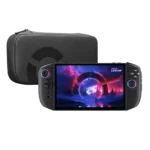
Lenovo Legion Go 2 Feature Scores
Explore all 32 feature scores for Lenovo Legion Go 2, organized into pros and cons.
Scores by Feature
Summary
32 reviewed features-
Very positive 4.5-5.013 (41%)
-
Positive 3.5-4.47 (22%)
-
Neutral 2.5-3.44 (13%)
-
Negative 1.5-2.48 (25%)
Pros
Sort
-
The 8.8-inch OLED is the clear standout, with rich color, deep blacks, sharp detail, and smooth VRR motion. Its glossy surface can reflect light, but reviewers still rank it among the best handheld displays.
-
The sturdy kickstand, secure controller rails, and refined chassis feel premium and thoughtfully constructed. Internal service access is less polished than the exterior.
-
Hall-effect sticks, responsive buttons, and the revised D-pad generally feel durable and precise. A few reviewers wanted firmer stick tension or more tactile buttons.
-
The Z2 Extreme configuration handles modern AAA games impressively for a handheld, especially with sensible settings and upscaling. Gains over well-tuned last-generation competitors are real but often modest.
-
Cooling is generally effective, with low GPU temperatures and comfortable grip areas even under load. Better tuning can also reduce unnecessary fan speed.
-
Full Windows access opens a huge library across Steam, GOG, Xbox, and other PC platforms. That breadth is a major advantage for buyers who already own many PC games.
-
Frame rates are strong at 800p and often smooth at 1200p with tuned settings, while VRR hides smaller dips well. Demanding games may still need upscaling, lower presets, or frame generation.
-
Rounded grips are more comfortable than the original, but the wide, heavy chassis still favors larger hands. Smaller-handed users and long-session players may need the kickstand and detached controls.
-
Wi-Fi, Ethernet, Bluetooth, and connected accessories worked reliably in the tested setups, with no meaningful drops or connection issues reported.
-
Detachable controllers, deep remapping, a touchpad, rear buttons, and FPS mouse mode make the system unusually versatile. The mouse mode is divisive and controller removal can be fiddly.
-
The speakers are generally loud and clearer than the first generation, but opinions vary on bass, directionality, and how well they compete with fan noise. Headphones remain preferable for demanding games.
-
The unusually large screen makes small text and dense PC game interfaces easier to read, which can reduce squinting and improve usability.
-
Original Legion Go controllers and compatible accessories continue to work with the second-generation hardware, easing upgrades for existing owners.
-
Cloud gaming worked smoothly in the cited test, with positive control feel and no obvious problems.
-
Games can look notably sharper and more detailed than on lower-powered handhelds, particularly when the hardware is paired with the vivid OLED panel.
-
Hot exhaust is directed away from the controls, keeping the areas held by the player comfortable during demanding sessions.
-
Startup is quick, with the system launching in only a few seconds.
-
The kickstand and large screen make the device useful for streaming shows and other entertainment when it is not being used for games.
-
Fast multiplayer matches can run smoothly at high frame rates, with strong performance after software updates.
-
The dark, vented design has a bold gaming look that feels distinctive and purposeful, though its bulky form is visually imposing.
Cons
Sort
-
The screen, versatility, and high-end performance are compelling, but the price is the most consistent complaint. Cheaper handhelds and gaming laptops often deliver better performance-per-dollar.
-
Several reviewers encountered sleep, wake, controller-recognition, freezing, or reboot problems. These issues appear software-sensitive, but they undermine the console-like experience.
-
The SSD is replaceable, yet reaching it may require removing the battery, fan, adhesive, or recessed screws. Most users will find upgrades harder than on competing handhelds.
-
The large display and flexible kickstand are useful, but the two-pound body is among the heaviest handhelds available. Extended handheld play can tire hands and wrists.
-
Initial setup can take substantial time because of Windows updates, launcher sign-ins, tweaks, and game downloads before the device feels ready.
-
The fingerprint reader can speed up Windows login, but its placement and sensitivity occasionally make unlocking or putting the device to sleep frustrating.
-
One terabyte fills quickly with modern AAA games and feels stingy at this price, making the larger storage configurations more attractive.
-
Storage can be expanded, but reviewers note that practical upgrade options are less convenient than they should be.
-
Fan behavior varies widely by mode and software tuning: balanced profiles can be quiet, while performance modes may become clearly audible or overpower the speakers.
-
PS5 streaming is possible, but using the built-in controls may require a third-party app; otherwise a DualSense controller is needed.
-
Legion Space and its quick settings panel are much improved, responsive, and useful for tuning performance and controls. Windows 11 still introduces setup friction, pop-ups, small touch targets, and inconsistent handheld behavior.
-
Gaming endurance typically falls around two to four hours depending on settings, with much longer runtimes in lighter workloads. Results vary sharply by power mode, brightness, operating system, and game.