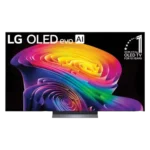
LG C6 Feature Scores
Explore all 106 feature scores for LG C6, organized into pros and cons.
Scores by Feature
Summary
106 reviewed features-
Very positive 4.5-5.062 (58%)
-
Positive 3.5-4.416 (15%)
-
Neutral 2.5-3.420 (19%)
-
Negative 1.5-2.46 (6%)
-
Very negative below 1.52 (2%)
Pros
Sort
-
The C6 delivers a crisp, colorful, high-contrast image that looks excellent across movies, sports, streaming, and games. Standard-size models are refined rather than revolutionary, while the larger tandem-panel versions look even more striking.
-
The C6 is one of the strongest gaming TVs available, combining superb picture quality, low latency, full-featured HDMI ports, and smooth VRR performance.
-
The ultra-thin, nearly borderless chassis looks premium and fits easily into modern rooms. It is familiar rather than dramatically redesigned.
-
The C6 makes a clear brightness jump over the C5, creating more impactful sunlight, clouds, reflections, and specular highlights. Full-screen brightness remains more limited than small-window peaks.
-
The move from 144Hz to 165Hz is a useful upgrade for PC players. One test found intermittent flicker and softness at 165Hz, while 120Hz remained more stable.
-
Pixel-level lighting produces superb contrast, with bright highlights standing cleanly against dark backgrounds and plenty of depth in cinematic scenes.
-
Colors are vivid yet natural in the best picture modes, with several tests showing near-reference accuracy straight from the box. Some HDR and gaming modes trade precision for extra punch.
-
Game Optimizer and Boost mode deliver exceptionally low latency, with 4K/60 results around 9ms and 120Hz results near 5ms in several tests.
-
webOS 26 is fast, feature-rich, and easy to navigate, with strong app and gaming support. Mandatory account terms and advertising substantially weaken the experience for privacy-conscious buyers.
-
HDR is a major strength, combining bright highlights, deep blacks, strong color, and confident tone mapping. The experience is especially impressive in dark or controlled-light rooms.
-
HD, 1080p, and even DVD material look cleaner, sharper, and more dimensional than expected. The new processor improves edges and textures without usually making content look artificial.
-
OLED blacks are generally deep and inky, but a few samples showed raised blacks or crushed near-black detail before adjustment. Small setting changes usually restore the expected depth.
-
All four HDMI inputs support the full gaming feature set, a major advantage for households with multiple consoles and a soundbar.
-
HDMI VRR, FreeSync, and G-SYNC support keep gameplay smooth and largely tear-free. Occasional flicker was reported in demanding PC use.
-
DCI-P3 coverage is essentially complete, and tandem-panel versions expand wider-gamut performance further. HDR colors look rich and varied without usually appearing overdone.
-
Filmmaker Mode is impressively accurate out of the box, with several measurements landing close to reference targets. Most buyers can get a natural, creator-faithful image without professional calibration.
-
The panel is nearly bezel-free, giving the image most of the front surface and creating a clean, immersive look.
-
The self-emissive panel keeps halos around bright objects to a minimum, delivering clean high-contrast edges without the blooming common on Mini LED sets.
-
Popular services are broadly covered and usually deliver Dolby Vision and Dolby Atmos correctly.
-
Brightness is unusually strong for a midrange OLED, with HDR highlights that can exceed 1,400 nits on standard models and go beyond 2,000 nits on tandem-panel versions. It still cannot fully overpower harsh direct light.
-
Game Optimizer preserves strong HDR impact and provides quick access to useful controls. Some samples needed tuning, and one 48-inch unit showed reduced color saturation.
-
Sports, films, and games generally look smooth and controlled. The recommended Cinematic Movement setting reduces judder without creating an obvious soap-opera effect.
-
The C6 offers deep manual controls, AutoCal support, multiple accurate presets, and reset options. Enthusiasts can fine-tune grayscale, tone mapping, and white balance extensively.
-
The pedestal feels sturdy and secure once assembled.
-
Menus and apps are generally quick and smooth once the TV is running. One large model took 20 to 30 seconds to complete a cold boot.
-
Filmmaker Mode produces neutral whites and accurate grayscale tracking, improving on the greenish tint seen in some older C-series models. HDR can run slightly cool on certain samples.
-
Dark scenes usually retain fine textures and background objects, though a few units showed black crush or slightly raised near-black tones that benefited from adjustment.
-
Most major streaming and catch-up services are available, although regional omissions such as Discovery+ or Freely may matter to some buyers.
-
With the right TruMotion setting, slow camera pans look much smoother and more cinematic without obvious artifacts.
-
Cinematic Movement is effective at smoothing pans while preserving a natural film look. Stronger processing is rarely necessary.
-
The standard 42- to 65-inch models use an improved WOLED design, while select larger and 48-inch versions receive more advanced tandem OLED hardware. That split creates meaningful performance differences between sizes.
-
The television itself feels premium and well made, even when the included remote does not.
-
Included clips and guides keep power and signal cables tidy around the central stand.
-
GeForce Now, Xbox Cloud Gaming, Amazon Luna, and LG’s gaming portal make controller-only gaming easy without a console.
-
The faster processor makes settings and navigation feel snappy, with useful quick menus that avoid interrupting playback.
-
Fast action remains crisp with minimal ghosting or edge artifacts, especially in gaming and sports.
-
Near-instant OLED response keeps gaming motion exceptionally clean and responsive, though it can make low-frame-rate stutter more visible.
-
Color and contrast remain consistent from wide seating positions, making the C6 a strong choice for group viewing.
-
The new processing greatly reduces visible banding and dark-scene dithering. A few samples still showed faint vertical bands in very dark gray content.
-
Stand assembly, app pairing, and initial configuration are generally straightforward, although the thin panel requires careful handling.
-
The presentation can sound wider and more precisely mapped than older C-series TVs, yet standard models still feel narrow beside a dedicated sound system.
-
Deep blacks, rich contrast, and accurate Filmmaker Mode make the C6 excellent for nighttime viewing. A few units need minor near-black adjustments.
-
AI Sound Pro keeps speech intelligible during action scenes, though one aggressive clarity mode made voices unnaturally loud and weakened the rest of the mix.
-
Voices and midrange are usually clean at normal levels, but one 48-inch model introduced distortion as volume increased.
-
All major current consoles can run at their 4K/120 ceiling through the C6’s fully capable gaming ports.
-
Console gaming at 4K/120 and PC gaming up to 4K/165 are both handled smoothly, with strong HDR and responsive controls.
-
Simultaneous audio through the TV speakers and Bluetooth hearing devices is especially valuable for mixed-hearing households.
-
Apple AirPlay 2 makes it easy to send media from an iPhone or other Apple device.
-
Apps load quickly and are well optimized, though one early sample had a temporary BBC iPlayer launch problem.
-
ALLM integrates cleanly with the broader gaming suite, automatically enabling responsive settings for compatible consoles.
-
Bluetooth audio can play alongside the TV speakers, a valuable option for hearing aids and mixed-listening households.
-
Bluetooth 5.3 and Auracast contribute to a comprehensive wireless setup for speakers, controllers, and other accessories.
-
AirPlay, Google Cast, Miracast, and Auracast provide broad wireless sharing options across phones, tablets, and computers.
-
Google Cast is built in and joins AirPlay and Miracast for easy wireless sharing.
-
Uniformity testing found little to no dirty-screen effect during normal viewing, which helps sports and panning shots look clean.
-
Dolby Vision content looks vibrant, accurate, and cinematic, making it the preferred premium HDR format on the C6.
-
AMD FreeSync Premium works as part of a comprehensive VRR package, supporting smooth PC and console play.
-
Nvidia G-SYNC compatibility helps maintain clean, tear-free motion for PC gaming.
-
LG’s Game Optimizer remains one of the most useful dashboards for adjusting latency, VRR, HDR, and genre-specific settings on the fly.
-
Color transitions are notably smoother than on the C5, with posterization mostly confined to extreme torture-test scenes.
-
The HDMI 2.1 implementation is unusually complete, with full-bandwidth gaming features available across all four inputs.
-
Four HDMI inputs provide ample room for consoles, media players, and an eARC sound system.
-
Bluetooth hearing devices can operate simultaneously with the TV speakers, making shared viewing more flexible.
-
Lower-resolution streams and discs receive useful cleanup and added clarity, though very soft or low-bitrate sources still cannot be made to look truly 4K.
-
AI Picture Pro can remove visible noise while preserving fine detail, making compressed or lower-quality material look cleaner.
-
The native 120Hz panel supports VRR up to 165Hz, giving PC gamers more headroom than the C5.
-
The Magic Remote pointer and navigation controls respond well, making text entry and menu movement faster.
-
The 4K panel looks especially sharp at the 48-inch size, making it well suited to large-screen desktop and gaming use.
-
Home Office and wireless mirroring connect easily and turn larger C6 models into useful oversized displays for work.
-
The central base has a sensible footprint that fits more furniture than wide-set feet.
-
VRR extends up to 165Hz for PC gaming while fully covering the 120Hz ceiling of current consoles.
-
Standard-size models have modest output, while the 77-inch version can play surprisingly loud without immediately losing clarity.
-
The thin panel looks excellent on a wall, but larger sizes are heavy and delicate enough to justify professional installation.
-
The Alpha 11 Gen 3 processor improves brightness, detail, noise cleanup, and menu speed. Some optional AI remastering modes are too aggressive and are better left off.
-
The central pedestal is attractive and furniture-friendly, though its angle can complicate soundbar placement and it does not swivel.
-
Recommendations range from useful and sensible to generic and poorly personalized. The feature may improve as it learns viewing habits.
-
Most samples were clean across normal brightness levels, but one retail unit showed a visible green glow near the bottom edge and some dark-gray vertical banding.
-
OLED’s fast response can expose stutter in low-frame-rate movies, although interpolation reduces it. Broadcast and fast-edit content generally avoids micro-stutter.
Cons
Sort
-
webOS 26 may require an LG account and acceptance of terms before built-in apps can be used, an unacceptable restriction for privacy-conscious buyers.
-
HDR10+ remains unsupported, which limits format flexibility for some streaming and gaming content despite otherwise strong HDR capabilities.
-
Large home-screen banners and screensaver promotions are distracting on a premium TV. LG at least allows some advertising to be disabled.
-
Users can disable some ads, but mandatory account and data-sharing terms make the smart platform feel invasive to privacy-conscious owners.
-
Broadcast setup works, but US models lack ATSC 3.0, which limits access to newer over-the-air standards.
-
The glossy screen can produce strong mirror-like reflections from windows and lamps. Indirect reflections are manageable, but placement matters in bright rooms.
-
Basic voice search can work well, but command recognition and AI responses are inconsistent. Copilot and hands-free “Hey LG” behavior felt unfinished on one unit.
-
Long-term reliability is not established, and one retail sample showed a green edge glow. Early software and gaming bugs also suggest some launch-period quality risk.
-
Bright full-screen scenes trigger noticeable automatic brightness limiting, so sports and snow-heavy content can look dimmer than small HDR highlights suggest.
-
LG’s assistant, Gemini, and Copilot add voice and AI features, but their usefulness and reliability remain inconsistent.
-
App shortcuts, the pointer, and a customizable heart button are convenient, but the missing conventional mute button frustrates some users.
-
The brighter panel makes ordinary daytime viewing practical, but direct light and dark scenes can still be difficult because of reflections.
-
Bass is tighter and more controlled than on the C5, but deep low-end impact remains limited on standard models.
-
Native HDR tone mapping preserves highlight detail well, but SDR-to-HDR remastering is inconsistent and can add harsh edges, cool tones, or an artificial look. PC HDR also showed mapping bugs on one 48-inch sample.
-
Atmos decoding is included, but standard models lack the height and scale needed for truly immersive effects. A soundbar remains the best route to cinematic audio.
-
Wireless results conflict by region or model: one review found Wi-Fi 6E, while others reported a downgrade to Wi-Fi 5. Wired Ethernet is a safer choice where maximum stability matters.
-
Glare control is weaker than on flagship anti-reflective OLEDs and some matte competitors. Direct sunlight is the main problem.
-
AI search can identify content correctly but sometimes fails to launch it, while simpler voice searches generally perform better.
-
Google Home, Matter, and LG device control are supported, but assistant behavior can feel fragmented compared with a full Google TV ecosystem.
-
The standard WOLED panel covers a broad HDR range, but very bright saturated colors can look slightly washed because of the white subpixel.
-
The default energy-saving mode reduces brightness enough that several users prefer to disable it, trading lower power use for better picture quality.
-
Dolby Vision, HDR10, and HLG are supported, but the continued absence of HDR10+ keeps the format lineup from being complete.
-
Panel hardware varies by size: standard WOLED models are excellent, while tandem OLED versions deliver brighter, richer performance.
-
The lineup covers compact 42-inch through large 83-inch screens, but panel technology and performance differ significantly by size.
-
Early firmware and PC-gaming bugs may improve through updates, but several issues remained unresolved at launch.
-
Opinions vary by region and model: some find the slimmer Magic Remote useful and responsive, while others criticize its lightweight plastic feel.
-
The C6 offers excellent performance for a midrange OLED, but launch pricing is difficult to justify while discounted C5 models remain available. Value improves substantially as prices fall.
-
Built-in audio is improved and often clearer than expected, but standard-size models still benefit greatly from a soundbar. The 77-inch tandem model can sound surprisingly loud and immersive.