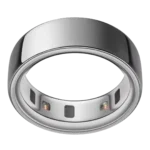
Oura Ring 4 Feature Scores
Explore all 50 feature scores for Oura Ring 4, organized into pros and cons.
Scores by Feature
Summary
50 reviewed features-
Very positive 4.5-5.027 (54%)
-
Positive 3.5-4.414 (28%)
-
Neutral 2.5-3.46 (12%)
-
Negative 1.5-2.43 (6%)
Pros
Sort
-
Sleep tracking was the most consistently praised attribute, with reviewers calling it accurate, insightful, and a core reason to buy the ring.
-
Comfort was one of the strongest consensus points, with many reviewers saying the flatter sensors made it easy to wear day and night.
-
The companion app was one of Oura's biggest strengths, repeatedly praised for clarity, polish, and making health data usable.
-
Health trend insights were a major strength, helping reviewers interpret long-term patterns rather than just view raw data.
-
Battery life was widely praised as better than smartwatches and improved from Gen 3, though real-world results often fell short of the eight-day claim.
-
Third-party compatibility was a strength, especially with Apple Watch, Natural Cycles, Strava, and other health platforms.
-
Design and appearance were broadly praised as stylish and jewelry-like, though one reviewer disliked the look and finish.
-
Weight was consistently praised, with reviewers often saying the ring felt light, subtle, or easy to forget.
-
Automatic workout detection earned broad praise for walking, running, and some activities, but reviewers still reported misses and misclassifications.
-
Cycle tracking drew strong praise overall, especially for period prediction and body-awareness, though one reviewer found in-app predictions less accurate than Natural Cycles.
-
The user interface was mostly praised as intuitive, cleaner, and proactive, though one reviewer found some navigation nuances annoying.
-
Charging speed was consistently praised, with reviewers describing quick top-ups and full charges in short windows.
-
Recovery insights were repeatedly praised for helping reviewers rest, adjust training, and respond to illness or low-readiness days.
-
The expanded size range was praised for fitting more fingers and being more inclusive.
-
Value for money was context-dependent: reviewers saw strong value for sleep and recovery, but weaker value for upgrades or fitness-first users.
-
Readiness scoring was generally useful for daily decisions, though at least one reviewer noted they did not always agree with it.
-
Activity and wind-down reminders were appreciated for being helpful without feeling as intrusive as smartwatch nudges.
-
Stress tracking helped several reviewers identify patterns and recover better, but others found the stress score confusing or not always accurate.
-
Data syncing was strongly praised where mentioned, with reviewers noting reliable syncing and little need to think about it.
-
Water resistance was treated as a strength, with reviewers noting 100-meter resistance and no need to remove it for water exposure.
-
Habit tracking and tags were praised for making behavior patterns easier to record and interpret.
-
Smartphone notifications were framed as a positive restraint: reviewers liked that Oura avoided constant buzzing while still allowing useful alerts.
-
Breathing and mindfulness content was received positively, with reviewers comparing it to established services and finding it calming.
-
Fit depended heavily on sizing and finger changes: some found the fit excellent, while others had looseness or comfort issues.
-
Fitness coaching was valued more as recovery or wellness guidance than as advanced athletic coaching.
-
Route tracking was helpful when it worked, with accurate maps in one review, but another reviewer missed runner-focused GPS routing.
-
Heart-rate accuracy was strongest for rest and general use, but reviewers saw mixed workout results and limited improvement in some tests.
-
Charging convenience was mixed: some found it easy and stress-free, while others wanted a portable charging case or disliked the dock tradeoff.
-
Apple Health compatibility was praised directly by a reviewer who loved that Oura synced with Apple Health.
-
Goal tracking had a strong behavioral effect for one reviewer, who reported a major increase in daily step output.
-
GPS accuracy was supported by a reviewer who found Oura's automatic route maps accurate.
-
Pairing reliability was excellent in the supporting review, where setup and pairing had no hiccups.
-
Swimming tracking was praised by a reviewer whose swims were logged reliably.
-
Workout mode variety was appreciated where the reviewer noted Oura could identify many workout profiles beyond basic walking and running.
-
App alerts were praised as polite and easy to ignore rather than intrusive.
-
Step counts were described as usable but imperfect, ranging from very accurate in one test to inflated or slightly off in others.
-
Strava compatibility was helpful because imported workout data improved the usefulness of readiness metrics.
-
Sleep-stage tracking was viewed as useful but not definitive, with one reviewer seeing variation across devices and another calling it solid.
-
Build quality was supported by one reviewer who described the titanium ring as feeling tough.
-
Reliability was mixed, with praise for customer service and warnings about losing the ring or a battery malfunction.
-
Bluetooth reliability was mostly good but not flawless, with one reviewer reporting occasional disconnects.
Cons
Sort
-
The lack of a vibrating alarm or stronger smart alert function was a clear complaint in multiple reviews.
-
Subscription value was the most repeated concern: some accepted it as worthwhile, but many disliked paying after buying an expensive ring.
-
Cadence tracking was criticized as missing from the runner-focused metrics one reviewer wanted.
-
Calorie tracking drew criticism in workout comparisons, with one reviewer saying Oura substantially undercounted calories versus Apple Watch.
-
Workout tracking remained the biggest weak area: acceptable for light wellness tracking, but limited or inaccurate for serious training.
-
Connected GPS reliability was limited by phone location and Bluetooth requirements, which one reviewer found restrictive.
-
Data privacy surfaced as a concern for one reviewer who wanted clarity on wearable health-data handling.
-
Durability was mixed: titanium felt tough, but scratches, wear, non-repairability, and battery replacement concerns were repeated drawbacks.
-
Reviewers found general activity tracking useful but inconsistent: some saw improvements, while others said the feature still is not good enough for dependable activity data.