Oura Ring 5 Feature Scores
Explore all 44 feature scores for Oura Ring 5, organized into pros and cons.
Scores by Feature
Summary
44 reviewed features-
Very positive 4.5-5.010 (23%)
-
Positive 3.5-4.422 (50%)
-
Neutral 2.5-3.48 (18%)
-
Negative 1.5-2.44 (9%)
Pros
Sort
-
Comfort was the strongest consensus point, with reviewers repeatedly saying the slimmer ring was easier to wear, forget, sleep in and use during workouts.
-
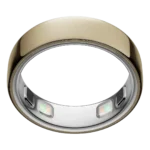
Design and appearance drew strong praise, with reviewers saying the Ring 5 looks more like jewelry and less like obvious wearable tech.
-
Sleep tracking was one of the strongest areas, with reviewers repeatedly saying the Ring 5 reflected sleep well or stayed close to prior Oura results.
-
Weight was praised across reviews, with the Ring 5 repeatedly described as noticeably lighter or shockingly light.
-
Fit improved thanks to the slimmer body, but reviewers stressed sizing-kit use because the Ring 5 can fit differently from earlier models.
-
Automatic workout detection was one of the clearer improvements, with multiple reviewers praising better low-motion recognition and correct activity suggestions.
-
Build quality was mostly praised, with reviewers pointing to improved hardware, a smoother interior, better construction and early scratch-free wear.
-
Health trend insights were a major strength, with reviewers praising actionable long-term health views, health alerts and broader wellness context.
-
Battery life was generally strong, with several reviewers seeing or expecting about a week, though long-term degradation and modest gains remained concerns.
-
Pairing and setup were praised as easy, with reviewers reporting immediate detection and a simple new-user process.
-
Women’s health and cycle tracking were praised, especially Oura’s cycle focus, hormonal birth control support and suitability for women.
-
The user interface was generally praised for manageable data presentation and intuitive app use, with some workout controls still less convenient than a watch.
-
Charging convenience was mixed: reviewers liked the travel case, but disliked its extra cost, size-specific design and lack of bundling.
-
Third-party compatibility centered on external heart rate monitors and supported Bluetooth devices, giving the ring better workout data options but sometimes requiring extra hardware.
-
Durability feedback was cautiously positive on scratch resistance, but reviewers also warned that long-term wear and past Oura scratching remain concerns.
-
Sleep apnea and nighttime breathing features were viewed as potentially useful wellness signals, not diagnostic tools, with reviewers seeing value in long-term breathing trends.
-
Resting heart rate tracking lined up closely in side-by-side testing, with one reviewer finding the Ring 5 within one beat of the Ring 4.
-
Charging speed was positively reviewed, including around 80 minutes for a full charge and a stated 20-to-80-minute charging window.
-
The companion app was described as polished and premium across iOS and Android.
-
Stress tracking was considered useful for recognizing when to prioritize sleep and recovery over harder activity.
-
Activity tracking was praised by some hands-on reviewers as more accurate and smarter than before, but others still found activity accuracy uneven versus other wearables.
-
Pace tracking was more capable through live activity tools, though reviewers framed it as good for casual runs rather than serious training.
-
Sleep stage tracking was viewed as good but imperfect, with reviewers noting both strong algorithm performance and normal disagreement between rings.
-
Reviewers who mentioned Locate saw nearby ring tracking as useful, but one hands-on test said it was not precise enough to feel like a true directional finder.
-
App alerts were supported by Health Radar-style alerts that provide next-step guidance when health signals change.
-
Calorie tracking was considered useful as part of weekly movement planning rather than as a standalone precision metric.
-
Customization options were positively mentioned in the app, where users can customize metric layout for easier access.
-
Distance tracking was framed as useful for casual run tracking when paired with phone-based GPS and live workout tools.
-
Readiness recommendations were considered consistent in side-by-side use, closely matching another Oura ring's guidance.
-
Recovery insights were useful in context, helping one reviewer decide when to emphasize sleep and recovery rather than exercise.
-
Route tracking was appreciated when the phone was nearby, especially for adding a GPS map overlay after detected outdoor exercise.
-
Heart rate accuracy was mixed: one workout test matched an Apple Watch, while another reviewer warned finger-based optical tracking can struggle during exercise.
Cons
Sort
-
Reliability concerns focused on long-term ring and battery longevity, with reviewers warning that Oura rings may not last forever.
-
Size options were a drawback because the Ring 5 removed some small and large sizes, even though some reviewers questioned whether further shrinkage mattered.
-
Subscription value split reviewers, with one defending the monthly fee but many calling the ongoing cost a major drawback versus subscription-free rivals.
-
Cadence tracking was a weakness because advanced running metrics such as cadence were not available.
-
GPS accuracy was limited by the absence of built-in GPS, forcing users to rely on a phone for the most accurate outdoor exercise data.
-
Data privacy was mixed: reviewers liked more control and deletion options, but warned that deeper medical data makes privacy stakes higher.
-
Fitness coaching was mixed: Advisor felt underdeveloped to one reviewer, while another noticed quicker and more accurate answers than before.
-
Connected GPS was useful when available, but reviewers emphasized dependence on phone GPS and found that this may not suit all runners or hikers.
-
Step counting received mixed but usable feedback: one reviewer said steps could be overstated, while another found side-by-side counts close enough.
-
Workout mode variety improved with more suggested activities and live sources, but reviewers still found parts of exercise support limited to outdoor workouts.
-
Value for money was mixed: reviewers liked the new buyer proposition but often found upgrades harder to justify, especially with the subscription and Ring 4 software support.
-
Workout tracking improved in comfort and detection for several reviewers, but serious training, intervals and smartwatch-style metrics remained common weaknesses.