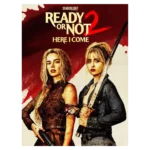
Ready or Not 2: Here I Come Feature Scores
Explore all 42 feature scores for Ready or Not 2: Here I Come, organized into pros and cons.
Scores by Feature
Summary
42 reviewed features-
Very positive 4.5-5.02 (5%)
-
Positive 3.5-4.416 (38%)
-
Neutral 2.5-3.412 (29%)
-
Negative 1.5-2.412 (29%)
Pros
Sort
-
Samara Weaving is the clearest point of agreement: most reviewers find her magnetic, physical, expressive, funny, and convincing as a traumatized survivor pushed straight back into danger. A small minority felt the sequel gives Grace less range or weakens what made her special.
-
The supporting cast is a major source of fun, especially Elijah Wood, Shawn Hatosy, Sarah Michelle Gellar, David Cronenberg, and Kathryn Newton. The main caveat is that the larger ensemble leaves some performers and villains with too little material.
-
The action is one of the sequel’s strongest and most discussed features. Reviewers repeatedly praise the ballroom fight, brutal brawls, creative kills, and bigger set pieces, though a minority call some fights repetitive, stiff, or overextended.
-
The cast is widely viewed as a major asset, with reviewers repeatedly praising the performers’ commitment to the movie’s ridiculous, bloody tone. Even several negative reviews say the acting is stronger than the material around it.
-
Weaving and Newton’s sister chemistry works very well for many reviewers, who like their comic friction, physical teamwork, and contrasting energies. Others find the relationship rushed or forced, so the performances often land better than the written estrangement.
-
The movie plays especially well for horror fans, fans of the first film, and lively theater crowds. Several reviewers specifically describe it as a communal screams-and-laughs experience, while colder reactions suggest casual viewers may be less impressed.
-
Direction is praised when the film turns carnage into readable, energetic horror-comedy and stages its biggest set pieces with confidence. More negative reviews fault the filmmakers for choosing repetition and safe franchise expansion over sharper invention.
-
Pacing is sharply split. Several reviewers praise the immediate start, breakneck movement, and strong momentum, while others say exposition, relationship detours, a long final act, or the second half slow the movie down.
-
The larger estate, golf course, casino, ritual spaces, and other status-heavy environments give the sequel a fitting arena for its expanded game. Reviewers praise the scale and design, though one felt the golf-course potential was not fully used.
-
The sequel has flashes of striking visual personality, from gothic spaces to Renaissance-inspired imagery and stylized bloodshed. Some reviewers find that look bold and playful, while others see a blander, less audacious presentation than the first film.
-
Entertainment value is genuinely split but leans positive: many reviewers call the sequel a blast, a crowd-pleaser, or a solidly fun bloodbath. The negative camp sees repetition, lore, and overlength turning the same ingredients into diminishing returns.
-
The comedy frequently lands through gruesome slapstick, inept rich villains, Elijah Wood’s deadpan delivery, and the film’s self-aware excess. Still, a sizable group finds the jokes forced, repetitive, tepid, or less sharp than the original.
-
Visual reactions range from lush, sinister, and cleanly legible to flat and drab. The strongest praise goes to how the camera handles crowded action and the expanded spaces, while the harshest criticism says the sequel lacks the first film’s moody visual punch.
-
The practical gore work is singled out as a strength, with prosthetics, makeup, stunts, and physical effects combining to make the biggest kills feel messy and theatrical.
-
The theatrical value depends heavily on taste. One reviewer urges seeing it with a crowd rather than waiting for streaming, while another says streaming is the safer choice if the sequel’s repetition makes a ticket feel hard to justify.
-
The editing receives specific praise for smoothly blending the first movie’s ending into the sequel’s opening and creating a faux-continuous transition. Elsewhere, continuity-style nitpicks temper that positive impression.
-
Makeup and prosthetic work are praised as part of the movie’s practical gore package, especially in its messiest set pieces. One reviewer also flags rough wig continuity, keeping the reaction from being uniformly positive.
-
The screenplay gets credit for finding witty variations on the first movie’s structure in the strongest reviews. Less enthusiastic critics think the added rules and emotional subplot make the writing less focused than it should be.
Cons
Sort
-
The story works best when it keeps Grace moving through the new hunt, but several critics found the expanded premise over-plotted, thin, or harder to justify than the original. A smaller group thought the sequel found a clever enough route forward.
-
Originality is a major weakness in the consensus. Even positive reviews often admit the sequel is essentially another round of the same game, while its defenders argue that the new scale and rules provide enough variation to justify returning.
-
Character depth is one of the more consistent weaknesses. Grace gets meaningful growth in some reviews, but many critics find Faith, the hunters, and much of the expanded ensemble underwritten, archetypal, or crowded out by the game mechanics.
-
Most criticism lands on how closely the sequel repeats the first film’s game and rhythms, with fewer surprises and less novelty. Some reviewers still found enough new rules, characters, and twists to keep the familiar structure lively.
-
The Grace-Faith drama is highly divisive. Their reconciliation adds a welcome personal layer for some viewers, but many critics find the bickering repetitive, the resentment unconvincing, or the emotional beats poorly placed amid a life-or-death hunt.
-
The enlarged rulebook is a frequent stumbling block: multiple reviewers call the mythology convoluted, inconsistent, or overloaded with explanation. Others enjoyed the absurd clauses and thought the rules created fun opportunities for schemes and surprises.
-
The bloody effects can be gleefully satisfying, but repeated spontaneous-combustion gags lose impact for several reviewers. What was once a surprise becomes predictable when the sequel returns to the same goopy payoff too often.
-
Runtime is a recurring concern among less enthusiastic reviewers, who say the movie runs long, begins to feel its length, or adds minutes the story does not need. A few faster-paced reviews had no issue with the 108-minute ride.
-
The movie’s heightened logic is easier to accept when Weaving grounds Grace’s ordeal, but several reviewers call out extreme plot armor and implausible escapes. The larger, more game-like structure can weaken the sense that the danger is real.
-
The gore is intentionally extreme and often part of the fun, but several reviewers think the violence crosses into ugliness when beatings linger or the brutality feels less cartoonish. Others explicitly appreciate that the gore stays purposeful and theatrical.
-
Reviewers who discuss the horror side often say the sequel is less frightening than the first, with action and gore replacing sustained fear. A few still find individual stretches dark, creepy, or tense.
-
Dialogue earns praise when the movie fires off snarky one-liners or lets Elijah Wood deliver the rules with dry precision. The sister arguments and heavy exposition draw much harsher reactions, often described as clunky, repetitive, or unnatural.
-
One reviewer criticizes a sequel music choice as less original than the first film’s use of the song, making the soundtrack feel more recycled than inspired in that moment.
-
The expanded mythology is the biggest point of disagreement. Some reviewers love the larger cabal, stranger rules, and new possibilities; others say the John Wick-style expansion makes a simple premise cluttered, overexplained, or less fun.
-
The eat-the-rich message works best for reviewers who enjoy the sequel doubling down on corrupt power and oligarchy. Others find the satire blunt, shallow, repetitive, or less incisive than the first film’s simpler class conflict.
-
The emotional core is inconsistent. Some reviewers are genuinely invested in Grace and Faith reconnecting and appreciate the added heart, while many others find the sister conflict undercooked, forced, or too thin to carry the expanded story.
-
The horror-comedy tone works when cartoon gore, deadpan humor, and self-aware absurdity stay in sync. Several critics say that balance breaks when prolonged cruelty or darker violence collides with the movie’s otherwise playful register.
-
Costume work receives mixed notice. One reviewer says the design supports the film well, while another points to visibly cheap construction in some of the wealthy characters’ clothing.
-
The sequel’s darker social undercurrent works for reviewers who see more weight in its attack on entrenched power. Others find the thematic bite too thin to match the louder scale and bloodshed.
-
One review raises concern that the international wealthy families risk leaning on cultural stereotypes, while also crediting the filmmakers with keeping those characters unpredictable enough to avoid a wholly one-note treatment.
-
Rewatch appeal is mixed. One critic says the two movies make an easy back-to-back watch and another is eager for more, while less enthusiastic viewers say this sequel is less memorable and does not demand repeat viewing.
-
Suspense is one of the clearest tradeoffs of going bigger. A few critics find strong tension in individual chases and fights, but many miss the first film’s intimate terror and say the wider grounds, predictability, and plot armor drain urgency.
-
The ending divides opinion. Some reviewers enjoyed the final turn, satisfying climax, or setup for more, while others found the payoff unsurprising, rushed, overstuffed, illogical, or simply weaker than the first film’s finish.
-
As a horror-comedy sequel, reactions range from enthusiastic approval to outright rejection. Fans of its blood-soaked, knowingly ridiculous formula often call it a worthy continuation, while detractors see an unnecessary and inferior repeat.
Cast & Creators
-
GraceWeaving is the film’s most consistently praised performer, with reviewers highlighting her physical commitment, expressive fear, feral determination, comic timing, and ability to ground the heightened premise. A few detractors think the sequel gives Grace less range than before, but even many negative reviews still single Weaving out.
-
The LawyerWood’s dry, unflappable Lawyer is one of the most dependable supporting highlights. Reviewers repeatedly praise his deadpan rule delivery, mischievous presence, comic timing, and ability to make exposition entertaining.
-
TitusHatosy earns strong notices for turning Titus into a physically imposing, increasingly chilling villain. His intensity and menace stand out, although the brutality attached to the character also contributes to some reviewers’ discomfort with the film’s darker tone.
-
FaithNewton is widely welcomed as a lively, snarky counterweight to Weaving, and several reviewers love the sisters’ chemistry. The main criticism lands on Faith’s writing rather than Newton herself, though a small number of reviewers also find the character grating or emotionally unconvincing.
-
UrsulaGellar is generally praised for icy, venomous villainy and for visibly enjoying the role of Ursula. Some reviewers wish the sequel gave her substantially more to do, making underuse the main complaint rather than performance quality.
-
ChesterCronenberg makes a strong impression despite limited screen time, with reviewers calling his appearance delightful, amusing, delicious, or memorable. The recurring complaint is simply that Chester’s role is too brief.
-
Francesca El CaidoJae is praised as a joyous addition who can hold her own opposite Weaving. Her Francesca fight is repeatedly associated with one of the sequel’s most memorable action set pieces.
-
Wan Cheng FuHall’s smaller ensemble role gets specific praise for landing well with the crowd, with his limited lines drawing big laughs at the screening described by the reviewer.
-
Ignacio El CaidoCarbonell is singled out in one review as the most effective of the secondary hunters, with his swagger and ineptitude giving Ignacio a stronger comic identity than many of the other wealthy antagonists.
-
ActorBeirne is briefly singled out as a memorable presence, with his awkward comic energy fitting the sequel’s crowded collection of eccentric supporting characters.