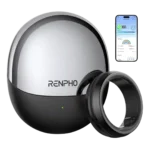
Renpho Lynx Smart Ring Feature Scores
Explore all 45 feature scores for Renpho Lynx Smart Ring, organized into pros and cons.
Scores by Feature
Summary
45 reviewed features-
Very positive 4.5-5.013 (29%)
-
Positive 3.5-4.417 (38%)
-
Neutral 2.5-3.411 (24%)
-
Negative 1.5-2.44 (9%)
Pros
Sort
-
Subscription value was a near-unanimous advantage; reviewers repeatedly praised getting full app access without monthly fees or paywalls.
-
Battery life was the clearest consensus strength, with almost every reviewer praising week-plus performance, even when one reviewer raised long-term degradation concerns.
-
Durability was a major strength, with reviewers reporting little wear, no scratches, and confidence using it through daily activities.
-
Charging convenience was a major strength thanks to the portable case, USB-C charging, and travel-friendly charging setup.
-
Weight was consistently praised, with reviewers describing the ring as light, lightweight, or much lighter than expected.
-
Value for money was usually praised because of the price, case, and no subscription, but a critical review questioned value due to design and performance issues.
-
Water resistance was one of the strongest areas, with reviewers comfortably wearing the ring around water and describing the protection as dependable in daily use.
-
Build quality was usually strong due to the titanium construction, though one reviewer felt the hardware looked or felt less premium than rivals.
-
Overall reliability was positive for everyday passive use, though one critical review said the product did not fully live up to its promise.
-
Stress tracking was consistently appreciated as a passive awareness tool, especially when tied to timelines, HRV, or prompts to slow down.
-
Third-party app compatibility was considered a strength, especially when reviewers valued syncing with broader health ecosystems and other RENPHO or health apps.
-
Fit was mostly positive when using the sizing kit, but reviewers warned that Renpho's ring sizing differs from normal jewelry and can be tricky.
-
Pairing reliability was praised across setup experiences, though one review noted the connection could take a few seconds each morning.
-
Data syncing reliability was generally solid once the app was opened, but manual syncing, delayed updates, and occasional workout-sync failures limited the experience.
-
Bluetooth reliability was strong where tested, with reviewers reporting quick loading, zero glitches, and no connectivity issues.
-
Sleep tracking accuracy was generally liked for basic use and sleep/wake detection, but one critical review found wake detection and deep-sleep labeling unreliable.
-
The user interface was mostly easy to navigate and understand, though several reviewers felt it was underdeveloped or less polished than premium competitors.
-
Apple Health compatibility was viewed positively as part of a broader integration story that made health data easier to unify across apps.
-
Sleep stage tracking was a common strength for casual insight, though reviewers cautioned that stage-level numbers should be treated as a guideline rather than laboratory truth.
-
Comfort was polarizing: some reviewers forgot the ring was there, while others found it chunky, clunky, or unpleasant for all-day wear.
-
Companion app quality was functional and accessible, but not premium; reviewers praised clarity while criticizing the lack of polish, nuance, and deeper insights.
-
Blood oxygen tracking was viewed positively where evaluated, with one review calling readings consistent with pulse oximeters and another finding metrics very close to comparison devices.
-
Heart rate accuracy split reviewers: some saw solid rest or device-comparison results, while intense interval training was described as unreliable.
-
Activity reminders were praised in one review where the ring worked better than other devices as a quiet reminder to stay active.
-
Charging speed received one clear positive evaluation, with the full charge time described as wonderfully fast.
-
Resting heart rate tracking received positive evidence in one comparison-heavy review, where the reviewer said the tracked metrics were extremely close to reference devices.
-
Design and appearance were mixed: some found the ring sleek or stylish, while others called it utilitarian, masculine, cheap, or too basic.
-
Goal tracking was positively received in one review, where daily faces and progress feedback felt encouraging rather than harsh.
-
Google Fit compatibility received positive evidence in one review that said cross-platform health integration helped create a more complete wellness picture.
-
Data privacy received limited but positive evidence from one reviewer who appreciated the ring's low-distraction, subscription-free style of tracking.
Cons
Sort
-
Workout mode variety was consistently limited; reviewers repeatedly noted that the ring covers only a narrow set of exercise types or fewer modes than competing wearables.
-
App alerts were a repeated limitation, with reviewers wanting low-battery or real-time alerts and noting that the ring provides little immediate notification feedback.
-
Step counts were one of the most repeated accuracy concerns: one review saw close results, while several others reported overcounting or inconsistent step data.
-
Fitness coaching was weak: reviewers wanted more practical guidance, richer recommendations, or AI-style coaching instead of generic app feedback.
-
Swimming tracking received only negative workout-mode evidence, with one review saying swim analytics were not meaningfully covered beyond waterproof protection.
-
Calorie estimates were treated as rough guidance at best, with reviewers noting mismatches against other devices and at least one run estimate that seemed low.
-
Distance tracking drew a clear concern in one running comparison, where the Lynx reported a shorter distance than the Garmin reference device.
-
Customization options were limited, with reviewers wanting more elegant, playful, or broader styling choices despite acknowledging a basic range of options.
-
Size options were adequate for many adults but repeatedly criticized for whole-size-only choices and a limited 6-to-13 range.
-
Workout tracking accuracy was mixed, with runs described as workable by one reviewer but HIIT, distance, calories, and syncing raising concerns in other tests.
-
Automatic workout detection was inconsistent across evidence: one review called the lack of detection a major oversight, while others liked passive walk or run logging.
-
Recovery insights were mixed: reviewers liked HRV-style recovery cues, but several complained that Renpho gave too little interpretation or personalized guidance.
-
Readiness or Health Index scoring was easy to understand for some users, but another reviewer found the percentage confusing and poorly explained.
-
Health trend insights were useful for broad patterns, but depth varied; reviewers liked trend awareness while criticizing Renpho's limited explanation and lifestyle guidance.
-
Reviewers found general activity tracking useful for trends and basic monitoring, but accuracy was uneven, with one lab-style review calling tracking a major weak spot.