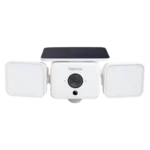
Reolink Solar Floodlight, B430 Feature Scores
Explore all 62 feature scores for Reolink Solar Floodlight, B430, organized into pros and cons.
Scores by Feature
Summary
62 reviewed features-
Very positive 4.5-5.031 (50%)
-
Positive 3.5-4.415 (24%)
-
Neutral 2.5-3.49 (15%)
-
Negative 1.5-2.45 (8%)
-
Very negative below 1.52 (3%)
Pros
Sort
-
The combination of 2K video, solar power, strong lighting, and fee-free local storage is widely considered excellent value around the entry-level price.
-
A microSD card provides straightforward recording and playback without required monthly fees, though the card is sold separately and footage can be lost if the camera is stolen.
-
The adjustable twin lights are consistently praised as genuinely bright and useful for yards, paths, and deterrence, though they cannot match the reach of high-powered wired floodlights.
-
Most installations take only two screws and a few app steps, especially on wood; brick, siding, ladders, and awkward solar placement can make the job harder.
-
Most units stay near full charge for weeks with adequate sun, but heavy triggers, dark winters, cold weather, or weak solar exposure can force manual recharging.
-
Most owners describe the camera as easy to live with, dependable, and worth recommending, though a small group encountered serious connection, detection, or charging failures.
-
The main camera feels sturdy, compact, and well assembled, although one detailed inspection criticized rough, cheaply finished mounting hardware.
-
Night footage is a major strength when the floodlights engage, producing clear color video; infrared mode is also useful, although one test found darker edges.
-
The all-in-one solar design eliminates exposed power and panel cables, making remote placement cleaner and avoiding cable damage or electrician work.
-
The wide view covers driveways, entrances, yards, and perimeter areas effectively, reducing the need to aim at one narrow section.
-
The camera fits well into larger Reolink setups, with owners successfully combining several cameras in one app and planning additional coverage.
-
The integrated panel often keeps the battery near full even in cloud, cold, or partial shade, but its fixed angle makes direct sun and careful placement essential.
-
Both floodlight panels can be rotated and tilted widely, while the ball-joint camera mount provides useful aiming control.
-
Brightness, warm-to-cool color temperature, subject-specific activation, flashing, and manual control make the lighting unusually configurable.
-
The 2K image is generally clear enough for faces, vehicles, and nearby security coverage, but several testers found it softer, grainier, or less useful at distance than sharper 4K cameras.
-
The Reolink app offers deep control over detection, lighting, recording, privacy, alerts, and playback; most find it clear, though setup and advanced menus can feel clunky or overwhelming.
-
Two-way talk is generally loud and understandable, but one tester found the siren much weaker than its rating suggests.
-
Free on-device AI distinguishes people, vehicles, and animals effectively in most tests and can tailor lighting or alerts by subject.
-
The IP66 body handled rain, snow, and varied outdoor weather well in testing, with no recurring sealing failures reported.
-
Time-lapse is a standout extra for weather or construction projects, while built-in filtering, encryption, and battery modes add useful flexibility.
-
The app makes it easy to exclude roads, branches, neighboring property, or other busy areas from triggering recordings.
-
The compact all-in-one shape looks clean and practical, with a sleek appearance that does not feel like a collection of mismatched parts.
-
Category labels, schedules, snoozing, email, push, and FTP options make alerts easy to organize around household routines.
-
Privacy masks are simple to draw and effectively block neighboring property or other sensitive areas from live view and recordings.
-
Person, vehicle, and animal detection works well in many tests, but some units miss people, misclassify motion, or perform poorly at night.
-
The camera captures useful activity in very dark conditions, especially wildlife and nearby movement, but the best color detail still depends on the floodlights.
-
The compact cube packs the camera, battery, panel, and two lights into a surprisingly small body that suits visible perimeter placement.
-
AI search and event filters make it much faster to find clips by object type or description instead of scrubbing through a full timeline.
-
The app is usually responsive and dependable, but isolated reports describe repeated connection failures and reboot-dependent access.
-
The camera continued operating through rain, snow, and hectic outdoor weather without performance problems in the reported tests.
-
The camera continued working in sub-zero conditions, including one test near -28°C, though battery products naturally lose efficiency in cold weather.
-
Reolink hubs, NVRs, and Home Assistant can support broader systems, but battery-camera integration may require a hub and can omit some controls.
-
Many setups connect quickly and maintain useful range, but router distance, walls, isolated networks, and a few defective units can cause severe reliability problems.
-
Pinch-to-zoom is intuitive and reveals useful detail in the app, although it remains digital enlargement of a 2K image.
-
The microphone can pick up speech from impressive distances, including through walls, while remaining clear enough for live communication.
-
Alexa and Google integrations provide useful voice control and live viewing, with especially positive feedback for Echo Show use.
-
Audio ranges from surprisingly clear to muffled at street level, so it works better at moderate distances than as a polished intercom replacement.
-
Daytime color can be accurate and well exposed, while some footage looks washed out and nighttime color depends heavily on proper floodlight brightness.
-
Alerts commonly arrive in roughly four to five seconds, but weak Wi-Fi and some units produce slower or noticeably lagging notifications.
-
Optional cloud plans are inexpensive compared with many rivals, but one owner found linking the plan to the camera frustrating enough to cancel.
-
Dual-band Wi-Fi 6 can deliver stable high-quality live video and useful range, but advanced isolated-network setups and a few homes experienced connection trouble.
-
The large internal battery enables a genuine wire-free floodlight camera for locations without mains power.
-
Reolink promptly supplied a replacement camera after a failure, giving one owner confidence in post-purchase support.
-
The Clear stream provides strong 2K playback, while the lower-bandwidth Fluent option trades substantial image quality for easier remote viewing.
-
A visible blue indicator clearly confirms when the light is active without requiring a trip into the app.
-
Motion capture begins early enough in the tested setup to avoid losing the subject before the recording starts.
Cons
Sort
-
There is no optical zoom, making the camera best for nearby and mid-range coverage rather than distant identification.
-
A hub is optional for basic use but may be required for Home Assistant or centralized storage, adding cost and sometimes reducing range.
-
The camera body and lights can be aimed, but the permanently fixed solar panel and short or rigid mount often force compromises between view, sun exposure, and eaves or gutters.
-
Live access is responsive on well-connected setups, but several owners reported intermittent service, failed connections, or the need to reboot.
-
This battery model records motion events only and is not suitable for buyers who require true 24/7 recording.
-
The camera cannot connect to a NAS through ONVIF, which is a firm limitation for buyers building an open surveillance system.
-
The fixed camera has no pan or tilt function, so buyers needing active coverage control should choose a PTZ model.
-
AI categories and exclusion zones can reduce nuisance alerts, yet default sensitivity often triggers on traffic, laundry, pets, or minor movement and may require careful tuning.
-
Some tests captured motion consistently, while several owners reported missed nighttime events, inconsistent activation, or complete recording failure.
-
Range varies sharply by installation: one test reached 40 feet, while other owners found person detection shorter than advertised or ineffective.
-
Solar and Wi-Fi are easier for remote placements, but wired-system compatibility is inconsistent and some buyers still prefer the security of a hardwired setup.
-
PoE remains preferable for some security installations, although solar and Wi-Fi were the easier choice for the tested perimeter use.
-
Mounting hardware, anchors, a USB cable, template, and dedicated wrench are useful, but the missing microSD card and occasional absent strap reduce completeness.
-
The 15fps footage is acceptable for routine monitoring and battery savings, but motion is visibly less smooth than on wired cameras running at higher frame rates.
-
Wake-up response ranges from nearly instant to several seconds; most tests found it acceptable for a battery camera, but one installation triggered the light far too late.
-
Support experiences are mixed: one replacement arrived immediately and another response was helpful, but a promised callback never came.