If you want better Airflow blowback
Choose Dreame L20 Ultra Robot Vacuum and Mop. It scores 4.8 vs 2.0 for Airflow blowback, with a 4.1 overall score.
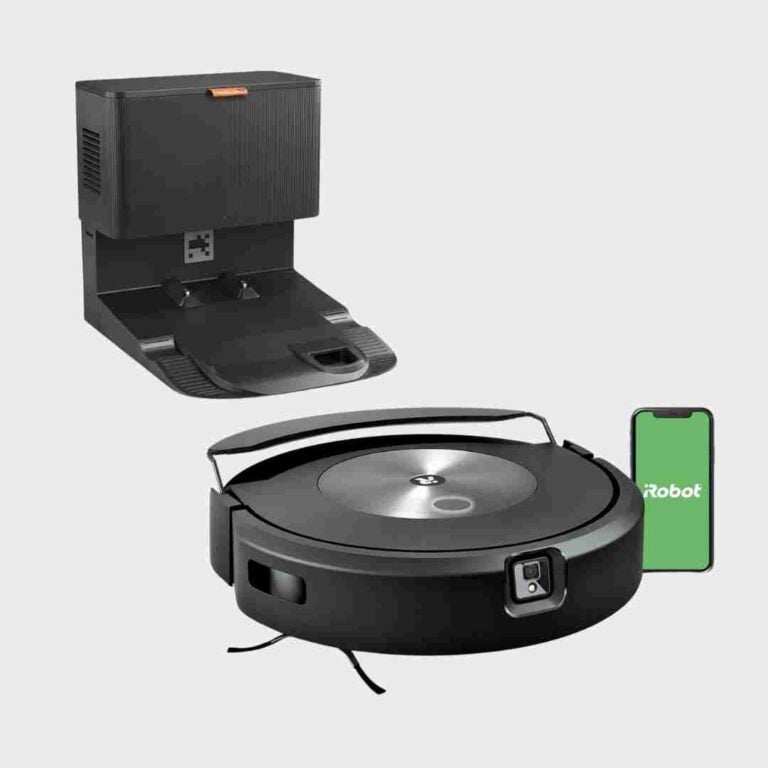
Choose the Roomba Combo j7+ if you want a strong robot vacuum with smart obstacle avoidance and a mop that avoids rugs. Skip it if you need quiet emptying, self-washing mops, or heavy-duty scrubbing.
Best for mixed-floor homes with rugs, pets, and everyday debris where automated vacuuming and avoiding damp carpets matter most. It suits users who value app control and obstacle avoidance more than deep mopping.
Not for buyers who need quiet operation, fully self-cleaning mop maintenance, or strong scrubbing for dried-on stains and heavy spills. It is also less compelling for mostly carpeted homes that do not need mopping.
The Roomba Combo j7+ earns its strongest praise as a vacuum-first hybrid: reviewers repeatedly liked its hard-floor pickup, carpet cleaning, obstacle avoidance, app controls, and retractable mop that keeps rugs dry. The tradeoff is that its mop is more of a maintenance tool than a deep scrubber, and the self-empty dock is repeatedly described as loud. Manual water refills, mop-pad washing, occasional navigation inefficiency, and mixed long-hair results keep it from feeling fully hands-off. Its best case is a mixed-floor home where avoiding wet carpets matters as much as daily debris pickup.
Compared with other Robotic Vacuums, this product is above average in Area Rug Handling, Mop lifting system, Obstacle Avoidance (Robot), near average in AI, Smart, App and Automation, Price and Value, below average in Self-cleaning cycle, Hair Pickup — Hard Floors, Bin and Bag.
| Attribute | This product | Category average | Difference |
|---|---|---|---|
| Self-cleaning cycle | 2.0 | 4.3 | -2.3 |
| Hair Pickup — Hard Floors | 2.5 | 4.4 | -1.9 |
| Bin and Bag | 2.0 | 3.9 | -1.9 |
| Airflow blowback | 2.0 | 3.4 | -1.4 |
| Water tank | 2.5 | 3.7 | -1.2 |
| Area Rug Handling | 4.8 | 3.7 | +1.1 |
| Mop lifting system | 4.8 | 3.9 | +1.0 |
| Obstacle Avoidance (Robot) | 4.4 | 3.6 | +0.8 |
Choose Dreame L20 Ultra Robot Vacuum and Mop. It scores 4.8 vs 2.0 for Airflow blowback, with a 4.1 overall score.
Choose Roborock S8 Pro Ultra Robot Vacuum and Mop. It scores 4.8 vs 2.0 for Self-cleaning cycle, with a 4.0 overall score.
Choose Mova V50 Ultra Complete. It scores 4.7 vs 2.5 for Hair Pickup — Hard Floors, with a 4.5 overall score.
Choose Roomba Combo j9+ Robot Vacuum & Mop. It scores 5.0 vs 3.4 for Hair‑Wrap / Tangle Resistance, with a 4.1 overall score.
Products reviewers directly compared with this model, grouped into quick takeaways.
Reviewers consistently praised the retractable mop system for lifting the pad away from carpets and rugs, making damp carpets unlikely in normal use.
The evidence is stronger for vacuuming. Reviewers liked its debris and pet-hair pickup, while mopping was often described as good for light upkeep rather than deep scrubbing.
Most reviewers found obstacle avoidance very good, especially for cords and pet-related hazards. Several still noted it is not perfect and can miss odd or flat objects.
No. Cleaning noise was often acceptable, but the dock's self-emptying cycle was repeatedly described as loud, startling, disruptive, or jet-engine-like.
The auto-empty dock reduces dustbin work, but reviewers repeatedly noted manual water refilling, mop-pad washing, and occasional hair or debris cleaning.
Yes, based on the reviews. Pet hair pickup, pet-waste avoidance confidence, and obstacle detection were recurring strengths, though heavy shedding can still require maintenance.
These are a few of the reviews included in our analysis.
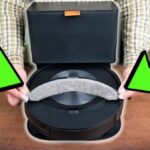

Choose the Eureka J15 Ultra for hands-free vacuuming/mopping, strong suction, edge coverage, and value. Skip it if you need the most advanced obstacle avoidance, compact dock, detergent dispensing, or quieter...
Pros: Kid-friendliness, Reverse cleaning performance
Cons: Solution / Liquid system, Low-profile design
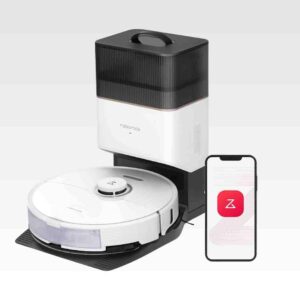
Best for excellent vacuuming, mapping, pet-hair handling, and low-touch daily upkeep. Skip it if you expect deep mop scrubbing, quiet auto-emptying, or premium value in a small or multi-story home.
Pros: Tool-change simplicity, Aesthetic design and finish
Cons: Stair Cleaning, Crevice / Groove Pickup (Hard Floors)
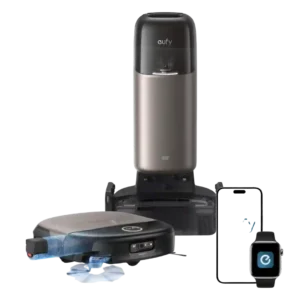
Best for excellent hard-floor mopping, sustained suction and nearly tangle-free hair handling. Skip it if precise edge cleaning, quiet maximum-power operation or flagship value matters more.
Pros: Pet-Ready Features, Filtration / Dust Containment
Cons: Ongoing ownership costs (bags, filters
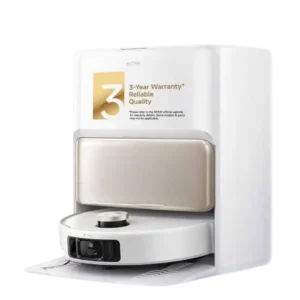
Best for powerful vacuuming, excellent mopping, pet-focused automation, and strong accessory value. Skip it if you need flawless obstacle avoidance, simple plug-and-play software, or the smallest possible dock.
Pros: Accessories and Tools, Hard Floor — Fine Dust Pickup
Cons: Airflow blowback, Scratch resistance