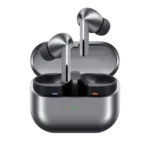
Samsung Galaxy Buds3 Pro Earbuds Feature Scores
Explore all 50 feature scores for Samsung Galaxy Buds3 Pro Earbuds, organized into pros and cons.
Scores by Feature
Summary
50 reviewed features-
Very positive 4.5-5.011 (22%)
-
Positive 3.5-4.428 (56%)
-
Neutral 2.5-3.410 (20%)
-
Negative 1.5-2.41 (2%)
Pros
Sort
-
Reviewers strongly praised the Buds3 Pro's overall sound, often calling it excellent, lively, detailed, or among the best in its class, with only a few tuning caveats.
-
Comfort was a consistent highlight, with reviewers describing the earbuds as light, easy to wear for long sessions, and more comfortable than earlier Galaxy Buds.
-
Equalizer customization was a standout strength, with reviewers repeatedly praising the 9-band EQ and the ability to tune sound globally.
-
Bass was generally viewed as strong, punchy, and satisfying, though a few reviewers found it loud, thumpy, or overcooked depending on volume and preset.
-
Call microphone quality was one of the strongest attributes overall, with many reviewers praising clear, natural calls, though a few measured softer or average results.
-
Midrange clarity was a recurring strength: reviewers heard natural vocals, realistic timbre, defined instruments, and meaningful improvements over earlier Samsung buds.
-
Transparency and ambient modes were a major strength, often described as natural, clear, convincing, and among the best some reviewers had heard.
-
Bluetooth reliability was praised for stable connections, long range, and a lack of dropouts in several tests.
-
Instrument separation was consistently praised, with reviewers hearing layered cues, separated instruments, and fine detail across orchestral, rock, and pop tracks.
-
Water and sweat resistance drew positive comments, especially for workouts and durability, with reviewers treating the IP57 rating as above average or reassuring.
-
ANC was broadly useful but not universally class-leading; some reviewers called it excellent or effective, while others found it merely decent or underwhelming.
-
Treble drew mostly positive comments for clarity, detail, and quick transients, but some reviewers heard fatigue, sharpness, or a darker default tuning that needed EQ.
-
Physical control usability was mixed-to-positive: many liked the pinch and swipe system, while others found the angular stems awkward or tricky.
-
Portability was praised because reviewers found the case small, pocketable, and easy to carry.
-
Touch and swipe responsiveness was strong where tested, especially for volume controls that reviewers called responsive, quick, and useful.
-
Design opinions were split between stylish, distinctive, and functional versus derivative, generic, or gimmicky.
-
Weight comfort was positive, with reviewers saying the light stems helped the buds stay in place and reduced ear pressure.
-
Spatial audio was mixed: some reviewers found it immersive or useful, while others called it hit-or-miss, compressed, or only occasionally worthwhile.
-
The soundstage was described as open, broad, and improved, giving music more separation and breadth than expected from true wireless earbuds.
-
Charging was mostly positive due to USB-C and wireless charging, but the lack of quick charging hurt one reviewer's score.
-
The companion app was important and generally useful for EQ, controls, fit tests, and settings, though some reviewers called it barebones or less intuitive.
-
Frequency response evidence was positive, with one reviewer finding a close Harman-curve match and another saying lab results tracked the target closely except for bass.
-
Setup and software basics were praised where tested, with reviewers calling setup easy and gestures simple once learned.
-
Volume output was considered strong enough for normal and loud listening, though one test noted boominess at higher levels.
-
Microphone noise reduction was split: some reviewers heard strong voice isolation, while others found background clutter or app-based recordings less impressive.
-
Stability ranged from excellent during workouts to weaker in active use, depending on reviewer fit and facial movement.
-
Battery life was one of the most divided areas: some reviewers called it decent or accurate, while others found it short or disappointing versus rivals.
-
Voice assistant and voice-control evidence was mixed: reviewers liked no-wake-word commands, but Bixby and prankable or awkward voice behavior remained concerns.
-
Built-in DAC and hi-res playback drew positive comments for impressive hi-res capability and studio-like detail, while still depending on Samsung support.
-
Auracast support was viewed positively as a forward-looking or standout Bluetooth feature.
-
Value was mixed: reviewers saw a premium, capable product, but many warned against full price or called the cost high.
-
Find My was helpful but imperfect: reviewers liked flashing lights and improved recovery, but disliked imprecision or odd notifications.
-
The integrated microphone design was praised in one review for helping deliver top-notch voice-calling performance.
-
AI translation was mixed: reviewers found it cool or decent, but several questioned whether the earbuds added much beyond the phone feature.
-
Gaming latency was praised in one review after Game Mode delivered phone gaming without noticeable delay.
-
Multipoint and switching worked well inside Samsung's ecosystem, but reviewers disliked that seamless switching was limited outside Samsung devices.
-
Preset EQ quality was praised in one review, especially the Clear preset and Samsung's unusually useful preset choices.
-
USB-C was positively tied to charging convenience in one review that praised USB-C plus Qi wireless charging.
-
Android compatibility was generally favorable, especially for Samsung and broader Android users, though the best experience was still Samsung-centered.
Cons
Sort
-
LDAC support was viewed negatively because reviewers explicitly wished Samsung had included LDAC or noted its absence as disappointing.
-
Multi-platform compatibility was a major weakness because iPhone users lack app support and many advanced features remain Samsung-exclusive.
-
Ear tip size options were a limitation, with reviewers wanting more than the included sizes for a better seal.
-
Maximum-volume clarity was mixed because one reviewer said higher volumes could make bass aggressive and boomy.
-
Codec support was a recurring compromise: Samsung's codec was appreciated, but reviewers criticized the ecosystem lock-in and lack of wider high-res codec options.
-
Sensors and automatic detection features were useful in concept but inconsistent, with some reviewers calling voice detect helpful and others finding adaptive behavior gimmicky or wonky.
-
Carry case quality was mixed: some liked the solid feel, transparency, and click, while others found it cheap-looking, clunky, slippery, or awkward.
-
Lossless or hi-res audio support was valued but limited by Samsung-device requirements and only subtle perceived improvements in some tests.
-
Passive isolation was mixed: a good seal blocked some sound, but reviewers said the design did not isolate as well as deeper in-ear or foam-tip alternatives.
-
Eartip fit was inconsistent: some reviewers got a good seal and comfort, while others criticized difficult removal, fragile tips, or easy dislodging.
-
Build quality was mixed, with some praise for premium materials and great build, but several complaints about plasticky or cheap-feeling finishes.