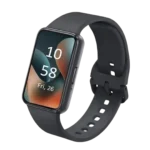
Samsung Galaxy Fit3 Feature Scores
Explore all 67 feature scores for Samsung Galaxy Fit3, organized into pros and cons.
Scores by Feature
Summary
67 reviewed features-
Very positive 4.5-5.022 (33%)
-
Positive 3.5-4.426 (39%)
-
Neutral 2.5-3.48 (12%)
-
Negative 1.5-2.411 (16%)
Pros
Sort
-
Value for money was the strongest consensus: reviewers repeatedly called it brilliant, affordable, or a strong bargain.
-
Display quality was one of the strongest themes, with reviewers praising the AMOLED panel, size, clarity, and vividness.
-
Comfort was a major strength, with most reviewers calling the Fit3 light and easy to wear, though a few disliked strap pressure or fit.
-
Touchscreen responsiveness was widely praised as accurate, fluid, and responsive, with only occasional lag or ASR-noted roughness.
-
Battery life was widely praised as better than most smartwatches, but real-world results varied from about two days with heavy always-on use to a week or more.
-
The user interface was usually described as smooth, clean, fast, and easy to navigate.
-
Design and appearance were strongly positive, with reviewers calling it handsome, elegant, premium-looking, or attractive.
-
Workout mode variety was a clear strength, with reviewers repeatedly noting more than 100 activities and broad coverage.
-
Weight was praised repeatedly; reviewers liked the light body for sleep and all-day wear.
-
Companion app quality was a strength, especially Samsung Health and Galaxy Wearable for clear data, setup, and customization.
-
Outdoor visibility was mostly good, with repeated praise for bright sunlight readability, but a few reviewers said direct sun could be weaker.
-
Blood oxygen tracking was viewed positively, including on-demand readings and close readings against a pulse oximeter in some testing.
-
Reviewers generally found basic activity readings useful and often accurate enough, though the evidence is about broad tracking rather than athlete-grade precision.
-
Durability was generally positive, with water resistance and months of use without visible damage, though scratches were possible.
-
Screen brightness was generally positive, especially auto-brightness and raise-to-wake, though outdoor brightness was not perfect in every review.
-
Smartphone notifications were a strength, with instant notifications, syncing, and comprehensive mirroring mentioned positively.
-
Heart-rate accuracy was one of the better-tracked areas, often close to reference devices, though intense intervals could expose lag or variance.
-
Find My Phone was strongly praised by reviewers who called it handy or a godsend.
-
Workout tracking was broadly praised for casual fitness, though detailed training accuracy was not strong enough for serious athletes.
-
Charging speed was mixed: several reviewers found charging fast, while others found it slow or merely average.
-
Automatic workout detection was split: several reviewers liked it, while others found missed or unreliable detection.
-
Band quality was mixed, with good silicone feel in several reviews but frustration around proprietary strap options.
-
Pairing reliability was generally positive, with quick setup and mostly smooth pairing.
-
Step counts were usually close or good in simple tests, but a few reviewers saw ghost or fake steps, making this mostly positive with caveats.
-
Build quality was praised for a well-made feel and robust aluminum body.
-
Goal tracking and activity targets were motivating, with reviewers liking target prompts and auto-detected activity logs.
-
Music controls were useful for controlling phone playback from the band.
-
Watch face options were mixed: reviewers liked the variety, but limits on loaded or third-party faces reduced flexibility.
-
Cadence tracking scored strongly in one controlled comparison where cadence matched the Apple Watch Ultra 2 exactly.
-
Subscription value was a clear positive where a reviewer praised access to features without extra subscription fees.
-
Button controls were simple and functional, with one reviewer appreciating the single-button return behavior.
-
Guided workouts were valued because Samsung Health training programs were free.
-
Customization options were praised for easy strap or visual customization.
-
Water resistance was praised for peace of mind when swimming and showering.
-
App alerts were part of the positively described notification mirroring package.
-
Bluetooth reliability had positive evidence where the tracker did not fail to reconnect to the smartphone.
-
Health insights were praised through Samsung Health’s engaging advice and data presentation.
-
The alarm function was considered useful, especially with customizable vibration alerts.
-
Breathing exercises were described as useful for regaining balance during stress.
-
Resting heart-rate tracking was described as accurate for basic steady-state monitoring.
-
Swimming tracking received positive feedback for lap and swim-type tracking, though one review lost swim data after a sync issue.
-
Elevation tracking had positive hands-on expectations because the barometer was appreciated for hiking-style use.
-
Fitness coaching evidence was positive where sleep coaching and Samsung Health guidance were described as genuinely useful.
-
The stopwatch was explicitly called useful.
-
The timer was described as handy for everyday reminders.
-
Recovery-style sleep scores were appreciated by some reviewers but questioned by others when the sleep score did not match perceived rest.
-
Cycle tracking was useful to have, but one reviewer considered early predictions too much like estimates.
-
Habit tracking was useful in concept, especially water logging, but one reviewer wanted more flexible input options.
Cons
Sort
-
GPS accuracy was a major limitation because the Fit3 lacks built-in GPS and depends on a phone for better outdoor tracking.
-
Third-party app compatibility was consistently limited, with no app store or installable apps.
-
Stress tracking was one of the weaker health metrics, with reviewers saying it misread calm or stressful moments.
-
Reliability was mixed because some reviewers saw stable daily use while others found firmware instability or lower reliability than Samsung watches.
-
Route tracking was limited or inaccurate without a phone, and reviewers missed reliable maps or route capture.
-
Distance estimates suffered when the tracker lacked reliable phone GPS support, especially on runs without a phone.
-
Data syncing reliability was a real concern in one review because sync failures caused data loss.
-
Sleep apnea monitoring was viewed as a missing advanced capability that would have been useful.
-
Calorie tracking was criticized as too generic for some workout modes rather than deeply useful.
-
Pace tracking was limited by the lack of built-in GPS, with reviewers warning against expecting truly accurate phone-free pace data.
-
The lack of a fuller readiness or energy score was noticed as a drawback compared with higher-end wearables.
-
Call alerts were limited because the Fit3 shows calls but cannot take them.
-
Connected GPS was specifically described as affecting tracking accuracy and proving fiddly in at least one review.
-
Size options were limited, with one reviewer noting essentially one band option.
-
Fit was criticized in one review because putting it on and removing it squeezed the strap against the skin.
-
Text alerts were workable through canned responses, but the experience was not ideal.
-
Charging convenience was mixed because the proprietary cable was sometimes useful but also criticized as custom, dated, or unreliable.
-
Sleep-stage tracking was useful in presentation but inconsistent in accuracy, with gaps or questionable awake-time estimates in some reviews.
-
Sleep tracking drew the most mixed evidence: several reviewers found it good or accurate, while others reported gaps, overestimates, missed wake periods, or low confidence.