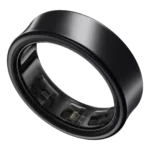
Samsung Galaxy Ring Feature Scores
Explore all 52 feature scores for Samsung Galaxy Ring, organized into pros and cons.
Scores by Feature
Summary
52 reviewed features-
Very positive 4.5-5.010 (19%)
-
Positive 3.5-4.420 (38%)
-
Neutral 2.5-3.416 (31%)
-
Negative 1.5-2.46 (12%)
Pros
Sort
-
Charging convenience was one of the strongest attributes thanks to the portable charging case, though one review noted charging habits can still be easy to forget.
-
Comfort was the strongest point across reviewers, with repeated praise for the light, unobtrusive, sleep-friendly ring form.
-
Battery life was generally a strength, often near a week, though long-term degradation and shorter real-world results appeared in some reviews.
-
Weight was consistently praised, with reviewers calling the ring light, barely noticeable, or easy to forget.
-
Subscription value was a major positive, with reviewers repeatedly appreciating that Samsung does not lock data behind a monthly fee.
-
Design and appearance were usually positive for the sleek, understated ring, though some reviewers found it bulky or not discreet enough.
-
Build quality was broadly praised for titanium, slim hardware, and excellent design, with only isolated durability concerns.
-
Pairing reliability was praised in the few reviews that discussed setup, with seamless or straightforward pairing.
-
Resting and sleeping heart-rate tracking generally scored well, with reviewers finding it close to baselines, chest straps, Oura, or Whoop during sleep.
-
Sleep tracking accuracy was broadly useful but not flawless, with many accurate bedtime or sleep-duration results and some missed sleep, gaps, or bad nights.
-
The Energy or readiness score was often liked as a quick daily signal, though some reviewers found it surface-level, static, or not always aligned with real context.
-
Durability was mixed: some rings held up well or resisted marks, while others scuffed quickly or looked heavily worn.
-
Water resistance was viewed positively in practical use, with reviewers comfortable wearing it around soap, sweat, swimming, and showering.
-
Menstrual cycle tracking had positive evidence, with reviewers reporting close date alignment or successful period prediction.
-
Sleep stage tracking was mixed: several reviewers saw close alignment with Oura or reference devices, while others found inconsistent staging or weak REM/deep-sleep results.
-
Step counting was split, ranging from dead-on or tremendously useful step tracking to outlier days and inaccuracies versus watches.
-
Alarm control was limited but useful where supported, with reviewers finding alarm dismissal or snoozing convenient.
-
User interface evidence was positive where Samsung presented data clearly and gave simple overviews with drill-downs.
-
Goal tracking was praised for clear, motivating heart-style progress visuals, though dynamic target adjustment was limited elsewhere.
-
Stress tracking was useful for broad accountability in some reviews, but one reviewer found it poor at separating cardio strain from stress.
-
Automatic workout detection worked well for some walks and runs but was inconsistent, delayed, or limited for other exercise types.
-
Fit evidence was mostly positive after proper sizing, but reviewers warned about smaller sizing, finger choice, and pressure points.
-
Cadence tracking had limited but positive evidence, matching the Apple Watch Ultra 2 in one test run.
-
Habit tracking evidence was positive where the ring helped a reviewer stay accountable to daily health goals.
-
Third-party or non-Samsung compatibility was mixed, with Android support praised but key features lost outside Samsung phones.
-
Strava compatibility had limited positive evidence because workout heart-rate data could sync to Strava for download.
-
Swimming tracking had limited positive evidence, with one reviewer impressed that the ring auto-detected pool time.
-
Charging speed was mixed, with fast top-ups in some reviews and very slow charging in another.
-
Connected GPS reliability was acceptable when phone GPS was used, but it depends on carrying the phone.
-
GPS accuracy evidence was limited but positive when judged as dependent on the paired phone's GPS.
Cons
Sort
-
Blood oxygen tracking was one of the weaker health metrics, with repeated reports of unreliable, wildly low, or consistently off SpO2 readings.
-
Sleep apnea monitoring was a negative gap where reviewers noted the feature is not available on the ring.
-
Workout mode variety was consistently limited, with repeated criticism that automatic or ring-supported workouts focus mainly on walking and running.
-
Reliability was mixed to weak because several reviewers trusted some basics but questioned the consistency of overall health and fitness measurements.
-
Distance tracking was a common weakness when the ring estimated workouts, with reviewers reporting shortened or inflated runs.
-
Calorie tracking was criticized when limited workout detection caused calorie burn and daily activity totals to be understated or off.
-
Pace tracking suffered when estimated distance was wrong, and one reviewer found walking speed not entirely accurate.
-
Route tracking was limited because the ring lacks onboard GPS and often requires a phone or cannot show a route map.
-
Elevation tracking evidence was negative, with a reviewer reporting far fewer floors climbed than a watch.
-
Workout tracking accuracy was the biggest divide: it worked for basic movement or heart-rate checks in some cases but failed serious gym, cycling, and broader fitness needs.
-
Smartphone notification evidence was negative because the ring provides no on-device buzz, screen, or comprehensive inputs.
-
Activity tracking drew mixed evidence: some reviewers found the basic activity picture comprehensive, while others questioned data quality and regular-activity counts.
-
Customization options were limited, especially around rest days or gesture choices.
-
Activity reminders were only lightly scored, with one reviewer saying phone-based move alerts were easy to miss hours later.
-
Recovery insights were mixed, with useful rest prompts in some cases but limited adjustment or static next steps in others.
-
Value for money was split: no subscription helped, but many reviewers called the ring pricey or best bought on sale.
-
Gesture/button-style controls were novel but limited, with praise for photo/alarm gestures and repeated requests for more actions.
-
Health trend insights were useful for basic or temperature-related awareness but often criticized as light, surface-level, or lacking helpful next steps.
-
Heart rate accuracy was highly context-dependent: resting or simple checks often matched references, while workouts produced spikes, gaps, or poor cycling performance.
-
Coaching evidence was mixed: some sleep or wellness coaching felt thoughtful or helpful for beginners, while other tips were obvious or not beneficial.
-
Companion app quality was mixed: Samsung Health could be organized, approachable, or excellent, but the two-app setup and auto-detection settings confused reviewers.
-
Ring locating was helpful when LEDs or location worked, but limited by no sound, daylight visibility, or Samsung-phone restrictions.