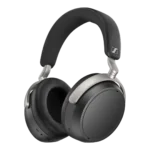
Sennheiser HDB 630 Wireless Over-Ear Headphones Feature Scores
Explore all 72 feature scores for Sennheiser HDB 630 Wireless Over-Ear Headphones, organized into pros and cons.
Scores by Feature
Summary
72 reviewed features-
Very positive 4.5-5.036 (50%)
-
Positive 3.5-4.424 (33%)
-
Neutral 2.5-3.410 (14%)
-
Negative 1.5-2.42 (3%)
Pros
Sort
-
Battery life is a major strength, with reviewers repeatedly praising the roughly 60-hour endurance as class-leading or exceptional.
-
Reviewers overwhelmingly praise the HDB 630 for natural, detailed, audiophile-grade sound, with only a few preference-based caveats around excitement or tuning.
-
Parametric EQ is one of the strongest consensus features, repeatedly described as standout, powerful, class-leading, or among the best in the category.
-
Instrument separation and imaging are one of the clearest consensus wins, with reviewers repeatedly hearing precise placement, layering, and distinct elements.
-
Reviewers broadly recommend the HDB 630 for sound-first buyers, with caveats around ANC, price, bass taste, controls, and portability.
-
Comfort earns broad praise for long sessions and all-day wear, though a few reviewers caution that larger ears or head shapes may feel pressure.
-
Midrange performance is a major strength, with vocals and instruments repeatedly described as clear, lifelike, detailed, and reference-like.
-
The soundstage is widely praised as broad and unusually spacious for closed wireless headphones, though not as open as true open-back designs.
-
The app is repeatedly praised as powerful, feature-rich, and central to unlocking the headphones' best capabilities.
-
The BTD 700 dongle is often praised as valuable or game-changing, but setup, durability, and some call/functionality issues keep it from being flawless.
-
Built-in DAC, USB-C, and hi-res playback support are repeatedly praised for improving clarity, solidity, or wired performance.
-
Treble is mostly judged clear and controlled, though a few reviewers found upper-treble energy or mid-treble dips less ideal.
-
The carry case is widely liked for protection, structure, organization, and build, though some reviewers mention its larger size.
-
Connectivity flexibility is a standout theme, with reviewers praising analog, USB-C, Bluetooth, and dongle-based listening options.
-
Clamp is mostly judged secure without being excessive, with some reviewers noting improved or reduced clamp versus Momentum 4.
-
Bass is generally described as controlled, clean, and punchy rather than exaggerated, but several reviewers note it can feel lean or soft for bass-heavy tastes.
-
Passive isolation benefits from the deeper pads and seal, although heat retention and fit sensitivity can affect results.
-
Value is mixed but favorable for sound-first buyers: the price is high, yet reviewers often credit the sound, features, and dongle with justifying it.
-
ANC is consistently useful and sometimes impressive, but several reviewers say it falls short of the very best Bose, Sony, and Apple options.
-
Call quality is usually strong, with clear two-way voice performance, although microphone use through certain modes or dongles can hurt audio behavior.
-
Software setup and EQ handling are praised for being easy, seamless, or protective against user error.
-
Travel use is helped by comfort, battery life, ANC, wired options, and case, though bulky storage is a caveat.
-
Background hiss is a strength, with reviewers noting no hiss or a dead-silent ANC floor.
-
Charging is praised for fast top-ups and strong charge rate.
-
Build quality is mostly solid, but plastic construction and some rattling or non-premium feel temper the praise.
-
Multi-platform compatibility is framed as a strength across mobile and desktop ecosystems.
-
Touch controls split reviewers: some found them responsive and well implemented, while others called them clumsy, inaccurate, or unreliable.
-
Wind handling is praised both for ANC wind reduction and real-call wind suppression.
-
Advanced features are a clear strength, especially the combination of parametric EQ, crossfeed, adaptive ANC, dongle support, and app controls.
-
Codec support is viewed as a strength, especially because the included dongle expands access to higher-quality aptX options.
-
Microphone noise handling is praised for controlling busy roads, wind, or louder environments without overpowering the voice.
-
Reviewers characterize the tuning as neutral and target-aligned, which supports accuracy but may not suit every casual listener.
-
Voice and tone feedback are generally useful and clear, though one reviewer found the voice prompt character less pleasant.
-
Design reactions are mixed-positive: many like the clean, understated look, while others find it plain, bulky, or less premium-looking than rivals.
-
Earpads are generally considered plush and supportive, but some reviewers note the openings can feel small or constrictive.
-
Channel matching is measured or described as excellent, helping voices and objects locate correctly in stereo.
-
Immersive audio is praised through the HDB 630's deep, enveloping soundstage and precise spatial presentation.
-
Smudge resistance is praised through the fingerprint-free matte finish.
-
ANC processing is credited with preserving the sound balance rather than degrading it.
-
ANC is praised by one reviewer for reducing distractions without hurting clarity, dynamics, or balance.
-
aptX Adaptive support is praised as a meaningful upgrade path for devices that otherwise lack it.
-
Smart listening features such as crossfeed and sound zones are useful for some material, but crossfeed is subjective and can reduce precision for some listeners.
-
Analog input is treated as part of the headphones' unusually flexible wired/wireless connectivity package.
-
Bluetooth performance is judged positively when using the transmitter or Windows, with reviewers noting strong wireless sound.
-
Launch features are viewed as a major selling point rather than an afterthought.
-
Headband adjustment is described as smooth and easy to fine-tune.
-
Included accessories are viewed positively because the package adds meaningful extras beyond the Momentum-style baseline.
-
Integrated microphones are positively described as top-notch for voice capture.
-
Smart Pause performance is praised in the review that tested it directly.
-
USB-C is praised as part of the strong wired listening and charging package, especially because USB-C listening is treated as frustration-free.
-
Wear-detection auto-pause works nicely in the review that tested it, despite broader sensor sensitivity issues.
-
Despite not being the lightest headphones, reviewers say they feel light and comfortable in use.
-
Transparency mode is usable to good, but reviewers who compared it to Apple or Sony found it less natural or less impressive.
-
Latency is fine for everyday video and casual use, but reviewers do not consider it ideal for competitive gaming or some console setups.
-
Headband padding is judged supportive and improved by one reviewer.
-
Fit stability is positive in travel use, with one reviewer noting a secure fit during a flight.
-
One reviewer highlights strong loudness as helping immersion, especially alongside ANC.
-
Android compatibility is acceptable to good in the evidence, especially compared with iPhone codec limitations.
-
The headphones provide enough headroom for useful volume increases without the reviewer flagging strain.
-
Wear/touch sensors are considered consistent overall, though not instantaneous.
Cons
Sort
-
Xbox compatibility is poor in the evidence because the dongle connection is explicitly said not to work on Xbox.
-
Water/sweat resistance is a clear limitation because at least one reviewer warns the headphones cannot be treated as wet-safe.
-
Auracast support is weak in the evidence because the dongle may support it but the headphones themselves did not seem to.
-
Auto on/off behavior is criticized for being too sensitive and powering on after small knocks.
-
Auto-play and wear detection are mixed because the reviewer found on-head detection overly sensitive.
-
Wear detection performance is mixed: Smart Pause can work well, but on-head detection can feel clumsy or too sensitive.
-
Multipoint reliability is mixed, with one reviewer finding a BTD 700 limitation and another noting occasional source-swapping confusion.
-
Portability is mixed: the headphones lay flat and travel in a protective case, but they do not fold inward and the case is bulky.
-
The physical profile is not especially discreet for everyone, with thicker cups creating a more noticeable look.
-
Cup swivel helps portability, but one reviewer says too much swivel can reduce wearing consistency and tonal balance.
-
Premium feel is mixed: some reviewers like the smooth, premium impression, while others say the materials do not fully match the price.
-
Button and gesture usability is mixed, with basic navigation praised but ANC pinch gestures and learning curve criticized.