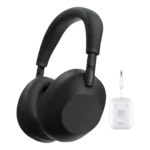
SONY WH-1000XM6 Headphones Feature Scores
Explore all 80 feature scores for SONY WH-1000XM6 Headphones, organized into pros and cons.
Scores by Feature
Summary
80 reviewed features-
Very positive 4.5-5.031 (39%)
-
Positive 3.5-4.427 (34%)
-
Neutral 2.5-3.413 (16%)
-
Negative 1.5-2.49 (11%)
Pros
Sort
-
ANC was the strongest consensus point: reviewers repeatedly called it class-leading, best-in-class, or among the best they had tested.
-
Reviewers broadly praised the XM6 for rich, clear, dynamic sound, with only a few noting rivals can sound wider or more refined.
-
Overall recommendations were strongly positive, with reviewers frequently calling the XM6 elite, best-in-class, or worth buying despite caveats.
-
The carrying case was a standout strength thanks to its compact size, protection, magnetic clasp, and faster access.
-
Travel friendliness was a major strength, supported by strong ANC, comfort, battery life, folding design, and the improved case.
-
Portability and foldability were major upgrades, with reviewers repeatedly praising the return of folding hinges and a smaller travel footprint.
-
Call quality was strongly praised, with reviewers highlighting clearer voice pickup, better mics, and strong performance in noisy settings.
-
EQ customization was one of Sony's strongest feature advantages, with repeated praise for the 10-band EQ, guided EQ, and deep tuning control.
-
Bass was usually described as punchy, controlled, and customizable, though one reviewer found Sony's low end could overpower mids and highs.
-
Transparency mode improved substantially and often sounded natural, though some reviewers still found AirPods Max more realistic or Sony slightly unnatural.
-
Microphone noise reduction was excellent in the evidence, especially against streets, wind, and ambient noise during calls.
-
Long-use comfort was mostly strong, especially for travel, but several reviewers reported heat, pressure, or fit issues for some heads and ears.
-
Physical button usability improved meaningfully, with reviewers liking the distinct power and ANC buttons and easier blind operation.
-
Battery life was viewed as solid and travel-ready at roughly 30 hours with ANC, though not class-leading against longer-lasting competitors.
-
Charging was praised for quick-charge performance and the ability to listen while charging.
-
Midrange and vocal clarity were a consistent strength, with reviewers calling voices clear, textured, natural, and fuller than prior models.
-
Design and aesthetics were mostly praised for a clean, modern, lightweight look, though some reviewers still found the design safe or understated.
-
Smart listening features such as Speak-to-Chat, Quick Attention, and adaptive modes were generally useful, though not universally essential.
-
Multipoint was viewed positively, with reviewers appreciating dual-device pairing across phones, laptops, and mixed Apple/non-Apple setups.
-
LDAC was a clear plus for Android and hi-res Bluetooth playback, though one reviewer warned the highest transfer rate may be unstable on some phones.
-
Ear cup padding was usually praised as soft and well cushioned, though one long-use review found the earpads warm and sweaty.
-
Editorial recognition was strong, with reviewers naming the XM6 a best overall or best new headphone pick.
-
Frequency response and tuning were generally praised as balanced and well measured, especially compared with earlier Sony tuning.
-
Passive isolation was a major strength in lab and hands-on impressions, helping the headphones block substantial noise even before ANC.
-
Advanced software features were plentiful and often impressive, but reviewers sometimes found them excessive, confusing, or underused.
-
Clamping force was generally comfortable and secure, with tighter fit improving isolation without widespread discomfort.
-
Weight comfort was praised where mentioned, with reviewers highlighting the XM6 as very light for premium over-ear ANC headphones.
-
Treble drew mostly positive comments for detail and sparkle, but lab-focused criticism noted some peaks that could need EQ.
-
The 3.5mm input was generally appreciated as a practical wired option, especially because it enables analog listening despite missing USB-C audio.
-
Instrument separation earned positive but limited evidence, with reviewers hearing better placement and clearer separation in the XM6.
-
Fit stability was positive where evaluated, with reviewers noting snug, secure fit and consistent seal behavior.
-
Preset or guided EQ profiles were received positively where discussed, helping users reach a preferred sound without complex manual tuning.
-
Value was mixed: reviewers often said performance justified the price, but the $450 tier, discounts, and missing features were recurring caveats.
-
Android compatibility was a strength thanks to LDAC, Android-friendly hi-res support, and cross-device pairing advantages.
-
Ear cup swivel and rotation were praised for neck comfort, easier storage, and restoring convenience missing from the XM5.
-
Headband padding and shape were mixed: some reviewers found it comfortable, while others criticized thin padding or long-term pressure.
-
Codec support was mostly good thanks to LDAC, SBC, LC3, and AAC, but reviewers noted limits such as missing aptX and some LDAC stability concerns.
-
Auto-play and wear detection performed very well in the available evidence, pausing and resuming immediately.
-
Sensors were praised in the available evidence because the wear sensors performed reliably.
-
Smart Pause worked very well in the available evidence, immediately pausing and resuming playback.
-
Wear detection auto-pause was excellent in the available review, immediately pausing and resuming playback.
-
Wear detection performance was excellent in the available review, with sensors described as as good as ever.
-
Wind handling was praised in microphone testing, where the XM6 rejected unwanted wind noise very well.
-
Features at launch were viewed as very complete in the available evidence, with one reviewer saying the XM6 offers essentially everything expected from premium Bluetooth ANC headphones.
-
Bluetooth performance was discussed positively where reviewed, with connectivity described as a standout area for Sony.
-
Headband adjustability had limited but positive evidence from a reviewer who found the fully extended fit comfortable.
-
The integrated microphone setup was viewed positively in the available evidence as part of the XM6's strong mic technology.
-
Connectivity options were praised for convenient device switching and multipoint behavior.
-
Bluetooth version support was viewed positively in one comparison because the XM6 uses newer Bluetooth with LE benefits.
-
Replaceable pads or headband evidence was limited but positive for earpads, with easier pad removal described as a change for the better.
-
Replaceable earpads were mixed: one source praised easier pad removal, another called replacement difficult, and another simply noted replaceable pads.
-
Aesthetic discretion was mixed: one reviewer liked the low-profile street look, while another thought the headphones looked dorkier than competitors.
-
Latency evidence was limited but positive for wired analog use, where reviewers noted no latency through the headphone cable.
-
Detachable analog cable use was useful for low-latency wired listening, though broader cable quality drew criticism elsewhere.
-
Head gestures had limited but positive evidence, with a reviewer calling nod/shake call control a nice touch.
-
LE Audio readiness was treated as a future-proofing benefit, tied to Auracast and newer Bluetooth features.
-
Build quality was mixed: one review found it very good, while another said the plastic construction felt underwhelming for the price.
-
Hinge durability was mixed: one review praised the more durable hinge, while another flagged fragile-feeling articulating hinges.
Cons
Sort
-
USB-C was the most repeated technical complaint because reviewers wanted USB-C audio or lossless digital playback, not charging-only behavior.
-
Smudge resistance was weak, with reviewers complaining that the darker finishes show finger grease and smudge badly.
-
Repairability was criticized, especially around maintenance options and difficulty replacing parts compared with expectations for a premium product.
-
Cable quality was criticized by one reviewer, who expected better cables for a premium headphone.
-
aptX was criticized because reviewers specifically noted the lack of aptX HD support.
-
Built-in DAC and hi-res wired playback were criticized because reviewers wanted a true digital lossless USB-C option.
-
Ecosystem integration was criticized where discussed because Sony's own ecosystem and PlayStation support felt incomplete.
-
Included accessories were criticized where evaluated because a reviewer expected better and more modern cables for the price.
-
Water and sweat resistance were a weakness because reviewers cautioned there is no IP rating.
-
Streaming service integration for spatial audio was weak, with reviewers noting limited or lost service support despite 360 Reality Audio capability.
-
Setup and software simplicity were mixed-to-negative because spatial setup, app navigation, and feature layout could feel involved or unintuitive.
-
Sidetone adjustment was a weakness for one reviewer because voice amplification sounded unnatural and could not be toned down enough.
-
Premium feel was one of the weaker areas because several reviewers felt the plastic build did not match the high price.
-
Spatial audio was one of the most mixed areas: cinema use sometimes impressed reviewers, but music support, setup, and service availability drew criticism.
-
Multi-platform compatibility was mixed: Apple and Android playback worked, but PlayStation wireless compatibility drew criticism.
-
Voice assistant and voice-command features were mixed, with one reviewer saying they worked well and another finding them inconsistent.
-
Durability over time had limited evidence, with one reviewer specifically worrying about the folding joint's long-term durability.
-
The app drew mixed-to-negative reactions because it is powerful but crowded, aged, or not especially intuitive.
-
Auracast support was mixed: one reviewer saw it as future-proofing, while another could not get it working in testing.
-
Immersive audio quality was mixed: cinema/background modes impressed some reviewers, while others called music upmixing gimmicky or poor.
-
Soundstage was mixed: some reviewers heard nice width, while others found it restricted or weak for competitive gaming.
-
Touch controls divided reviewers: some found them accurate or intuitive, while others called them finicky, easy to nudge, or terrible.