Soundcore Anker Liberty 5 Pro Max Feature Scores
Explore all 50 feature scores for Soundcore Anker Liberty 5 Pro Max, organized into pros and cons.
Scores by Feature
Summary
50 reviewed features-
Very positive 4.5-5.09 (18%)
-
Positive 3.5-4.429 (58%)
-
Neutral 2.5-3.411 (22%)
-
Negative 1.5-2.41 (2%)
Pros
Sort
-
Call quality is the standout consensus strength, with many users saying callers heard them clearly in cars, gyms, cafés, amusement parks, and noisy work settings. A few mixed reports exist, but the overall pattern is unusually strong.
-
Microphone noise rejection is repeatedly described as exceptional, often hiding wind, traffic, tools, vacuums, water jets, or public noise from callers. A small minority still heard muffling in very noisy environments.
-
ANC is one of the product’s biggest wins, with repeated praise for commute, airplane, gym, household, and street-noise performance. It is strongest on low-frequency rumble, though voices and certain real-world situations can still break through.
-
Most listeners found the Liberty 5 Pro Max energetic, detailed, and enjoyable after tuning, with many owners calling the sound excellent. The main split is the default profile, which some found rich and powerful while others heard it as muffled or only good, not great.
-
Overall sentiment is positive, with many owners calling these premium, impressive, or among the best earbuds they have used. Negative reactions center on sound tuning, AI subscription expectations, case reliability, and a few defective or disappointing units.
-
Stability is strong for workouts, walking, and daily use, with several users saying the buds stay put. Secure fins are a major reason the larger design works.
-
The Soundcore app is a major strength for customization, with EQ, HearID, ANC controls, fit tools, and many extras. One customer strongly disliked the app layout and felt too much of it was ads.
-
Three-device multipoint is a major convenience for people moving between phones, tablets, laptops, and work devices. The main tradeoff is that full LDAC quality is not available when all three connections are active.
-
Voice commands are a useful surprise, responding quickly without needing a wake word in several tests. They are especially appealing when hands are busy, though they share processing limits with other AI sound features.
-
EQ flexibility is excellent, and HearID helps tame the default bass-heavy sound for many users. The biggest caveat is that some bass complaints persist even after adjustment.
-
Comfort is generally strong for a larger bud, especially once the right fins and tips are fitted. A few people disliked the in-ear feel, itchiness, or bulk when sleeping, so ear shape matters.
-
Charging is a practical strength, with fast top-ups, USB-C, and wireless charging all mentioned positively. There are isolated hardware complaints, including one earbud not charging correctly.
-
The physical seal helps these earbuds block a lot of outside sound before ANC even gets involved. Several comments credit the snug in-ear fit for making noise reduction feel especially strong.
-
Battery life is usually described as solid, with fast everyday endurance and good case reserves. Heavy feature use, the case screen, LDAC, voice control, or ANC can bring runtimes down, and a few owners reported poor battery experiences.
-
Tip selection is generous, with five sizes repeatedly mentioned. That flexibility helps users get a better seal for comfort, ANC, and stability.
-
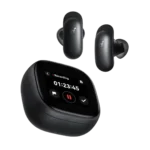
The touchscreen case is both the signature feature and a recurring source of complaints. Many loved controlling modes from the case, but lag, freezes, scratches, bulk, and durability worries show this first-gen idea is not fully polished.
-
The design gets credit for premium-looking finishes and distinctive colors. Not everyone likes the larger, unusual earbud shape, but the overall look is often seen as high-end.
-
Preset sound modes can help reshape the tuning quickly, especially Clear Vocals or balanced options. They are useful shortcuts for people who do not want to build a full custom EQ.
-
Earbud touch controls are mixed: several found them precise and responsive, while others struggled with accidental slides or awkward tap areas. The case touchscreen also has occasional lag or freezes.
-
Transparency mode is more divisive than ANC. Some found it natural and clean, while others called it weak, hissy, or much worse than AirPods and Samsung pass-through modes.
-
Fit is generally secure, helped by ear fins and multiple tip choices. The main negatives are itchiness, dislike of in-ear pressure, and needing careful positioning in wind or while sleeping.
-
Instrument separation is a bright spot when the tuning works well, with listeners picking out vocals, guitars, and subtle instrument detail. It helps the earbuds feel clearer than their bassy default profile might suggest.
-
Vocals and instruments often come through cleanly, especially after EQ or HearID adjustments. The main complaint is that the bass-forward tuning can sometimes push midrange clarity back.
-
Volume output is strong enough for users who want a fuller, louder presentation. One tester especially liked that ANC made audio feel more detailed and full.
-
Hi-res and AI enhancement features can make compressed or lower-quality audio feel cleaner and fuller. They are useful extras, but they do not replace true lossless playback or guarantee audiophile sound.
-
At their best, the earbuds can sound very clear and get loud, but clarity at higher settings is not unanimous. One owner found music less clear and muddy when pushed.
-
Bluetooth reliability is mostly positive, with instant pairing and no issues for some owners. A few users reported connection instability or trouble connecting to a computer, so it is not flawless.
-
Setup and software are powerful but not always simple. Some praised reliable app tools and privacy controls, while firmware hiccups, feature learning curves, and cloud processing limits frustrated others.
-
Depth and surround are good enough to make music feel spacious for some listeners. Still, the stage is not consistently described as expansive compared with more audiophile-focused earbuds.
-
Sweat and water resistance are treated as solid for workouts and everyday use. The IP55-rated buds give buyers more confidence for gym sessions and light rain.
-
Android users benefit from Fast Pair, LDAC, and reported success with Samsung and Honor phones. The best Android experience comes when users accept the LDAC and multipoint tradeoffs.
-
The included tips and fins are appreciated because they make fit adjustment easier. Buyers get enough sizing options to dial in seal and stability.
-
Wear detection is a convenient touch, pausing audio automatically when the buds are removed. It adds to the sense that the app and sensors are feature-rich.
-
Codec support is broad enough for the price tier, with SBC, AAC, and LDAC covering both iPhone and Android use. The limitation is that higher-quality modes can conflict with multipoint or other processing features.
-
The case can store raw recordings before syncing, which is useful for meetings away from the phone. Transcription and summaries still depend on later processing, so the offline benefit is limited.
-
The measured tuning leans heavily above the preferred bass target, especially around the low end. That makes the sound fun for some, but less accurate for neutral listeners.
-
Apple users get good AAC sound and stable connectivity, but not AirPods-style automatic switching. The Pro Max works well across Apple devices while still feeling less integrated than Apple’s own earbuds.
-
The earbuds and case remain pocketable, but the Pro Max case is noticeably heavier than the standard version. That extra weight is part of the tradeoff for the screen and case hardware.
Cons
Sort
-
Spatial audio is polarizing. Some enjoyed the larger presentation, while others felt Dolby processing hurt music or compared poorly with rival spatial modes.
-
Lossless support is limited by Bluetooth and platform constraints. The review specifically notes that iPhones stay on AAC rather than a lossless wireless option.
-
Portability is the clearest case-related compromise. Some testers still fit it easily in jeans pockets, while others found the Pro Max case chunky, bulky, or less comfortable to carry.
-
Find My support is useful for iPhone owners, but one customer complained that locating the buds through sound was not available as expected. The tracking story is helpful, not perfect.
-
The stage has enough space for casual listening, but several audio-focused testers found it more compact than premium competitors. It can feel slightly closed-in rather than wide and airy.
-
Build quality impressions range from premium to disappointing. Several testers praised the finish and solid feel, while others criticized plastic materials, rattles, or a fragile-looking case screen.
-
Value depends heavily on whether the case screen and AI notes fit your life. Many felt the feature set justifies the price, while others saw the $60 Max premium, subscriptions, or sound compromises as hard to justify.
-
Treble is generally smooth rather than harsh, but it is not the strongest part of the sound. Some testers wanted more brilliance, presence, or cleaner top-end detail.
-
Bass is a defining part of the tuning: fans liked the punch and depth, but several testers said the default curve is too bass-heavy. A few felt the low end becomes bloated or muddy even after EQ work.
-
LDAC is appreciated by Android users who want higher-resolution wireless audio, but it comes with practical tradeoffs. It is unavailable with three-device multipoint and does not help iPhone users.
-
Translation works well enough for simple travel or controlled conversations, especially with the case acting as the other person’s mic and speaker. The weak points are lag, button pressing, missed words, and a few reports of the case mic failing.
-
AI note-taking is the Pro Max’s biggest differentiator, and it can be genuinely useful for meetings, lectures, interviews, and summaries. It also draws the strongest complaints because it may require the case mic, has subscription limits, and can misidentify speakers or fail on some units.