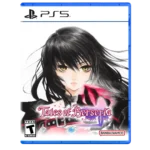
Tales of Berseria Remastered Feature Scores
Explore all 85 feature scores for Tales of Berseria Remastered, organized into pros and cons.
Scores by Feature
Summary
85 reviewed features-
Very positive 4.5-5.028 (33%)
-
Positive 3.5-4.424 (28%)
-
Neutral 2.5-3.413 (15%)
-
Negative 1.5-2.418 (21%)
-
Very negative below 1.52 (2%)
Pros
Sort
-
The cast is the most consistently praised element after the story, with strong chemistry, memorable personalities, and unusually compelling anti-hero dynamics.
-
The revenge story is the clearest consensus strength, praised for its darker perspective, twists, emotional weight, and willingness to center morally gray characters.
-
The revenge story repeatedly lands with real emotional force; reviewers describe tears, goosebumps, poignancy, and a strong attachment to Velvet’s journey.
-
Velvet is overwhelmingly praised as a distinctive, compelling anti-heroine whose anger, vulnerability, and growth give the story its identity.
-
Bundled DLC is one of the remaster’s clearest wins: most reviewers liked getting the original costumes and extras included, especially for newcomers.
-
Voice work is a major strength, especially the performances behind Velvet and the main cast, though one reviewer strongly preferred Japanese audio over the English dub.
-
Despite its darker tone, Berseria still feels recognizably Tales, retaining the series’ charm, party chemistry, visual identity, and action-RPG character.
-
Encounter toggles, difficulty controls, Grade Shop modifiers, button mapping, and other conveniences give players strong control over how demanding or time-consuming the journey feels, though one review noted the lack of colorblind modes.
-
The anti-hero revenge structure and morally gray party help Berseria stand apart from the brighter, more traditional hero stories associated with the series.
-
Soul management, Break Souls, combo trees, and character-specific systems can create satisfying tactical depth, though some critics think the systems do not always harmonize.
-
Reviewers who clicked with the battle system found fights fast, satisfying, and highly engaging, with especially strong moment-to-moment action.
-
Skits, banter, and party conversations are often funny, warm, and character-rich, though one remaster review noticed awkwardly compressed dialogue timing.
-
Character growth is one of Berseria’s strongest qualities, especially Velvet’s arc and the way major party members evolve across the story.
-
The anime and watercolor-inspired art direction continues to hold up well, with reviewers praising its style even when textures and environments look dated.
-
Berseria’s darker, morally gray tone is a standout strength, giving the familiar Tales formula a more mature and emotionally charged identity.
-
The story’s moral ambiguity, revenge themes, free-will questions, and philosophical framing give reviewers more to think about than a typical straightforward hero narrative.
-
Autosave is a welcome modern convenience that reduces the risk of lost progress and makes the long RPG easier to play casually.
-
The supporting party is praised for distinct motivations, chemistry, banter, and storylines that make them more than simple companions to Velvet.
-
Even reviewers who criticize the remaster often still call Berseria itself fun, entertaining, or a must-play first experience.
-
New objective markers, collectible icons, and minimap changes are genuinely useful, although a few reviewers found them inconsistent or absent when most needed.
-
Midgand’s moral conflicts, regional stories, and changing societies give the setting a stronger sense of history and consequence than its plain environments suggest.
-
Most versions feel smooth and responsive in combat, but one Switch review reported severe input lag that made both fighting and exploration unwieldy.
-
Modern versions generally load faster, with several reviewers calling the improvements noticeable or nicely brisk.
-
Minigames, battle arenas, collectibles, exploration rewards, and other side activities help break up the main loop and give the package welcome variety.
-
The 20% movement-speed boost is one of the most appreciated QoL changes, though some reviewers still find traversal floaty, sluggish, or detached from the world.
-
Encounter toggles and Grade Shop XP boosts make grinding far easier to control, a widely appreciated convenience for story-focused or returning players.
-
Combat is the biggest point of disagreement: many reviewers love its speed, combo freedom, and risk-reward systems, while others find it button-mashy, overcomplicated, poorly balanced, or repetitive.
-
Earlier and less restrictive travel tools are a meaningful improvement, though some reviewers still found warping limited or awkwardly structured.
-
Character and battle animation was praised as smooth and effective, even when other visual elements still showed the game’s age.
-
Battle effects and flashy ultimate attacks add energy and spectacle to the real-time combat.
-
Berseria’s anti-hero lead, darker story, and freer combat represented meaningful departures from older Tales conventions that several reviewers still appreciate.
-
PS5 performance is usually smooth, while PC and especially Switch reports are more variable; the harshest Switch review described serious input-lag and image-quality problems.
-
Characterization and emotional writing are often excellent, especially around Velvet and the party, but a few reviewers criticize tropey sections, weaker villains, or missed thematic opportunities.
-
The soundtrack divides reviewers more than the story or voice acting: some rank it highly, while others call most of it average or forgettable outside standout themes.
-
New icons and clearer indicators improve navigation and inventory clarity, but older build menus can still feel convoluted.
-
Arte and combo customization gives combat meaningful flexibility, letting players experiment with large move sets and different strings.
-
Boss opinions were split: several reviewers enjoyed the stronger encounters, while another found boss battles uninspired.
-
Costumes and cosmetic options are fun and plentiful, but deeper build customization can feel limited or inflexible in places.
-
Strong art and music can bring Midgand to life, but pop-in and dated environmental presentation can noticeably break immersion.
-
The visual picture is mixed: the anime style still looks appealing and some remaster versions are crisp, but many reviewers see only minor upgrades and Switch can look noticeably worse.
-
Portable Berseria is a major selling point for some reviewers, but Switch-specific image quality, 30fps limits, and one severe input-lag report make handheld recommendations platform-sensitive.
-
Quality-of-life tweaks add welcome smoothness, but dated assets, unresolved rough edges, and the small scale of the update keep the remaster from feeling comprehensively polished.
-
A physical release with extra presentation value was specifically appreciated by a longtime Tales fan.
-
Equipment enhancement earned praise for making dropped materials useful and giving gear management a satisfying purpose between battles.
-
New objective and collectible indicators make the minimap more useful and reduce friction when tracking goals and pickups.
-
Local battle multiplayer is welcomed as a useful extra, though it is described as serviceable rather than essential.
-
Some reviewers think the game teaches its mechanics well, while others find the explanations confusing or insufficient for the combat’s complexity.
-
Collectibles, Katz rewards, treasure, and other field pickups add small reasons to explore otherwise straightforward spaces.
-
The Soul system’s give-and-take creates an enjoyable resource rhythm when earning and spending Souls is working well.
-
Local battle co-op is functional and welcome for players who want to share fights, but it is not presented as a major reason to buy.
-
The combat camera was described as mostly well behaved, helping the fast battle system keep a cohesive flow.
-
Battle multiplayer was described as serviceable but superfluous: usable for shared play, yet far from central to the experience.
Cons
Sort
-
Dungeon design is one of the clearest weaknesses, repeatedly described as linear, bland, maze-like, repetitive, or too long.
-
Environments are widely criticized as bland, sparse, low-detail, or dated, especially beside the stronger character models and art direction.
-
Technical polish varies sharply by platform. PS5 reports are often smooth, while Switch reviews repeatedly mention pop-in, flicker, shimmering, and other visual glitches.
-
Exploration is often dragged down by backtracking, long corridors, repetitive dungeons, and repeated fights, although faster movement and encounter toggles improve it in the remaster.
-
Enemy variety is a recurring weakness in dungeons, with repeated foes and samey encounter waves undercutting otherwise lively combat.
-
Repeated objectives and forced backtracking can turn progression into a routine trek through already visited maps.
-
Companion AI is a weak spot, with basic behavior and unreliable healing leaving the player to handle much of the important decision-making.
-
Velvet’s power is a recurring balance problem in the more critical combat takes, where her Break Soul loop can make other party members feel unnecessary.
-
The darker story includes death, killing, child-directed violence, and revealing costumes, making it a more mature Tales entry than some reviewers expected.
-
The revenge plot’s violence, mature themes, and occasional revealing costumes make this a less family-friendly Tales entry than the series’ lighter adventures.
-
The dominant complaint is that this feels more like a port or convenience-focused rerelease than a transformative remaster. The QoL work is useful, but many existing owners see too little reason to rebuy.
-
One detailed review found the endgame side content rushed, typo-heavy, and noticeably less polished than the main story.
-
One PC-focused review went beyond calling the remaster unnecessary and described the commercial proposition as potentially predatory for existing owners.
-
Party and enemy AI drew criticism for being basic, with players often expected to do most of the meaningful work themselves.
-
Facial models can still look stiff, one of several presentation details that make the game’s older technical foundation visible.
-
Berseria is notably linear rather than truly open, and a couple of reviewers felt the zones were smaller or more constrained than they first appeared.
-
Difficulty can swing too far toward easy when Grade Shop bonuses or Velvet’s strongest loops are used, while harder settings do a better job exposing the combat’s strategic depth.
-
The lack of PS4 save transfer was called a missed opportunity for returning players considering the remaster.
-
One review specifically criticized repeated tasks and story padding for making the adventure feel longer than its central conflict needed.
-
One review specifically lamented the absence of a meaningful side-quest system alongside the game’s uninspired dungeon structure.
-
One repeat player felt the magic faded on subsequent runs and explicitly recommended experiencing Berseria once rather than replaying it repeatedly.
-
Menu impressions are mixed: new item indicators can help, but build management, DLC claiming, and some older interfaces are still cumbersome.
-
Value depends heavily on ownership: newcomers often get the best package with bundled DLC and QoL upgrades, while existing PS4/PC owners repeatedly see little reason to pay again.
-
Dungeon puzzles are usually considered simple or underdeveloped, with only occasional later sections standing out positively.
-
One reviewer felt the long combat-exploration-upgrade cycle stopped introducing enough new systems to stay fresh through the full runtime.
-
Audio opinions are mixed: battle effects can be excellent, but some remaster versions have distracting menu mixing or unusually loud effects.
-
The opening combat hours can feel overwhelming as Artes and interconnected systems arrive before every player feels comfortable with them.
-
Gear and ability systems can support steady growth, but several critics see them as shallow, overly menu-heavy, or unnecessary because combat can be trivialized.
-
Combat can be approachable at first yet overwhelming as systems stack up; reviewers disagree on whether the tutorials and gradual introductions make that complexity manageable.
-
Story pacing is often strong, but repetitive dungeons and backtracking can interrupt emotional highs; the remaster’s faster travel helps without eliminating the issue.
-
Progression has useful depth through equipment, Grade Shop options, and evolving combat choices, but some reviewers feel growth is muted because the game can be too easy or bonuses too incremental.
-
Bringing Berseria to Switch and Xbox expands access, but missing upgrade paths, sparse PC options, screenshot restrictions, and no native Switch 2 version disappointed some reviewers.
-
Performance is strong on PS5 in several reviews, but Switch impressions are much less consistent, with 30fps caps and occasional dips drawing criticism.