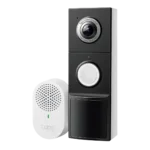
Tapo D225 Smart Video Doorbell Camera with Chime Feature Scores
Explore all 49 feature scores for Tapo D225 Smart Video Doorbell Camera with Chime, organized into pros and cons.
Scores by Feature
Summary
49 reviewed features-
Very positive 4.5-5.015 (31%)
-
Positive 3.5-4.425 (51%)
-
Neutral 2.5-3.45 (10%)
-
Negative 1.5-2.44 (8%)
Pros
Sort
-
Subscription value was a major strength because smart alerts and local recording are largely available without mandatory monthly fees.
-
The wide, head-to-toe field of view was one of the most consistently praised strengths across reviews.
-
Price and value were among the strongest themes, with reviewers repeatedly calling the D225 affordable, feature-packed, or a bargain.
-
Recording was a headline strength thanks to wired 24/7 recording and strong clip controls, though one review found CVR not fully Nest-like.
-
Reviewer recommendations were broadly positive, especially for buyers prioritizing value, local storage, and wide 2K coverage.
-
Storage was a major strength, especially free local microSD recording and the ability to avoid cloud dependence.
-
Dual-power flexibility was a major strength, especially for buyers who can hardwire while keeping battery backup.
-
Pre-roll was praised for capturing context before motion and helping avoid incomplete event clips.
-
Video quality was consistently praised for sharp 2K detail, though one comparison found it close to the cheaper D210.
-
Ring Call was a standout communication feature because it made answering the door faster and harder to miss.
-
Notifications were commonly praised as quick, accurate, or relevant, with occasional false-alert caveats.
-
Installation was mostly described as easy, though one reviewer was briefly confused by the mounting bracket setup.
-
Reviewers liked the free AI detection and generally found smart detection strong, though one reviewer reported some false alerts.
-
Motion detection was broadly seen as strong and quick, though false alerts kept it from being perfect.
-
Night vision was generally useful, especially infrared or color night modes, but reviewers criticized weak spotlight illumination and color-night tradeoffs.
-
System completeness was praised because reviewers saw the feature set as comprehensive for a doorbell at this price.
-
Activity zones were praised for narrowing notifications and customizing alert types, though one review wondered whether the feature could be overkill.
-
Package monitoring was praised for keeping packages in frame and producing quick package-related alerts.
-
Ownership costs were viewed favorably because local storage and optional subscription plans reduce recurring-cost pressure.
-
General reliability was positive, with reviewers reporting good performance and only a few hiccups.
-
Object and person detection was often praised for identifying people, packages, vehicles, or pets, but false alerts appeared in one review.
-
Automation evidence was positive, especially with Amazon/Alexa routines that triggered reliably and with little delay.
-
Reviewers connected the doorbell’s monitoring and communication features with added household peace of mind.
-
Two-way talk was viewed as useful and clear overall, with one caveat that recorded conversation audio captured only the doorbell side.
-
Smart-home integration was useful with Alexa, Google, Amazon, and Tapo, but HomeKit limitations reduced the score.
-
The app was praised for useful controls, quick loading, and a nice interface, but reviewers also noted old-school setup, minor bugs, and app-fit caveats.
-
The included chime was loud, customizable, and quick to set up, but Always On/CVR limits use of an existing chime.
-
Battery life was praised as strong, but charging is less convenient because the whole doorbell must be removed.
-
Personalization was a positive, especially LED appearance changes and extensive app customization.
-
Theft and tamper protection was viewed positively because anti-theft behavior and reset protection were called out as useful.
-
Lag evidence was mostly positive when hardwired or integrated with Amazon, while battery mode showed more delay.
-
Quick replies were treated as useful for communicating when the owner cannot or does not want to talk live.
-
Security ecosystem integration was positive, with reviewers pointing to Tapo’s broader ecosystem and smart-home connections.
-
Privacy-related evidence focused on useful privacy-mode behavior rather than a full audit of data practices.
-
The D225 earned praise for offering continuous/local-style functionality without needing a separate hub.
-
The included hardware was praised as complete enough for installation without hunting for extra basics.
-
Light controls were useful, but color-night-vision lighting could add distortion and was not universally ideal.
-
The LED color customization was treated as a small but enjoyable way to change the doorbell’s appearance.
-
Weather tolerance had limited but positive evidence through CNET’s pro-level mention of the high IP66 rating.
-
Upgrade value was context-dependent: the D225 is worth more for wired/CVR use, but less compelling if used only on battery.
Cons
Sort
-
Design was the clearest aesthetic weakness, with reviewers calling it homely, garish, awkward, bulky, or not as nice looking.
-
Size and form factor were criticized because the unit is bulky, large, or a honker compared with some rivals.
-
Face recognition was a weak point because reviewers explicitly noted it is missing.
-
RTSP was a downside because one reviewer specifically called out its absence.
-
Porch/spotlight brightness was mixed to weak: it could be too bright close-up yet still insufficient for distant night detail.
-
The lens was considered usable but imperfect, with reviewers noting fisheye distortion or soft edges.
-
Wi-Fi evidence was limited and mixed because one reviewer flagged 2.4GHz-only support as a constraint.
-
Snapshot capture was treated as optional rather than essential because the reviewer felt the camera loaded quickly without rich snapshots.
-
Physical controls were partly praised for reducing app dependence, but the doorbell button/icon visibility drew criticism.