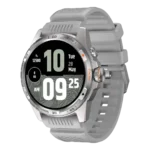
Ticwatch Atlas Feature Scores
Explore all 53 feature scores for Ticwatch Atlas, organized into pros and cons.
Scores by Feature
Summary
53 reviewed features-
Very positive 4.5-5.08 (15%)
-
Positive 3.5-4.428 (53%)
-
Neutral 2.5-3.410 (19%)
-
Negative 1.5-2.47 (13%)
Pros
Sort
-
Battery life is the strongest consensus point, usually delivering multi-day endurance and repeatedly beating typical Wear OS expectations.
-
Software smoothness is a major strength, with reviewers repeatedly reporting snappy, fluid performance and little lag.
-
Durability is one of the Atlas' clearest strengths, with scratch resistance, rugged construction, and water tests holding up well.
-
Display quality is generally strong thanks to the dual-layer setup, though a few reviewers note washed-out colors or less premium vibrancy.
-
Outdoor visibility is a standout, with multiple reviewers saying the display or low-power layer remains readable in daylight.
-
Charging speed is mostly praised for fast top-ups, despite one reviewer calling it unimpressive.
-
Comfort is widely positive despite the large case, helped by soft straps and manageable weight.
-
Workout variety is strong, with reviewers consistently citing broad sports coverage and more than 100 modes.
-
Water resistance performs well in reviewer use, including swim and submersion experiences.
-
Call handling is well regarded, with good clarity and useful wrist calling in practical situations.
-
Value is context-dependent: discounts make it attractive, but several reviewers prefer cheaper or more polished alternatives.
-
Heart-rate accuracy is mostly positive in controlled or everyday use, but a few workout tests showed meaningful under- or over-reporting.
-
The band is mostly comfortable, grippy, breathable, and secure, though reviewers note limited 24mm options and some less-premium feel.
-
Overall health tracking is generally useful and often accurate, but heart-rate reliability and insight depth remain uneven.
-
Design draws mixed-to-positive reactions: many like the rugged look, while others find it bland, bulky, or too familiar.
-
Auto-detection is generally praised for quickly recognizing walks or exertion, with only minor limits around passive workout context.
-
Build quality is consistently strong, with reviewers praising the premium feel, metal construction, and sturdy rugged case.
-
Customization is praised across watch faces, tiles, complications, and low-power display settings.
-
Smartwatch features are broad and useful, but the experience is weakened by missing Assistant support and ecosystem tradeoffs.
-
GPS accuracy divides reviewers: some found routes solid or Apple Watch-like, while others saw sluggish lock-on and overreported distance.
-
Button controls are mostly liked for the crown and haptics, though one reviewer found rotation missing and another found sensitivity uneven.
-
Touchscreen responsiveness is strong in the few reviews that tested it directly.
-
Materials feel sturdy and high-end for the price, though one reviewer notes the Atlas still lacks true top-end premium feel.
-
Third-party app support is solid through Wear OS and the Play Store, with Strava, Spotify, and other apps working well.
-
Brightness is usually acceptable or strong outdoors, but some reviewers found the screen less vibrant or dimmer than premium rivals.
-
Sleep tracking is mixed: some reviewers found it accurate or aligned with other devices, while others saw wake time counted as sleep.
-
Reliability is mostly good, with stable performance and few freezes, but phantom vibrations and one watch-face glitch appear as caveats.
-
Calorie tracking is considered useful and close enough to comparison devices for everyday fitness understanding.
-
Menu navigation is mostly easy and clearly defined, with the crown and gestures making everyday use straightforward.
-
Onboard music support is useful, with storage and Spotify offline playback helping phone-free workouts.
-
Notifications are useful and customizable overall, though one reviewer experienced unexplained vibrations.
-
Safety features are appreciated in principle, but fall detection produced multiple accidental triggers for some reviewers.
-
Fitness tracking accuracy is mixed, ranging from strong everyday results to concerns about GPS and heart-rate accuracy for serious training.
-
Step counting gets limited but positive support, with one reviewer finding it surprisingly consistent.
-
Google app integration and Mobvoi's improving app layer are viewed as useful, though not as polished as leading ecosystems.
-
Blood oxygen results are mixed: some readings matched reference devices, while others produced erratic or dodgy spot readings.
Cons
Sort
-
Voice assistant support is the clearest smart-feature drawback because reviewers repeatedly complain that Google Assistant is missing.
-
Size options are poor because the Atlas comes in one large size and several reviewers warn it is not for small wrists.
-
Cross-platform support is limited because reviewers note Android-only use and no iPhone compatibility.
-
Recovery insights are weak, with reviewers saying suggestions felt off or required third-party apps.
-
ECG support is a weakness because one reviewer specifically notes that the Atlas lacks an ECG sensor found on rival Wear OS watches.
-
LTE is a clear limitation because one reviewer calls it the only glaring omission.
-
Charging convenience is a recurring weak spot because reviewers dislike the proprietary pogo-pin setup, loose connection risk, or USB-A cable.
-
Coaching is underdeveloped, with one reviewer wanting a more complete fitness feature suite instead of relying on outside apps.
-
Wellness insights are basic, with reviewers saying the data exists but requires too much digging and offers limited interpretation.
-
The user interface is mixed to weak, with reviewers criticizing drab visuals, too many Mobvoi apps, or boring animations.
-
Music control integration is limited because one reviewer wanted playback control inside TicExercise instead of leaving the workout app.
-
Operating system experience is the most repeated tradeoff: Wear OS works, but update uncertainty and older software hurt confidence.
-
Mapping and navigation are mixed: Google Maps and heat maps help, but reviewers want stronger native offline mapping and training tools.
-
Pairing reliability is mixed because setup is easy once started, but app handoff between Mobvoi and Wear OS can be confusing.
-
Watch face quality is split, with some reviewers loving the selection while others call Mobvoi's faces uninspiring or terrible.
-
Fit is context-dependent: some reviewers find it comfortable, while others warn that the large body can be awkward or too big.
-
The companion app is functional and sometimes informative, but several reviewers find it barebones, sluggish, or visually unimpressive.