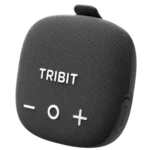
Tribit StormBox Micro 3 Feature Scores
Explore all 42 feature scores for Tribit StormBox Micro 3, organized into pros and cons.
Scores by Feature
Summary
42 reviewed features-
Very positive 4.5-5.028 (67%)
-
Positive 3.5-4.47 (17%)
-
Neutral 2.5-3.45 (12%)
-
Negative 1.5-2.42 (5%)
Pros
Sort
-
Magnetic mounting was the most widely praised design upgrade, with reviewers repeatedly calling it strong, versatile, clutch, and genuinely useful.
-
EQ customization was one of the most consistently praised features, with reviewers valuing presets, nine-band control, and custom tuning.
-
Reviewers repeatedly described the Micro 3 as practical and easy to use in daily life, travel, outdoor, and desk scenarios.
-
Most reviewers praised the tonal balance as fuller, punchier, and cleaner than expected from a tiny speaker, with only XBass/muffled tuning caveats.
-
The strap was praised as durable, secure, and useful for bikes, backpacks, and other non-magnetic mounting situations.
-
Price/value was strongly praised across reviews, especially at sale pricing, with multiple reviewers calling it competitive or a bargain.
-
Battery life was one of the strongest points, with reviewers calling the 24-hour claim impressive and reporting strong real-world endurance.
-
Drop durability received strong praise, including no-damage drop experiences and repeated confidence that the speaker is built for outdoor use.
-
Charging speed was consistently praised, especially the quick top-up performance and faster charging versus the prior model.
-
Value-for-money sentiment was extremely strong, with reviewers calling it one of the best values or a major win at its price.
-
Build and cabinet quality were praised as dense, premium-feeling, resistant, and helpful for bass control.
-
The overall presentation was praised as balanced, clear, full-bodied, and consistent rather than merely loud.
-
Reverse charging was widely viewed as a useful backup feature, though one reviewer framed it as more emergency extra than main power bank.
-
Bluetooth stability was positively reviewed, with no-dropout testing and comments that the connection felt modern, reliable, and stable.
-
Vocals and mids were consistently described as clear, weighted, and not harsh, helping the speaker avoid the thin sound common to small models.
-
Speakerphone quality was a standout because reviewers found calls clear and useful, especially compared with small speakers that omit a mic.
-
Reviewers found the Micro 3 loud for its size, with stronger output than expected, though one comparison noted it trails the Boom Go3i for sheer volume.
-
Reviewers liked the compact, lightweight feel, repeatedly noting that it is easy to hold, carry, or fit into everyday use.
-
Controls were described as responsive, large, and premium-feeling, with one reviewer saying all touch controls worked perfectly.
-
Water resistance inspired confidence, with reviewers saying the IP68 upgrade adds reassurance and makes rain, splashes, and sink drops low-stress.
-
Setup was considered very easy, with simple pairing and ready-in-seconds use mentioned in hands-on reviews.
-
Stereo performance impressed reviewers when two units were paired, with both reviews describing the paired sound as strong and full-bodied.
-
The app experience was viewed positively overall, with instant connection and solid EQ control, though Soundcore was considered more feature-rich.
-
Microphone usefulness was praised for calls and conference-call scenarios, making the Micro 3 more versatile than mic-less competitors.
-
Bluetooth connectivity was viewed as quick and dependable, with reviewers emphasizing fast pairing and a smoother everyday experience.
-
Bluetooth range drew positive comments for keeping music going across rooms, outdoors, or across a lake without needing the phone nearby.
-
Low-volume performance was especially praised with XBass, where reviewers found it adds warmth and punch without overdriving the speaker.
-
Smart extras such as firmware updates, sleep timer, app controls, and practical additions were viewed as useful rather than gimmicky.
-
USB-C charging was viewed as practical, with reviewers liking one-cable convenience and faster USB-C charging despite plug caveats.
-
Inter-speaker connectivity was praised for fast TWS connection in testing.
-
On-device controls were praised for covering core playback, Bluetooth, XBass, and TWS functions without always needing the app.
-
Dust resistance was treated as part of the Micro 3's practical ruggedness rather than a standalone test point.
-
Energy efficiency evidence was positive, with one reviewer noting the battery barely moves after hours at moderate indoor volume.
-
The dedicated TWS button was viewed as a meaningful improvement that makes pairing a second Micro 3 simpler.
-
Dynamic performance received positive evidence from one reviewer who heard finesse in instrument re-entry and solid dynamics.
Cons
Sort
-
Backwards compatibility is a clear weakness because reviewers complained it cannot pair with the Micro 2 or other Tribit models.
-
The only wired-input evidence was negative: one reviewer flagged the lack of aux input as something some buyers will care about.
-
Codec support is a limitation: the review evidence specifically notes the lack of premium codecs such as LDAC or aptX Adaptive.
-
Detail retrieval is an area where the Micro 3 gives up ground to pricier speakers, despite otherwise good sound for its size.
-
Design sentiment was mixed: the rounded look and logo were acceptable, but reviewers wanted better color options and subtler branding.
-
Status indicators are mixed: illuminated controls help at night, but one reviewer wished more top buttons were lit.
-
High-volume behavior is mixed: reviewers reported compression or clipping with demanding bass, but one reviewer praised the speaker for maintaining consistency.