- Alternative: Alexa and Wi-Fi control The Levoit Core 200S is suggested for shoppers who want Alexa-style smart control.
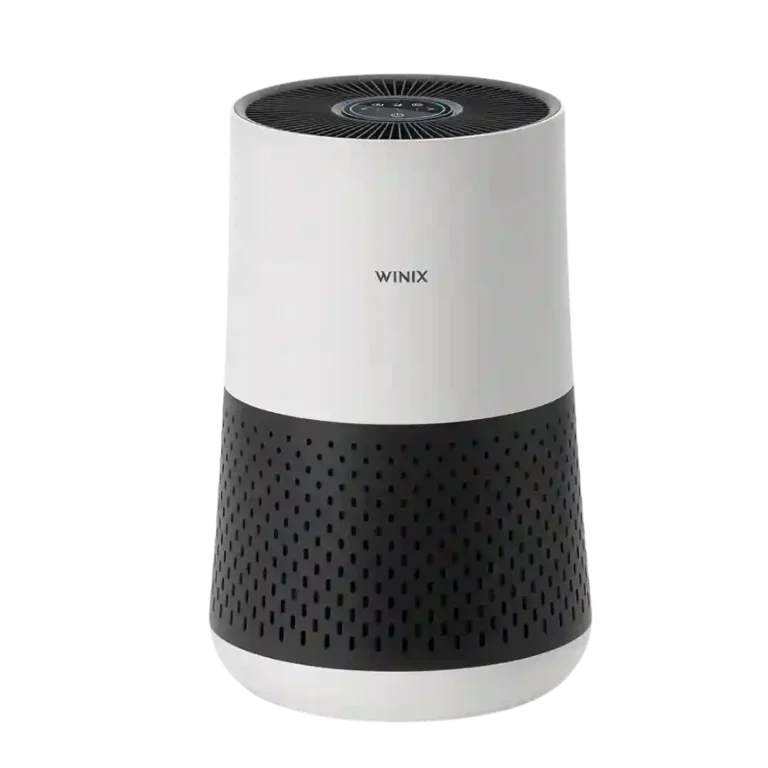
Winix A231 (A230) Air Purifier Review
Bottom Line
Choose the Winix A231/A230 for strong small-room cleaning, allergy relief, and value. Skip it for serious odor/VOC control, dark-room silence, Wi-Fi control, or large spaces.
Best for bedrooms, offices, dorms, RVs, bathrooms, and pet areas where the main goals are dust, particles, and allergy comfort. It suits shoppers who want strong cleaning power and simple controls without paying for Wi-Fi.
Not for buyers who need serious VOC, smoke, or heavy odor removal, or who want a dark bedroom with strong overnight airflow. Noise-sensitive users and smart-home users may prefer another model.
The Winix A231/A230 comes across as a compact purifier with unusually strong cleaning power for its price and size. Testers praised its CADR and particle-removal speed, while many owners reported fresher rooms, less dust, easier breathing, and better allergy comfort in bedrooms, dorms, offices, RVs, and pet spaces. The tradeoff is refinement: odor and VOC control are limited by the small carbon layer, high speeds can be loud, the light ring can bother sleepers, and the air-quality sensor is inconsistent. It is a high-value small-room cleaner, but not a quiet luxury unit or a serious gas/odor specialist.
Compared in Reviews
Products reviewers directly compared with this model, grouped into quick takeaways.
- Worse: air cleaning speed The A231 cleaned the test room faster than the popular Levoit Core 300.
- Similar: particle removal The Levoit Vital 100S was the only model described as comparable in one particle-removal test.
Feature Scorecards
Summary
71 reviewed features- Very positive 4.5-5.0 21% 15 features
- Positive 3.5-4.4 41% 29 features
- Neutral 2.5-3.4 23% 16 features
- Negative 1.5-2.4 13% 9 features
- Very negative below 1.5 3% 2 features
Pros
-
Durability can be excellent in successful units, with owners reporting years of continuous use and trouble-free operation. Noise and component failures in some units keep the long-term picture from being spotless.
-
Mold-related feedback is positive but narrow. Owners dealing with mold and dust allergies say additional A231 units helped while they waited for remediation or helped allergy symptoms clear up.
-
Some owners connect the A231 with better sleep, especially when allergy symptoms, coughing, or room freshness improve. Others like the sleep-mode sound or white-noise effect.
-
Particle removal looks strong for a compact purifier, with lab-style tests and owner impressions pointing to fast clearing of fine dust and particulates. It is best framed as a small-room performer, not a whole-home solution.
-
Breathing relief is a major owner-reported benefit. People mention less stuffiness, fewer sinus issues, less coughing, easier mornings, and better comfort around allergies or irritants.
-
CADR is a clear advantage for the price and size. Expert sources repeatedly frame the A231 as unusually strong for a compact purifier, though one owner comparison says a similar Eureka was rated better for pollen.
-
Air changes per hour are described as a strength within the recommended room size. The unit is presented as capable of frequent air turnover in its target coverage area, not as a large-room machine.
-
Allergy relief is one of the clearest owner-reported benefits. Many users mention less sneezing, easier breathing, fewer stuffy mornings, or improved reactions around pets, dust, and seasonal triggers, though a few did not get the allergy improvement they wanted.
-
Pet dander and animal-related particles are a strong use case. Cat, dog, and bird owners repeatedly describe fewer symptoms, cleaner pet rooms, and better control of fur-and-dander buildup.
-
Ease of use is strong: setup, controls, filter access, and daily operation are usually described as simple. The main exception is figuring out the filter reset and some touch-control activation issues.
-
Value is a major reason people like the A231. It is often praised as powerful for the price, though buyers who hate the noise or need stronger odor removal may not feel the savings are worth it.
-
Pet hair capture is a practical strength. Owners with cats, dogs, birds, litter areas, and shedding seasons describe fur, hair, and larger debris collecting on the filter.
-
Dust reduction comes up often, from less visible dust on surfaces to filter screens catching lint, cat litter dust, and household debris. Heavy-dust homes may need more frequent cleaning than the usual schedule.
-
Portability is generally good because the unit is compact and light enough to move between rooms. The lack of a true handle keeps it from being perfect.
-
The True HEPA filter earns confidence from both expert and customer comments. It is called out as a real HEPA setup and as a reason the Winix feels more capable than lower-end alternatives.
-
Maintenance is usually easy, especially filter access, cleaning, and replacement. The main complaints are unclear filter orientation, a fiddly reset-light process, and breakable bottom tabs if forced.
-
Air cleaning is the A231’s biggest strength: test results and many owners describe fresher rooms, cleaner bedrooms, and noticeable improvements. A minority felt it did little, especially compared with larger Winix units.
-
The size works well for bedrooms, offices, dorm rooms, RVs, bathrooms, and other small areas. A few buyers found it larger than expected or less discreet than they wanted.
-
The HEPA stage is treated as a major reason to buy this compact unit. Owners and tests connect it with strong particle capture, allergy use, and better filtration than some budget alternatives.
-
Design feedback is mostly positive: owners describe it as modern, sleek, compact, and good-looking. Minor complaints include limited color options and a lighted look that some bedroom users dislike.
-
The pre-filter is useful for catching larger debris such as pet hair, lint, and dust before it reaches the HEPA layer. Owners who clean it periodically see it as a practical way to extend filter life.
-
The multi-stage setup is viewed positively for a budget compact purifier. It gives the A231 a more complete filtration package than many simple small-room units.
-
Warranty coverage is seen as a plus, especially with a two-year period and replacement support mentioned. Warranty help mattered most for buyers who ran into noise or defect problems.
-
Smoke handling is mixed. Some owners saw it react to cooking smoke or cigarette exposure, but smoke removal is not as central a strength as dust and general particle capture.
-
Replacement filter availability is uneven. Some buyers found many sources or easy Amazon ordering, while others said canister filters were harder to find or less convenient than expected.
-
Odor control is the most divided performance area. Many owners say it freshens bedrooms, dorms, litter-box areas, and pet spaces, while several tests and owners say the small carbon layer struggles with stronger cooking, smoke, VOC, or heavy odor problems.
-
The real-time air quality light gives quick visual reassurance when it reacts properly. Some users like seeing the room status change, while others question whether the displayed status truly matches the air they can smell or feel.
-
Room fit is strongest in bedrooms, offices, dorms, RVs, bathrooms, and other small spaces. Several people tried it beyond that, but larger rooms and whole-house use call for bigger machines or multiple units.
-
Filter life is generally a plus, with many mentions of roughly annual replacement and long-lasting filters. Dusty or pet-heavy homes may shorten that interval and require more frequent pre-filter cleaning.
-
Overall satisfaction leans positive, with many owners saying they would buy again or recommend it. Negative ratings usually come from noise, light brightness, sensor doubts, or defective units.
-
Fan speed control is simple and useful, with manual speeds available when users want more cleaning than auto mode chooses. The small number of settings keeps operation straightforward.
-
A couple of owners felt the purifier made the room feel cooler while running. That seems to come from airflow rather than true cooling performance.
-
Cord length is mentioned positively in unboxing, with enough reach for typical wall placement. There is not much broader cord feedback.
-
Safety certification comments focus on ozone limits from PlasmaWave. The product is presented as staying under allowed limits, though the ionizer remains a concern for some households.
-
Virus-reduction confidence is tied to the PlasmaWave claim rather than broad real-world owner proof. One unboxing review framed the feature as a nice extra for cleaner, safer-feeling air.
-
Auto mode is convenient and often praised for reacting to cooking, sprays, odors, or air changes. It can also frustrate users when it reacts slowly, stays too low, gets noisy at night, or fails to enter sleep mode automatically.
-
Sleep mode is loved for dimming lights and running quietly, but it comes with a tradeoff: airflow drops noticeably. Buyers who want strong overnight filtration plus darkness may find it limiting.
-
Sensor feedback is highly mixed. Some owners call it sensitive to cooking, sprays, odors, and even flatulence, while others say it misses smoke, dust, scents, or new-material odors they expected it to detect.
-
Air circulation feels strong for the size when the fan is turned up, and the 360-degree intake design is appreciated. Sleep mode and some lower settings move too little air for buyers who want constant airflow.
-
Pollen performance is mentioned less often, but the comments that do mention it are generally positive. One comparison notes a competing Eureka was stronger on pollen, while a pet/allergy household says the Winix helps with pollen entering the house.
-
PlasmaWave is appreciated when it boosts cleaning or can be turned off, but it is divisive. Concerns include noise, smell, ozone byproduct worries, and a default-on behavior that some users dislike.
-
Noise is the most repeated complaint and the most context-dependent trait. Sleep mode and low operation are often quiet, but higher speeds, motor hum, wobble, and random auto-mode ramp-ups bother noise-sensitive users.
-
The top controls are simple in layout, but not always pleasant in daily use. Touch sensitivity, tiny icons, and bright surrounding lights can make nighttime adjustments frustrating.
-
Documentation is mostly adequate but not perfect. One owner liked the easy instructions, while another found the filter orientation directions unclear.
Cons
-
Filter cost is mixed: some sources call the filters inexpensive or good long-term value, while several owners complain that replacements cost more than expected for a budget purifier. Aftermarket options help lower the yearly cost for some buyers.
-
Energy use draws mixed reactions. Some owners see little effect on the electric bill, while expert tests and one long-term owner say the A231 uses more power than expected for a compact purifier.
-
Reliability varies sharply by unit. Many owners report years of smooth 24/7 use, while others experienced motor noise, lights failing, stopped operation, or early defects.
-
Washability is not fully satisfying. One owner liked gently washing the mesh-style pre-filter, while another wished the unit had a washable filter rather than a replacement-focused setup.
-
Replacement experiences range from smooth to frustrating. Amazon and Winix replacements solved some problems quickly, but reset-light trouble and unresolved defective deliveries left others annoyed.
-
Customer support is inconsistent. Some buyers received helpful replacements or quick responses, while others describe hard-to-reach or nonexistent support.
-
Build quality is mixed. Several users call it sturdy, quality-built, or not flimsy, but others report loose control panels, wobble, broken tabs, cheap-feeling parts, or fan-balance issues.
-
Ozone-free confidence is not absolute because PlasmaWave may produce ozone as a byproduct. The positive note is that the discussed levels are said to be within allowed limits.
-
Indicator lights are useful for air-quality feedback but are also a common bedroom annoyance. Many like the ring during the day, while others find it too bright unless sleep mode is used.
-
Safety concerns center on PlasmaWave and asthma-sensitive households. Some users appreciate that it can be turned off, while others worry about ozone byproduct or kids enabling it.
-
Scheduling control is thin. A few users mention a timer or wish for one, but the product’s practical routine control is mostly manual mode, auto mode, and sleep mode rather than full scheduling.
-
Smart features are helpful but basic. The sensor, auto mode, light indicator, and PlasmaWave add capability, but lack of app and smart-speaker control limits remote operation.
-
Display readability has issues in dark rooms. Unlit arrows and icons can be hard to find, while the surrounding light ring can make the small control area harder to use.
-
Arrival condition is uneven. Some units arrived protected and in good shape, while a few buyers received damaged, poorly padded, or open-box items.
-
Power consumption is a technical drawback in expert testing. The motor and annual energy cost are described as higher than ideal for the unit’s size and CADR class.
-
The missing carry handle is called out as a downside. It is still light enough to move, but a handle would make room-to-room use easier.
-
Settings retention is a recurring annoyance around PlasmaWave and sleep behavior. Some users dislike that PlasmaWave comes back on by default or that auto mode does not remember the sleep-like behavior they want.
-
The activated carbon filter is the biggest filtration compromise. It can help with lighter smells, but multiple comments criticize the thin fabric-style carbon for weak odor, gas, and VOC performance.
-
App connectivity is absent, and that disappoints buyers comparing it with Wi-Fi-enabled purifiers. Several people specifically wished the A231 had Wi-Fi or app control.
-
Remote control is a missing convenience. Several people wished they could adjust the unit from bed, from across the room, or while away.
-
Voice-assistant control is not part of this model. Buyers who want Alexa or smart-speaker control are steered toward other compact purifiers.
-
There is no child-lock style protection for PlasmaWave. One owner specifically disliked that kids could turn the ionization mode on in a house with asthma and allergy concerns.
-
One owner reported the wire coating coming off near the machine. It is a narrow but concerning power-connection durability complaint.
-
VOC-sensor behavior is a weakness in the most detailed testing. The sensor was described as slow to react compared with particle sensors in competing models.
-
Listing accuracy drew a couple of complaints. One buyer expected an included first filter, and another expected automatic sleep behavior that their units did not provide.
-
One buyer complained that the first filter was missing and had to be ordered separately. That made the initial purchase feel incomplete.
-
VOC reduction is a weak point for buyers focused on gases. The strongest criticism says the mesh-style carbon is not enough for serious VOC absorption.
Compared With Category Average
Compared with other Air Purifiers, this product is above average in durability, below average in VOC reduction, activated carbon filter, child lock.
Summary
8 compared features- Above average 0.4+ pts higher 13% 1 feature
- Same as average within 0.3 pts 0% 0 features
- Below average 0.4+ pts lower 88% 7 features
| Attribute | This product | Category average | Difference |
|---|---|---|---|
| VOC reduction | 1.0 | 3.5 | -2.5 |
| activated carbon filter | 2.1 | 3.8 | -1.8 |
| child lock | 2.0 | 3.7 | -1.7 |
| voice assistant compatibility | 2.0 | 3.6 | -1.6 |
| durability | 5.0 | 3.4 | +1.6 |
| display readability | 2.5 | 3.9 | -1.4 |
| indicator lights | 2.9 | 3.9 | -1.0 |
| ozone-free operation | 3.0 | 4.4 | -1.4 |
FAQ
Is the Winix A231/A230 good for allergies?
Yes for many owners. A large share of customer feedback mentions less sneezing, easier breathing, fewer stuffy mornings, and better comfort around dust, pets, pollen, or mold-related triggers.
Is it quiet enough for a bedroom?
Sleep mode is often described as very quiet, but higher speeds are a common complaint. Buyers who need strong airflow while sleeping may dislike the noise-light tradeoff.
Does it remove odors well?
It can help with lighter pet, litter-box, dorm, and room smells, but it is not a strong odor or VOC specialist. Several sources criticize the small fabric-style carbon filter for serious gases, cooking smells, or smoke.
Does auto mode work reliably?
Auto mode is useful when it reacts to cooking, sprays, odors, or changing air quality, but it is inconsistent. Some owners call the sensor sensitive, while others say it misses smoke, scents, dust, or new-material odors.
How often are filters replaced?
The common replacement interval is about once a year, though dusty or pet-heavy spaces may need more frequent cleaning and potentially shorter filter life. Replacement cost feedback is mixed.
Does it have Wi-Fi, app control, or a remote?
No. The A231/A230 has manual controls, auto mode, sleep mode, an indicator ring, and PlasmaWave, but not app control, smart-speaker control, or a remote.
Sample Expert Reviews We Analyzed
These are a few of the reviews included in our analysis.

Video Reviews
- Review score
- 4.4
- Review score
- 4.2
- Review score
- 3.7
- Review score
- 3.7
Article Reviews
Consider This Instead
If you want better VOC reduction
Choose PuroAir 240. It scores 5.0 vs 1.0 for VOC reduction, with a 4.3 overall score.
If you want better activated carbon filter
Choose Austin Air Bedroom Machine. It scores 5.0 vs 2.1 for activated carbon filter, with a 4.1 overall score.
If you want better indicator lights
Choose Coway Airmega 250. It scores 5.0 vs 2.9 for indicator lights, with a 4.3 overall score.
If you want better build quality
Choose Shark MAX HP202. It scores 5.0 vs 3.1 for build quality, with a 4.2 overall score.
Overall Top Air Purifiers Alternatives
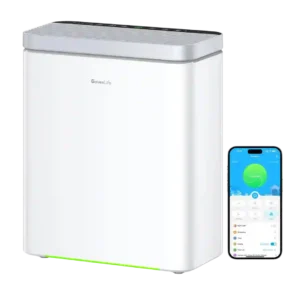
Choose the H7124 if you want a quiet smart purifier for odors, dust, pets, and app control. Skip it if you need foolproof Wi-Fi, wall-facing intake, UV light, or strong...
Pros: particle removal effectiveness, pollen removal
Cons: UV-C light effectiveness, air dryness
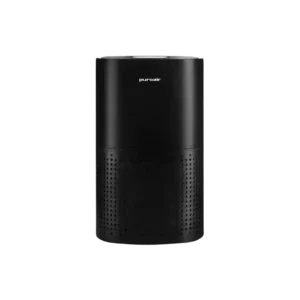
Best for quiet, smart large-room cleaning and strong odor control. Skip it if $99 filters, true-HEPA wording, or occasional sensor/fan reliability complaints are dealbreakers.
Pros: air purification performance, allergen reduction
Cons: reliability, filter replacement cost
Best for large rooms, strong particle cleanup, quiet everyday running, and easy rolling. Skip it if you need app control, compact placement, automatic restart after outages, or low filter costs.
Pros: ozone-free operation, particle removal effectiveness
Cons: filter replacement cost, app connectivity
Best for compact rooms, strong particle removal, quiet sleep use, and useful app controls. Skip it for large spaces, heavy odors, or exact PM2.5 readings.
Pros: Wi-Fi reliability, filter stages
Cons: PM2.5 detection