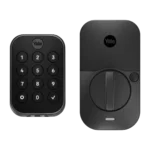
Yale Assure Lock 2 Smart Lock Feature Scores
Explore all 33 feature scores for Yale Assure Lock 2 Smart Lock, organized into pros and cons.
Scores by Feature
Summary
33 reviewed features-
Very positive 4.5-5.04 (12%)
-
Positive 3.5-4.421 (64%)
-
Neutral 2.5-3.45 (15%)
-
Negative 1.5-2.43 (9%)
Pros
Sort
-
Guest codes were one of the most consistently praised features, especially temporary, scheduled, unlimited, or child-friendly access options.
-
Build and design earned broad praise for a sleek, premium, sturdy feel, though a few reviewers found the interior bulk or thumb-turn construction less appealing.
-
Remote access was a major strength: reviewers valued checking status, controlling the lock away from home, and getting peace of mind from anywhere.
-
Core lock reliability was mostly strong, with many reviewers reporting smooth or problem-free operation, though some long-term and connectivity-related issues softened the consensus.
-
User management was strong overall, with app users, entry codes, schedules, and guest controls praised for families, visitors, and rental scenarios.
-
Smart-home integration was broad and often praised across HomeKit, Alexa, Google, Matter/module plans, and other ecosystems, though Home Key and Android/Wear OS gaps created caveats.
-
Access logs were consistently useful, letting reviewers track who locked, unlocked, or entered and helping families or hosts monitor activity.
-
Most reviewers found installation manageable or easy, helped by app guidance and templates, but several called out door measurements, DoorSense drilling, cable routing, or calibration as potential friction.
-
Auto-lock and auto-unlock were useful conveniences for many reviewers, but reliability depended on DoorSense behavior, proximity logic, and reviewer preference for location tracking.
-
Lock/unlock speed was generally strong, with reviewers describing quick keypad response, fast auto-unlock behavior, and instant fingerprint unlocking.
-
The locking mechanism was viewed positively, with smooth, quiet, solid operation and audible confirmation highlighted across reviews.
-
Keypad impressions were mixed: reviewers liked responsive, readable, and kid-friendly entry, but disliked sunlight readability problems and extra taps to wake the screen.
-
Backup entry options were valued, including physical keys on keyed models and 9V battery contacts on key-free models, especially as protection against dead batteries.
-
Module-based connectivity and reduced bridge requirements were viewed as flexible strengths, though some features still required a paid module or the right protocol.
-
Fingerprint performance split sharply: several reviewers praised quick, accurate recognition, while one long-term reviewer reported persistent failures that undermined the feature.
-
DoorSense was useful for knowing door status and enabling safer auto-lock behavior, but installation, appearance, and occasional calibration behavior were recurring caveats.
-
Voice control generally worked and added convenience, but security restrictions and PIN requirements limited how seamless it felt.
-
The app was often described as simple or easy to follow, but reviewers also reported slow loading, antiquated design, connectivity frustrations, and setup hiccups.
-
Notifications were useful for access, auto-lock, and ajar alerts, but some reviewers wanted earlier low-battery warnings or reported missing/annoying alerts.
-
Weather-related impressions were positive where tested or judged, including cold-climate touchscreen use and confidence that the lock could withstand the elements.
-
Security features drew mixed-to-positive reactions, including two-factor setup, encryption, keypad lockout, and backup-key tradeoffs.
-
Physical attack resistance impressions were positive where discussed, especially for the key-free model and reviewers’ sense that the lock felt tough.
-
Bluetooth performance was positive when direct and local, but one reviewer found waiting for Bluetooth/Wi-Fi switching frustrating in real use.
-
The matte screen finish drew praise for reducing visible finger smudges, which reviewers treated as a useful security and appearance benefit.
-
Two-factor authentication was explicitly praised as part of the app’s account security requirements.
Cons
Sort
-
Battery life was one of the weakest areas, especially with Wi-Fi models, with complaints about short life, limited battery visibility, and frequent replacement concerns.
-
Backset flexibility was a clear limitation in one review, which said the lock was not an option for a longer-than-average backset.
-
Support was a weak point in one long-term review, where Yale helped resolve some issues but did not solve or replace the fingerprint problem.
-
Wi-Fi added valuable remote control and ecosystem support, but reviewers repeatedly connected it with battery drain, slow or spotty connectivity, and setup annoyances.
-
Door fit was mostly workable on standard doors, though reviewers stressed measuring carefully and one reviewer found their dimensions did not match at a first install location.
-
Geofencing and auto-unlock were convenient when they worked, but reviewers disliked fixed radius limits, constant location access, or privacy/battery implications.
-
The touchscreen looked clean and worked well at night or in cold weather, but direct sunlight visibility was a repeated weakness.
-
Value was mixed: reviewers liked the feature range and some found it affordable or worth it on sale, while others considered it pricey or questioned add-on costs.