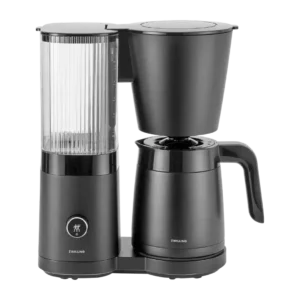
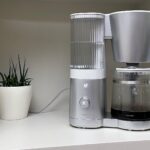
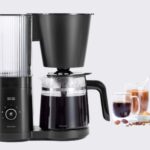
Review: Zwilling Enfinigy Drip Coffee Maker
Updated: 2 months ago
3.7
Based on methodology below
84
Insights analyzed
21
Grouped by key features
5
From expert reviews
Scores below reflect consolidated expert coverage across these features.
Bottom Line
Choose the Zwilling Enfinigy if you want SCA-certified, great-tasting drip coffee in a sleek, compact brewer. Skip it if you need an all-morning hotplate or worry about fragile plastic/glass parts.
Best for
Design-minded drip drinkers who want SCA-level coffee with a simple dial, quick brews, and an optional bloom cycle, especially for small to medium households.
Not for
Anyone who needs an all-morning warming plate, wants lots of brew-strength/temperature controls, or expects easy access to replacement parts like carafes and lids.
Verdict
The Enfinigy targets specialty-style drip brewing with an even shower head and an optional bloom step, and reviewers consistently describe a clean, well-extracted cup across different batch sizes. The workflow is mostly simple once you learn the icons and dial. The tradeoff is feature depth and ownership friction: there are few knobs for strength or temperature, starter extras are sparse, and replacement parts like carafes can be hard to source. If you want a stylish, low-clutter brewer that prioritizes cup quality over tinkering, it fits; if you like to fine-tune every variable or expect abundant spares, it may disappoint.
Pros
-
5.0based on 5 reviewsRecognition and certifications: 5.0, based on 5 reviewsMultiple sources emphasize SCA certification and Golden Cup recognition as a key differentiator, framing it as a brewer built to hit specialty coffee standards.
-
4.6based on 4 reviewsBrewing performance and consistency: 4.6, based on 4 reviewsAcross reviews, it brews notably clean, flavorful drip coffee with good extraction, especially when the bloom feature is used. Small and larger batches are generally consistent, with taste described as fruity or nutty and free of burnt bitterness.
-
4.5based on 3 reviewsSpeed and time-to-cup: 4.5, based on 3 reviewsBrew times are quick for an SCA-style brewer: roughly 3 minutes for two cups, about 5 minutes for a half carafe, and around 7–9 minutes for a full batch.
-
4.2based on 5 reviewsDesign, ergonomics and footprint: 4.2, based on 5 reviewsIt is widely praised for minimalist, modern looks and a compact footprint, though its height and display visibility in bright light can be inconvenient. The dial-based interface keeps the exterior clean when not in use.
-
4.2based on 5 reviewsAutomation and sensors: 4.2, based on 5 reviewsAutomation focuses on practical essentials: bloom on/off, brew-size selection, a programmable timer, and maintenance prompts influenced by water hardness. There are few customization settings beyond those basics.
-
4.2based on 5 reviewsHeating-element power: 4.2, based on 5 reviewsHeating performance is strong enough to meet SCA-style brewing needs, with reviewers noting consistent high brew-water temperatures and finished coffee around ~180–185°F for larger batches (cooler for minimum-volume brews).
-
4.2based on 5 reviewsOverall user experience: 4.2, based on 5 reviewsDay-to-day use is generally easy and quiet, with a simple workflow once you learn the icons. The main tradeoffs are limited control over strength/temperature and the need for occasional trial-and-error on coffee dosing.
-
4.0based on 5 reviewsWater system, maintenance and descaling: 4.0, based on 5 reviewsCleaning is mostly straightforward with removable parts and clear descaling workflows, plus reminders tied to water hardness settings. The main quirks are a non-removable water tank and a shower head area that can need extra rinsing.
-
4.0based on 1 reviewPopularity: 4.0, based on 1 reviewIt shows up frequently in buying guides and review roundups, driven largely by its distinctive design paired with SCA-level cup quality.
-
3.9based on 4 reviewsAssembly and Setup: 3.9, based on 4 reviewsSetup is simple (initial water-only cycle, set clock, choose water hardness), but multiple reviewers note missing basics like a hardness test strip or clearer first-run guidance.
-
3.6based on 3 reviewsCup, tray and carafe handling: 3.6, based on 3 reviewsThe carafe generally pours neatly with minimal dripping, and the drip circulator helps mix the brew. A recurring annoyance is the lid flipping or falling open when pouring the last of the coffee, and the glass feels delicate to some.
-
3.5based on 5 reviewsValue and Price: 3.5, based on 5 reviewsValue is polarized: sale pricing around the mid-$100s to ~$200 can feel fair for SCA performance and aesthetics, but full retail is often seen as expensive for a mostly-plastic build and limited controls.
Cons
-
3.3based on 5 reviewsBuild quality and durability: 3.3, based on 5 reviewsBuild quality impressions are mixed: the design looks premium, but several reviewers describe plasticky or flimsy components and a fragile-feeling glass carafe. Long-term durability is a question mark, especially given limited spare parts.
-
3.3based on 5 reviewsCapacity: 3.3, based on 5 reviewsNominal capacity is marketed as a large multi-cup brewer, but real-world output depends on small 'cup' markings; a full batch often translates to roughly five standard mugs. One review also highlights lower-than-expected max capacity on a related variant.
-
3.3based on 3 reviewsAccuracy of marketing claims: 3.3, based on 3 reviewsMarketing around 'cup' capacity can be misleading because the marked cup volumes are smaller than typical mugs, and brewed output can land below the fill line due to absorption. Expectations for premium robustness also vary versus the price.
-
3.2based on 5 reviewsWarranty and Customer support: 3.2, based on 5 reviewsWarranty terms are attractive on paper (often cited as multi-year), but support is undercut by limited availability of replacement parts like carafes and lids.
-
3.1based on 4 reviewsDesign flaws: 3.1, based on 4 reviewsCommon pain points include the 30-minute hotplate limit, limited adjustability, non-removable reservoir, and occasional usability quirks (icon learning curve, lid behavior while pouring, display brightness).
-
3.1based on 2 reviewsEnvironmental packaging sustainability: 3.1, based on 2 reviewsPackaging is often described as mostly cardboard with minimal plastic, but sustainability critiques focus on reliance on single-use paper filters and the lack of easily replaceable parts that could extend product life.
-
3.1based on 4 reviewsFilter: 3.1, based on 4 reviewsIt uses standard cone paper filters (commonly size #4), which are easy and tidy but not included in the box and not clearly specified in some manuals. There is no built-in grinder or reusable filter focus in the reviewed materials.
-
2.7based on 3 reviewsPot function: 2.7, based on 3 reviewsThe warming plate keeps coffee hot for about 30 minutes and then shuts off automatically with no extension option. Some reviewers like this for flavor preservation, while others find it limiting for all-morning refills.
-
2.3based on 3 reviewsAccessories: 2.3, based on 3 reviewsIncluded extras are sparse; multiple reviewers note no starter filter papers, no scoop, and sometimes no water-hardness test strip or sample descaler, which can slow down first use.
FAQ
Does the hotplate stay on longer than 30 minutes?
No. Reviews consistently report the warming plate turns off automatically after about 30 minutes and cannot be extended, which helps prevent stewed flavors but limits all-morning refills.
What type of paper filter does it use?
Most reviewers used standard cone filters in size #4, which fit well. Filter papers are typically not included in the box, so plan to buy them separately.
How much coffee do you really get from a full 12-cup batch?
The carafe markings use small 'cups', so a full brew often works out to about five normal mugs, depending on mug size and whether you leave room for milk.
Is the bloom function worth using?
Yes for many people. Turning bloom on pre-wets the grounds to release gas and tends to improve clarity and extraction, especially with freshly ground coffee.
Do I need to set water hardness, and how often will I descale?
The machine asks you to pick a water hardness level, which influences descaling reminders. Descaling is described as a simple, mostly automatic cycle, but you may need to supply your own descaler.
Where do these scores and summaries come from?
All scoring and summaries were derived only from the provided reviews.json transcripts for this product.
Reviews we analyzed
Video Reviews
Article Reviews
Best Coffee Machines
#1
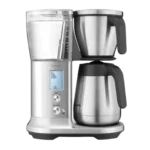
4.4
Choose it if you want a large, highly customizable batch brewer that can make excellent coffee consistently. Skip it if you mostly brew...
Pros: Popularity, Recognition and certifications, App, connectivity and smart control, Heating-element power, Build quality and durability, Brewing performance and consistency, Capacity
Cons: Design flaws, Warranty and Customer support
#2
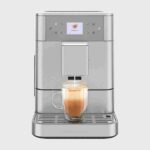
4.4
Choose the KF6 if you want excellent espresso and notably quiet operation from a super-automatic. Skip it if you want dense cappuccino foam...
Pros: Recognition and certifications, Grinder, hopper and dosing system, Water system, maintenance and descaling, Assembly and Setup, Automation and sensors, Build quality and durability,...
Cons: Accuracy of marketing claims
#3
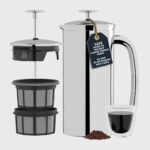
4.3
Choose the Espro P7 for a premium, insulated French press that noticeably cuts grit; Skip if you want a bargain brewer or expect...
Pros: Recognition & certifications, Popularity, Build quality & durability, Cup, tray & carafe handling, Filter, Brewing performance & consistency, Overall user experience
Cons: None
#4
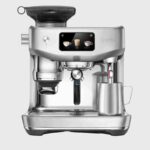
4.3
Choose the Oracle Jet if you want fast, guided espresso that feels almost hands-off. Skip if you need true brew-and-steam-at-once dual-boiler performance or...
Pros: Speed & time-to-cup, Heating-element power, Automation & sensors, Assembly & Setup, Espresso & beverage quality, Guided tamper convenience, Overall user experience
Cons: Value & Price