Average score
P1
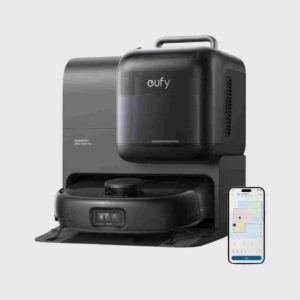
Product 1: eufy Omni E28 Robot Vacuum...
3.6
P2
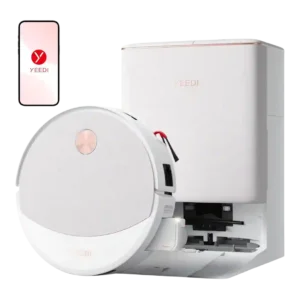
Product 2: Yeedi M16 Infinity
4.2
Accessories and Tools
P1
Product 1: eufy Omni E28 Robot Vacuum...
2.5
Accessory coverage is a weakness because one reviewer specifically criticized the lack of spare mops, brushes, and related ancillaries.
P2
Product 2: Yeedi M16 Infinity
2.4
The included accessories were criticized as essentials-only, with no spare mop roller, side brush, or extra bags included.
Adaptive chassis lift
P1Product 1: eufy Omni E28 Robot Vacuum...
No score yet
P2
Product 2: Yeedi M16 Infinity
4.5
Threshold and chassis adaptation performed well, helping the robot handle doorway lips and move room to room without getting stuck.
Aesthetic design and finish
P1
Product 1: eufy Omni E28 Robot Vacuum...
3.7
Design opinions are mixed: some reviewers liked the modern, tidy look, while another found the FlexiOne-heavy design less sleek.
P2
Product 2: Yeedi M16 Infinity
4.5
Design was consistently praised as modern, refined, attractive, and more display-friendly than many robot vacuums.
AI, Smart, App and Automation
P1
Product 1: eufy Omni E28 Robot Vacuum...
4.0
Smart, app, and automation features are generally useful and customizable, though experimental tracking features and object logic sometimes disappoint.
P2
Product 2: Yeedi M16 Infinity
4.4
Smart features, scheduling, voice control, and app automation were useful overall, but customization and polish were not perfect.
Airflow blowback
P1Product 1: eufy Omni E28 Robot Vacuum...
No score yet
P2
Product 2: Yeedi M16 Infinity
4.3
Blast airflow was credited with quieter operation while preserving cleaning performance.
Area Rug Handling
P1
Product 1: eufy Omni E28 Robot Vacuum...
2.1
Area-rug handling is a recurring concern, with reports of dampening rugs, tracking mess onto a rug, or dragging a rug corner.
P2
Product 2: Yeedi M16 Infinity
3.1
Area-rug handling was mixed: it climbs and detects rugs well, but thicker rugs and deeper dirt remain harder.
Assembly and Setup
P1
Product 1: eufy Omni E28 Robot Vacuum...
4.5
Setup is consistently easy, with reviewers calling it quick, painless, and straightforward across several reviews.
P2
Product 2: Yeedi M16 Infinity
4.8
Setup was repeatedly described as easy, straightforward, and fast from unboxing through mapping.
Automatic shutoff for obstructions
P1
Product 1: eufy Omni E28 Robot Vacuum...
3.0
Obstruction shutoff evidence is mixed: the robot stopped and reported an error after dragging a rug corner, which avoided continued damage but followed a mishap.
P2Product 2: Yeedi M16 Infinity
No score yetBattery and Charging
P1
Product 1: eufy Omni E28 Robot Vacuum...
3.9
Battery feedback is neutral-to-positive: efficiency can be mixed, but practical coverage and runtime were considered sufficient or generous.
P2
Product 2: Yeedi M16 Infinity
4.5
Charging and runtime support were praised for fast boosts and large-home usefulness, with one max-carpet runtime result below average.
Bin and Bag
P1
Product 1: eufy Omni E28 Robot Vacuum...
2.2
Bin capacity draws criticism: the onboard dustbin is small and may force more frequent dock returns, despite the auto-empty system.
P2
Product 2: Yeedi M16 Infinity
4.4
The bagged bin system was viewed positively for hygiene and mess control, though bag replacement remains part of ownership.
Build quality and durability
P1
Product 1: eufy Omni E28 Robot Vacuum...
2.4
Build confidence is limited by concerns about maintenance burden, plastic components, and the non-premium feel of detachable parts.
P2
Product 2: Yeedi M16 Infinity
4.3
Build quality was praised in early use, with the hardware feeling sturdy.
Carpet — High-Pile Pickup
P1Product 1: eufy Omni E28 Robot Vacuum...
No score yet
P2
Product 2: Yeedi M16 Infinity
2.7
High-pile or deep carpet cleaning was the clearest cleaning weakness, with traditional uprights and test averages outperforming it.
Carpet — Low-Pile Pickup
P1
Product 1: eufy Omni E28 Robot Vacuum...
4.3
Low-pile carpet evidence is limited but positive where performance across hard floors and carpets was called beefy.
P2
Product 2: Yeedi M16 Infinity
4.4
Low-pile rug pickup was strong, especially for embedded hair.
Clogging and debris prevention
P1
Product 1: eufy Omni E28 Robot Vacuum...
1.8
Clogging evidence is negative where the wet-vac module clogged when used on serious debris.
P2
Product 2: Yeedi M16 Infinity
4.5
Clogging prevention was positive in testing because auto-emptying did not clog or fail.
Comparative performance
P1
Product 1: eufy Omni E28 Robot Vacuum...
4.3
Comparative performance is mixed but often strong, with deep-clean carpet and obstacle results compared favorably to averages while some reviewers ranked it below top competitors overall.
P2
Product 2: Yeedi M16 Infinity
3.6
Comparative performance was mixed: the M16 undercuts flagships and improves on prior models, but deep carpet and edge cleaning were not class-leading.
Controls and UI
P1
Product 1: eufy Omni E28 Robot Vacuum...
4.3
Controls and UI are mostly praised for intuitive app settings, voice responses, and useful customization, with a few limitations noted elsewhere.
P2
Product 2: Yeedi M16 Infinity
4.1
The app and controls were considered clean and easy to use, though reviewers also noted lag, low app ratings, and room for more customization.
Convertible handheld design
P1
Product 1: eufy Omni E28 Robot Vacuum...
4.6
The detachable handheld spot-cleaner design is one of the strongest themes, repeatedly praised as convenient, useful, and well integrated.
P2Product 2: Yeedi M16 Infinity
No score yetCord management
P1
Product 1: eufy Omni E28 Robot Vacuum...
2.2
Cord management is criticized because the base lacks cord wrap and the FlexiOne cord setup keeps the station from sitting neatly hidden.
P2Product 2: Yeedi M16 Infinity
No score yetCorner Cleaning (Robot)
P1
Product 1: eufy Omni E28 Robot Vacuum...
4.5
Robot corner cleaning is one of the clearer strengths, with multiple reviews praising the CornerRover arm and corner coverage.
P2
Product 2: Yeedi M16 Infinity
2.9
Corner cleaning remained mixed to weak because round-robot limitations and reviewer complaints persisted despite improved reach.
Docking and Auto-Empty Reliability (Robot)
P1
Product 1: eufy Omni E28 Robot Vacuum...
4.4
Docking and auto-empty reliability are mostly strong, with successful returns, thorough dustbin emptying, and dependable base entry reported.
P2
Product 2: Yeedi M16 Infinity
4.5
Docking and auto-empty reliability were positive, with no emptying failures and strong hands-off station performance.
Dock noise
P1
Product 1: eufy Omni E28 Robot Vacuum...
2.1
Dock noise is one of the most repeated complaints, especially during auto-emptying, mop cleaning, and spot-cleaner use.
P2
Product 2: Yeedi M16 Infinity
3.2
Dock emptying noise was a drawback: loud, but brief.
Dried-On Stain Removal
P1
Product 1: eufy Omni E28 Robot Vacuum...
4.6
Dried-on and set-in stain performance is strong, with multiple reviewers saying coffee, jelly, and old furniture stains were cleaned effectively.
P2
Product 2: Yeedi M16 Infinity
4.6
Dried and sticky stains were handled well across reviews, though one dried spot needed two passes.
Ease of use
P1
Product 1: eufy Omni E28 Robot Vacuum...
3.9
Ease of use is generally good for setup, app control, and low handholding, though the FlexiOne can be a hassle for some.
P2
Product 2: Yeedi M16 Infinity
4.3
Ease of use was strong because the system was low-effort rather than maintenance-free.
Edge and Baseboard Cleaning (Hard Floors)
P1
Product 1: eufy Omni E28 Robot Vacuum...
3.9
Hard-floor edge and baseboard cleaning is generally praised, though edge mopping is called weak by one reviewer.
P2
Product 2: Yeedi M16 Infinity
4.3
Edge and baseboard cleaning improved with extending mop/edge systems, though some evidence still described edge reach as imperfect.
Edge‑Following Accuracy (Robot)
P1
Product 1: eufy Omni E28 Robot Vacuum...
3.5
Edge-following and edge performance are mixed, from good baseboard reach to weaker carpet-edge pickup.
P2
Product 2: Yeedi M16 Infinity
3.8
Edge-following accuracy was mixed: wall/baseboard cleaning improved, but one review still wanted stronger edge performance.
Emptying and Mess Control
P1
Product 1: eufy Omni E28 Robot Vacuum...
3.5
Emptying and mess control is mostly strong through auto-emptying and self-maintenance, though dirty-water tank handling can be messy.
P2
Product 2: Yeedi M16 Infinity
4.5
Emptying and mess control were praised for keeping dirt contained and reducing contact with dust.
Filtration / Dust Containment
P1
Product 1: eufy Omni E28 Robot Vacuum...
4.0
Filtration is improved over a prior Eufy model thanks to a larger filter that clogs less quickly, though evidence remains limited.
P2
Product 2: Yeedi M16 Infinity
4.3
Dust containment earned positive notes for sealed bags, filtration, and hygiene benefits that reduce direct contact with debris.
Floor Drying Time
P1
Product 1: eufy Omni E28 Robot Vacuum...
3.7
Floor drying is mixed: some floors were mildly damp or not too wet, while other setups left dampness near the base.
P2
Product 2: Yeedi M16 Infinity
4.5
Floor drying time was positive, with floors drying within minutes or quickly after mopping.
Floorhead design
P1
Product 1: eufy Omni E28 Robot Vacuum...
4.3
Floorhead design is praised where the roller-mop approach improved scrubbing efficacy compared with older/common mop styles.
P2
Product 2: Yeedi M16 Infinity
4.4
The floorhead and brush design were praised as clever, especially for debris pickup and anti-tangle behavior.
Floor shine after cleaning
P1
Product 1: eufy Omni E28 Robot Vacuum...
4.6
Floor shine is praised in limited evidence, with one reviewer saying solid floors were left shiny and not too wet.
P2
Product 2: Yeedi M16 Infinity
4.6
Floor shine was supported by one review noting that cleaned floors looked polished.
Fresh Liquid Pickup Speed
P1
Product 1: eufy Omni E28 Robot Vacuum...
4.7
Fresh liquid and wet spot pickup are praised, especially through the FlexiOne wet-vac function.
P2
Product 2: Yeedi M16 Infinity
4.7
Fresh liquid and sauce pickup was strong, with reviewers describing Coke and barbecue sauce cleanup as easy.
Hair-removal channel issues
P1
Product 1: eufy Omni E28 Robot Vacuum...
1.2
Hair-removal channel performance is the clearest failure: long hair formed dense hair cigars and produced record-low results.
P2
Product 2: Yeedi M16 Infinity
5.0
Hair-removal channel behavior was positive, with hair not getting tangled or stuck in testing.
Hair Pickup — Carpets
P1
Product 1: eufy Omni E28 Robot Vacuum...
3.8
Carpet hair pickup varies from excellent in one test to average/serviceable in others.
P2
Product 2: Yeedi M16 Infinity
4.6
Carpet hair pickup was strong in low-pile and cat-hair testing.
Hair Pickup — Hard Floors
P1
Product 1: eufy Omni E28 Robot Vacuum...
3.2
Hard-floor hair pickup is serviceable rather than class-leading based on pet-hair evidence.
P2
Product 2: Yeedi M16 Infinity
4.5
Hair pickup on hard-floor or mixed-surface use was praised through pet-hair pickup evidence, though the evidence was less surface-specific than carpet hair testing.
Hair‑Wrap / Tangle Resistance
P1
Product 1: eufy Omni E28 Robot Vacuum...
5.0
Hair-wrap resistance is often praised for clean brushes, but this differs from the separate long-hair clumping issue.
P2
Product 2: Yeedi M16 Infinity
4.8
Hair-wrap resistance was one of the strongest points, with repeated reports of no or near-zero tangles.
Hard Floor — Fine Dust Pickup
P1
Product 1: eufy Omni E28 Robot Vacuum...
3.9
Hard-floor fine dust pickup ranges from excellent surface pickup to weaker sand-test performance, depending on the review and test method.
P2
Product 2: Yeedi M16 Infinity
4.7
Hard-floor fine dust pickup was strong, with fine dust and crumbs cleared easily.
Hard Floor — Large Debris Intake
P1
Product 1: eufy Omni E28 Robot Vacuum...
4.2
Hard-floor large debris intake is usually good, especially near corners, but larger clustered cereal challenged object detection in one review.
P2
Product 2: Yeedi M16 Infinity
4.6
Hard-floor large debris intake was praised for taking in larger debris in one go.
Headlight and LED lights
P1Product 1: eufy Omni E28 Robot Vacuum...
No score yet
P2
Product 2: Yeedi M16 Infinity
4.2
Lighting had limited positive evidence, mainly for reliable low-light navigation rather than debris illumination.
Heating element
P1
Product 1: eufy Omni E28 Robot Vacuum...
2.5
Heating-related evidence is limited and negative for the spot cleaner because it does not offer heated water.
P2Product 2: Yeedi M16 Infinity
No score yetHose length
P1
Product 1: eufy Omni E28 Robot Vacuum...
2.8
Hose feedback is mixed: one reviewer found it too short and trap-prone, while another called the length decent.
P2Product 2: Yeedi M16 Infinity
No score yetInnovation compared to competitors
P1
Product 1: eufy Omni E28 Robot Vacuum...
4.6
Innovation is repeatedly praised through the roller mop, integrated FlexiOne, and broader versatile design.
P2
Product 2: Yeedi M16 Infinity
4.6
Reviewers emphasized innovation through advanced features, improved systems, and pricing that undercuts more expensive competitors.
Kid-friendliness
P1Product 1: eufy Omni E28 Robot Vacuum...
No score yet
P2
Product 2: Yeedi M16 Infinity
4.5
Kid and family fit was positive in busy-home use, especially for reducing chores in a parent’s routine.
Large debris handling
P1
Product 1: eufy Omni E28 Robot Vacuum...
3.1
Large debris handling is mixed: some reviews found large debris pickup capable, while Tom’s Guide found it avoided clustered Cheerios.
P2
Product 2: Yeedi M16 Infinity
4.6
Large debris handling was positive, with reviewers reporting crumbs, coffee grounds, snacks, and larger debris handled effectively.
Low-profile design
P1
Product 1: eufy Omni E28 Robot Vacuum...
4.0
Low-profile access is somewhat positive because the E28’s regular robot-vacuum shape helped it go more places than taller alternatives.
P2
Product 2: Yeedi M16 Infinity
3.3
Low-profile design helped reach under furniture, but one review tied it to top-cover scratching.
Maintenance requirements
P1
Product 1: eufy Omni E28 Robot Vacuum...
3.9
Maintenance requirements are reduced by self-cleaning and auto-emptying, but side brushes, hoses, filters, and the robot still need attention.
P2
Product 2: Yeedi M16 Infinity
3.7
Maintenance was generally low but not absent; reviewers still noted weekly checks and possible extra roller-mop maintenance in pet homes.
Maneuverability and Handling
P1
Product 1: eufy Omni E28 Robot Vacuum...
2.6
Handling is mixed because the robot can be thorough, but the FlexiOne module and changing home layouts can be cumbersome.
P2
Product 2: Yeedi M16 Infinity
4.4
The robot maneuvered smoothly over transitions and test obstacles, reducing user intervention across rooms.
Map and Path Efficiency (Robot Vacuums)
P1
Product 1: eufy Omni E28 Robot Vacuum...
4.3
Mapping and path efficiency are mostly strong, with fast mapping, detailed LiDAR maps, and above-average coverage repeatedly noted.
P2
Product 2: Yeedi M16 Infinity
4.4
Mapping and navigation were praised as fast, smooth, efficient, and accurate enough for room segmentation.
Mop lifting system
P1
Product 1: eufy Omni E28 Robot Vacuum...
2.5
Mop lifting is imperfect in practice because one review still reported dampened area rugs during combined runs.
P2
Product 2: Yeedi M16 Infinity
4.5
Mop lifting worked well to avoid wetting carpets and rugs.
Mopping performance
P1
Product 1: eufy Omni E28 Robot Vacuum...
4.3
Mopping performance is the strongest broad category, praised by most reviewers for roller-mop cleaning, stain removal, and hard-floor results despite some mixed findings.
P2
Product 2: Yeedi M16 Infinity
4.6
Mopping was one of the strongest areas, with reviewers praising scrubbing, spotless floors, stain handling, and refreshed hard floors.
Noise level
P1
Product 1: eufy Omni E28 Robot Vacuum...
3.7
The robot itself can be quiet or reasonable, but dock, mop-cleaning, spot-cleaner, and navigation-struggle noise are repeated drawbacks.
P2
Product 2: Yeedi M16 Infinity
4.2
Reviewers generally found standard cleaning quiet or manageable, with louder moments on high suction or during dock activity.
Obstacle Avoidance (Robot)
P1
Product 1: eufy Omni E28 Robot Vacuum...
3.8
Obstacle avoidance is polarized: some reviews report excellent object recognition, while others saw it run over, avoid debris, or get confused.
P2
Product 2: Yeedi M16 Infinity
4.4
Obstacle avoidance was broadly positive, with reviewers noting solid or accurate avoidance, though some cables and toys still caused concern.
Odor control
P1
Product 1: eufy Omni E28 Robot Vacuum...
1.8
Odor control has a concern around trapped hose water potentially leading to mold or bad smells.
P2
Product 2: Yeedi M16 Infinity
4.5
Odor control was praised because drying and self-cleaning features help prevent musty smells and buildup.
Onboard tool storage
P1
Product 1: eufy Omni E28 Robot Vacuum...
4.5
Onboard tool storage is positive in limited evidence because the hose winds neatly onto the built-in cleat.
P2Product 2: Yeedi M16 Infinity
No score yetOngoing ownership costs (bags, filters, batteries)
P1Product 1: eufy Omni E28 Robot Vacuum...
No score yet
P2
Product 2: Yeedi M16 Infinity
3.2
Long-term ownership includes bags, filters, and brushes, adding cost, though one reviewer said this was not unusual for the category.
Overall cleaning convenience
P1
Product 1: eufy Omni E28 Robot Vacuum...
4.7
Overall cleaning convenience is a strong theme because reviewers say it reduces handholding, stress, and manual cleaning effort.
P2
Product 2: Yeedi M16 Infinity
4.7
Cleaning convenience was a standout theme, with hands-off operation and chore reduction repeatedly praised.
Overall durability/longevity
P1
Product 1: eufy Omni E28 Robot Vacuum...
2.7
Longevity concerns center on the integrated spot-cleaner hose and fittings, which reviewers worried may wear out before the robot.
P2
Product 2: Yeedi M16 Infinity
4.0
Early durability impressions were positive, with one reviewer noting that nothing felt fragile during testing.
Overall opinion
P1
Product 1: eufy Omni E28 Robot Vacuum...
4.1
Overall opinions are mixed-to-positive: many recommend the E28 for its versatility, but others criticize noisy, pricey, or imperfect performance.
P2
Product 2: Yeedi M16 Infinity
4.7
Overall opinion was strongly positive, with reviewers calling it dependable, complete, compelling, and recommendable.
Packaging quality
P1
Product 1: eufy Omni E28 Robot Vacuum...
4.5
Packaging evidence is positive but limited, with recyclable materials specifically praised.
P2Product 2: Yeedi M16 Infinity
No score yetPet-Ready Features
P1
Product 1: eufy Omni E28 Robot Vacuum...
3.7
Pet-focused usefulness is helped by the spot cleaner and solid everyday pet-hair results, but longer hair and hair-cigar issues make it less ideal for heavy shedding.
P2
Product 2: Yeedi M16 Infinity
4.6
Pet suitability was a recurring strength thanks to strong hair pickup, reduced roller tangles, and performance in pet-filled homes.
Price and Value
P1
Product 1: eufy Omni E28 Robot Vacuum...
3.3
Value is highly context-dependent: some reviewers praised competitive features, while others felt the price was too high unless the deep cleaner matters.
P2
Product 2: Yeedi M16 Infinity
4.7
Value was a major strength at discounted pricing, while MSRP was treated as less compelling.
Runtime
P1
Product 1: eufy Omni E28 Robot Vacuum...
4.1
Runtime is generally acceptable to good, with sufficient coverage for most homes despite mixed battery-efficiency comments.
P2
Product 2: Yeedi M16 Infinity
2.8
Runtime was context-dependent, with above-average low-suction coverage but below-average max-suction carpet coverage.
Sanitizing performance
P1Product 1: eufy Omni E28 Robot Vacuum...
No score yet
P2
Product 2: Yeedi M16 Infinity
4.0
One review framed the heated fresh-water washing system as more hygienic, but evidence was limited to station washing rather than verified sanitization.
Scratch resistance
P1Product 1: eufy Omni E28 Robot Vacuum...
No score yet
P2
Product 2: Yeedi M16 Infinity
2.7
Scratch resistance was a drawback in one review, where the top cover showed scratches after use.
Self-cleaning cycle
P1
Product 1: eufy Omni E28 Robot Vacuum...
4.5
Self-cleaning is a major strength, with the dock and mop-wash system repeatedly working effectively and reducing maintenance.
P2
Product 2: Yeedi M16 Infinity
4.6
The self-cleaning cycle was repeatedly praised for thorough mop washing, drying, and automated dock routines.
Solution / Liquid system
P1
Product 1: eufy Omni E28 Robot Vacuum...
2.4
The liquid/detergent system is useful but one reviewer found the detergent door hard to open.
P2
Product 2: Yeedi M16 Infinity
4.4
The liquid system was praised for consistent water control and a dedicated cleaner tank that supports deeper mopping.
Stair Cleaning
P1Product 1: eufy Omni E28 Robot Vacuum...
No score yet
P2
Product 2: Yeedi M16 Infinity
2.5
Stair cleaning remains a limitation because the robot reduces manual vacuuming but does not replace an upright for stairs.
Storage footprint and upright-stand stability
P1
Product 1: eufy Omni E28 Robot Vacuum...
2.6
The base takes meaningful floor space, with reviewers calling it bulky and noting that it needs a fair bit of room.
P2
Product 2: Yeedi M16 Infinity
4.0
Station footprint drew mixed evidence: some praised the slimmer, more attractive dock, while another found it unsuitable for cramped entryways.
Streaking / Residue
P1
Product 1: eufy Omni E28 Robot Vacuum...
2.6
Streaking and residue are a concern, with reviewers noting streak risk, smears, sticky residue, and dampness in some scenarios.
P2
Product 2: Yeedi M16 Infinity
4.7
Streaking and residue control were praised, with no pooling, no smeared residue, and clean floors reported.
Stuck resistance
P1
Product 1: eufy Omni E28 Robot Vacuum...
3.6
Stuck resistance varies: some reviewers rarely had to rescue it, while others reported rug, mat, or corner jams.
P2
Product 2: Yeedi M16 Infinity
3.0
Stuck resistance was mostly good, but loose cables remained a realistic risk.
Suction and Airflow
P1
Product 1: eufy Omni E28 Robot Vacuum...
3.6
Suction feedback is split: several reviewers praised strong everyday pickup, while lab-focused reviews found suction and airflow underwhelming or merely average for the price.
P2
Product 2: Yeedi M16 Infinity
4.5
Suction was widely praised for everyday debris, dust, and hair, though one lab-style review warned that high advertised pascals did not translate into class-leading deep carpet results.
Suitability for heavy-duty use
P1
Product 1: eufy Omni E28 Robot Vacuum...
3.0
Heavy-duty suitability is limited by missing spare consumables and durability concerns for heavier spot-cleaner use.
P2
Product 2: Yeedi M16 Infinity
4.4
Heavy-duty suitability was good for busy homes and heavy cleaning support, but deep carpet limitations prevent it from fully replacing manual cleaning.
Suitability for small spaces
P1
Product 1: eufy Omni E28 Robot Vacuum...
4.2
Small-space suitability has some positive evidence because one reviewer said it takes less room than comparable combos, though this is not universal.
P2
Product 2: Yeedi M16 Infinity
3.5
Small-space suitability was mixed: compact station design helps, but another reviewer found the dock poor for cramped apartment entryways.
Support and Reliability
P1
Product 1: eufy Omni E28 Robot Vacuum...
4.0
Reliability evidence is positive but limited, with one review calling the robot vacuuming and mopping reliable.
P2
Product 2: Yeedi M16 Infinity
2.8
Reliability evidence was mixed because product testing was positive, but broader Yeedi feedback mentioned app, navigation, and customer-service concerns.
Surface safety with attachments
P1Product 1: eufy Omni E28 Robot Vacuum...
No score yet
P2
Product 2: Yeedi M16 Infinity
4.2
Surface and furniture protection had limited positive evidence from the soft edge designed to protect furniture.
Tool-change simplicity
P1
Product 1: eufy Omni E28 Robot Vacuum...
4.5
Tool access is generally easy, with parts demonstrated clearly and side brushes popping off quickly for cleaning.
P2Product 2: Yeedi M16 Infinity
No score yetUnder-Furniture Pickup
P1
Product 1: eufy Omni E28 Robot Vacuum...
4.2
Under-furniture pickup is helped by reach and access, with one reviewer finding very few unreachable spots.
P2
Product 2: Yeedi M16 Infinity
4.6
Under-furniture pickup was a strength due to low clearance, but one review noted a scratch tradeoff from aggressive depth clearance.
Upholstery / Above-Floor Pickup
P1
Product 1: eufy Omni E28 Robot Vacuum...
4.7
Upholstery and above-floor cleaning are strong because the FlexiOne repeatedly performed well on furniture, rugs, and fabric stains.
P2Product 2: Yeedi M16 Infinity
No score yetValue-for-money
P1
Product 1: eufy Omni E28 Robot Vacuum...
3.0
Value-for-money is sharply split: a discount improves the case, but one review says the noisy, subpar parts do not justify the high price.
P2
Product 2: Yeedi M16 Infinity
4.7
Value-for-money was strong at sale prices, especially given the advanced feature set.
Versatility
P1
Product 1: eufy Omni E28 Robot Vacuum...
4.7
Versatility is a strong point due to combined vacuuming, mopping, app automation, and portable spot-cleaning.
P2
Product 2: Yeedi M16 Infinity
4.4
Versatility was positive because the robot handled vacuuming and mopping across hardwood, tile, and carpet transitions.
Water tank
P1
Product 1: eufy Omni E28 Robot Vacuum...
3.6
Water-tank feedback is mixed: the dirty-water access is convenient, but the deep-cleaner reservoir can run through water quickly.
P2Product 2: Yeedi M16 Infinity
No score yetWeight
P1
Product 1: eufy Omni E28 Robot Vacuum...
2.4
Weight is a drawback for the detachable FlexiOne and overall appliance when it needs to be moved.
P2Product 2: Yeedi M16 Infinity
No score yet