Compare eufy Omni E28 Robot Vacuum and Mop vs Mova Mobius 60
No summary yet.
The package includes multiple mop-pad sets and spare accessories, giving buyers more than a bare-minimum in-box setup.
Threshold and obstacle climbing are standout capabilities; the adaptive chassis lift is repeatedly described as unusually capable for this category.
Design impressions are favorable overall, with reviewers calling out the black finish and polished flagship appearance.
App and automation features are widely described as feature-rich, including schedules, room/zone cleaning, adjustable suction/water, do-not-disturb for emptying, and experimental modes. Smart home support (including Matter in some reviews) is considered a plus, though usability quirks and occasional confusion are noted.
Automation is one of the product’s clearest strengths, with room scheduling, per-room customization, smart mapping, and automatic mop decisions all mentioned.
Area rugs can be a weak spot: some reviews report occasional dampening of rugs or snagging and dragging a rug edge, especially during combined runs. Settings like carpet avoidance or vacuum-first can reduce risk but do not eliminate it in every account.
Area-rug handling is generally good because the robot detects carpets and can avoid leaving wet patches, though one review still calls carpet performance only average overall.
No summary yet.
Setup is repeatedly described as easy, with reviews praising a smooth first-run experience and straightforward installation.
Bag maintenance is easier because the app can alert the user when replacement time is approaching.
Battery life is typically described as sufficient for most homes, with efficient coverage per charge. Some tests characterize battery efficiency as slightly below average, but practical runtime and completion rates are generally acceptable.
Battery and charging are mixed: the robot can finish runs and recharge-resume, but multiple reviewers still call battery life a real weakness.
The robot’s onboard bin is described as relatively small in at least one test, but the dock’s auto-emptying reduces the practical impact. Expect more frequent dock visits during large jobs, especially in debris-heavy homes.
Reviewers describe the bagged dock positively, highlighting automatic emptying into a large disposable bag for lower-touch upkeep.
Build quality is consistently described as strong, with reviewers calling the robot well-constructed and well-finished.
High-pile/deeper carpet cleaning is reported as strong in at least one standardized deep-clean test, placing it above average. However, some sources still report weaker fine-debris extraction under certain default configurations.
Evidence from real-home testing points to strong high-pile carpet performance, especially in how the robot moves and cleans on thicker carpet.
Low-pile carpet pickup is usually described as good for routine maintenance, with strong surface pickup and decent grooming. A few tests still find weaknesses on fine, heavy debris when relying on default smart boosting rather than maximum suction.
Medium-pile carpet results are generally favorable for everyday debris and hair maintenance, though not always class-leading on fine particulates. Performance is commonly described as solid but with edge limitations on carpeted rooms.
The evidence supports strong medium-pile results, including near-complete pickup claims in testing on medium-pile carpet.
Where direct comparisons appear, the Mobius 60 is often described as outperforming its pricier Dreame rival in key tests.
Controls and UI are generally described as user-friendly with strong customization and map tools. A few users mention minor app errors or learning curve in map editing, but overall sentiment is positive.
The app and controls are seen as strong, with reviewers describing the interface as intuitive, feature-rich, and easy to manage.
No summary yet.
Corner cleaning is frequently praised due to an extending brush/edge mechanism that improves reach into corners compared to many round robots. Corner coverage is commonly noted as a strength on hard floors.
Corner cleaning is repeatedly praised because the extending side hardware reaches farther into corners than many robots do.
Crevice and groove pickup is better than average in the evidence, especially where reviewers discuss crevices and narrow hard-floor debris collection.
One review explicitly notes the lack of a dirt-detection sensor, so this feature is a weakness rather than a strength.
Auto-emptying and dock self-maintenance are generally viewed as effective and reliable, including mid-run emptying for some users. The most consistent negative is not reliability but how loud the dock can be while performing these tasks.
Docking and auto-empty behavior are described positively, with repeated evidence that the robot returns to the dock and empties itself reliably.
Dock noise is a frequent complaint. Auto-emptying and some cleaning cycles are described as very loud, prompting use of do-not-disturb scheduling or disabling certain dock behaviors overnight.
Dock noise is a tradeoff; one detailed review says the auto-empty cycle gets noticeably loud even if it is brief.
Dried-on stain removal is generally rated above average for a robot, with multiple reviews noting strong scrubbing from the roller mop. Some reports mention minor residue or smearing on tougher messes, depending on settings and cleanup scenario.
Dried-on stain removal is good but not universally dominant: one review found it below average, while another says it can remove stains that stop many robot mops.
Ease of use is strong overall, with reviewers describing the app and daily operation as accessible despite the deep feature set.
Edge and baseboard cleaning on hard floors is generally described as good, aided by side-brush behavior and the robot’s shape. Edge mopping is more mixed, with some reviews calling it only average at the perimeter.
Edge and baseboard performance is a strength thanks to the extending brush and mop reach described across reviews.
Review evidence suggests the robot follows edges accurately enough to clean tight wall-and-corner transitions well.
Dust containment is typically considered solid for a self-emptying system, with the sealed bag approach reducing direct contact with debris. Some reviews note limitations tied to vacuum performance on fine debris, but containment itself is generally not the core issue.
Dust containment is solid in the reviews thanks to the sealed bagged dock design rather than an exposed bin-only approach.
Floor drying is commonly described as leaving floors mildly damp rather than soaked, but a few reviews mention extra water left behind and occasional dampening near rugs or around the base area after mop activity.
The brush and floorhead setup is positioned as advanced, with anti-tangle design and edge-focused hardware called out in the reviews.
One detailed review says the Plush pad can leave floors looking shiny without excess moisture.
The roller-style mop and onboard dirty-water handling are repeatedly cited as enabling wet spill pickup that many pad-based robots struggle with. Users still note that very messy liquid events can require extra cleanup or post-run maintenance.
A recurring specific risk is hair collecting behind the brush into dense clumps in long-hair testing or certain scenarios. This is described as unit- and hair-length-dependent, but it is the most notable hair-channeling concern across critical reviews.
There is at least some evidence of hair clumping rather than fully clean channel evacuation under heavier long-hair conditions.
Carpet hair pickup is a strength, with direct praise for stuck-on hair removal and a high pet-hair test score.
Hair pickup on hard floors looks strong in the review set, including praise for grabbing hair, crumbs, and fine dust together.
Tangle resistance is often praised on the main rollers in normal use, with many reporting minimal brush tangles. However, long hair can still clump behind the brush housing in some testing, creating cleanup needs for very long hair environments.
Hair-wrap resistance is one of the strongest recurring positives, with repeated claims of little to no tangling in testing and home use.
Fine-dust performance is the most polarizing part of vacuuming. Some reports describe occasional missed dust bunnies or weak fine debris pickup in standardized testing, particularly on carpet, even when larger debris pickup is good.
Hard-floor fine-dust pickup is excellent in the review evidence, including near-100% pickup results for small debris.
Large debris pickup on hard floors is widely described as strong, helped by dual side-brush behavior and edge sweeping. Some reviews note the robot can misclassify clustered debris as obstacles in certain situations.
Large-debris intake on hard floors is strong, with reviews noting that the robot can pick up noticeably larger particles.
Built-in lighting improves dark-area cleaning and obstacle spotting according to the review evidence.
Heating is central to the dock design, with hot-water washing and PTC heating repeatedly noted in the evidence.
Reviewers treat the mop-swap design as genuinely novel, often framing it as category-defining rather than a routine spec bump.
Homes with children benefit from strong obstacle recognition, especially around toys and other everyday floor clutter.
Large debris handling is a strength in the evidence, with reviewers saying bigger particles do not easily trip the robot up.
Clearance is generally decent, but the LiDAR turret height can prevent entry under certain furniture and can cause repeated bumping attempts in low-clearance zones. Most homes will be fine, but specific tight furniture can be problematic.
The low-profile design is a standout practical advantage because the robot can slip under furniture that blocks taller competitors.
Maintenance is described as low day-to-day due to the dock washing/drying and auto-emptying, but not maintenance-free. Spot cleaner use can add upkeep (hose flushing, drying, and handling trapped water), and some users report periodic manual checks for hair buildup behind the brush housing.
Maintenance demands are lower than average thanks to auto-emptying, pad washing, and generally low-babysitting operation.
Mapping and path efficiency are usually rated above average, with fast mapping and orderly coverage patterns. A few accounts mention the robot learns problem areas over time via keep-out zones and can be efficient once zones are set.
Mapping and pathing are smart and detailed overall, but not flawless; several reviews praise map precision while others note slower navigation or niche layout struggles.
Mop lifting is well supported in the reviews, with repeated mentions of automatic lift behavior to keep carpets and rugs drier.
Most reviews describe the roller mop system as a standout: strong scrubbing, good everyday soil removal, and effective automated washing/drying through the dock. A minority describe mopping as only average in certain real-world messes without the recommended solution, but overall sentiment skews positive.
Mopping performance is broadly strong, though not without nuance: several reviews are enthusiastic, while one testing-focused review found only slightly above-average overall results.
Noise is generally acceptable in regular cleaning modes, though one review notes noticeably higher sound on max power and another calls the auto-empty cycle loud.
Obstacle avoidance is often a highlight, with strong object recognition in multiple tests, but it is not perfectly consistent. Some reviews report it can still run over, drag, or mis-handle certain items and can also over-avoid debris it should vacuum.
Obstacle avoidance is one of the most consistently praised features, with strong test scores and repeated mentions of cable and object avoidance.
Odor control feedback is mixed: most do not flag it as an issue, but at least one review reports unpleasant odors during dock vacuuming/emptying and concern about trapped water in the spot-cleaner hose leading to smells if not flushed/dried properly.
Odor control appears strong in the dock system, with one detailed review specifically noting pads without lingering odor.
Ownership costs are not trivial but are at least spelled out in the reviews, especially for replacement bags and routine consumables.
Cleaning convenience is a major theme throughout the reviews: this is consistently described as a hands-off, low-intervention system.
Early durability signals are encouraging rather than definitive: one review notes no major hardware failures so far, but the product is still relatively new.
Overall sentiment is very positive: multiple reviewers frame the Mobius 60 as a standout or top-tier premium robot.
No summary yet.
Pet-oriented use is well supported by evidence about pet waste avoidance, mixed-floor homes with dogs, and strong day-to-day cleaning for pet households.
Value depends heavily on whether you will use the spot cleaner and prioritize mopping. Several reviewers see strong value versus premium rivals given features, while at least one critic argues the street price is hard to justify given noise, upkeep, and vacuuming tradeoffs.
Value is good for buyers who specifically want the flagship mop-swap concept, but several reviews still acknowledge that the price is high.
Privacy controls are discussed mostly in the context of the onboard camera and smart features. One review highlights an approach focused on onboard analysis with limited user access to camera data, while others do not raise privacy as a primary concern.
Privacy controls are present and usable, with reviewers explicitly noting that camera functions can be turned off in the app.
Runtime is serviceable but inconsistent in the reviews: some cite long quiet-mode figures, while others call real-world coverage below average.
Sanitizing features are a major selling point, with hot washing, heated drying, and UV treatment repeatedly mentioned.
Surface finish appears gentle on delicate floors, with one review specifically mentioning no water marks or micro-scratches.
Self-cleaning is a core strength, with repeated evidence that the dock washes, dries, and manages mop upkeep largely on its own.
Software support looks active so far, with reviewers noting frequent refinements aimed at addressing early quirks.
The system’s water and detergent handling is a major convenience point: automatic mixing/dispensing and shared reservoirs support both mopping and spot cleaning. Some note solution availability or the need to follow brand guidance, and heavy spot-cleaning can consume water quickly.
The liquid system is flexible, with repeated evidence for dual-solution support and room-appropriate dispensing.
The base station is commonly described as large and space-hungry, and the modular top can prevent the unit from sitting flush to a wall. It looks neat for what it is, but placement needs more clearance than simpler docks.
The dock is a space tradeoff; reviews describe it as larger than many competitors, so storage footprint is not a strength.
Several sources mention potential streaking or residue, often tied to higher water output or the mop leaving more moisture than average. Others report shiny floors and minimal residue in everyday use, suggesting results vary by floor type, settings, and mess severity.
Residue control is not perfect out of the box; one reviewer specifically found the first mopping pass streaky before adjusting settings.
Most accounts report the robot usually avoids getting stuck, but there are examples of wedging into corners, snagging on rugs, or repeatedly attempting to enter low-clearance spaces, indicating occasional intervention may be needed in cluttered or changeable layouts.
The robot handles typical trouble spots well, with reviews saying it avoids getting stuck and can keep cleaning without supervision.
Suction and airflow impressions vary: some reviews describe strong general pickup, while others report underwhelming results on tougher fine debris (notably sand on carpet) and bench measurements that feel average for the price tier.
Across reviews, suction is a standout strength: reviewers repeatedly emphasize the 30,000Pa output and describe the vacuuming power as class-leading.
The product is well suited to demanding, high-maintenance homes where buyers want flagship automation and stronger cleaning coverage.
This is not an ideal fit for very small spaces because the dock is large and the full system is more than some small homes need.
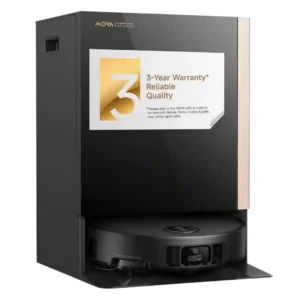
Support and reliability signals are mixed: the three-year warranty is a plus, but one review notes customer-service concerns.
The specialized pads appear safe for delicate flooring, with evidence about gentle handling and reduced marking on sensitive surfaces.
The mop system is notably easy to change because the robot returns to the dock and swaps pads automatically instead of requiring manual changes.
Under-furniture cleaning is a clear strength thanks to the retractable sensor and low body height described across reviews.
The detachable spot cleaner is consistently cited as effective for upholstery and above-floor stains, with strong convenience because it is docked, charged, and ready. Limits include hose reach, weight/handling, and that it is better for stains than for surface-level vacuuming of loose hair or debris on fabric.
Value-for-money is strongest when the buyer wants this exact feature set; reviewers describe getting a lot for the money, but not a bargain-basement product.
Water tank capacity and handling are generally viewed as adequate for routine mopping and occasional spot cleaning, but extended deep-clean use can drain a tank quickly. Shared tank design is convenient but ties the spot cleaner and robot to the same refill/empty cycle.
The water system is generous for a robot vacuum, with multiple reviews calling out the large clean- and dirty-water tanks.
Weight and handling are mainly discussed for the removable spot-clean module, which can feel heavy or cumbersome to move around during cleaning. The full system is also described as bulky compared to more compact robot+dock setups.
Weight cuts both ways in the evidence: the robot is heavy for the category, which may help cleaning pressure but makes the overall package more cumbersome.