Compare eufy Omni E28 Robot Vacuum and Mop vs Ecovacs Deebot X12 OmniCyclone
No summary yet.
Accessories support is positive where mentioned. Reviews note included cleaning-solution bottles or detergents and say the product comes with what is needed to get started.
Adaptive lifting and climbing support is tied to four-wheel drive, threshold climbing, and the ability to handle raised transitions. The evidence points to better movement over thresholds rather than staircase use.
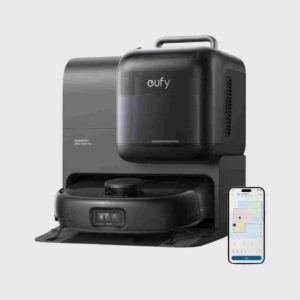
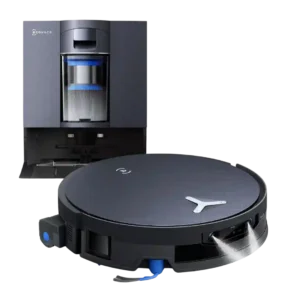
Design impressions are positive but limited. PCMag liked the darker X11-like look, while another reviewer called the dock and robot simple, modern, and unobtrusive.
App and automation features are widely described as feature-rich, including schedules, room/zone cleaning, adjustable suction/water, do-not-disturb for emptying, and experimental modes. Smart home support (including Matter in some reviews) is considered a plus, though usability quirks and occasional confusion are noted.
Smart features are broad: sources mention LiDAR, RGB camera, AI stain detection, Agent Yiko, adaptive scheduling, app control, smart-home integration, and app-based customization. One hands-on reviewer says app mapping could improve.
Airflow blowback is only directly supported by PCMag’s hard-floor test, where the side brush did not fling sand or rice across the room.
Area rugs can be a weak spot: some reviews report occasional dampening of rugs or snagging and dragging a rug edge, especially during combined runs. Settings like carpet avoidance or vacuum-first can reduce risk but do not eliminate it in every account.
Area-rug and carpet transitions are a clear strength. Sources repeatedly describe carpet detection, mop lifting, a mop cover, carpet-first cleaning, and keeping rugs or carpets dry.
No summary yet.
Setup is described as straightforward or very easy. Sources mention scanning the QR code, app pairing, Wi-Fi setup, and fast mapping or configuration.
Automatic standby is only directly supported by one hands-on review, which says the robot put itself to sleep after taking care of its cleaning routines.
Battery life is typically described as sufficient for most homes, with efficient coverage per charge. Some tests characterize battery efficiency as slightly below average, but practical runtime and completion rates are generally acceptable.
Battery and charging are mostly positive, with repeated mentions of PowerBoost top-ups and quick charging. PCMag is the main caveat, saying its real-world runtime stepped back from the X11 despite still exceeding 90 minutes.
The robot’s onboard bin is described as relatively small in at least one test, but the dock’s auto-emptying reduces the practical impact. Expect more frequent dock visits during large jobs, especially in debris-heavy homes.
The bagless bin and dock are one of the most repeated design points. Sources emphasize no disposable dust bags and self-emptying, though hands-on testing also found the canister could still need manual cleaning.
Build comments are limited but generally positive, with references to a large plastic canister and a heavy-duty robot body rather than long-term durability testing.
High-pile/deeper carpet cleaning is reported as strong in at least one standardized deep-clean test, placing it above average. However, some sources still report weaker fine-debris extraction under certain default configurations.
Low-pile carpet pickup is usually described as good for routine maintenance, with strong surface pickup and decent grooming. A few tests still find weaknesses on fine, heavy debris when relying on default smart boosting rather than maximum suction.
Medium-pile carpet results are generally favorable for everyday debris and hair maintenance, though not always class-leading on fine particulates. Performance is commonly described as solid but with edge limitations on carpeted rooms.
Child lock support is direct but limited to one review, which describes Child mode as turning off access to the top buttons.
Debris prevention is mostly tied to the anti-tangle system and airflow path. Most sources describe reduced hair wrap, while PCMag still found hair and dirt wedged in the canister or robot crevices.
Comparative evidence is extensive. Sources compare the X12 with the X11, other Deebots, traditional robot mops, and bagged versions; PCMag’s comparison is the most critical, favoring other recent Deebot models.
Controls and UI are generally described as user-friendly with strong customization and map tools. A few users mention minor app errors or learning curve in map editing, but overall sentiment is positive.
Controls are well covered through the app, room targeting, cleaning modes, physical switches, and app-based settings. Reviewers describe the interface as easy or breezy, with one Italian review noting app control for targeted stain cleaning.
No summary yet.
Corner cleaning is frequently praised due to an extending brush/edge mechanism that improves reach into corners compared to many round robots. Corner coverage is commonly noted as a strength on hard floors.
Corner cleaning is generally good but not perfect. Several sources cite better corner reach or hard-to-reach cleaning, while one hands-on video warns that corners still need occasional manual attention.
Cyclone performance evidence centers on the bagless OmniCyclone or PureCyclone dock, with sources describing cyclone-style debris separation, no disposable bags, and reduced long-term consumables.
Auto-emptying and dock self-maintenance are generally viewed as effective and reliable, including mid-run emptying for some users. The most consistent negative is not reliability but how loud the dock can be while performing these tasks.
Docking and auto-empty reliability are major strengths across the reviews: the dock empties debris, washes and dries the mop or roller, manages water, and lets the robot continue cleaning with less intervention.
Dock noise is a frequent complaint. Auto-emptying and some cleaning cycles are described as very loud, prompting use of do-not-disturb scheduling or disabling certain dock behaviors overnight.
Dried-on stain removal is generally rated above average for a robot, with multiple reviews noting strong scrubbing from the roller mop. Some reports mention minor residue or smearing on tougher messes, depending on settings and cleanup scenario.
Dried-on stain handling is the headline feature. Most sources praise FocusJet pretreatment or water-jet softening, while hands-on tests show limits: jelly was not sprayed in one run and the worst stains may need more than one pass.
Ease of use is positive. Reviews describe app controls, intuitive operation, easy setup, room targeting, and straightforward cleaning-mode changes.
Edge and baseboard cleaning on hard floors is generally described as good, aided by side-brush behavior and the robot’s shape. Edge mopping is more mixed, with some reviews calling it only average at the perimeter.
Edge and baseboard cleaning is repeatedly praised or claimed through TruEdge, extended roller coverage, and close-to-wall cleaning, with multiple sources citing walls, baseboards, or hard-to-reach edges.
Edge-following accuracy is a repeated strength through TruEdge, extended roller reach, and close wall/baseboard cleaning across many reviews and launch writeups.
Emptying and mess control is mixed. Many sources praise self-emptying and dirty-water management, but PCMag had to pull out remnants manually and a hands-on video says damp dirt can stick inside the bagless bin.
Dust containment is typically considered solid for a self-emptying system, with the sealed bag approach reducing direct contact with debris. Some reviews note limitations tied to vacuum performance on fine debris, but containment itself is generally not the core issue.
Dust containment is mixed. One review likes the washable dust-bin filter, while PCMag found dirt and pet hair wedged in the canister, requiring manual removal.
Floor drying is commonly described as leaving floors mildly damp rather than soaked, but a few reviews mention extra water left behind and occasional dampening near rugs or around the base area after mop activity.
Floor drying is supported mostly through fresh-water control, relatively dry floor results, and hot-air drying of the mop or roller. The strongest direct floor result says it leaves the floor relatively dry.
The floorhead design centers on the long OZMO roller mop, brush roll, and roller-based cleaning approach. Sources repeatedly contrast the roller with pads and describe continuous refresh or wider coverage.
The roller-style mop and onboard dirty-water handling are repeatedly cited as enabling wet spill pickup that many pad-based robots struggle with. Users still note that very messy liquid events can require extra cleanup or post-run maintenance.
Fresh liquid pickup is only directly evidenced in PCMag’s soy-sauce test, where the robot sprayed the stain, mopped it up in one swoop, and returned for mop washing.
A recurring specific risk is hair collecting behind the brush into dense clumps in long-hair testing or certain scenarios. This is described as unit- and hair-length-dependent, but it is the most notable hair-channeling concern across critical reviews.
Hair-removal channel issues are supported only by PCMag, which found some hair stuck in crevices on the bottom despite no visible pet-hair remnants on the floor.
Carpet hair pickup is strong in the two hands-on reviews that discuss it: PCMag found no noticeable pet hair remnants, and Android Police was impressed by dog-hair pickup on carpet.
Tangle resistance is often praised on the main rollers in normal use, with many reporting minimal brush tangles. However, long hair can still clump behind the brush housing in some testing, creating cleanup needs for very long hair environments.
Hair-wrap resistance is consistently praised or described through ZeroTangle, anti-tangle airflow, and reduced hair wrapping. PCMag still noted some hair stuck in robot crevices.
Fine-dust performance is the most polarizing part of vacuuming. Some reports describe occasional missed dust bunnies or weak fine debris pickup in standardized testing, particularly on carpet, even when larger debris pickup is good.
Hard-floor fine-dust pickup is mixed in PCMag’s measurement: the X12 picked up sand on hardwood but left clumps and had a worsening dirt-dropping issue on that surface.
Large debris pickup on hard floors is widely described as strong, helped by dual side-brush behavior and edge sweeping. Some reviews note the robot can misclassify clustered debris as obstacles in certain situations.
Hard-floor large-debris intake is mixed in PCMag’s rice test. It picked up most of the rice, but the reviewer still found clumps near bed posts and around the throw rug.
Heating support appears in the dock routines: sources describe hot-water mop washing, heated water, and hot-air drying for the roller or mop.
Innovation is strongly supported. Most sources focus on the unusual FocusJet stain pretreatment, water-jet system, bagless dock, and broader attempt to solve stains, hair, edges, and maintenance together.
Kid-friendliness is supported by one hands-on family review that highlights Child mode and frames the robot as useful in a house with active young boys and pets.
Large-debris handling is lightly supported by one hands-on review that tested crumbs and pet hair in everyday home conditions; PCMag’s rice test is scored separately under hard-floor large debris.
Clearance is generally decent, but the LiDAR turret height can prevent entry under certain furniture and can cause repeated bumping attempts in low-clearance zones. Most homes will be fine, but specific tight furniture can be problematic.
Low-profile performance is lightly supported by one review that says the robot reached hard-to-reach spots under the couch.
Maintenance is described as low day-to-day due to the dock washing/drying and auto-emptying, but not maintenance-free. Spot cleaner use can add upkeep (hose flushing, drying, and handling trapped water), and some users report periodic manual checks for hair buildup behind the brush housing.
Maintenance requirements are lower than typical but not zero. Sources emphasize self-emptying, self-washing, drying, bagless operation, and reduced manual upkeep, while hands-on testing still found occasional bin cleaning.
Maneuverability is generally strong. Reviews cite four-wheel drive, threshold climbing, floor-to-floor movement, real-home navigation, and no stuck runs, though one source says navigation still has room to develop.
Mapping and path efficiency are usually rated above average, with fast mapping and orderly coverage patterns. A few accounts mention the robot learns problem areas over time via keep-out zones and can be efficient once zones are set.
Mapping and path efficiency are good but not perfect. PCMag reports fast, accurate mapping and efficient navigation, while another hands-on review says the map layout is good but fine details can be missed.
The mop lifting system is consistently supported. Sources describe a 15mm lift, automatic carpet detection, and a smart cover that protects carpets or fabric surfaces from moisture.
Most reviews describe the roller mop system as a standout: strong scrubbing, good everyday soil removal, and effective automated washing/drying through the dock. A minority describe mopping as only average in certain real-world messes without the recommended solution, but overall sentiment skews positive.
Mopping performance is strong in concept and often positive, especially with the roller and FocusJet system, but hands-on reviews note limits with worst stains, residue, and one-pass stain removal.
Noise feedback is mixed. One reviewer says higher suction increases noise, an Italian review prefers that it does not make too much noise, and a hands-on video says the roller is louder than pad-based mopping.
Obstacle avoidance is often a highlight, with strong object recognition in multiple tests, but it is not perfectly consistent. Some reviews report it can still run over, drag, or mis-handle certain items and can also over-avoid debris it should vacuum.
Obstacle avoidance is mixed-positive. The robot handled shoes, cords, and most objects in some reviews, but PCMag’s test says it ran over one small white toy and only avoided the larger, more colorful ones.
Odor control feedback is mixed: most do not flag it as an issue, but at least one review reports unpleasant odors during dock vacuuming/emptying and concern about trapped water in the spot-cleaner hose leading to smells if not flushed/dried properly.
Odor control is supported through hot-air drying and carpet/wet separation language. Sources describe hot-air drying as preventing wet-mop smells or bad odors.
Ownership costs benefit from the bagless design and reduced need for replacement bags, but cleaning solution is a continuing consumable and one review lists replacement solution pricing.
Overall cleaning convenience is high. Sources emphasize hands-off cleaning, reduced maintenance, clean-looking floors, lower daily work, and automatic dock routines, even where performance is not flawless.
Overall opinion is favorable but not unanimous. Several reviewers call it effective, innovative, or worth it, while PCMag’s conclusion is more reserved because of dirt dropping, battery comparison, and value.
No summary yet.
Packaging evidence is limited to PCMag’s setup description, which says protective packing material covered nearly every surface before use.
Pet use is a recurring theme: sources describe homes with cats, dogs, high-shedding pets, or kids and pets, and point to suction, pet-hair pickup, anti-tangle design, and maintenance automation as the relevant strengths.
Value depends heavily on whether you will use the spot cleaner and prioritize mopping. Several reviewers see strong value versus premium rivals given features, while at least one critic argues the street price is hard to justify given noise, upkeep, and vacuuming tradeoffs.
Value is mixed. Some coverage notes the unchanged price or savings from fewer bags, but hands-on reviews repeatedly flag the $1,499 price and PCMag prefers other Deebot models for overall value.
Privacy controls are discussed mostly in the context of the onboard camera and smart features. One review highlights an approach focused on onboard analysis with limited user access to camera data, while others do not raise privacy as a primary concern.
Runtime and continuous cleaning are positive overall because of PowerBoost top-ups and larger-home claims, though PCMag measured 118 minutes and said the X11 regained charge more effectively.
Self-cleaning is one of the strongest repeated points. Sources describe automatic dust emptying, mop washing, roller rinsing, drying, water management, tray cleaning, and dock-based maintenance routines.
Software-update support is only lightly evidenced: PCMag says the app setup process includes downloading updates after placing the robot in the base.
The system’s water and detergent handling is a major convenience point: automatic mixing/dispensing and shared reservoirs support both mopping and spot cleaning. Some note solution availability or the need to follow brand guidance, and heavy spot-cleaning can consume water quickly.
The liquid system is a major theme: sources describe cleaning-solution mixing, dual high-pressure jets, fresh-water rinsing, dirty-water separation, detergent reservoirs, and clean-water flow to the roller.
The base station is commonly described as large and space-hungry, and the modular top can prevent the unit from sitting flush to a wall. It looks neat for what it is, but placement needs more clearance than simpler docks.
Storage footprint is a drawback. The dock needs clearance, takes up considerable space, and multiple sources frame the product as overkill or less suitable for small spaces.
Several sources mention potential streaking or residue, often tied to higher water output or the mop leaving more moisture than average. Others report shiny floors and minimal residue in everyday use, suggesting results vary by floor type, settings, and mess severity.
Streaking and residue performance is mixed. Several sources say fresh-water roller washing avoids dirty-water spreading or streaks, while PCMag’s jelly test left residue and spread stickiness.
Most accounts report the robot usually avoids getting stuck, but there are examples of wedging into corners, snagging on rugs, or repeatedly attempting to enter low-clearance spaces, indicating occasional intervention may be needed in cluttered or changeable layouts.
Stuck resistance is a strong point in the hands-on reviews. PCMag says it never got stuck, Android Police did not need to rescue it, and other sources cite reduced stuck risk or solid object handling.
Suction and airflow impressions vary: some reviews describe strong general pickup, while others report underwhelming results on tougher fine debris (notably sand on carpet) and bench measurements that feel average for the price tier.
The X12 is repeatedly tied to strong suction, usually around 22,000Pa, with several sources linking that airflow to crumbs, dust, debris, and pet hair pickup. PCMag’s measured pickup was more mixed, especially for sand on carpet.
Heavy-duty suitability is one of the clearest audience fits. Sources repeatedly frame the X12 for larger homes, pets, kids, sticky messes, heavy carpet layouts, or full-home cleaning rather than light upkeep.
Small-space suitability is weak. Reviews describe the dock as large, the product as not tiny, and the cleaner as overkill for small apartments or already-clean homes.
Operational reliability is mostly positive in the hands-on evidence: several reviews report no rescues or good stuck resistance, though one source says software and navigation still have room to improve.
Under-furniture pickup is supported by one hands-on review that says the robot reached hard-to-reach spots under the couch.
The detachable spot cleaner is consistently cited as effective for upholstery and above-floor stains, with strong convenience because it is docked, charged, and ready. Limits include hose reach, weight/handling, and that it is better for stains than for surface-level vacuuming of loose hair or debris on fabric.
Value-for-money is mixed-positive. Bagless operation lowers consumable costs, discounts appear in some coverage, and reviewers value time savings, but the high launch price and PCMag’s comparison limit the score.
Versatility is strong because the X12 combines vacuuming, mopping, stain pretreatment, self-cleaning, carpet handling, room targeting, and multi-floor or mixed-floor use in one system.
Water tank capacity and handling are generally viewed as adequate for routine mopping and occasional spot cleaning, but extended deep-clean use can drain a tank quickly. Shared tank design is convenient but ties the spot cleaner and robot to the same refill/empty cycle.
The water system is a repeated strength: sources describe clean and dirty water reservoirs or tanks, water-refill management, separate dirty-water handling, and detergent/cleaning-solution reservoirs.
Weight and handling are mainly discussed for the removable spot-clean module, which can feel heavy or cumbersome to move around during cleaning. The full system is also described as bulky compared to more compact robot+dock setups.
Weight/size evidence is limited and mostly about bulk: PCMag lists the robot dimensions, while Android Police calls it not tiny and heavy-duty.