Access logs
P1
Product 1: Schlage Encode Plus Smart Lock
4.5
Access logs were praised by reviewers who liked being able to see lock history and how the lock was opened or closed.
P2
Product 2: eufy Video Smart Lock S330
4.8
Access logs were useful for seeing who came and went and which credential unlocked the door.
Alarm/siren loudness (if included)
P1
Product 1: Schlage Encode Plus Smart Lock
2.3
The built-in alarm was criticized as too quiet, even by reviewers who liked having forced-entry detection available.
P2Product 2: eufy Video Smart Lock S330
No score yetApp
P1
Product 1: Schlage Encode Plus Smart Lock
2.7
The app experience was mixed because the Schlage app exposes useful settings, but Apple Home app limitations and sync quirks made access-code and HomeKit management confusing.
P2
Product 2: eufy Video Smart Lock S330
4.6
The app was usually described as smooth, easy, useful, or user-friendly across reviews.
Auto-lock
P1
Product 1: Schlage Encode Plus Smart Lock
4.0
Auto-lock received positive comments as a useful safety net, especially for users who want the door to relock after a delay or when the last person leaves.
P2
Product 2: eufy Video Smart Lock S330
4.3
Auto-lock was valued for peace of mind, though one reviewer cautioned against using timed auto-lock without reliable door-position awareness.
Auto-relock after failed attempts
P1
Product 1: Schlage Encode Plus Smart Lock
4.0
Failed-code lockout behavior was treated as a useful security deterrent because repeated wrong entries frustrate brute-force attempts.
P2Product 2: eufy Video Smart Lock S330
No score yetBattery
P1
Product 1: Schlage Encode Plus Smart Lock
2.8
Battery impressions were mixed: one long-term user reported jams near low battery, one called two-month life terrible, while another early reviewer projected strong life.
P2
Product 2: eufy Video Smart Lock S330
4.4
Battery life was generally praised as long-lasting, though full charging can take several hours.
Build quality and durability
P1
Product 1: Schlage Encode Plus Smart Lock
4.4
Build quality received strong praise from reviewers who described the lock as solid, secure-feeling, and backed by Schlage's reputation for durable hardware.
P2
Product 2: eufy Video Smart Lock S330
4.8
Reviewers consistently praised the heavy, metal-feeling construction and durable build.
Camera and doorbell performance
P1Product 1: Schlage Encode Plus Smart Lock
No score yet
P2
Product 2: eufy Video Smart Lock S330
4.3
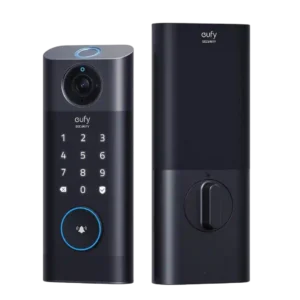
Camera and doorbell performance was generally strong, especially video clarity, but motion timing, distance, and visitor button clarity were recurring caveats.
Door-sense
P1
Product 1: Schlage Encode Plus Smart Lock
2.0
Door-sense capability was criticized as absent, with a reviewer saying an open/closed door sensor would still be useful despite lock/unlock notifications.
P2
Product 2: eufy Video Smart Lock S330
3.0
Door-sense evidence was mixed: departure detection was useful, but one reviewer criticized the lock for not knowing whether the door was open.
Door compatibility (deadbolt fit)
P1
Product 1: Schlage Encode Plus Smart Lock
3.2
Door fit mattered because reviewers warned that smart locks dislike resistance and may have battery or operation issues if the deadbolt does not move smoothly.
P2
Product 2: eufy Video Smart Lock S330
2.7
Door fit was context-dependent: some installations worked smoothly, while shallow strike plates, alignment, and size constraints caused problems.
Feature additions via updates
P1Product 1: Schlage Encode Plus Smart Lock
No score yet
P2
Product 2: eufy Video Smart Lock S330
4.5
A post-review feature addition impressed one long-term reviewer by making live-view unlocking more convenient.
Fingerprint
P1
Product 1: Schlage Encode Plus Smart Lock
2.0
Fingerprint unlocking was a notable missing feature, especially because reviewers compared it unfavorably with lower-priced competing locks that include it.
P2
Product 2: eufy Video Smart Lock S330
4.4
Fingerprint performance was strongly positive in most reviews, but one reviewer had repeated failed reads.
Guest Codes and Access
P1
Product 1: Schlage Encode Plus Smart Lock
3.8
Guest access was praised for schedules, renter use, and easy code sharing, but one reviewer criticized the 100-code limit versus competing locks with more capacity.
P2
Product 2: eufy Video Smart Lock S330
5.0
Guest access was a standout use case, with reviewers liking temporary access, contractor use, and removable access.
Hub requirement
P1
Product 1: Schlage Encode Plus Smart Lock
3.6
Reviewers liked that the lock can avoid a separate bridge, but Apple/HomeKit users still saw hub requirements as important for remote control, Thread performance, or battery life.
P2
Product 2: eufy Video Smart Lock S330
4.3
The required bridge/chime was viewed positively when it improved chime, storage, or camera-feed experience.
Industrial design
P1
Product 1: Schlage Encode Plus Smart Lock
3.7
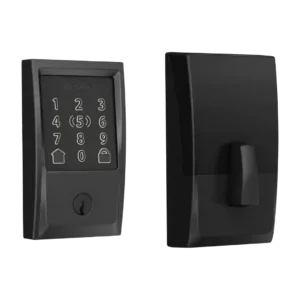
Reviewers liked the styling and finish options when they matched existing hardware, but some noted that the interior/exterior lock body is larger and less discreet than slimmer rivals.
P2
Product 2: eufy Video Smart Lock S330
4.0
Design was generally liked for its sleek or elegant look, though its large size stood out as a drawback.
Installation and Setup
P1
Product 1: Schlage Encode Plus Smart Lock
4.3
Reviewers consistently found the hardware installation easy, often describing setup as quick, smooth, or straightforward, though Apple/Home app setup could add complexity for some users.
P2
Product 2: eufy Video Smart Lock S330
4.2
Installation was often described as easy or manageable, but door fit and alignment created trouble for some reviewers.
Keypad
P1
Product 1: Schlage Encode Plus Smart Lock
3.3
Keypad feedback was split: some reviewers praised responsiveness and readability, while several complained that the numbers are hard to see or that the touch keypad feels lower quality.
P2
Product 2: eufy Video Smart Lock S330
4.3
Keypad and touchpad feedback was mostly positive, though one reviewer had wake-up/tap responsiveness issues.
Lock/unlock speed
P1
Product 1: Schlage Encode Plus Smart Lock
4.6
Locking and unlocking speed earned strong praise, with multiple reviewers describing Home Key, app, voice, or Thread responses as very quick or nearly instant.
P2
Product 2: eufy Video Smart Lock S330
5.0
When working well, unlocking was described as instant or very fast, especially through fingerprint recognition.
Locking motor
P1
Product 1: Schlage Encode Plus Smart Lock
4.3
The lock motor was repeatedly praised as smooth, fast, and quieter than prior Schlage or Nest/Yale locks, making everyday locking less disruptive.
P2
Product 2: eufy Video Smart Lock S330
3.5
Motor feedback was split: one long-term reviewer found it solid, while another warned that small alignment resistance could stop locking.
Locking reliability
P1
Product 1: Schlage Encode Plus Smart Lock
4.7
Reliability was a major strength in hands-on reviews, with reviewers describing the lock as dependable, fast, and easy to live with.
P2
Product 2: eufy Video Smart Lock S330
4.2
Reliability was mixed, ranging from flawless and better-than-prior locks to failures when alignment or one-touch locking was imperfect.
Notifications
P1
Product 1: Schlage Encode Plus Smart Lock
4.2
Notifications were praised when they identified who unlocked the door, especially through Apple devices and Home Key alerts.
P2
Product 2: eufy Video Smart Lock S330
4.0
Notifications were mostly praised as quick and useful, but some reviewers reported missed or delayed motion events.
Physical attack resistance
P1Product 1: Schlage Encode Plus Smart Lock
No score yet
P2
Product 2: eufy Video Smart Lock S330
4.5
Physical security impressions were positive, centered on wanting a sturdier alternative to flimsy plastic doorbells.
Remote access
P1
Product 1: Schlage Encode Plus Smart Lock
2.5
Remote access was limited in Apple Home setups without a hub, which reviewers treated as an important caveat despite the lock's built-in Wi-Fi.
P2
Product 2: eufy Video Smart Lock S330
5.0
Remote access was a clear strength, with reviewers valuing lock control from the app while away.
Security features (encryption)
P1Product 1: Schlage Encode Plus Smart Lock
No score yet
P2
Product 2: eufy Video Smart Lock S330
3.5
Security/encryption evidence was limited but noted an encryption message before streaming, alongside privacy caution.
Smart-home integration (Alexa, Google, Siri, HomeKit, Matter, Thread)
P1
Product 1: Schlage Encode Plus Smart Lock
4.3
The strongest praise centered on Apple Home Key and broad smart-home support, with reviewers calling Home Key fast and convenient, especially for iPhone and Apple Watch users.
P2
Product 2: eufy Video Smart Lock S330
3.0
Smart-home integration was mixed because Alexa/Google support was useful, but reviewers noted the lack of Apple HomeKit, IFTTT, or Matter.
Touchscreen
P1
Product 1: Schlage Encode Plus Smart Lock
2.7
Touchscreen opinions were mixed to negative: reviewers liked some visual and audio cues but complained about no haptics, weak feedback, and a flawed touch keypad.
P2
Product 2: eufy Video Smart Lock S330
3.8
Touchscreen feedback was split between responsive operation and needing repeated taps to wake it.
Two-factor authentication availability
P1
Product 1: Schlage Encode Plus Smart Lock
2.0
Two-factor authentication was criticized as missing from the Schlage app, reducing account-security confidence compared with some rival smart-lock apps.
P2Product 2: eufy Video Smart Lock S330
No score yetUser access management
P1
Product 1: Schlage Encode Plus Smart Lock
3.7
User access management was praised for admin keys and code toggles, but reviewers also reported Home app and Schlage app code-management limitations.
P2
Product 2: eufy Video Smart Lock S330
5.0
User management evidence was positive, especially around quickly adding additional users.
Value and Price
P1
Product 1: Schlage Encode Plus Smart Lock
3.8
Value depended heavily on Apple/HomeKit use: many reviewers called it worth the high price for Home Key, while others felt it costs more while missing some rival features.
P2
Product 2: eufy Video Smart Lock S330
4.2
Most reviewers considered the price fair for the combined lock, camera, doorbell, fingerprint, and no-extra-fee package.
Voice control
P1
Product 1: Schlage Encode Plus Smart Lock
4.3
Voice control was described as fast and broadly supported across platforms, with Siri confirmation treated as an appropriate security behavior when unlocking.
P2
Product 2: eufy Video Smart Lock S330
5.0
Voice control performed well in the one review that tested it directly.
Wi-Fi
P1
Product 1: Schlage Encode Plus Smart Lock
4.5
Wi-Fi performed well in the reviews that tested it, and integrated Wi-Fi was praised for reducing bridge dependence, though Apple users may still need a hub for remote features.
P2
Product 2: eufy Video Smart Lock S330
5.0
Wi-Fi performance had limited but strong evidence, with one reviewer reporting no live-view latency.