Access logs
P1
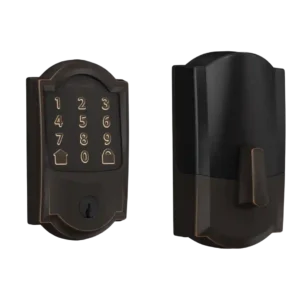
Product 1: Schlage Encode Smart Lock
4.6
Activity history, lock logs, and audit trails were repeatedly mentioned as useful for knowing who locked or unlocked the door and when.
P2
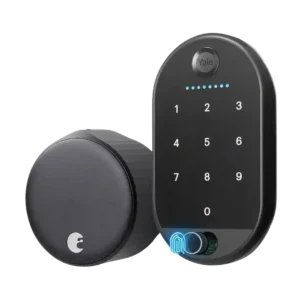
Product 2: Yale August Smart Lock
4.0
Activity timelines and logs are useful in most reviews, showing who used the lock and when, but one reviewer reported a serious missed log after an unexpected unlock.
Alarm/siren loudness (if included)
P1
Product 1: Schlage Encode Smart Lock
3.8
The tamper/forced-entry alarm exists, but loudness opinions vary sharply from quiet to deafening or 90 dB.
P2Product 2: Yale August Smart Lock
No score yetApp
P1
Product 1: Schlage Encode Smart Lock
4.3
The app was usually described as useful or easy for status, codes, locks, and history, but setup and third-party configuration were sometimes confusing.
P2
Product 2: Yale August Smart Lock
4.1
Most reviewers liked the August app's clear controls, alerts, access tools, and setup flow, though one found the shared Yale/August app experience confusing and another had freezes during setup.
Auto-lock
P1
Product 1: Schlage Encode Smart Lock
4.2
Auto-lock is widely supported and often appreciated, though reviewers warned it can be risky without door-sense if the door is open.
P2
Product 2: Yale August Smart Lock
4.6
Auto-lock is broadly praised for flexible timers and convenience, with one reviewer turning it off because it could lock them out without keys or a phone.
Auto-relock after failed attempts
P1
Product 1: Schlage Encode Smart Lock
4.0
One locksmith test found the keypad temporarily disabled after multiple invalid codes, although it did not send an active phone notification.
P2Product 2: Yale August Smart Lock
No score yetBattery
P1
Product 1: Schlage Encode Smart Lock
3.3
Battery evidence centered on four AA batteries, often around six months of life; Wi-Fi drain was a repeated caveat, though one reviewer reported 40 percent after five months.
P2
Product 2: Yale August Smart Lock
2.8
Battery life is the most consistent drawback: reviewers cite three-month expectations, costly CR123 cells, and in one long-term test only six to eight weeks.
Bluetooth
P1
Product 1: Schlage Encode Smart Lock
4.5
Bluetooth evidence is limited but positive, with reviewers noting nearby communication and one locksmith emphasizing encrypted Bluetooth.
P2
Product 2: Yale August Smart Lock
3.7
Bluetooth supports local detection and auto-unlock behavior, but it is also tied to range limits and mixed reliability in some owner experiences.
Build quality and durability
P1
Product 1: Schlage Encode Smart Lock
4.3
Most evidence points to sturdy, heavy, secure hardware, although one reviewer criticized the bulky interior electronics housing.
P2
Product 2: Yale August Smart Lock
4.6
Reviewers generally liked the compact, solid-feeling design and high-quality materials, especially compared with earlier, bulkier August locks.
Camera and doorbell performance
P1
Product 1: Schlage Encode Smart Lock
4.3
Doorbell and camera integration was strongest with Ring and Amazon Key for live-view lock control, but Ring Alarm support and multi-app setup caused limitations.
P2Product 2: Yale August Smart Lock
No score yetDoor-sense
P1
Product 1: Schlage Encode Smart Lock
1.0
Door-sense is a clear limitation: one review explicitly listed no door sense and described the auto-lock open-door risk.
P2
Product 2: Yale August Smart Lock
4.0
DoorSense is valued for door-open status and alerts, but reliability is mixed because one reviewer could not calibrate it accurately.
Door compatibility (deadbolt fit)
P1
Product 1: Schlage Encode Smart Lock
4.0
Reviewers found the lock compatible with standard deadbolt holes and common door thicknesses, but one installation needed strike-plate alignment work.
P2
Product 2: Yale August Smart Lock
5.0
The retrofit deadbolt design is a standout because it fits over existing interior hardware rather than replacing the exterior lock.
Existing hardware reuse
P1
Product 1: Schlage Encode Smart Lock
2.0
The Encode is a full deadbolt replacement, so it generally replaces rather than reuses the existing lock body.
P2
Product 2: Yale August Smart Lock
5.0
Existing exterior hardware and house keys remain usable, making the lock especially attractive for renters or shared-key situations.
Fingerprint
P1
Product 1: Schlage Encode Smart Lock
1.5
Fingerprint support is absent in the reviewed evidence; one reviewer specifically wished Schlage had added a fingerprint recognition sensor.
P2
Product 2: Yale August Smart Lock
1.5
Fingerprint entry is not a strength because one review explicitly notes the lock has no fingerprint pad.
Finish durability
P1
Product 1: Schlage Encode Smart Lock
5.0
Direct finish evidence is limited, but GearBrain cited the top ANSI/BHMA Grade AAA rating for security, durability, and finish.
P2Product 2: Yale August Smart Lock
No score yetGeofencing
P1
Product 1: Schlage Encode Smart Lock
1.4
Geofencing and true auto-unlock were repeatedly called out as missing compared with some alternatives.
P2
Product 2: Yale August Smart Lock
3.9
Geofencing and auto-unlock are praised when they work, but long-term and negative reviews describe delays, failures, and stopped automation.
Guest Codes and Access
P1
Product 1: Schlage Encode Smart Lock
4.8
Guest access was a major strength, especially the 100-code capacity plus temporary, recurring, scheduled, or app-based access options.
P2
Product 2: Yale August Smart Lock
4.7
Guest access is a consistent strength, with virtual keys, temporary access, scheduled codes, and text or email invitations mentioned across reviews.
Hub requirement
P1
Product 1: Schlage Encode Smart Lock
5.0
Reviewers strongly agreed that the lock avoids a separate hub, bridge, adapter, or Wi-Fi module, which simplifies ownership.
P2
Product 2: Yale August Smart Lock
4.8
Built-in Wi-Fi removes the old bridge requirement in most reviews, although reviewers note this convenience comes with battery tradeoffs.
Installation and Setup
P1
Product 1: Schlage Encode Smart Lock
4.4
Installation was usually described as screwdriver-simple and fast, often helped by app guides or snap-in hardware, though some reviewers found setup, programming, or alignment tricky.
P2
Product 2: Yale August Smart Lock
4.3
Installation is usually described as quick and easy with app guidance, but one owner-review had setup freezes and calibration trouble.
Key override reliability
P1
Product 1: Schlage Encode Smart Lock
4.3
Reviewers frequently valued the physical key backup for battery, app, or electronics failures, although some noted the package includes only one key.
P2
Product 2: Yale August Smart Lock
4.8
Because the exterior lock remains, physical keys still work reliably as a backup when batteries die or smart features disappoint.
Keypad
P1
Product 1: Schlage Encode Smart Lock
4.4
The keypad was usually easy, backlit, accessible, or responsive, with minor complaints about night visibility and limited settings granularity.
P2
Product 2: Yale August Smart Lock
3.3
A keypad exists as an add-on, but it is not included and reviewers mention extra cost, small size, or slight delay.
Lock/unlock speed
P1
Product 1: Schlage Encode Smart Lock
4.2
Keypad and app unlocking were often described as instant or near-instant, while voice/app status updates sometimes showed lag.
P2
Product 2: Yale August Smart Lock
4.3
App-based lock and unlock speed is excellent in lab-style reviews, while one long-term reviewer found phone, watch, and voice workflows slower than a key.
Locking motor
P1
Product 1: Schlage Encode Smart Lock
3.5
Motor feedback was mixed: some reviewers found it quiet or strong, while others described it as loud, grinding, or bulky.
P2
Product 2: Yale August Smart Lock
4.7
The locking motor is viewed positively for smooth, quiet operation, though one negative owner-review reported state confusion.
Locking reliability
P1
Product 1: Schlage Encode Smart Lock
4.6
Locking reliability was generally strong, with multiple reviewers reporting flawless, smooth, or reliably working lock/unlock behavior.
P2
Product 2: Yale August Smart Lock
3.9
Locking reliability is strong in most tests, but one rant-style review reported serious confusion and unexpected unlock behavior.
Notifications
P1
Product 1: Schlage Encode Smart Lock
4.4
Notifications for lock state, code use, or battery were useful across many reviews, though invalid-code push alerts were not always available.
P2
Product 2: Yale August Smart Lock
4.7
Notifications and smart alerts are widely appreciated for lock status, door-ajar events, and user activity, with one review raising concern over missing logs.
Physical attack resistance
P1
Product 1: Schlage Encode Smart Lock
4.9
Physical security was a major strength, with repeated Grade 1/ANSI/BHMA praise and reinforcement hardware evidence.
P2
Product 2: Yale August Smart Lock
5.0
Physical security evidence is limited but positive, with one review citing an ANSI grade 1 rating.
Pick/drill resistance (if rated)
P1
Product 1: Schlage Encode Smart Lock
4.0
Pick and drill evidence is mixed: one review cites resistance to bumping and picking, while a locksmith called the stock cylinder good but not impossible to pick.
P2Product 2: Yale August Smart Lock
No score yetRemote access
P1
Product 1: Schlage Encode Smart Lock
4.5
Remote access was consistently supported, letting users lock or unlock from the app or phone while away, with some app-flow caveats.
P2
Product 2: Yale August Smart Lock
4.7
Remote access is a major benefit of the built-in Wi-Fi, with reviewers repeatedly noting control from anywhere through the app.
Security features (encryption)
P1
Product 1: Schlage Encode Smart Lock
5.0
Security encryption evidence is limited to one locksmith review explicitly praising encrypted Bluetooth.
P2
Product 2: Yale August Smart Lock
4.7
Security features are positively supported by mobile-app encryption in one review and optional biometric app authentication in another.
Smart-home integration (Alexa, Google, Siri, HomeKit, Matter, Thread)
P1
Product 1: Schlage Encode Smart Lock
4.0
Smart-home integration is useful but uneven: Alexa, Google, Ring, Amazon Key, and Home Assistant appear in evidence, while HomeKit, IFTTT, SmartThings, and Ring Alarm limitations recur.
P2
Product 2: Yale August Smart Lock
4.0
Smart-home integration is a major strength across Alexa, Google, Siri, HomeKit, IFTTT, and other platforms, though a few reviewers hit HomeKit or assistant issues.
Tamper detection sensitivity
P1
Product 1: Schlage Encode Smart Lock
4.8
Tamper detection is supported through the built-in alarm, and one review specifically noted adjustable alarm sensitivity in the app.
P2Product 2: Yale August Smart Lock
No score yetTouchscreen
P1
Product 1: Schlage Encode Smart Lock
4.1
The touch interface was considered responsive and fingerprint resistant by some, but another locksmith noted it is not a true modern touchscreen.
P2
Product 2: Yale August Smart Lock
2.0
Touchscreen support is weak because the lock itself does not include a native outside touch panel.
Two-factor authentication availability
P1Product 1: Schlage Encode Smart Lock
No score yet
P2
Product 2: Yale August Smart Lock
5.0
Two-factor authentication is directly supported in one review for account login and setup.
User access management
P1
Product 1: Schlage Encode Smart Lock
4.7
User management is flexible through access codes, schedules, time limits, virtual keys, and PIN changes, but one review noted no single-use code.
P2
Product 2: Yale August Smart Lock
4.6
User management is strong, with permanent, recurring, temporary, household, and PIN-code access controls mentioned.
Value and Price
P1
Product 1: Schlage Encode Smart Lock
4.0
Value was context-dependent: reviewers called it expensive or not the best value, but many still found it worth the money for features and security.
P2
Product 2: Yale August Smart Lock
3.7
Value is mixed: reviewers often call it pricey, but some still justify the cost because Wi-Fi is built in and retrofit installation is strong.
Voice control
P1
Product 1: Schlage Encode Smart Lock
4.2
Voice control works mainly through Alexa and Google, with unlock often requiring a PIN and Google unlock support limited or absent in several reviews.
P2
Product 2: Yale August Smart Lock
4.1
Voice control works across major assistants in positive reviews, but some reviewers disliked spoken-password security or found Siri and Google too slow.
Warranty and support
P1
Product 1: Schlage Encode Smart Lock
5.0
Warranty evidence was positive where mentioned, including lifetime mechanical and 3-year electronics coverage or a three-year warranty.
P2
Product 2: Yale August Smart Lock
4.0
Support evidence is limited but positive around continued software and security updates under Assa Abloy/Yale ownership.
Wi-Fi
P1
Product 1: Schlage Encode Smart Lock
4.4
Built-in 2.4GHz Wi-Fi is a core strength for remote access and hub-free setup, though reviewers noted connection and battery tradeoffs.
P2
Product 2: Yale August Smart Lock
4.3
Built-in Wi-Fi is one of the lock's defining advantages for remote control, but it contributes to battery-life complaints and setup issues in one review.