Access logs
P1
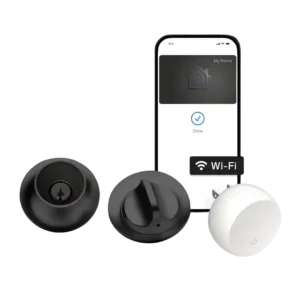
Product 1: Level Lock+ Smart Lock
3.9
Access logs were useful overall, but one reviewer wanted better accuracy and detail from the activity history.
P2
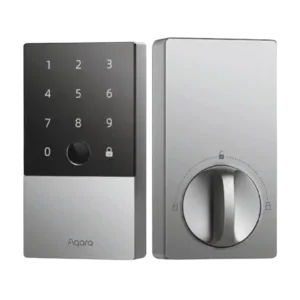
Product 2: Aqara Smart Lock U100
3.9
Activity logs were useful for seeing who used the lock, but HomeKit-sourced events were less detailed about the exact unlock method.
Alarm/siren loudness (if included)
P1Product 1: Level Lock+ Smart Lock
No score yet
P2
Product 2: Aqara Smart Lock U100
4.0
The built-in speaker/alarm was viewed as useful rather than extremely loud, with reviewers appreciating open-door and warning alerts.
App
P1
Product 1: Level Lock+ Smart Lock
4.1
The app was praised for features and access sharing, but its setup and firmware-update experience could be uneven.
P2
Product 2: Aqara Smart Lock U100
3.6
The Aqara app offered deep control and setup help, but reviewers also criticized slow status updates, long-press controls, and a frustrating firmware process.
Auto-lock
P1
Product 1: Level Lock+ Smart Lock
3.3
Auto-lock was useful but limited because it relies on timing rather than knowing with certainty that the door is closed.
P2
Product 2: Aqara Smart Lock U100
3.7
Auto-lock evidence was mixed, ranging from flawless or cool performance to beta-feature delays and at least one lockout caused by latch behavior.
Auto-relock after failed attempts
P1Product 1: Level Lock+ Smart Lock
No score yet
P2
Product 2: Aqara Smart Lock U100
4.5
Failed-attempt lockout was consistently viewed positively, with reviewers saying it worked as intended and helped deter brute-force attempts.
Battery
P1
Product 1: Level Lock+ Smart Lock
3.4
Battery replacement was praised as elegant and easy, but battery reporting frustrated reviewers because it lacks precise percentage detail.
P2
Product 2: Aqara Smart Lock U100
3.4
Battery impressions were mixed: some reported excellent life or no early drain, while others saw quick drain or disliked the lack of clear low-battery awareness.
Bluetooth
P1
Product 1: Level Lock+ Smart Lock
3.2
Bluetooth was the most inconsistent connectivity area: some reviewers found it stable, while others called it spotty or range-limited.
P2
Product 2: Aqara Smart Lock U100
4.0
Bluetooth performance was acceptable to strong in short-range use, with minimal latency and stable connections reported despite general reservations about Bluetooth smart-home devices.
Build quality and durability
P1
Product 1: Level Lock+ Smart Lock
4.7
Build quality came across as premium and well constructed, with reviewers praising the polished hardware and overall workmanship.
P2
Product 2: Aqara Smart Lock U100
4.3
Reviewers consistently described the lock as solid, heavy, sturdy, or well-built, with only cosmetic design or material caveats in a few cases.
Door-sense
P1
Product 1: Level Lock+ Smart Lock
2.1
Reviewers wanted true door-sense behavior; the repeated concern was that the lock cannot tell whether the door is actually closed.
P2
Product 2: Aqara Smart Lock U100
4.1
Door-sense was useful and often praised, though one reviewer estimated it at about 80% accuracy and used an extra contact sensor for certainty.
Door compatibility (deadbolt fit)
P1
Product 1: Level Lock+ Smart Lock
3.0
Door fit was the main setup caveat: smooth, well-aligned deadbolts worked best, while tight clearances, older doors, and imperfect alignment caused extra work.
P2
Product 2: Aqara Smart Lock U100
3.4
Fit was strongest on standard deadbolt doors; reviewers praised a perfect fit in one install but warned that other lock types or unusual deadbolts can complicate replacement.
Existing hardware reuse
P1
Product 1: Level Lock+ Smart Lock
2.7
Because Lock+ replaces the full deadbolt, reviewers noted less reuse of existing keyed hardware and more friction when trying to keep old keys.
P2
Product 2: Aqara Smart Lock U100
4.0
One reviewer reused an existing strike plate successfully, suggesting some prior hardware can work when the bolt alignment is already right.
Feature additions via updates
P1
Product 1: Level Lock+ Smart Lock
3.4
Future update potential was mixed: Matter/Thread promises made the lock feel future-proof to some, but delayed deployment was a concern.
P2
Product 2: Aqara Smart Lock U100
3.0
Firmware updates were a tradeoff: one long-term reviewer said they improved performance, while another found the update process frustrating.
Fingerprint
P1
Product 1: Level Lock+ Smart Lock
2.0
Fingerprint access was viewed as a missing convenience, with one reviewer explicitly wishing the keypad included a fingerprint scanner.
P2
Product 2: Aqara Smart Lock U100
4.8
Fingerprint unlocking was the strongest area of agreement, with reviewers repeatedly calling it fast, accurate, reliable, and often their preferred method.
Geofencing
P1
Product 1: Level Lock+ Smart Lock
3.2
Geofencing and touch-based arrival features were useful but more context-dependent than Home Key because they rely on location and Bluetooth.
P2
Product 2: Aqara Smart Lock U100
3.3
Geofencing was possible but evidence was cautious: one reviewer used it successfully, while another warned location automations were beta-like and risky.
Guest Codes and Access
P1
Product 1: Level Lock+ Smart Lock
4.0
Guest access was well liked for passes, cards, and temporary sharing, though several reviewers disliked requiring guests to install the Level app.
P2
Product 2: Aqara Smart Lock U100
3.8
Guest access was useful for one-time, temporary, and shared passcodes, but several reviewers wanted more flexible schedules or noted user/password limits.
Hub requirement
P1
Product 1: Level Lock+ Smart Lock
2.6
Hub requirements were a recurring drawback, especially the nearby Connect bridge and the need for separate bridging in some ecosystems.
P2
Product 2: Aqara Smart Lock U100
3.3
Hub requirements were the biggest ecosystem tradeoff: some saw the bundled hub as a no-brainer, while others disliked needing extra hardware for remote and Matter features.
Industrial design
P1
Product 1: Level Lock+ Smart Lock
4.8
Industrial design was the clearest consensus strength, with reviewers praising the stealth, minimal, ordinary-deadbolt appearance.
P2Product 2: Aqara Smart Lock U100
No score yetInstallation and Setup
P1
Product 1: Level Lock+ Smart Lock
4.5
Reviewers strongly liked the simple physical install, often calling it exceptionally easy, though one reviewer found the instructions thin and had to backtrack.
P2
Product 2: Aqara Smart Lock U100
4.4
Most reviewers found installation straightforward or easy, though one noted older or unusual deadbolt doors may require extra measuring or creative fitting.
Key override reliability
P1
Product 1: Level Lock+ Smart Lock
4.1
Physical key fallback was treated as a useful backup, especially for battery failure or less tech-oriented household members.
P2
Product 2: Aqara Smart Lock U100
3.7
The physical key remained a useful backup, but reviewers framed it more as emergency insurance than a primary access method.
Keypad
P1
Product 1: Level Lock+ Smart Lock
3.5
The optional keypad was considered useful, especially for guests and rentals, but reviewers disliked that it costs extra and is not integrated.
P2
Product 2: Aqara Smart Lock U100
4.3
The keypad was generally well liked for responsiveness, readability, and satisfying operation, with minor complaints about extra confirmation steps or fingerprint wear concerns.
Keyway quality
P1
Product 1: Level Lock+ Smart Lock
2.0
Keyway quality drew serious criticism because reviewers felt the cylinder was too easy to pick and not robust enough for the price.
P2
Product 2: Aqara Smart Lock U100
2.2
Keyway quality was the clearest mechanical weak spot because multiple reviewers found re-keying difficult or effectively not practical.
Lock/unlock speed
P1
Product 1: Level Lock+ Smart Lock
4.5
Home Key and app unlocking were generally quick, with reviewers describing NFC as immediate and app responses as just a few seconds.
P2
Product 2: Aqara Smart Lock U100
4.8
Locking and unlocking were repeatedly described as quick, especially through Siri, Home Key, and the fast motorized action.
Locking reliability
P1
Product 1: Level Lock+ Smart Lock
4.5
Locking reliability was a major strength across testing, with reviewers repeatedly saying the lock worked reliably once installed and aligned.
P2
Product 2: Aqara Smart Lock U100
3.5
Reliability was split: early testing was flawless for some reviewers, while longer-term users reported offline states, wrong status, and unresponsive behavior.
Notifications
P1Product 1: Level Lock+ Smart Lock
No score yet
P2
Product 2: Aqara Smart Lock U100
4.3
Notifications and alerts were considered useful for knowing who unlocked the door, whether it was left open, or whether automations fired.
Physical attack resistance
P1
Product 1: Level Lock+ Smart Lock
4.5
Physical forced-entry strength was praised by one reviewer based on the lock's residential rating and deadbolt strength.
P2
Product 2: Aqara Smart Lock U100
3.5
Physical attack evidence was limited, but one reviewer framed the lock’s lowest BHMA grade as still providing meaningful durability.
Pick/drill resistance (if rated)
P1
Product 1: Level Lock+ Smart Lock
1.8
Pick resistance was a weak point, with reviewers citing easy picking and available-tool attacks as a meaningful security caveat.
P2
Product 2: Aqara Smart Lock U100
2.5
Pick-resistance evidence was limited and skeptical, with one reviewer assuming the U100 could still be defeated like many smart locks.
Remote access
P1
Product 1: Level Lock+ Smart Lock
3.8
Remote access was useful and sometimes reliable, but it depended on bridges, HomeKit hubs, or Wi-Fi Connect rather than direct lock Wi-Fi.
P2
Product 2: Aqara Smart Lock U100
2.9
Remote access worked best with an Aqara hub or Apple home hub, but reviewers noted important limitations when controlling settings away from the lock.
Security features (encryption)
P1Product 1: Level Lock+ Smart Lock
No score yet
P2
Product 2: Aqara Smart Lock U100
4.5
Security features drew positive comments around AES encryption and local fingerprint storage.
Smart-home integration (Alexa, Google, Siri, HomeKit, Matter, Thread)
P1
Product 1: Level Lock+ Smart Lock
4.4
Smart-home integration was strongest for Apple HomeKit and Home Key, while broader ecosystem support was more conditional or dependent on updates.
P2
Product 2: Aqara Smart Lock U100
4.4
Smart-home integration was a major strength, especially HomeKit/Home Key and Matter potential, but Alexa setup and Home Key lock limitations created caveats.
User access management
P1
Product 1: Level Lock+ Smart Lock
4.5
User access management was a strength, with reviewers praising flexible control over household members, guests, cards, and shared access.
P2
Product 2: Aqara Smart Lock U100
4.3
User access management was usually praised for clear controls, remote management, and multiple user types, despite app and code-management caveats.
Value and Price
P1
Product 1: Level Lock+ Smart Lock
2.9
Value was mixed: reviewers liked the premium design and Apple experience but repeatedly noted the high price and security tradeoffs.
P2
Product 2: Aqara Smart Lock U100
4.4
Value was broadly praised because the U100 packs Home Key, fingerprint, keypad, and smart integrations at a lower price than several named alternatives, though hub costs can raise the total.
Voice control
P1
Product 1: Level Lock+ Smart Lock
4.2
Voice control generally worked well through Siri or Alexa, though one reviewer noted occasional Siri delay.
P2
Product 2: Aqara Smart Lock U100
4.3
Voice control worked well in the cited tests, including Siri and Alexa examples, with voice access framed as one of several convenient unlock or lock methods.
Wi-Fi
P1
Product 1: Level Lock+ Smart Lock
2.7
Wi-Fi was useful when included through Connect, but reviewers disliked the lack of direct Wi-Fi and the dependence on a bridge or alternate hub.
P2
Product 2: Aqara Smart Lock U100
2.3
The lack of built-in Wi-Fi was a recurring limitation because remote control and long-distance features require a hub or router workaround.