Access logs
P1
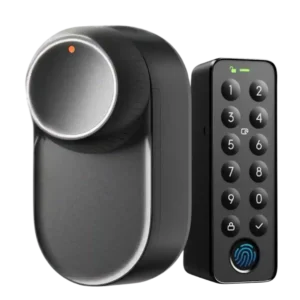
Product 1: SwitchBot Lock Ultra
4.3
Reviewers who discussed logs valued being able to see activity history, with one noting accurate logs and another saying they help check who came and went.
P2
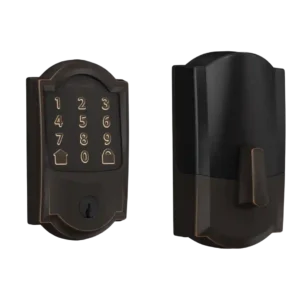
Product 2: Schlage Encode Smart Lock
4.6
Reviewers found the history/audit trail useful for seeing who entered and when, especially for family, guests, and rental-style access.
Alarm/siren loudness (if included)
P1
Product 1: SwitchBot Lock Ultra
3.0
The keypad speaker is clearly audible, but one reviewer found the voice prompts annoying enough to lower the score.
P2
Product 2: Schlage Encode Smart Lock
3.5
Alarm loudness was split: one review called the siren quiet, while a locksmith found it very loud and annoying.
App
P1
Product 1: SwitchBot Lock Ultra
4.8
The SwitchBot app was widely praised for easy pairing, clear calibration, smooth menus, and stable operation, with a few feature-description caveats.
P2
Product 2: Schlage Encode Smart Lock
4.6
Most reviewers found the Schlage Home or Key app easy, responsive, and useful, with some caveats about simplicity or setup complexity.
Auto-lock
P1
Product 1: SwitchBot Lock Ultra
3.2
Auto-lock drew mixed evidence: some reviewers liked the extra security or found it reliable, while lift-to-lock doors and a bad door sensor broke the experience for others.
P2
Product 2: Schlage Encode Smart Lock
4.4
Auto-lock was widely useful for forgotten doors, though reviewers warned that timing and lack of door awareness can create practical issues.
Auto-relock after failed attempts
P1Product 1: SwitchBot Lock Ultra
No score yet
P2
Product 2: Schlage Encode Smart Lock
4.0
A locksmith observed that repeated invalid codes temporarily disable the keypad, showing the lockout behavior works, though active alerts were missing.
Battery
P1
Product 1: SwitchBot Lock Ultra
4.7
Battery evidence was strongly positive overall, especially for the rechargeable pack and backup/emergency power, though one reviewer wondered about Keypad Vision drain.
P2
Product 2: Schlage Encode Smart Lock
3.0
Battery feedback was mixed: built-in Wi-Fi drains AA batteries faster, but warnings and at least one long-term experience were positive.
Bluetooth
P1
Product 1: SwitchBot Lock Ultra
4.0
Bluetooth was praised when used for local control and keypad communication, but one reviewer found Bluetooth-based phone control slow.
P2
Product 2: Schlage Encode Smart Lock
5.0
The only explicit Bluetooth judgment was positive, emphasizing encrypted Bluetooth in the lock.
Build quality and durability
P1
Product 1: SwitchBot Lock Ultra
4.7
Build quality was consistently described as tough, robust, solid, or premium, with only a mild plastic-build caveat from one reviewer.
P2
Product 2: Schlage Encode Smart Lock
4.5
Reviewers consistently described the lock as solid, sturdy, beefy, heavy, or secure-feeling.
Camera and doorbell performance
P1
Product 1: SwitchBot Lock Ultra
4.0
Doorbell-related evidence was limited but positive, with the keypad button described as a useful doorbell-style feature.
P2
Product 2: Schlage Encode Smart Lock
3.7
Ring doorbell/live-view control was praised when supported, but Ring Alarm compatibility created a major limitation in one review.
Door-sense
P1
Product 1: SwitchBot Lock Ultra
2.8
Door-sense was split: one reviewer found the sensor useful for auto-lock, while another said the magnet still reported the door state unreliably.
P2
Product 2: Schlage Encode Smart Lock
1.5
The main door-sense evidence was negative: the lock can auto-lock without knowing whether the door is actually shut.
Door compatibility (deadbolt fit)
P1
Product 1: SwitchBot Lock Ultra
4.3
Door compatibility was a major strength for unusual doors, deadbolts, jimmy-proof locks, and mortise locks, though one reviewer needed custom adapters.
P2
Product 2: Schlage Encode Smart Lock
4.5
Reviewers generally found the lock fit existing deadbolt openings or aligned well after adjustment, with no structural door changes needed in tested installs.
Existing hardware reuse
P1
Product 1: SwitchBot Lock Ultra
4.5
Reviewers liked that the retrofit design keeps existing exterior hardware, keys, and deadbolts, making it renter-friendly and low-modification.
P2
Product 2: Schlage Encode Smart Lock
2.5
One review treated hardware reuse as a drawback because Encode replaces the whole deadbolt instead of modifying the existing one.
Facial recognition
P1
Product 1: SwitchBot Lock Ultra
4.3
Facial recognition was often praised as hands-free and reliable, but some reviewers had issues with lighting, positioning, or early firmware.
P2Product 2: Schlage Encode Smart Lock
No score yetFeature additions via updates
P1
Product 1: SwitchBot Lock Ultra
4.5
Firmware and update evidence was positive where mentioned, including a fixed face-registration issue and praise for SwitchBot’s update pace.
P2Product 2: Schlage Encode Smart Lock
No score yetFingerprint
P1
Product 1: SwitchBot Lock Ultra
4.1
Fingerprint access was mostly fast and convenient, although one reviewer reported the scanner sometimes failed to respond.
P2
Product 2: Schlage Encode Smart Lock
1.5
One reviewer specifically wished the lock added fingerprint recognition, so the lack of it counted as a limitation.
Geofencing
P1
Product 1: SwitchBot Lock Ultra
1.5
Geofencing was one of the clearest weak points, with reviewers calling it haphazard or saying it did not work in testing.
P2
Product 2: Schlage Encode Smart Lock
1.7
Geofencing was repeatedly identified as missing, with reviewers noting the lack of hands-free auto-unlock as a meaningful convenience gap.
Guest Codes and Access
P1
Product 1: SwitchBot Lock Ultra
4.2
Guest and temporary access options were praised for codes, emergency options, Airbnbs, and vacation rentals, but one reviewer wanted more scheduling flexibility.
P2
Product 2: Schlage Encode Smart Lock
4.5
Guest access was a major strength, with praise for many codes, scheduling, temporary access, texts, and family/service-person use; single-use code absence was the main caveat.
Hub requirement
P1
Product 1: SwitchBot Lock Ultra
3.1
Hub requirement was a common tradeoff: hubs unlock Matter, remote access, and integrations, but several reviewers treated that dependency as a limitation.
P2
Product 2: Schlage Encode Smart Lock
5.0
Reviewers strongly agreed that built-in Wi-Fi and no hub, bridge, or adapter is one of the lock’s clearest advantages.
Industrial design
P1
Product 1: SwitchBot Lock Ultra
4.4
Design was generally praised as smaller, modern, neater, and more premium, though wood veneers and side latches drew minor criticism.
P2
Product 2: Schlage Encode Smart Lock
4.0
Exterior design earned praise for style and curb appeal, but interior hardware size and appearance drew criticism.
Installation and Setup
P1
Product 1: SwitchBot Lock Ultra
4.7
Installation and setup were consistently praised as quick, simple, or beginner-friendly, though odd doors or adapters could complicate the process.
P2
Product 2: Schlage Encode Smart Lock
4.3
Installation was usually described as easy and quick, although programming, Wi-Fi setup, or third-party app setup could be confusing.
Key override reliability
P1
Product 1: SwitchBot Lock Ultra
3.7
Key override reliability depended on door hardware: some reviewers valued keeping a manual key path, while another lost outside-key access on their setup.
P2
Product 2: Schlage Encode Smart Lock
4.6
Reviewers valued the physical key backup, especially as protection against dead batteries or smart-function failures.
Keypad
P1
Product 1: SwitchBot Lock Ultra
4.4
The keypad was repeatedly described as essential, convenient, flexible, and fast, especially when paired with face, fingerprint, NFC, and PIN methods.
P2
Product 2: Schlage Encode Smart Lock
4.7
The keypad was generally praised as easy, bright, backlit, and accessible, with one reviewer noting a nighttime first-press annoyance.
Lock/unlock speed
P1
Product 1: SwitchBot Lock Ultra
4.4
Lock/unlock speed was mostly praised as fast or quicker than prior models, though Bluetooth phone unlocking could take several seconds in one review.
P2
Product 2: Schlage Encode Smart Lock
4.7
Lock/unlock response was usually fast or instant, with one reviewer describing it as only somewhat more responsive than another lock.
Locking motor
P1
Product 1: SwitchBot Lock Ultra
4.5
Motor evidence was strong overall, with reviewers praising torque, quietness, and strength, aside from a weak night-mode/sticky-lock caveat.
P2
Product 2: Schlage Encode Smart Lock
3.1
Motor feedback was mixed: one reviewer found it quiet, another said it was strong, while others complained it was loud or grinding.
Locking reliability
P1
Product 1: SwitchBot Lock Ultra
4.6
Locking reliability was strong overall, with several reviewers reporting solid operation, reliable locking, and no failed unlocks, except in special night-mode or sensor cases.
P2
Product 2: Schlage Encode Smart Lock
4.7
Locking reliability was one of the strongest areas, with reviewers reporting perfect tests, flawless keyless entry, smooth unlocking, and dependable performance.
Notifications
P1
Product 1: SwitchBot Lock Ultra
4.5
Notification evidence was positive where tested, including accurate lock-open notifications, Apple Home notifications, and helpful battery alerts.
P2
Product 2: Schlage Encode Smart Lock
4.1
Notifications were usually useful for lock status and user activity, but reviewers noted missed battery warnings and no active invalid-code alert.
Physical attack resistance
P1Product 1: SwitchBot Lock Ultra
No score yet
P2
Product 2: Schlage Encode Smart Lock
5.0
Physical security was repeatedly praised through Grade 1/AAA ratings, reinforced hardware, and confidence against forced entry.
Pick/drill resistance (if rated)
P1Product 1: SwitchBot Lock Ultra
No score yet
P2
Product 2: Schlage Encode Smart Lock
4.5
Only one review directly tied the lock’s construction to pick/key resistance, saying it would be difficult for a thief to duplicate the key.
Remote access
P1
Product 1: SwitchBot Lock Ultra
3.8
Remote access was useful for visitors and temporary access, but reviewers repeatedly noted that it depends on a hub.
P2
Product 2: Schlage Encode Smart Lock
4.6
Remote access was strongly praised for checking status, letting people in, locking from away, and fast reliable remote operation.
Security features (encryption)
P1
Product 1: SwitchBot Lock Ultra
4.5
Security feature evidence was positive for local biometric handling, anti-peek passcodes, and face-recognition resistance to photos or videos.
P2
Product 2: Schlage Encode Smart Lock
5.0
The only direct encryption evidence was positive, with the reviewer praising the lock’s encrypted Bluetooth.
Smart-home integration (Alexa, Google, Siri, HomeKit, Matter, Thread)
P1
Product 1: SwitchBot Lock Ultra
3.6
Smart-home integration was powerful but mixed: Matter, Apple Home, Home Assistant, and automations worked well for some, while others had unreliable or basic Matter behavior.
P2
Product 2: Schlage Encode Smart Lock
3.9
Smart-home integration was useful with Alexa, Google, Ring, Amazon Key, and Home Assistant, but limited by HomeKit, IFTTT, SmartThings, Google unlock, and Ring Alarm gaps.
User access management
P1
Product 1: SwitchBot Lock Ultra
4.4
User access management was praised for detailed controls, temporary access, and adjustable authorizations, with one reviewer wanting finer scheduling.
P2
Product 2: Schlage Encode Smart Lock
4.9
User management was praised for quick code creation, schedules, granular options, and caregiver/parent use cases.
Value and Price
P1
Product 1: SwitchBot Lock Ultra
4.3
Value was generally positive thanks to fair pricing and strong bundles, though one reviewer felt the appeal fell when keypad cost pushed it near full smart locks.
P2
Product 2: Schlage Encode Smart Lock
4.5
Value was mixed but leaned positive: several reviewers called it pricey, yet many found the security, reliability, and features worth the cost.
Voice control
P1
Product 1: SwitchBot Lock Ultra
4.0
Voice control evidence was limited but positive, with one reviewer simply calling voice control nice.
P2
Product 2: Schlage Encode Smart Lock
4.2
Voice control generally worked well, especially with Alexa, but Google unlocking limits lowered the overall score.
Weather resistance
P1
Product 1: SwitchBot Lock Ultra
4.3
Weather evidence was positive for the keypad and lock surviving rain, wind, and cold testing, with one cold-weather facial-recognition caveat.
P2Product 2: Schlage Encode Smart Lock
No score yetWi-Fi
P1
Product 1: SwitchBot Lock Ultra
4.0
Wi-Fi evidence focused on hub bridging and connection quality; setup could be fast, but app responsiveness depends on hub Wi-Fi quality.
P2
Product 2: Schlage Encode Smart Lock
4.4
Wi-Fi was strongly valued for direct remote control without extra hardware, though battery drain and one weak connection were caveats.