Access logs
P1
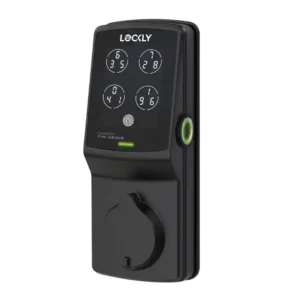
Product 1: Lockly Secure Plus Smart Lock
4.3
Reviewers who discussed logs liked the recordkeeping, citing accurate history entries and even a year of usable activity history.
P2
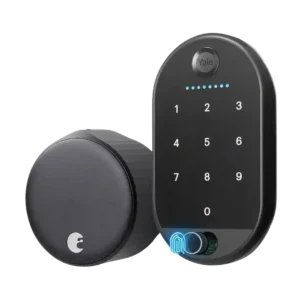
Product 2: Yale August Smart Lock
2.8
The activity log was useful in one review, but another reviewer reported a serious failure where an unlock event was not logged.
App
P1
Product 1: Lockly Secure Plus Smart Lock
4.2
The app was generally considered easy, clear, and responsive, though one review separated that from a difficult guest-code workflow.
P2
Product 2: Yale August Smart Lock
4.1
The app was widely praised as intuitive, responsive, and feature-rich, though one reviewer had severe app freezing during setup.
Auto-lock
P1
Product 1: Lockly Secure Plus Smart Lock
5.0
Auto-lock has limited but strong evidence, with PCMag reporting that the feature worked very well in testing.
P2
Product 2: Yale August Smart Lock
4.4
Auto-lock was one of the strongest features, praised for flexibility and peace of mind, though one reviewer disabled it because it could lock them out.
Battery
P1
Product 1: Lockly Secure Plus Smart Lock
4.5
Battery evidence is limited to one long-term review, but that reviewer called performance stellar after about a year of use.
P2
Product 2: Yale August Smart Lock
2.3
Battery life was the most consistent weakness, with repeated concern about CR123 batteries, shorter lifespan, replacement cost, and one six-to-eight-week real-world result.
Bluetooth
P1
Product 1: Lockly Secure Plus Smart Lock
4.5
Bluetooth evidence is positive, with stable connectivity and unusually quick app response over Bluetooth range.
P2
Product 2: Yale August Smart Lock
4.0
Bluetooth-range control was described as responsive in one review, with the lock reacting nearly immediately when pressed.
Build quality and durability
P1
Product 1: Lockly Secure Plus Smart Lock
4.4
Build quality was repeatedly praised as sturdy, well-built, strong, and rock solid.
P2
Product 2: Yale August Smart Lock
4.8
Build quality drew praise where discussed, with reviewers calling out high-quality materials and a solidly built feel.
Door compatibility (deadbolt fit)
P1
Product 1: Lockly Secure Plus Smart Lock
4.0
Compatibility evidence is positive but limited, with reviewers noting standard-door fit and successful single-doorknob replacement.
P2
Product 2: Yale August Smart Lock
4.5
Reviewers valued the retrofit deadbolt fit for renters and existing-door setups, though one installation was complicated by tight door trim.
Existing hardware reuse
P1Product 1: Lockly Secure Plus Smart Lock
No score yet
P2
Product 2: Yale August Smart Lock
4.7
Keeping the outside hardware and existing deadbolt was repeatedly praised, especially for renters, maintenance access, and preserving exterior appearance.
Fingerprint
P1
Product 1: Lockly Secure Plus Smart Lock
4.7
Fingerprint access is the strongest feature across reviews, described as fast, accurate, responsive, effective, and unusually good.
P2
Product 2: Yale August Smart Lock
2.0
Fingerprint entry was treated as a missing keyless feature rather than a strength of this lock.
Geofencing
P1Product 1: Lockly Secure Plus Smart Lock
No score yet
P2
Product 2: Yale August Smart Lock
3.5
Geofencing and auto-unlock were the most mixed smart feature: some reviewers found it handy or excellent, while others found it slow, inconsistent, or stopped working.
Guest Codes and Access
P1
Product 1: Lockly Secure Plus Smart Lock
3.7
Guest access is mixed: several reviewers liked the flexible access options, while one found temporary-code delivery convoluted and buggy.
P2
Product 2: Yale August Smart Lock
4.8
Guest access was easy and useful, with virtual keys, sharing by text, and scheduled codes highlighted positively.
Hub requirement
P1
Product 1: Lockly Secure Plus Smart Lock
2.3
The hub requirement is a drawback because remote and voice features require added hardware and cost.
P2
Product 2: Yale August Smart Lock
4.5
Reviewers liked that built-in Wi-Fi removes the need for an add-on bridge or Connect module.
Industrial design
P1
Product 1: Lockly Secure Plus Smart Lock
3.6
Design opinions are mixed: reviewers liked the attractive, premium look, but several also called the lock large, bulky, or obvious.
P2Product 2: Yale August Smart Lock
No score yetInstallation and Setup
P1
Product 1: Lockly Secure Plus Smart Lock
3.8
Installation is sharply mixed, ranging from simple, app-guided, and quick to unusually complicated and frustrating.
P2
Product 2: Yale August Smart Lock
4.4
Most reviewers found setup easy, quick, and well guided by the app, with one strong dissent reporting freezes, verification issues, and calibration trouble.
Key override reliability
P1
Product 1: Lockly Secure Plus Smart Lock
4.3
Key backup evidence is positive, with reviewers valuing physical-key and backup access as a practical fallback.
P2
Product 2: Yale August Smart Lock
3.7
The retained physical key was useful as a fallback and for renters, but one long-term tester still ended up carrying keys because smart unlocking was not fast enough.
Keypad
P1
Product 1: Lockly Secure Plus Smart Lock
4.4
The keypad and PIN Genie concept were widely praised for security and usability, although one reviewer found the shifting layout disorienting.
P2
Product 2: Yale August Smart Lock
3.0
The optional keypad works and can be useful, but reviewers noted it is not included and may disappoint buyers who want a built-in keypad experience.
Lock/unlock speed
P1
Product 1: Lockly Secure Plus Smart Lock
4.6
Lock and unlock speed was consistently positive, with instant app response or unlocks taking only a couple of seconds.
P2
Product 2: Yale August Smart Lock
4.3
App/manual locking was often described as instant, smooth, or quick, but one reviewer found physical keys faster than app, Siri, or watch workflows.
Locking motor
P1
Product 1: Lockly Secure Plus Smart Lock
4.5
Motor evidence is limited, but PCMag praised the lock for relatively quiet operation.
P2
Product 2: Yale August Smart Lock
5.0
The motor was praised for quiet operation in PCMag testing.
Locking reliability
P1
Product 1: Lockly Secure Plus Smart Lock
3.8
Locking reliability is mixed: some testing found smooth, great performance, while Digital Trends encountered unresolved calibration errors.
P2
Product 2: Yale August Smart Lock
3.7
Locking reliability was excellent in most formal testing and one six-month review, but one reviewer reported serious state confusion and unreliable locking status.
Notifications
P1
Product 1: Lockly Secure Plus Smart Lock
1.5
Notifications are a weakness in the limited evidence, with PCMag specifically missing push notification support.
P2
Product 2: Yale August Smart Lock
4.8
Notifications were a clear strength, with reviewers praising flexible smart alerts, quick push alerts, and better door-status awareness.
Physical attack resistance
P1Product 1: Lockly Secure Plus Smart Lock
No score yet
P2
Product 2: Yale August Smart Lock
5.0
Physical security received strong praise from TechGearLab, which highlighted the ANSI Grade 1 strength rating and intruder resistance.
Remote access
P1
Product 1: Lockly Secure Plus Smart Lock
2.0
Remote access is a repeated limitation because the lock lacks built-in internet control and needs extra Wi-Fi hardware.
P2
Product 2: Yale August Smart Lock
4.7
Remote access was praised as convenient for controlling the lock from elsewhere in the house or anywhere with a phone connection.
Security features (encryption)
P1
Product 1: Lockly Secure Plus Smart Lock
4.3
Security evidence is positive, with praise for hack resistance and unusually comprehensive account-security setup.
P2
Product 2: Yale August Smart Lock
4.5
Security software features were reassuring in the CNET review, especially authentication and encryption protections around the app and account.
Smart-home integration (Alexa, Google, Siri, HomeKit, Matter, Thread)
P1
Product 1: Lockly Secure Plus Smart Lock
1.9
Smart-home integration is one of the clearest weaknesses, with repeated criticism of missing or limited platform support.
P2
Product 2: Yale August Smart Lock
3.9
Smart-home integration was broad and often praised, but Alexa/Google setup hitches, HomeKit offline issues, and one severe HomeKit complaint made reliability mixed.
Touchscreen
P1
Product 1: Lockly Secure Plus Smart Lock
5.0
The touchscreen evidence is positive, with reviewers praising seamless operation and responsive keypad behavior.
P2
Product 2: Yale August Smart Lock
2.5
The lack of a built-in outside touchpad/touchscreen was a drawback for the reviewer who preferred that style of lock.
User access management
P1
Product 1: Lockly Secure Plus Smart Lock
3.5
User access management is mixed, combining flexible access options with one strong complaint about difficult PIN assignment.
P2
Product 2: Yale August Smart Lock
4.8
User access management was praised for free virtual keys and scheduled access codes.
Value and Price
P1
Product 1: Lockly Secure Plus Smart Lock
2.4
Value is a common concern because reviewers repeatedly describe the lock, hub path, or overall package as expensive.
P2
Product 2: Yale August Smart Lock
3.6
Value was mixed: several reviewers called it pricey but worthwhile, while others weighed the high price against batteries, keypad add-ons, and reliability frustrations.
Voice control
P1
Product 1: Lockly Secure Plus Smart Lock
2.0
Voice control is limited because it is not built in and depends on extra Wi-Fi hardware that reviewers criticized.
P2
Product 2: Yale August Smart Lock
3.6
Voice control worked quickly in one test and was supported broadly, but other reviewers reported password recognition issues or slow/failing Siri and Google Assistant use.
Warranty and support
P1
Product 1: Lockly Secure Plus Smart Lock
5.0
Warranty evidence is strongly positive, with Digital Trends calling it one of the best in the smart-lock market.
P2
Product 2: Yale August Smart Lock
4.0
Support was viewed positively through a resolved battery-warning bug and confidence that August/Assa Abloy support would keep software maintained.
Wi-Fi
P1
Product 1: Lockly Secure Plus Smart Lock
2.6
Wi-Fi is mixed: the lack of built-in Wi-Fi is criticized, but one review found hub-connected Wi-Fi response very fast.
P2
Product 2: Yale August Smart Lock
3.6
Built-in Wi-Fi was praised for freshness, range, and eliminating a bridge, but reviewers tied it to battery drain and one reported mesh/Wi-Fi frustration.