Access logs
P1
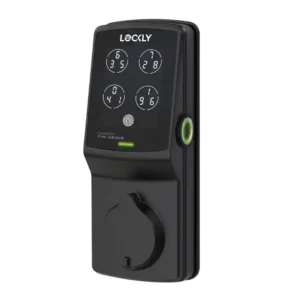
Product 1: Lockly Secure Plus Smart Lock
4.3
Reviewers who discussed logs liked the recordkeeping, citing accurate history entries and even a year of usable activity history.
P2
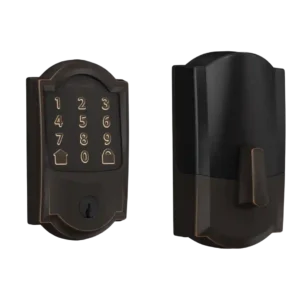
Product 2: Schlage Encode Smart Lock
4.6
Reviewers found the history/audit trail useful for seeing who entered and when, especially for family, guests, and rental-style access.
Alarm/siren loudness (if included)
P1Product 1: Lockly Secure Plus Smart Lock
No score yet
P2
Product 2: Schlage Encode Smart Lock
3.5
Alarm loudness was split: one review called the siren quiet, while a locksmith found it very loud and annoying.
App
P1
Product 1: Lockly Secure Plus Smart Lock
4.2
The app was generally considered easy, clear, and responsive, though one review separated that from a difficult guest-code workflow.
P2
Product 2: Schlage Encode Smart Lock
4.6
Most reviewers found the Schlage Home or Key app easy, responsive, and useful, with some caveats about simplicity or setup complexity.
Auto-lock
P1
Product 1: Lockly Secure Plus Smart Lock
5.0
Auto-lock has limited but strong evidence, with PCMag reporting that the feature worked very well in testing.
P2
Product 2: Schlage Encode Smart Lock
4.4
Auto-lock was widely useful for forgotten doors, though reviewers warned that timing and lack of door awareness can create practical issues.
Auto-relock after failed attempts
P1Product 1: Lockly Secure Plus Smart Lock
No score yet
P2
Product 2: Schlage Encode Smart Lock
4.0
A locksmith observed that repeated invalid codes temporarily disable the keypad, showing the lockout behavior works, though active alerts were missing.
Battery
P1
Product 1: Lockly Secure Plus Smart Lock
4.5
Battery evidence is limited to one long-term review, but that reviewer called performance stellar after about a year of use.
P2
Product 2: Schlage Encode Smart Lock
3.0
Battery feedback was mixed: built-in Wi-Fi drains AA batteries faster, but warnings and at least one long-term experience were positive.
Bluetooth
P1
Product 1: Lockly Secure Plus Smart Lock
4.5
Bluetooth evidence is positive, with stable connectivity and unusually quick app response over Bluetooth range.
P2
Product 2: Schlage Encode Smart Lock
5.0
The only explicit Bluetooth judgment was positive, emphasizing encrypted Bluetooth in the lock.
Build quality and durability
P1
Product 1: Lockly Secure Plus Smart Lock
4.4
Build quality was repeatedly praised as sturdy, well-built, strong, and rock solid.
P2
Product 2: Schlage Encode Smart Lock
4.5
Reviewers consistently described the lock as solid, sturdy, beefy, heavy, or secure-feeling.
Camera and doorbell performance
P1Product 1: Lockly Secure Plus Smart Lock
No score yet
P2
Product 2: Schlage Encode Smart Lock
3.7
Ring doorbell/live-view control was praised when supported, but Ring Alarm compatibility created a major limitation in one review.
Door compatibility (deadbolt fit)
P1
Product 1: Lockly Secure Plus Smart Lock
4.0
Compatibility evidence is positive but limited, with reviewers noting standard-door fit and successful single-doorknob replacement.
P2
Product 2: Schlage Encode Smart Lock
4.5
Reviewers generally found the lock fit existing deadbolt openings or aligned well after adjustment, with no structural door changes needed in tested installs.
Fingerprint
P1
Product 1: Lockly Secure Plus Smart Lock
4.7
Fingerprint access is the strongest feature across reviews, described as fast, accurate, responsive, effective, and unusually good.
P2
Product 2: Schlage Encode Smart Lock
1.5
One reviewer specifically wished the lock added fingerprint recognition, so the lack of it counted as a limitation.
Guest Codes and Access
P1
Product 1: Lockly Secure Plus Smart Lock
3.7
Guest access is mixed: several reviewers liked the flexible access options, while one found temporary-code delivery convoluted and buggy.
P2
Product 2: Schlage Encode Smart Lock
4.5
Guest access was a major strength, with praise for many codes, scheduling, temporary access, texts, and family/service-person use; single-use code absence was the main caveat.
Hub requirement
P1
Product 1: Lockly Secure Plus Smart Lock
2.3
The hub requirement is a drawback because remote and voice features require added hardware and cost.
P2
Product 2: Schlage Encode Smart Lock
5.0
Reviewers strongly agreed that built-in Wi-Fi and no hub, bridge, or adapter is one of the lock’s clearest advantages.
Industrial design
P1
Product 1: Lockly Secure Plus Smart Lock
3.6
Design opinions are mixed: reviewers liked the attractive, premium look, but several also called the lock large, bulky, or obvious.
P2
Product 2: Schlage Encode Smart Lock
4.0
Exterior design earned praise for style and curb appeal, but interior hardware size and appearance drew criticism.
Installation and Setup
P1
Product 1: Lockly Secure Plus Smart Lock
3.8
Installation is sharply mixed, ranging from simple, app-guided, and quick to unusually complicated and frustrating.
P2
Product 2: Schlage Encode Smart Lock
4.3
Installation was usually described as easy and quick, although programming, Wi-Fi setup, or third-party app setup could be confusing.
Key override reliability
P1
Product 1: Lockly Secure Plus Smart Lock
4.3
Key backup evidence is positive, with reviewers valuing physical-key and backup access as a practical fallback.
P2
Product 2: Schlage Encode Smart Lock
4.6
Reviewers valued the physical key backup, especially as protection against dead batteries or smart-function failures.
Keypad
P1
Product 1: Lockly Secure Plus Smart Lock
4.4
The keypad and PIN Genie concept were widely praised for security and usability, although one reviewer found the shifting layout disorienting.
P2
Product 2: Schlage Encode Smart Lock
4.7
The keypad was generally praised as easy, bright, backlit, and accessible, with one reviewer noting a nighttime first-press annoyance.
Lock/unlock speed
P1
Product 1: Lockly Secure Plus Smart Lock
4.6
Lock and unlock speed was consistently positive, with instant app response or unlocks taking only a couple of seconds.
P2
Product 2: Schlage Encode Smart Lock
4.7
Lock/unlock response was usually fast or instant, with one reviewer describing it as only somewhat more responsive than another lock.
Locking motor
P1
Product 1: Lockly Secure Plus Smart Lock
4.5
Motor evidence is limited, but PCMag praised the lock for relatively quiet operation.
P2
Product 2: Schlage Encode Smart Lock
3.1
Motor feedback was mixed: one reviewer found it quiet, another said it was strong, while others complained it was loud or grinding.
Locking reliability
P1
Product 1: Lockly Secure Plus Smart Lock
3.8
Locking reliability is mixed: some testing found smooth, great performance, while Digital Trends encountered unresolved calibration errors.
P2
Product 2: Schlage Encode Smart Lock
4.7
Locking reliability was one of the strongest areas, with reviewers reporting perfect tests, flawless keyless entry, smooth unlocking, and dependable performance.
Notifications
P1
Product 1: Lockly Secure Plus Smart Lock
1.5
Notifications are a weakness in the limited evidence, with PCMag specifically missing push notification support.
P2
Product 2: Schlage Encode Smart Lock
4.1
Notifications were usually useful for lock status and user activity, but reviewers noted missed battery warnings and no active invalid-code alert.
Physical attack resistance
P1Product 1: Lockly Secure Plus Smart Lock
No score yet
P2
Product 2: Schlage Encode Smart Lock
5.0
Physical security was repeatedly praised through Grade 1/AAA ratings, reinforced hardware, and confidence against forced entry.
Pick/drill resistance (if rated)
P1Product 1: Lockly Secure Plus Smart Lock
No score yet
P2
Product 2: Schlage Encode Smart Lock
4.5
Only one review directly tied the lock’s construction to pick/key resistance, saying it would be difficult for a thief to duplicate the key.
Remote access
P1
Product 1: Lockly Secure Plus Smart Lock
2.0
Remote access is a repeated limitation because the lock lacks built-in internet control and needs extra Wi-Fi hardware.
P2
Product 2: Schlage Encode Smart Lock
4.6
Remote access was strongly praised for checking status, letting people in, locking from away, and fast reliable remote operation.
Security features (encryption)
P1
Product 1: Lockly Secure Plus Smart Lock
4.3
Security evidence is positive, with praise for hack resistance and unusually comprehensive account-security setup.
P2
Product 2: Schlage Encode Smart Lock
5.0
The only direct encryption evidence was positive, with the reviewer praising the lock’s encrypted Bluetooth.
Smart-home integration (Alexa, Google, Siri, HomeKit, Matter, Thread)
P1
Product 1: Lockly Secure Plus Smart Lock
1.9
Smart-home integration is one of the clearest weaknesses, with repeated criticism of missing or limited platform support.
P2
Product 2: Schlage Encode Smart Lock
3.9
Smart-home integration was useful with Alexa, Google, Ring, Amazon Key, and Home Assistant, but limited by HomeKit, IFTTT, SmartThings, Google unlock, and Ring Alarm gaps.
Touchscreen
P1
Product 1: Lockly Secure Plus Smart Lock
5.0
The touchscreen evidence is positive, with reviewers praising seamless operation and responsive keypad behavior.
P2
Product 2: Schlage Encode Smart Lock
4.2
Touchscreen feedback was mostly positive for responsiveness and cold-use practicality, though one reviewer stressed it is not a true modern glass touchscreen.
User access management
P1
Product 1: Lockly Secure Plus Smart Lock
3.5
User access management is mixed, combining flexible access options with one strong complaint about difficult PIN assignment.
P2
Product 2: Schlage Encode Smart Lock
4.9
User management was praised for quick code creation, schedules, granular options, and caregiver/parent use cases.
Value and Price
P1
Product 1: Lockly Secure Plus Smart Lock
2.4
Value is a common concern because reviewers repeatedly describe the lock, hub path, or overall package as expensive.
P2
Product 2: Schlage Encode Smart Lock
4.5
Value was mixed but leaned positive: several reviewers called it pricey, yet many found the security, reliability, and features worth the cost.
Voice control
P1
Product 1: Lockly Secure Plus Smart Lock
2.0
Voice control is limited because it is not built in and depends on extra Wi-Fi hardware that reviewers criticized.
P2
Product 2: Schlage Encode Smart Lock
4.2
Voice control generally worked well, especially with Alexa, but Google unlocking limits lowered the overall score.
Warranty and support
P1
Product 1: Lockly Secure Plus Smart Lock
5.0
Warranty evidence is strongly positive, with Digital Trends calling it one of the best in the smart-lock market.
P2
Product 2: Schlage Encode Smart Lock
5.0
Warranty evidence was limited but positive, with one locksmith calling its electronics warranty the longest among reviewed locks.
Wi-Fi
P1
Product 1: Lockly Secure Plus Smart Lock
2.6
Wi-Fi is mixed: the lack of built-in Wi-Fi is criticized, but one review found hub-connected Wi-Fi response very fast.
P2
Product 2: Schlage Encode Smart Lock
4.4
Wi-Fi was strongly valued for direct remote control without extra hardware, though battery drain and one weak connection were caveats.