Access logs
P1
Product 1: Lockly Secure Plus Smart Lock
4.3
Reviewers who discussed logs liked the recordkeeping, citing accurate history entries and even a year of usable activity history.
P2
Product 2: eufy Video Smart Lock E330
4.8
Reviewers who evaluated event history found it useful for checking clips and seeing who came or went, especially for family awareness.
App
P1
Product 1: Lockly Secure Plus Smart Lock
4.2
The app was generally considered easy, clear, and responsive, though one review separated that from a difficult guest-code workflow.
P2
Product 2: eufy Video Smart Lock E330
4.5
The app was consistently praised as simple, polished, and useful for setup, live view, lock control, access management, and monitoring.
Auto-lock
P1
Product 1: Lockly Secure Plus Smart Lock
5.0
Auto-lock has limited but strong evidence, with PCMag reporting that the feature worked very well in testing.
P2
Product 2: eufy Video Smart Lock E330
4.8
Auto-lock drew strong praise for reliably relocking after a set time and reducing worry about whether the door was left unlocked.
Auto-relock after failed attempts
P1Product 1: Lockly Secure Plus Smart Lock
No score yet
P2
Product 2: eufy Video Smart Lock E330
5.0
The failed-attempt lockout behavior was viewed as a strong security safeguard when someone keeps entering wrong codes or fingerprints.
Battery
P1
Product 1: Lockly Secure Plus Smart Lock
4.5
Battery evidence is limited to one long-term review, but that reviewer called performance stellar after about a year of use.
P2
Product 2: eufy Video Smart Lock E330
3.7
Battery feedback was the most divided area: some reviewers liked the removable rechargeable pack, while others reported short runtime or slow charging.
Build quality and durability
P1
Product 1: Lockly Secure Plus Smart Lock
4.4
Build quality was repeatedly praised as sturdy, well-built, strong, and rock solid.
P2
Product 2: eufy Video Smart Lock E330
4.9
Build quality was rated very highly, with reviewers repeatedly describing the lock as metal, sturdy, well made, durable, and high quality.
Camera and doorbell performance
P1Product 1: Lockly Secure Plus Smart Lock
No score yet
P2
Product 2: eufy Video Smart Lock E330
4.4
Camera and doorbell performance was generally strong, with sharp 2K video, good night vision, fast loading, and useful two-way features, though field of view and door placement limited some setups.
Door compatibility (deadbolt fit)
P1
Product 1: Lockly Secure Plus Smart Lock
4.0
Compatibility evidence is positive but limited, with reviewers noting standard-door fit and successful single-doorknob replacement.
P2
Product 2: eufy Video Smart Lock E330
2.5
Door compatibility was a major caveat because screen doors, storm doors, deep jambs, and awkward door angles could compromise the camera or overall fit.
Fingerprint
P1
Product 1: Lockly Secure Plus Smart Lock
4.7
Fingerprint access is the strongest feature across reviews, described as fast, accurate, responsive, effective, and unusually good.
P2
Product 2: eufy Video Smart Lock E330
4.9
Fingerprint access was one of the strongest areas, repeatedly described as fast, accurate, responsive, convenient, and the preferred unlock method.
Guest Codes and Access
P1
Product 1: Lockly Secure Plus Smart Lock
3.7
Guest access is mixed: several reviewers liked the flexible access options, while one found temporary-code delivery convoluted and buggy.
P2
Product 2: eufy Video Smart Lock E330
4.8
Guest access was praised when reviewers could give temporary or remote user access without handing over physical keys.
Hub requirement
P1
Product 1: Lockly Secure Plus Smart Lock
2.3
The hub requirement is a drawback because remote and voice features require added hardware and cost.
P2
Product 2: eufy Video Smart Lock E330
3.5
Hub requirement was mixed because the lock can work without a HomeBase, but one reviewer disliked needing a separate chime when used alone.
Industrial design
P1
Product 1: Lockly Secure Plus Smart Lock
3.6
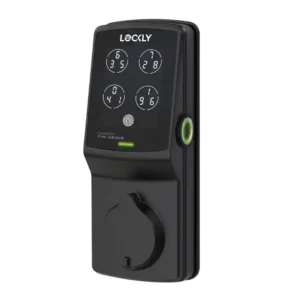
Design opinions are mixed: reviewers liked the attractive, premium look, but several also called the lock large, bulky, or obvious.
P2
Product 2: eufy Video Smart Lock E330
4.5
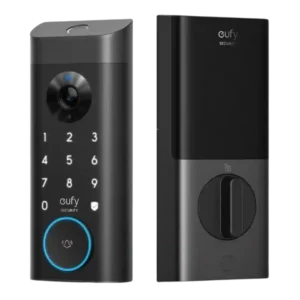
Industrial design was well liked, with reviewers calling the lock sleek, compact, sharp, premium-looking, and attractive.
Installation and Setup
P1
Product 1: Lockly Secure Plus Smart Lock
3.8
Installation is sharply mixed, ranging from simple, app-guided, and quick to unusually complicated and frustrating.
P2
Product 2: eufy Video Smart Lock E330
4.6
Installation and setup were consistently praised as quick, easy, straightforward, foolproof, or among the easiest smart-lock setups reviewers had tried.
Key override reliability
P1
Product 1: Lockly Secure Plus Smart Lock
4.3
Key backup evidence is positive, with reviewers valuing physical-key and backup access as a practical fallback.
P2
Product 2: eufy Video Smart Lock E330
4.4
Key override reliability scored well because reviewers appreciated the hidden physical key and backup power options for dead-battery situations.
Keypad
P1
Product 1: Lockly Secure Plus Smart Lock
4.4
The keypad and PIN Genie concept were widely praised for security and usability, although one reviewer found the shifting layout disorienting.
P2
Product 2: eufy Video Smart Lock E330
4.6
The keypad was viewed positively for reliability, passcode flexibility, and backlighting, although one reviewer treated keypad access as less preferred than fingerprint.
Lock/unlock speed
P1
Product 1: Lockly Secure Plus Smart Lock
4.6
Lock and unlock speed was consistently positive, with instant app response or unlocks taking only a couple of seconds.
P2
Product 2: eufy Video Smart Lock E330
5.0
Lock and unlock speed scored strongly in the one clear opinionated review that called the lock fast and quiet.
Locking motor
P1
Product 1: Lockly Secure Plus Smart Lock
4.5
Motor evidence is limited, but PCMag praised the lock for relatively quiet operation.
P2
Product 2: eufy Video Smart Lock E330
4.5
The locking motor was praised as smooth and responsive in hands-on use.
Locking reliability
P1
Product 1: Lockly Secure Plus Smart Lock
3.8
Locking reliability is mixed: some testing found smooth, great performance, while Digital Trends encountered unresolved calibration errors.
P2
Product 2: eufy Video Smart Lock E330
4.8
Locking reliability scored highly where reviewers focused on the smart-lock half, calling it responsive and saying it worked as advertised.
Notifications
P1
Product 1: Lockly Secure Plus Smart Lock
1.5
Notifications are a weakness in the limited evidence, with PCMag specifically missing push notification support.
P2
Product 2: eufy Video Smart Lock E330
4.9
Notifications were a clear strength, with reviewers describing alerts as nearly instant, responsive, fast, or consistent.
Remote access
P1
Product 1: Lockly Secure Plus Smart Lock
2.0
Remote access is a repeated limitation because the lock lacks built-in internet control and needs extra Wi-Fi hardware.
P2
Product 2: eufy Video Smart Lock E330
4.8
Remote access was rated very highly because reviewers liked being able to view, unlock, greet visitors, or control the lock from the app remotely.
Security features (encryption)
P1
Product 1: Lockly Secure Plus Smart Lock
4.3
Security evidence is positive, with praise for hack resistance and unusually comprehensive account-security setup.
P2
Product 2: eufy Video Smart Lock E330
5.0
Security features such as scramble passcode and failed-attempt protections were praised as sensible, useful, and security-enhancing.
Smart-home integration (Alexa, Google, Siri, HomeKit, Matter, Thread)
P1
Product 1: Lockly Secure Plus Smart Lock
1.9
Smart-home integration is one of the clearest weaknesses, with repeated criticism of missing or limited platform support.
P2
Product 2: eufy Video Smart Lock E330
4.0
Smart-home integration was mixed-positive: Alexa, Google, Apple Watch, and Eufy ecosystem links were appreciated, but lack of HomeKit hurt one review.
Touchscreen
P1
Product 1: Lockly Secure Plus Smart Lock
5.0
The touchscreen evidence is positive, with reviewers praising seamless operation and responsive keypad behavior.
P2
Product 2: eufy Video Smart Lock E330
2.5
Touchscreen visibility scored poorly in the one clear opinionated review because the keypad and doorbell button were hard to find in the dark.
User access management
P1
Product 1: Lockly Secure Plus Smart Lock
3.5
User access management is mixed, combining flexible access options with one strong complaint about difficult PIN assignment.
P2
Product 2: eufy Video Smart Lock E330
4.5
User access management scored well where reviewers valued adding users, codes, and fingerprints with access rules.
Value and Price
P1
Product 1: Lockly Secure Plus Smart Lock
2.4
Value is a common concern because reviewers repeatedly describe the lock, hub path, or overall package as expensive.
P2
Product 2: eufy Video Smart Lock E330
4.3
Value was mostly positive thanks to all-in-one convenience and savings versus higher-tier models, though one reviewer stressed that the lock is not cheap.
Voice control
P1
Product 1: Lockly Secure Plus Smart Lock
2.0
Voice control is limited because it is not built in and depends on extra Wi-Fi hardware that reviewers criticized.
P2
Product 2: eufy Video Smart Lock E330
4.3
Voice control was positively received, especially Alexa integration, chime support, and hands-free unlocking through assistants.
Weather resistance
P1
Product 1: Lockly Secure Plus Smart Lock
4.5
Weather resistance evidence is positive but limited to one review that judged the casing able to handle harsh conditions.
P2
Product 2: eufy Video Smart Lock E330
4.8
Weather resistance scored strongly where reviewers found the lock handled rain, hot conditions, or outdoor exposure well.
Wi-Fi
P1
Product 1: Lockly Secure Plus Smart Lock
2.6
Wi-Fi is mixed: the lack of built-in Wi-Fi is criticized, but one review found hub-connected Wi-Fi response very fast.
P2
Product 2: eufy Video Smart Lock E330
4.0
Wi-Fi was mixed-positive: one reviewer saw fast alerts even on weak 2.4GHz Wi-Fi, while another warned experience depends on network strength.