Access logs
P1Product 1: Kwikset Obsidian Smart Lock
No score yet
P2
Product 2: Schlage Encode Smart Lock
4.6
Reviewers found the history/audit trail useful for seeing who entered and when, especially for family, guests, and rental-style access.
Alarm/siren loudness (if included)
P1Product 1: Kwikset Obsidian Smart Lock
No score yet
P2
Product 2: Schlage Encode Smart Lock
3.5
Alarm loudness was split: one review called the siren quiet, while a locksmith found it very loud and annoying.
App
P1
Product 1: Kwikset Obsidian Smart Lock
3.5
Reviewers liked app-based control when a compatible platform supported it, but the lock lost points because it lacks its own app and some hub apps could not manage codes.
P2
Product 2: Schlage Encode Smart Lock
4.6
Most reviewers found the Schlage Home or Key app easy, responsive, and useful, with some caveats about simplicity or setup complexity.
Auto-lock
P1
Product 1: Kwikset Obsidian Smart Lock
4.3
Auto-lock was reliable and easy to set up in stronger reviews, though one transcript noted that changing related customization switches required a screwdriver.
P2
Product 2: Schlage Encode Smart Lock
4.4
Auto-lock was widely useful for forgotten doors, though reviewers warned that timing and lack of door awareness can create practical issues.
Auto-relock after failed attempts
P1Product 1: Kwikset Obsidian Smart Lock
No score yet
P2
Product 2: Schlage Encode Smart Lock
4.0
A locksmith observed that repeated invalid codes temporarily disable the keypad, showing the lockout behavior works, though active alerts were missing.
Battery
P1
Product 1: Kwikset Obsidian Smart Lock
2.8
Battery feedback was mixed: one preview praised warning before batteries died, while later user-oriented evidence reported six-month or five-month battery life concerns.
P2
Product 2: Schlage Encode Smart Lock
3.0
Battery feedback was mixed: built-in Wi-Fi drains AA batteries faster, but warnings and at least one long-term experience were positive.
Bluetooth
P1
Product 1: Kwikset Obsidian Smart Lock
3.0
Bluetooth was a mild drawback rather than a dealbreaker: one reviewer did not mind its absence, but warned it could deter buyers who want phone proximity unlocking.
P2
Product 2: Schlage Encode Smart Lock
5.0
The only explicit Bluetooth judgment was positive, emphasizing encrypted Bluetooth in the lock.
Build quality and durability
P1
Product 1: Kwikset Obsidian Smart Lock
4.5
Build quality was praised in the clearest durability evidence, with the lock described as sturdy and jam-free during testing.
P2
Product 2: Schlage Encode Smart Lock
4.5
Reviewers consistently described the lock as solid, sturdy, beefy, heavy, or secure-feeling.
Camera and doorbell performance
P1Product 1: Kwikset Obsidian Smart Lock
No score yet
P2
Product 2: Schlage Encode Smart Lock
3.7
Ring doorbell/live-view control was praised when supported, but Ring Alarm compatibility created a major limitation in one review.
Door compatibility (deadbolt fit)
P1
Product 1: Kwikset Obsidian Smart Lock
4.0
Door fit looked favorable for standard replacements, with the reviewer saying it should be almost as easy to install in most standard lock enclosures.
P2
Product 2: Schlage Encode Smart Lock
4.5
Reviewers generally found the lock fit existing deadbolt openings or aligned well after adjustment, with no structural door changes needed in tested installs.
Existing hardware reuse
P1
Product 1: Kwikset Obsidian Smart Lock
4.5
Existing hardware reuse was a strength in the replacement scenario, where the reviewer installed it easily after removing a prior Kwikset lock.
P2
Product 2: Schlage Encode Smart Lock
2.5
One review treated hardware reuse as a drawback because Encode replaces the whole deadbolt instead of modifying the existing one.
Fingerprint
P1
Product 1: Kwikset Obsidian Smart Lock
4.4
Fingerprint-related security earned consistent praise because SecureScreen and coating features reduced the risk of visible touch patterns revealing codes.
P2
Product 2: Schlage Encode Smart Lock
1.5
One reviewer specifically wished the lock added fingerprint recognition, so the lack of it counted as a limitation.
Guest Codes and Access
P1
Product 1: Kwikset Obsidian Smart Lock
3.8
Guest access was one of the most mixed areas: reviewers liked multiple codes and temporary scheduling in some versions, but criticized limited code counts and remote-code gaps in others.
P2
Product 2: Schlage Encode Smart Lock
4.5
Guest access was a major strength, with praise for many codes, scheduling, temporary access, texts, and family/service-person use; single-use code absence was the main caveat.
Hub requirement
P1
Product 1: Kwikset Obsidian Smart Lock
3.0
Hub requirements split reviewers: Z-Wave was welcomed by smart-home users, while others treated the required hub as an added burden.
P2
Product 2: Schlage Encode Smart Lock
5.0
Reviewers strongly agreed that built-in Wi-Fi and no hub, bridge, or adapter is one of the lock’s clearest advantages.
Industrial design
P1
Product 1: Kwikset Obsidian Smart Lock
4.5
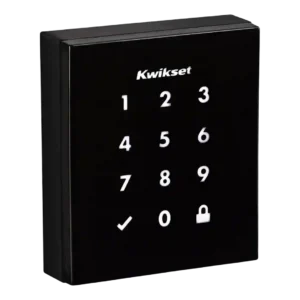
Design was the strongest consensus attribute, with repeated praise for the sleek, minimalist, modern, key-free look.
P2
Product 2: Schlage Encode Smart Lock
4.0
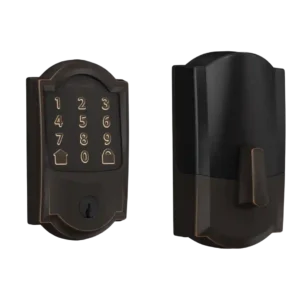
Exterior design earned praise for style and curb appeal, but interior hardware size and appearance drew criticism.
Installation and Setup
P1
Product 1: Kwikset Obsidian Smart Lock
3.5
Installation ranged from simple and thoughtfully guided to frustrating, with one reviewer blaming unclear instructions and bolt machining while others completed setup easily.
P2
Product 2: Schlage Encode Smart Lock
4.3
Installation was usually described as easy and quick, although programming, Wi-Fi setup, or third-party app setup could be confusing.
Keypad
P1
Product 1: Kwikset Obsidian Smart Lock
4.5
The keypad was praised for intuitive everyday locking and unlocking.
P2
Product 2: Schlage Encode Smart Lock
4.7
The keypad was generally praised as easy, bright, backlit, and accessible, with one reviewer noting a nighttime first-press annoyance.
Lock/unlock speed
P1
Product 1: Kwikset Obsidian Smart Lock
3.8
Locking speed was mixed, with one review praising prompt Alexa locking while another noticed the lock ran a bit slower than normal.
P2
Product 2: Schlage Encode Smart Lock
4.7
Lock/unlock response was usually fast or instant, with one reviewer describing it as only somewhat more responsive than another lock.
Locking motor
P1
Product 1: Kwikset Obsidian Smart Lock
2.5
The locking motor drew a clear complaint for being quite loud, even though the same review did not report jams.
P2
Product 2: Schlage Encode Smart Lock
3.1
Motor feedback was mixed: one reviewer found it quiet, another said it was strong, while others complained it was loud or grinding.
Locking reliability
P1
Product 1: Kwikset Obsidian Smart Lock
4.5
Locking reliability was positive overall, with reviewers reporting that auto-relock worked every time, the bolt worked fine after setup, and the mechanism did not jam.
P2
Product 2: Schlage Encode Smart Lock
4.7
Locking reliability was one of the strongest areas, with reviewers reporting perfect tests, flawless keyless entry, smooth unlocking, and dependable performance.
Physical attack resistance
P1
Product 1: Kwikset Obsidian Smart Lock
4.5
Physical attack resistance was praised because the keywayless design removes common keyed-entry attack paths.
P2
Product 2: Schlage Encode Smart Lock
5.0
Physical security was repeatedly praised through Grade 1/AAA ratings, reinforced hardware, and confidence against forced entry.
Pick/drill resistance (if rated)
P1
Product 1: Kwikset Obsidian Smart Lock
4.5
Pick and bump-key resistance was praised because ditching the keyway removed the risk of picking or forced entry with a bump key.
P2
Product 2: Schlage Encode Smart Lock
4.5
Only one review directly tied the lock’s construction to pick/key resistance, saying it would be difficult for a thief to duplicate the key.
Remote access
P1
Product 1: Kwikset Obsidian Smart Lock
3.3
Remote access depended heavily on the platform: it worked well through Wink in one review, but other evidence tied remote control to a more expensive hub-enabled setup.
P2
Product 2: Schlage Encode Smart Lock
4.6
Remote access was strongly praised for checking status, letting people in, locking from away, and fast reliable remote operation.
Security features (encryption)
P1
Product 1: Kwikset Obsidian Smart Lock
4.3
Security features were praised across reviews, especially SecureScreen, which reviewers said worked well and helped prevent code guessing from fingerprints.
P2
Product 2: Schlage Encode Smart Lock
5.0
The only direct encryption evidence was positive, with the reviewer praising the lock’s encrypted Bluetooth.
Smart-home integration (Alexa, Google, Siri, HomeKit, Matter, Thread)
P1
Product 1: Kwikset Obsidian Smart Lock
3.7
Smart-home integration was useful but ecosystem-dependent: Z-Wave, SmartThings, Wink, Alexa, and other platforms worked well in some cases, while HomeKit and Google limitations hurt compatibility.
P2
Product 2: Schlage Encode Smart Lock
3.9
Smart-home integration was useful with Alexa, Google, Ring, Amazon Key, and Home Assistant, but limited by HomeKit, IFTTT, SmartThings, Google unlock, and Ring Alarm gaps.
Touchscreen
P1
Product 1: Kwikset Obsidian Smart Lock
3.9
Touchscreen feedback was mostly positive for responsiveness and security, but reviewers also noted wake-up misses and glossy smudging.
P2
Product 2: Schlage Encode Smart Lock
4.2
Touchscreen feedback was mostly positive for responsiveness and cold-use practicality, though one reviewer stressed it is not a true modern glass touchscreen.
User access management
P1
Product 1: Kwikset Obsidian Smart Lock
3.4
User access management varied sharply by version and platform, from strong scheduled and one-time code support to complaints about no expiring codes or no app-based code changes.
P2
Product 2: Schlage Encode Smart Lock
4.9
User management was praised for quick code creation, schedules, granular options, and caregiver/parent use cases.
Value and Price
P1
Product 1: Kwikset Obsidian Smart Lock
3.0
Value was divided: some reviewers considered it expensive once hubs or non-connected limitations were included, while one YouTube reviewer called the price good for a keyless Z-Wave lock.
P2
Product 2: Schlage Encode Smart Lock
4.5
Value was mixed but leaned positive: several reviewers called it pricey, yet many found the security, reliability, and features worth the cost.
Voice control
P1
Product 1: Kwikset Obsidian Smart Lock
3.7
Voice control worked well when supported, especially Alexa locking and status checks, but other reviews emphasized that Alexa or Google control required a Z-Wave hub.
P2
Product 2: Schlage Encode Smart Lock
4.2
Voice control generally worked well, especially with Alexa, but Google unlocking limits lowered the overall score.