Access logs
P1
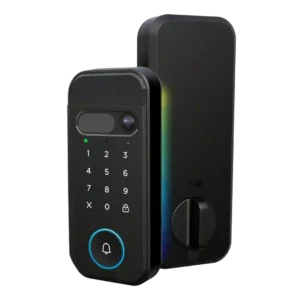
Product 1: myQ Secure View 3-in-1 Smart...
4.1
The app can associate access with individual PINs or users, giving at least basic visibility into who opened the door.
P2
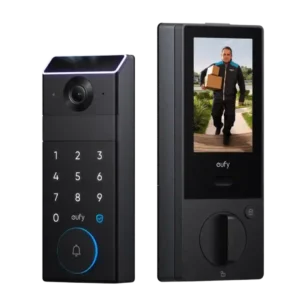
Product 2: eufy FamiLock S3 Max Smart...
4.4
Reviews describe useful event histories for lock/unlock actions, motion, and doorbell activity, with recorded events accessible in the app.
App
P1
Product 1: myQ Secure View 3-in-1 Smart...
4.4
Reviewers consistently describe the myQ app as central to setup, settings, unlocking, device management, and camera/lock control.
P2
Product 2: eufy FamiLock S3 Max Smart...
4.0
The Eufy app is central to setup, live view, controls, and customization; reviewers found it capable, though one noted it takes time to master.
Auto-lock
P1
Product 1: myQ Secure View 3-in-1 Smart...
4.6
Auto-lock evidence is strong, including unknown-person locking, face-based lock/unlock automation, and a configurable 90-second autolock delay.
P2
Product 2: eufy FamiLock S3 Max Smart...
4.5
Auto-lock is a recurring strength, with configurable timing, schedules, and door-closed behavior highlighted across several reviews.
Auto-relock after failed attempts
P1Product 1: myQ Secure View 3-in-1 Smart...
No score yet
P2
Product 2: eufy FamiLock S3 Max Smart...
4.5
Wrong-try protection is repeatedly described as a lockout or lockdown feature after incorrect passcodes or unregistered palm attempts.
Battery
P1
Product 1: myQ Secure View 3-in-1 Smart...
4.2
Battery feedback is mostly positive around six-month claims and rechargeable design, with one caveat that the initial charge took several hours.
P2
Product 2: eufy FamiLock S3 Max Smart...
4.4
Battery coverage is strong overall thanks to the large rechargeable pack plus AAA backup, though one reviewer found the five-month estimate optimistic.
Bluetooth
P1
Product 1: myQ Secure View 3-in-1 Smart...
3.8
Bluetooth appears during setup or internal hardware discussion, but the review evidence is limited and not performance-focused.
P2
Product 2: eufy FamiLock S3 Max Smart...
4.4
Bluetooth is directly confirmed alongside 2.4GHz Wi-Fi radios in one review.
Build quality and durability
P1
Product 1: myQ Secure View 3-in-1 Smart...
4.5
Hands-on reviewers describe the exterior as dense, secure, and well built, with general quality impressions that are strongly positive.
P2
Product 2: eufy FamiLock S3 Max Smart...
4.4
Build quality is viewed positively, with reviewers citing robust construction, metal casing, BHMA durability, and tamper/weather toughness.
Camera and doorbell performance
P1
Product 1: myQ Secure View 3-in-1 Smart...
4.4
Camera and doorbell evidence is broad: reviewers cite 2K HDR video, wide-angle viewing, color night vision, two-way audio, and doorbell/camera consolidation.
P2
Product 2: eufy FamiLock S3 Max Smart...
4.3
Camera and doorbell performance is useful and often sharp in good light, but low-light quality and face detail drew mixed comments.
Door-sense
P1
Product 1: myQ Secure View 3-in-1 Smart...
4.5
Door-sense is supported by the included magnetic open/closed sensor and app feedback that distinguishes a door being ajar from closed.
P2
Product 2: eufy FamiLock S3 Max Smart...
4.3
Door-sense and door-state behavior are supported by reports that the lock can detect open or closed states for auto-lock behavior.
Door compatibility (deadbolt fit)
P1
Product 1: myQ Secure View 3-in-1 Smart...
3.8
Door fit is workable for deadbolt-style installs, though one reviewer needed to drill and prep a door that did not already have a deadbolt.
P2
Product 2: eufy FamiLock S3 Max Smart...
3.7
Deadbolt and door fit are mostly standard, but screen or storm doors can obstruct the camera view and reduce the all-in-one benefit.
Existing hardware reuse
P1
Product 1: myQ Secure View 3-in-1 Smart...
2.5
Existing hardware reuse is limited because the lock replaces the deadbolt and may require new drilling if the door is not already prepared.
P2
Product 2: eufy FamiLock S3 Max Smart...
3.8
Existing hardware reuse appears limited; one installer reused the existing strike plate, but the lock otherwise replaces the deadbolt assembly.
Fingerprint
P1
Product 1: myQ Secure View 3-in-1 Smart...
4.4
Fingerprint support is repeatedly mentioned and tested, with reviewers treating it as one of the main everyday unlock methods.
P2
Product 2: eufy FamiLock S3 Max Smart...
1.5
The product does not use a fingerprint reader; reviewers instead frame palm vein recognition as the biometric method.
Finish durability
P1Product 1: myQ Secure View 3-in-1 Smart...
No score yet
P2
Product 2: eufy FamiLock S3 Max Smart...
4.2
Finish durability evidence is limited but positive, with comments about hiding fingerprints, smudges, and looking good after use.
Guest Codes and Access
P1
Product 1: myQ Secure View 3-in-1 Smart...
4.4
Guest and temporary access are supported through PIN codes, user-specific pins, and quick passes for short-term access.
P2
Product 2: eufy FamiLock S3 Max Smart...
4.5
Guest access is robust, with reviewers repeatedly mentioning scheduled, one-time, recurring, PIN, and palm-based access options.
Hub requirement
P1
Product 1: myQ Secure View 3-in-1 Smart...
4.2
Review evidence points to direct Wi-Fi setup and optional accessories rather than a clearly required hub, though no review gives a formal no-hub statement.
P2
Product 2: eufy FamiLock S3 Max Smart...
3.9
A hub is optional for basic use, but HomeBase or Matter controllers are needed for some storage, chime, AI, or platform features.
Installation and Setup
P1
Product 1: myQ Secure View 3-in-1 Smart...
4.4
Setup is usually described as clear or easy, but the most detailed install shows extra work for drilling, strike prep, calibration, and alignment.
P2
Product 2: eufy FamiLock S3 Max Smart...
4.4
Installation is generally rated easy, with app guidance and 15-20 minute setup reported, though one reviewer had a pre-release connection issue.
Key override reliability
P1
Product 1: myQ Secure View 3-in-1 Smart...
4.2
A physical key remains available as a backup, with reviewers noting included keys and a concealed keyhole under the doorbell cover.
P2
Product 2: eufy FamiLock S3 Max Smart...
4.2
Key override is present and useful as a fallback, hidden behind the doorbell button or key slot.
Keypad
P1
Product 1: myQ Secure View 3-in-1 Smart...
4.2
The keypad supports PIN entry and is described as visible during setup, with one reviewer noting the touch-sensitive design instead of physical buttons.
P2
Product 2: eufy FamiLock S3 Max Smart...
4.5
The keypad is consistently described as responsive, easy to press, backlit, and able to support many PINs.
Lock/unlock speed
P1
Product 1: myQ Secure View 3-in-1 Smart...
4.8
Speed evidence is strong, including two-second unlock claims and hands-on praise for fast facial recognition.
P2
Product 2: eufy FamiLock S3 Max Smart...
4.8
Unlock speed is strong, especially for palm recognition, with reviewers describing quick or instant responses.
Locking motor
P1
Product 1: myQ Secure View 3-in-1 Smart...
4.3
Motor operation is described positively overall, with smooth inside locking and working app lock/unlock, though one install needed strike cleanup.
P2
Product 2: eufy FamiLock S3 Max Smart...
4.6
The motorized lock/unlock controls are praised through interior buttons and automatic operation.
Locking reliability
P1
Product 1: myQ Secure View 3-in-1 Smart...
4.4
Hands-on testing found the unlock methods working after setup, with reliability depending partly on correct strike alignment.
P2
Product 2: eufy FamiLock S3 Max Smart...
4.7
Locking reliability is strong across testing, with reviewers reporting responsive operation and no major lock/unlock failures.
Notifications
P1
Product 1: myQ Secure View 3-in-1 Smart...
3.9
Notifications include context-aware alerts, motion alerts, access alerts, and paid detection labels that identify what triggered an alert.
P2
Product 2: eufy FamiLock S3 Max Smart...
4.4
Notifications are generally fast and useful for motion, people, doorbell, loitering, and departure alerts, though one review saw slight delay.
Palm vein recognition
P1Product 1: myQ Secure View 3-in-1 Smart...
No score yet
P2
Product 2: eufy FamiLock S3 Max Smart...
4.5
Palm vein recognition is the strongest consensus feature, usually described as fast, reliable, and easier than fingerprint access, with minor angle or learning-curve caveats.
Physical attack resistance
P1
Product 1: myQ Secure View 3-in-1 Smart...
3.0
Physical resistance evidence is limited: one review says no BHMA/ANSI grade is disclosed, while another notes a stronger strike component.
P2
Product 2: eufy FamiLock S3 Max Smart...
4.6
Physical attack resistance is supported by ANSI/BHMA Grade 1 references and comments about tamper resistance, durability, and tough construction.
Pick/drill resistance (if rated)
P1
Product 1: myQ Secure View 3-in-1 Smart...
2.3
Pick or drill resistance is not independently tested; the only related evidence is the lack of a disclosed BHMA/ANSI grade.
P2
Product 2: eufy FamiLock S3 Max Smart...
4.5
Pick resistance is supported by anti-pick and encrypted-cylinder claims, but drill resistance is not directly discussed.
Remote access
P1
Product 1: myQ Secure View 3-in-1 Smart...
4.5
Remote access is well supported, with app-based lock/unlock control described for letting someone in when the owner is away.
P2
Product 2: eufy FamiLock S3 Max Smart...
4.6
Remote access is available through the Eufy app and related controls, with several reviews noting away-from-home or remote control.
Security features (encryption)
P1
Product 1: myQ Secure View 3-in-1 Smart...
4.5
Security evidence is strongest for biometric privacy because one reviewer says face scans stay on the device rather than the cloud.
P2
Product 2: eufy FamiLock S3 Max Smart...
4.5
Security features include scramble passcodes, code masking, encrypted communications, and encrypted lock-cylinder claims.
Smart-home integration (Alexa, Google, Siri, HomeKit, Matter, Thread)
P1
Product 1: myQ Secure View 3-in-1 Smart...
2.7
Integration is mixed: myQ ecosystem integration is presented as a strength, but popular third-party platforms are described as unsupported or previously restricted.
P2
Product 2: eufy FamiLock S3 Max Smart...
3.7
Smart-home integration is broad on paper through Matter, Alexa, Google, Apple Home/HomeKit, and SmartThings, but advanced video and palm features are limited outside Eufy.
Tamper detection sensitivity
P1Product 1: myQ Secure View 3-in-1 Smart...
No score yet
P2
Product 2: eufy FamiLock S3 Max Smart...
4.4
Tamper detection is only directly supported by one review noting alarms if someone forcibly removes the lock.
Touchscreen
P1
Product 1: myQ Secure View 3-in-1 Smart...
3.7
The front keypad is touch-sensitive, though one reviewer notes physical buttons may be a personal preference for some users.
P2
Product 2: eufy FamiLock S3 Max Smart...
4.7
The interior screen is a major differentiator, praised as a useful digital peephole with strong viewing convenience.
User access management
P1
Product 1: myQ Secure View 3-in-1 Smart...
4.5
User management is strong, with evidence for managing users, assigning PINs, adding fingerprints, adding another user, and short-term access.
P2
Product 2: eufy FamiLock S3 Max Smart...
4.6
User management supports individual profiles, adding/deleting users, PINs, hands, and access schedules.
Value and Price
P1
Product 1: myQ Secure View 3-in-1 Smart...
3.3
Value is mixed: reviewers like the all-in-one design, but price, overkill for simple needs, and subscription-gated features create clear caveats.
P2
Product 2: eufy FamiLock S3 Max Smart...
3.4
Value is mixed: reviewers see value in combining a lock, doorbell, and camera, but repeatedly call the S3 Max expensive.
Voice control
P1
Product 1: myQ Secure View 3-in-1 Smart...
1.5
Voice-control evidence is negative because reviewers cite removed Google Assistant support and lack of Amazon Alexa or Google Home integration.
P2
Product 2: eufy FamiLock S3 Max Smart...
4.6
Voice control works well in the reviews that tested it, including Alexa, Siri, and Google-style command use.
Warranty and support
P1
Product 1: myQ Secure View 3-in-1 Smart...
2.0
Support evidence is a concern because one review highlights disabled third-party support and broader consumer skepticism about Chamberlain’s practices.
P2
Product 2: eufy FamiLock S3 Max Smart...
4.0
Warranty evidence is limited to one review listing 18 months for electronics and 36 months for mechanical parts.
Weather resistance
P1
Product 1: myQ Secure View 3-in-1 Smart...
4.5
Weather evidence is positive, including the stated -4°F to 140°F range and hands-on praise for a moisture-sealing rubber gasket.
P2
Product 2: eufy FamiLock S3 Max Smart...
4.6
Weather resistance is supported by IP65 mentions and claims of reliable climate operation.
Wi-Fi
P1
Product 1: myQ Secure View 3-in-1 Smart...
4.2
Wi-Fi support is directly shown in review evidence, including connection to a 2.4 GHz Wi-Fi network during setup.
P2
Product 2: eufy FamiLock S3 Max Smart...
4.4
Wi-Fi is well covered, including built-in Wi-Fi, 2.4GHz support, and Wi-Fi 6 references across reviews.