Compare Google Nest Indoor Camera (Wired), 2nd Generation vs SimpliSafe Outdoor Security Camera Series 2
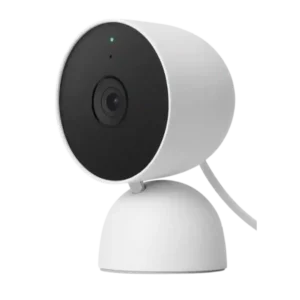
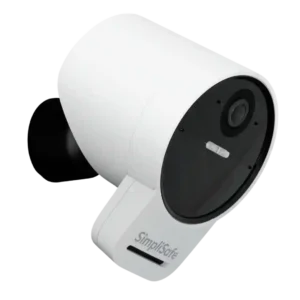
Google Home gives deep controls for events, zones, privacy, and device toggles, but several reviewers call the UI dense or unintuitive (some settings feel buried) while others describe it as polished and straightforward once configured.
Camera settings in the app cover motion sensitivity, zones, night vision modes, siren and spotlight behavior, and monitoring-related toggles. Most reviewers find controls straightforward and easy to customize.
Physical articulation (tilt/swivel via stand/ball joint) is helpful for aiming, but range can feel limited in some wall-mount scenarios and there’s no motorized movement.
The mount allows practical aiming and fine-tuning, and the magnetic design makes adjustments fast. This helps dial in coverage for doors, driveways, and walkway angles.
Two-way audio is usually described as clear and usable, with several calling it surprisingly good; a minority report echo in large spaces or intermittent two-way talk issues, and one notes audio recording may need to be enabled in settings.
Two-way audio and captured audio are generally described as loud and clear, with improvements over the prior generation. Outdoor voice pickup and playback are considered strong for a battery camera in this class.
Because the camera is wired, it offers no battery runtime or backup; in a power outage it stops, and ‘battery life’ becomes more about how long your phone/tablet can stay active while monitoring.
Battery life is most often cited around three months, with some reports stretching to three to six months depending on activity. Charging takes several hours, and many recommend wired power for always-on monitoring features.
Build quality is frequently described as premium for the price class, with a sturdy base and solid materials that feel more substantial than many budget indoor cams.
Build quality is described as sturdy and modern-looking, with the newer lower module adding improved audio hardware. Overall fit and finish is viewed as appropriate for outdoor use.
The permanently attached power cable (often cited as 10 ft/3 m) helps reach outlets but is not user-replaceable, and hiding/colour-matching the cord is a recurring annoyance; some setups benefit from routing the cable through the base.
Long outdoor cables help reach outlets, but clean routing can be challenging depending on your exterior layout. Reviewers mention needing clips or creative runs under trim to keep it neat.
The free three-hour cloud history is viewed as too short for real security by many reviewers; Nest Aware extends event history (30/60 days) and adds features like familiar faces and sound alerts, but the ongoing fee is a common complaint.
Storage and monitoring value varies by plan: some reviewers call the multi-camera cloud storage pricing reasonable, while others emphasize the high monthly cost of pro monitoring tiers. Overall cost of ownership is a frequent tradeoff.
Daytime colors are generally described as natural and accurate, helped by HDR in bright/contrast-heavy scenes.
Daytime color is generally reported as vibrant and pleasing, while nighttime color via spotlight is more muted. Overall color accuracy is solid for 1080p class footage, with expected night tradeoffs.
Connectivity is Wi-Fi-based (2.4/5GHz) and commonly paired with Bluetooth LE for setup; lack of Ethernet/PoE means performance depends on your wireless coverage.
Connectivity is Wi-Fi-based and generally requires strong coverage; some reviews praise antenna performance and signal tests. The major limitation is no camera cellular backup, so a Wi-Fi outage can disable monitoring and recording access.
24/7 continuous recording is available only with higher-tier Nest Aware (Plus) in the reviews; without it, the camera is primarily event-based with a short free lookback.
Continuous 24/7 recording is not a focus here; the camera is event-based rather than always-on recording. Reviewers comparing to rivals flag this as a limitation for forensic-style coverage.
When users hit setup snags, support has been able to resolve them via phone, suggesting responsive assistance. That said, the need to call support highlights room for smoother self-service troubleshooting.
Activity/motion zones are flexible and useful (and available without a subscription), helping cut unwanted alerts, but at least one review says the path to create them isn’t obvious in the app.
Activity or motion zones are a key strength, helping block out roads, sidewalks, and other high-traffic areas. Even with Active Guard constraints, reviewers note zones remain a primary way to tune what gets monitored and alerted.
Detection is a highlight: the camera can distinguish people, animals, and vehicles with high accuracy in most tests; familiar face identification exists but is tied to Nest Aware in multiple reviews.
Detection is built around motion plus AI categorization, with Active Guard adding human verification and intervention options. Reviews range from very positive about proactive response to skeptical about consistency, making setup and expectations important.
Indoor detection and IR illumination are commonly described as effective across typical room distances, with multiple sources citing roughly 15 ft as a practical night-vision/detection reference point.
Detection sensitivity is often praised as improved and responsive, but at least one user reports weaker detection near the edges of the frame. Placement and aiming still matter for consistent coverage.
The 6x digital zoom is handy for quick checks, but multiple reviews note a noticeable loss of detail at distance or when heavily zoomed.
Digital zoom is commonly listed as 10x and can help with closer details. However, reviewers note that faces and fine detail become harder to rely on at distance, especially if streaming is reduced to 720p for monitoring.
Dual-band Wi-Fi performance is a strength in testing, with reviewers reporting stable connections on both 2.4GHz and 5GHz and few dropouts when signals are adequate.
Several reviewers note the camera is effectively 2.4GHz Wi-Fi only, with no 5GHz option. That can limit performance flexibility in congested networks or for users who prefer 5GHz coverage.
Durability impressions are positive for indoor use (stable stand, solid feel), but it’s not designed for weather exposure and lacks battery backup for outages.
Outdoor durability is praised, especially given IP65 sealing and stable outdoor performance in testing. The main durability-adjacent concern is physical security, since a magnetic mount can be easier to steal if installed within reach.
Noise cancellation and full-duplex talk are often praised, but real-world acoustics (like garages) can still introduce echo or background noise in some setups.
Noise handling is positioned as a strength, with reviewers describing clearer two-way communication that is less affected by wind or passing cars. This helps the system feel more like a live-intervention tool than a basic cam.
Event capture is generally reliable within the short free window, yet cooldown behavior and the three-hour retention limit can make it easy to miss what happened if you don’t check promptly. Most reviewers found recording dependable, but at least one hands-on test reports missed recordings due to cooldown timing between events.
Motion events are typically captured and logged, with timestamps and monitoring review indicators. However, experiences with live intervention can vary depending on settings, subscription tier, and scenario. Event clips generally appear reliably in the timeline when Wi-Fi is stable, and monitoring can review events as they happen. The biggest reliability risk mentioned is Wi-Fi dependency: if Wi-Fi drops, camera functionality and recording can drop with it.
False alerts are usually well-controlled, especially when paired with zones and event-type filtering, but some reviewers saw occasional mislabels (for example, a pet flagged as a person) and one noted missed back-to-back events.
False alert reduction comes from person detection, familiar faces, and zone tuning, which many reviewers find helpful. Still, the filtering is not perfect and some tests show inconsistent classification or missed behavior.
The 135-degree view covers a wide area and is often seen as a sweet spot, though a few reviewers observe mild fish-eye distortion typical of wide lenses.
The 140-degree field of view is consistently described as wide and useful for covering a yard, driveway, or porch with fewer cameras. A few reviewers note it is strong, even if not the absolute widest available.
At least one hands-on review notes a firmware update during initial setup before use. Ongoing update cadence is not emphasized, but initial updating is part of onboarding.
The built-in spotlight is described as bright enough to get attention and improve visibility for near-field areas. It is more of a deterrence and color-night-vision aid than a true wide-area floodlight.
1080p at 30fps is standard and consistently seen as smooth enough for indoor monitoring and event playback.
Reviews consistently note there is no Apple HomeKit support.
HomeKit support is generally not present in the reviewed experience, and at least one major review explicitly notes no Apple HomeKit compatibility. Buyers prioritizing HomeKit ecosystems should plan accordingly.
A SimpliSafe base station and ecosystem are required for operation, making this an add-on rather than a standalone camera. That tight integration is a strength for existing SimpliSafe users but a blocker for others.
Reviews that discuss automation note no IFTTT support.
IFTTT-style automations are generally not supported for the camera in the reviewed experience. This keeps integrations simpler but reduces cross-platform smart-home workflows.
Included extras are generally adequate: power adapter, mounting screws/anchors, and basic documentation, supporting either shelf or wall installs out of the box.
Packaging and included mounting hardware are generally appreciated, including batteries and cables. Some users note a missing charger block, so you may need your own USB power adapter.
Setup is typically quick (scan code, add in Google Home, connect Wi-Fi) and mounting is straightforward with the built-in bracket, though a few reports mention QR-scan friction or placement constraints caused by needing an outlet nearby.
Setup is repeatedly described as quick and beginner-friendly with clear in-app steps. The most common installation pain point is getting continuous power to the mounting location for always-on features.
The front status light is a clear privacy cue (recording/viewing), and some reviews mention you can adjust its brightness in settings.
The status light can help signal recording and when a monitoring agent is engaged. Some reviewers dislike that certain services can force the light on, reducing discretion.
Most reviews report minimal distortion in normal use, though some mild fish-eye at the edges is noted due to the wide field of view.
There’s no microSD/NVR option, limiting local storage; one review highlights up to about an hour of onboard buffering during internet outages before uploading, but most still view local storage convenience as a weak point.
Reviews consistently note there is no convenient local storage option such as microSD or NVR recording. Access to recorded clips is largely tied to SimpliSafe subscriptions and cloud storage.
Low-light performance is generally strong for an indoor cam thanks to HDR and IR night mode, with reviewers describing usable detail in dark areas; a few caveats include black-and-white night footage and occasional IR glare depending on placement.
Low-light results improve when the spotlight is used for color night vision and some reviews mention HDR helping reduce glare. Colors at night are usually usable but less vivid than daytime.
Microphone pickup is strong and can capture sounds beyond the immediate area, though some reviewers dislike that it can also capture a lot of background noise without strong filtering.
The microphone array is frequently called out as upgraded and sensitive, picking up voices from a distance and handling outdoor noise better than before. This supports clearer agent and homeowner communication.
Reliability is generally strong for daily viewing and clip review, though a few reviews report glitchy first-time setup, brief reconnect delays, and occasional feature hiccups (notably two-way talk in some tests).
The mobile app experience is generally described as intuitive and stable, with flexible toggles for modes and alerts. A minority of users report onboarding or enrollment errors that required troubleshooting.
You can shelf-mount, wall-mount, or ceiling-mount with included hardware, but because it’s wired-only, placement flexibility ultimately depends on outlet locations and cable concealment.
Magnetic mounting and adjustable hardware make repositioning easy and quick. The downside noted is security: magnets can make it easier to remove unless mounted out of reach or paired with a more permanent bracket.
Night vision is generally bright and crisp in black-and-white, often cited as usable to around 15 ft; downsides include no color night vision and occasional IR reflections/brightness issues depending on positioning.
Night performance is built around IR black-and-white night vision plus color night vision when the spotlight turns on. Some testers report good contrast and detail, while others find the night image washed out or murky under certain settings. Night vision range is typically cited around 30 feet, which covers most porches and near-yard areas. Face and fine-detail clarity at longer distances can still be limited, especially when streaming quality is reduced.
No summary yet.
Notification controls are flexible, letting users toggle alerts by mode, mute during gatherings, and tune what generates notifications. This helps prevent alert fatigue in busy areas.
Alert delivery is typically very fast, often arriving within seconds or near-instantly in testing; however, one review reports cooldown behavior that can suppress rapid repeat notifications.
Standard motion alerts tend to arrive quickly, and several reviews describe the monitoring handoff as fast, often within tens of seconds. One reviewer reports the classification and vetting process can still take a few minutes in practice.
On-device AI/ML is widely praised for fast, accurate categorization and improved privacy (less dependence on cloud processing for recognition), and it underpins many of the camera’s smarter alerts.
AI processing is central to the Active Guard concept, including person recognition and familiar faces to reduce unnecessary escalation. Accuracy and behavior are reported as good to mixed depending on the reviewer and test scenario, with some noting it did not match marketing in their trials.
The operating range suits typical indoor environments, but one reviewer flags a freezing-point minimum as a concern for unheated cabins or winterized-off spaces.
Operating temperature is generally stated around -4°F to 122°F, which covers many climates. Reviews caution that regions colder than that may see issues in extreme winter conditions.
Power is plug-in only, with no battery mode, which simplifies maintenance but limits placement and eliminates backup during outages.
Battery use is a major convenience, with multi-month estimates commonly cited depending on activity. Some higher-end monitoring features are still tied to being plugged in, so battery is best for flexible placements or backup power.
Solar options are mentioned in the ecosystem, but multiple reviews note that Active Guard requires wall power and cannot rely on solar or battery alone. Solar is therefore better suited to basic self-monitoring use cases.
Pre-event recording is a common complaint; multiple reviewers note there is no true pre-recording or pre-roll. That can mean you miss what happened right before motion triggers.
Value is polarizing: some call it one of the best Nest bargains (especially on sale) because smart alerts and short history are free, while others say it’s overpriced versus cheaper cams with higher resolution or better storage options.
Most reviews frame value as highly dependent on whether you will pay for monitoring and use Active Guard. Hardware pricing is considered steep for 1080p, and subscriptions can dominate long-term cost.
There is no motorized pan/tilt/zoom; you can’t remotely move the camera’s viewpoint, so PTZ responsiveness is effectively not available.
Competitor comparisons highlight that recording can feel late without pre-roll, which can create the impression of a start-time lag. Users who prioritize capturing the lead-up may find this limiting.
The camera’s small, unobtrusive footprint and friendly design are repeatedly praised, making it easy to place in living spaces without looking overly industrial.
Integration is strongest with Google Assistant and Google smart displays; several reviews explicitly note missing Alexa and Apple ecosystem support, making this best for Google-centric homes.
Smart-home support is described as limited overall: some reviews mention Alexa and Google control at a system level, while others report the camera itself does not offer meaningful voice control or automation depth. Expect basic integration rather than rich routines.
Filtering and browsing history by ‘what was seen’ (people/animals/vehicles) is widely viewed as useful, and familiar-face labeling (with Nest Aware) can further improve search and triage.
Sound-based alerts (such as smoke/CO alarm detection) are treated as a useful add-on feature in reviews and demos, though availability is sometimes tied to subscription tiers.
Speaker output is typically loud and clear for two-way talk; a few note it can be louder than needed for close-range monitoring.
The speaker and deterrence tools are a standout: a 90 dB siren plus spoken warnings can be very effective. Most hands-on tests found it impactful, though one reviewer did not hear an agent speak during their specific trials.
Spotlight behavior supports both deterrence and color night vision, and it can act as a visible status indicator during events. Range and brightness are generally good for close areas but not equivalent to a dedicated floodlight cam.
Live view and clip playback are usually stable and responsive, but some users note brief delays when reopening the feed or reconnecting.
The platform scales well if you plan multiple Nest devices: subscriptions can cover multiple cameras, and the Google Home UI supports browsing and filtering across a multi-camera setup.
Footage is generally clear 1080p with HDR, good enough for typical indoor monitoring, but reviewers note it’s not class-leading versus 2K/4K competitors and detail drops quickly when you crop or rely on digital zoom.
Across reviews, 1080p recording is generally sharp enough for everyday identification, but it is not class-leading versus 2K/4K rivals. When Active Guard is enabled, some reviewers note streaming can be locked to 720p, which looks noticeably grainier.
Weather resistance is consistently described as IP65 and suitable for rain and dust, with at least one hands-on outlet confirming it survived direct water exposure. Overall outdoor hardiness is a clear positive.
Wired power enables always-on operation and is required for Active Guard monitoring features in several reviews. It improves uptime but constrains placement to outlet access and makes cable routing part of the install.