P1
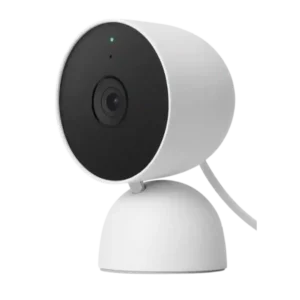
Google Nest Indoor Camera (Wired), 2nd Generation
P2
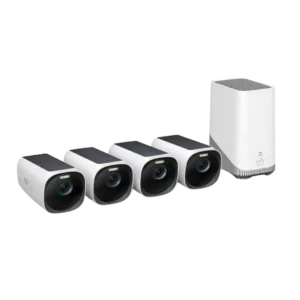
Eufy S330 4K Solar Camera (eufyCam 3)
Average score
P1
Product 1: Google Nest Indoor Camera (Wired),...
3.7
P2
Product 2: Eufy S330 4K Solar Camera...
4.1
App controls and settings
P1
Product 1: Google Nest Indoor Camera (Wired),...
3.9
App opinions were mixed: Google Home could be easy and powerful, but some reviewers found it clumsy, glitchy, or awkward.
P2
Product 2: Eufy S330 4K Solar Camera...
4.6
App controls and settings are generally praised for depth and ease of use, with some layout and multicam wishes elsewhere in the evidence.
Articulation range
P1
Product 1: Google Nest Indoor Camera (Wired),...
2.8
Manual articulation was mixed: some found aiming easy, while wall mounting and the small arm limited range.
P2
Product 2: Eufy S330 4K Solar Camera...
4.5
Articulation range evidence is limited to one review, but that review praises the pan-and-tilt range for covering a large outdoor area.
Audio recording quality
P1
Product 1: Google Nest Indoor Camera (Wired),...
4.1
Audio was usually clear, loud, or superb, but a few reviewers reported delay, echo, unclear speech, or unreliable two-way talk.
P2
Product 2: Eufy S330 4K Solar Camera...
4.8
Two-way audio and intercom quality are rated well, with reviewers describing the sound as loud, clear, and practical.
Battery life
P1Product 1: Google Nest Indoor Camera (Wired),...
No score yet
P2
Product 2: Eufy S330 4K Solar Camera...
4.8
Battery life is rated very highly because reviewers often report no charging needed after setup when solar conditions are adequate.
Build quality
P1
Product 1: Google Nest Indoor Camera (Wired),...
4.6
Build quality was widely praised as well-made, sturdy, premium, and durable-feeling.
P2
Product 2: Eufy S330 4K Solar Camera...
4.7
Build quality is praised as robust, great-feeling, durable, and visually high quality.
Cable management
P1
Product 1: Google Nest Indoor Camera (Wired),...
3.4
Cable feedback was mixed: length and concealment helped, but the fixed white cord created placement and aesthetic issues.
P2
Product 2: Eufy S330 4K Solar Camera...
4.0
Cable management is a plus where solar and wireless setup can avoid cable runs, though solar positioning remains a tradeoff.
Cloud storage plan value
P1
Product 1: Google Nest Indoor Camera (Wired),...
2.3
Cloud storage value was the most repeated concern, with many reviewers criticizing the short free window and paid Nest Aware dependence despite one positive view of free lookback.
P2
Product 2: Eufy S330 4K Solar Camera...
5.0
Cloud-plan value is strong because reviewers repeatedly value avoiding subscriptions and prefer local or hard-drive storage over recurring cloud fees.
Color accuracy
P1
Product 1: Google Nest Indoor Camera (Wired),...
4.3
Color accuracy was praised as true-to-life or pretty good.
P2
Product 2: Eufy S330 4K Solar Camera...
4.8
Color handling is praised in the available evidence, with reviewers citing accurate or vivid color output.
Connectivity options
P1
Product 1: Google Nest Indoor Camera (Wired),...
4.5
Connectivity evidence was positive from one whole-home test with no Wi-Fi issues.
P2
Product 2: Eufy S330 4K Solar Camera...
4.5
Connectivity is mostly positive, with strong range and dual-connectivity results, though one reviewer notes signal quality can affect power use.
Continuous recording capability
P1
Product 1: Google Nest Indoor Camera (Wired),...
3.5
Continuous recording is available, but reviewers treated it as cost-bound because it requires the paid Nest Aware Plus tier.
P2
Product 2: Eufy S330 4K Solar Camera...
2.3
Continuous recording is a weakness: reviewers say the S330 is motion-activated and not a full 24/7 recording solution.
Customizable motion zones
P1
Product 1: Google Nest Indoor Camera (Wired),...
4.4
Motion zones were useful and flexible, with free access praised, though setup ranged from opaque to easy across reviews.
P2
Product 2: Eufy S330 4K Solar Camera...
4.3
Activity and motion zones are viewed positively because they help reduce unwanted alerts and target the areas reviewers actually wanted monitored.
Detection features
P1
Product 1: Google Nest Indoor Camera (Wired),...
4.6
Detection features were a core strength, with reviewers praising object, animal, person, and face recognition despite one spotty-performance caveat.
P2
Product 2: Eufy S330 4K Solar Camera...
3.9
Detection features are strong overall for people and faces, but opinions are mixed for pets, nighttime recognition, and some tracking scenarios.
Detection range
P1Product 1: Google Nest Indoor Camera (Wired),...
No score yet
P2
Product 2: Eufy S330 4K Solar Camera...
4.0
Detection range was described as solid at closer distances and still usable around 20 feet, with accuracy declining farther away.
Digital zoom clarity
P1
Product 1: Google Nest Indoor Camera (Wired),...
3.3
Digital zoom was acceptable in some tests but often lost detail or became muddy when cropping in.
P2
Product 2: Eufy S330 4K Solar Camera...
4.5
Digital zoom and cropping are generally praised for preserving useful detail from the 4K footage, though one review notes long-distance blur from users.
Dual-band (2.4/5GHz) performance
P1
Product 1: Google Nest Indoor Camera (Wired),...
4.5
One reviewer found no connectivity issues across weak and strong dual-band Wi-Fi areas.
P2Product 2: Eufy S330 4K Solar Camera...
No score yetDurability
P1
Product 1: Google Nest Indoor Camera (Wired),...
4.5
Durability evidence was limited but positive from one reviewer’s well-made impression.
P2
Product 2: Eufy S330 4K Solar Camera...
4.8
Durability evidence is positive, with reviewers describing the system as durable and suitable for outdoor weather-resistant use.
Echo/noise cancellation
P1
Product 1: Google Nest Indoor Camera (Wired),...
2.3
Noise handling was a weak spot in baby-room and garage contexts, where background noise or echo made speech harder to distinguish.
P2Product 2: Eufy S330 4K Solar Camera...
No score yetEvent recording reliability
P1
Product 1: Google Nest Indoor Camera (Wired),...
3.0
Event recording reliability was split: outage buffering and recording consistency earned praise, but baby-monitoring and cooldown tests exposed missed or impractical recording.
P2
Product 2: Eufy S330 4K Solar Camera...
4.0
Event retrieval was mostly reliable in the available evidence, with only occasional delay mentioned.
False alert filter effectiveness
P1
Product 1: Google Nest Indoor Camera (Wired),...
4.1
False alert filtering was mostly strong, though one reviewer had a dog misidentified as a human.
P2
Product 2: Eufy S330 4K Solar Camera...
4.2
False-alert filtering is mostly strong after tuning, though high sensitivity and some auto-tracking scenarios can still produce mistakes.
Field of view
P1
Product 1: Google Nest Indoor Camera (Wired),...
4.3
The 135-degree view was useful for covering more space and generally balanced width with limited distortion, despite a slight fish-eye caveat.
P2
Product 2: Eufy S330 4K Solar Camera...
3.5
Field-of-view feedback is mixed: reviewers liked broad coverage with multiple cameras, but several called the native view narrow for outdoor placement.
Floodlight brightness
P1Product 1: Google Nest Indoor Camera (Wired),...
No score yet
P2
Product 2: Eufy S330 4K Solar Camera...
4.5
Spotlight brightness evidence is positive, with the spotlight doing a good job lighting the reviewer's yard.
HomeKit integration
P1
Product 1: Google Nest Indoor Camera (Wired),...
1.5
HomeKit support was explicitly absent.
P2
Product 2: Eufy S330 4K Solar Camera...
2.1
HomeKit integration is a consistent weakness because reviewers repeatedly note that Apple HomeKit support is missing.
Hub requirement
P1Product 1: Google Nest Indoor Camera (Wired),...
No score yet
P2
Product 2: Eufy S330 4K Solar Camera...
3.5
The hub is a tradeoff: it enables local storage and AI, but some reviewers dislike the required hub, Ethernet, or storage upgrade.
IFTTT/automation compatibility
P1
Product 1: Google Nest Indoor Camera (Wired),...
2.8
IFTTT support was absent, while Google’s geofence-style automation was praised.
P2
Product 2: Eufy S330 4K Solar Camera...
2.0
IFTTT support is weak, with the cited review explicitly listing no IFTTT support as a con.
Included accessories
P1Product 1: Google Nest Indoor Camera (Wired),...
No score yet
P2
Product 2: Eufy S330 4K Solar Camera...
4.8
Included accessories are praised for making installation easier and for the broad scope of delivery in the camera bundle.
Installation and Mounting
P1
Product 1: Google Nest Indoor Camera (Wired),...
4.7
Setup and mounting were consistently described as easy, quick, or painless.
P2
Product 2: Eufy S330 4K Solar Camera...
5.0
Installation is widely praised as simple, quick, cable-free, and easy to complete through the app or mounting hardware.
LED indicator visibility
P1
Product 1: Google Nest Indoor Camera (Wired),...
4.0
The status light was useful for making recording state and privacy mode visible.
P2Product 2: Eufy S330 4K Solar Camera...
No score yetLens distortion correction
P1
Product 1: Google Nest Indoor Camera (Wired),...
4.5
Lens distortion was minimal overall, with no barrel or pincushion distortion and only slight fish-eye that did not hurt clarity.
P2Product 2: Eufy S330 4K Solar Camera...
No score yetLocal storage option convenience
P1
Product 1: Google Nest Indoor Camera (Wired),...
2.3
Local storage convenience was mixed: outage buffering was appreciated, but the lack of true local or microSD storage drew criticism.
P2
Product 2: Eufy S330 4K Solar Camera...
4.8
Local storage is a major strength, with reviewers praising expandable HomeBase storage, no ongoing cost, and secure local recording.
Low-light performance
P1
Product 1: Google Nest Indoor Camera (Wired),...
4.8
Low-light footage was reported as clear, bright, and strong enough in full dark.
P2
Product 2: Eufy S330 4K Solar Camera...
3.8
Low-light performance earns mixed-positive feedback: several reviewers praised sharp night footage, while others reported motion blur or weaker nighttime detection.
Microphone sensitivity
P1
Product 1: Google Nest Indoor Camera (Wired),...
3.3
Microphone pickup was sensitive enough to hear throughout a home, but one review found it captured too much background noise for baby monitoring.
P2Product 2: Eufy S330 4K Solar Camera...
No score yetMobile app reliability
P1
Product 1: Google Nest Indoor Camera (Wired),...
2.0
Mobile app reliability drew complaints around setup glitches and two-way talk failures.
P2
Product 2: Eufy S330 4K Solar Camera...
4.5
Mobile app reliability is positive overall, with reviewers calling the app user friendly and praising fast clip loading.
Mounting flexibility
P1
Product 1: Google Nest Indoor Camera (Wired),...
4.3
Mounting and positioning were mostly flexible, especially with the ball/socket and built-in mount.
P2
Product 2: Eufy S330 4K Solar Camera...
4.2
Mounting flexibility is mixed: wireless placement helps, but solar exposure and positioning constraints can limit real-world mounting choices.
Night vision
P1
Product 1: Google Nest Indoor Camera (Wired),...
4.3
Night vision generally earned praise for bright, clear black-and-white footage, though reviewers noted the lack of color night vision and one called it only OK.
P2
Product 2: Eufy S330 4K Solar Camera...
4.0
Night vision is generally useful and often sharp, especially with color or spotlight support, though multiple reviewers note weaker night results or ghosting.
Notification management
P1
Product 1: Google Nest Indoor Camera (Wired),...
4.5
Notification controls were praised for customization, categories, push choices, and alert reduction.
P2
Product 2: Eufy S330 4K Solar Camera...
5.0
Notification management is praised where facial recognition helps reduce unwanted alerts and focus notifications on meaningful events.
Notification speed
P1
Product 1: Google Nest Indoor Camera (Wired),...
4.8
Reviewers generally saw fast or instant notifications, even though one cooldown-focused review later exposed repeat-alert problems.
P2
Product 2: Eufy S330 4K Solar Camera...
4.5
Notification speed was praised in the tested setup, with the reviewer saying alerts reached the phone quickly enough for motion events.
On-device features
P1
Product 1: Google Nest Indoor Camera (Wired),...
4.7
Free and on-device features stood out, especially smart alerts and no-subscription event history, though value depends on storage needs.
P2
Product 2: Eufy S330 4K Solar Camera...
5.0
On-device features are praised as premium, broad, and available without the same recurring subscription burden.
On-device processing (AI)
P1
Product 1: Google Nest Indoor Camera (Wired),...
4.8
On-device AI processing was viewed positively for local object recognition and privacy.
P2
Product 2: Eufy S330 4K Solar Camera...
4.9
On-device AI is one of the clearest strengths, with reviewers praising BionicMind, familiar-face recognition, and improving local identification.
ONVIF/RTSP support
P1Product 1: Google Nest Indoor Camera (Wired),...
No score yet
P2
Product 2: Eufy S330 4K Solar Camera...
2.0
ONVIF/RTSP support is a weakness because the cited review says ONVIF users are left unsupported.
Operating temperature range
P1
Product 1: Google Nest Indoor Camera (Wired),...
2.0
One reviewer warned that below-freezing locations could be problematic.
P2
Product 2: Eufy S330 4K Solar Camera...
5.0
Operating temperature evidence is limited, but the cited review frames the weather-ready operating range as suitable for year-round outdoor security.
Power options (battery)
P1
Product 1: Google Nest Indoor Camera (Wired),...
3.5
The lack of battery was a placement drawback for one reviewer but also removed recharge worries for another.
P2
Product 2: Eufy S330 4K Solar Camera...
5.0
Battery power is a strength because reviewers emphasize flexible placement and little concern about running out of battery.
Power options (solar panel)
P1Product 1: Google Nest Indoor Camera (Wired),...
No score yet
P2
Product 2: Eufy S330 4K Solar Camera...
4.7
Solar power is the standout strength, repeatedly praised for keeping batteries topped up and reducing charging maintenance.
Pre-event recording length
P1Product 1: Google Nest Indoor Camera (Wired),...
No score yet
P2
Product 2: Eufy S330 4K Solar Camera...
2.0
Pre-event capture is limited because motion activation can omit the first couple of seconds before the camera starts recording.
Price value
P1
Product 1: Google Nest Indoor Camera (Wired),...
3.5
Value was sharply mixed: some praised the smart-feature package, while others called the price high or overpriced versus cheaper competitors.
P2
Product 2: Eufy S330 4K Solar Camera...
4.5
Price value is mixed-positive: reviewers call it expensive up front but justify the cost through 4K video, solar power, AI, and no monthly fees.
PTZ (pan/tilt/zoom) control responsiveness
P1
Product 1: Google Nest Indoor Camera (Wired),...
1.5
Remote pan/tilt movement is absent, and reviewers wanting room scanning or more accurate aiming marked this as a limitation.
P2
Product 2: Eufy S330 4K Solar Camera...
4.5
The pan-and-tilt control evidence is limited to one review, but that reviewer found the controls intuitive in the Eufy app.
Recording start-time lag
P1
Product 1: Google Nest Indoor Camera (Wired),...
1.5
One reviewer found a cooldown period that could block repeat alerts and recordings.
P2
Product 2: Eufy S330 4K Solar Camera...
2.0
Battery-triggered recording has a clear lag concern, with one reviewer warning that the camera can miss the first moments of activity.
Size and footprint
P1
Product 1: Google Nest Indoor Camera (Wired),...
4.5
Reviewers liked the small, compact, discreet footprint and attractive appearance.
P2
Product 2: Eufy S330 4K Solar Camera...
4.5
Size and footprint evidence is limited but positive, with one reviewer saying the HomeBase does not take up much shelf space.
Smart-home integration (Alexa, Google, Siri, HomeKit, Matter, Thread)
P1
Product 1: Google Nest Indoor Camera (Wired),...
4.1
Google integration was repeatedly praised, while non-Google ecosystems were weaker or unsupported.
P2
Product 2: Eufy S330 4K Solar Camera...
3.5
Smart-home integration is mixed: Alexa and Google support work smoothly, but broader ecosystem support is limited.
Smart home accessory compatibility
P1
Product 1: Google Nest Indoor Camera (Wired),...
4.4
Google display and accessory compatibility worked well, while broader security-system and ecosystem compatibility was narrower.
P2
Product 2: Eufy S330 4K Solar Camera...
5.0
Smart-home accessory compatibility has limited but positive evidence, with an Alexa routine triggering a Wyze Bulb reliably.
Smart search accuracy
P1
Product 1: Google Nest Indoor Camera (Wired),...
4.5
Smart history and search tools helped reviewers filter or browse events by object and thumbnail.
P2Product 2: Eufy S330 4K Solar Camera...
No score yetSound detection accuracy
P1
Product 1: Google Nest Indoor Camera (Wired),...
4.0
Sound detection was seen as a useful emergency-alert add-on, though evidence was mostly limited to feature usefulness rather than deep testing.
P2Product 2: Eufy S330 4K Solar Camera...
No score yetSpeaker volume
P1
Product 1: Google Nest Indoor Camera (Wired),...
4.5
Speaker and two-way volume were considered clear and loud enough, sometimes louder than needed.
P2
Product 2: Eufy S330 4K Solar Camera...
4.0
Speaker volume is serviceable to strong: one review praised loud clear audio, while others said it gets the job done or is just loud enough.
Spotlight features
P1Product 1: Google Nest Indoor Camera (Wired),...
No score yet
P2
Product 2: Eufy S330 4K Solar Camera...
4.3
Spotlight features are useful for illumination and deterrence, though evidence is limited to a few reviewer observations.
Streaming reliability
P1
Product 1: Google Nest Indoor Camera (Wired),...
4.0
Live viewing was generally reliable and low-lag, though one baby-monitoring review reported reconnect delay.
P2
Product 2: Eufy S330 4K Solar Camera...
4.1
Streaming reliability is mostly good, including strong Echo Show and remote connectivity results, but a few reviews mention live-feed delays or quality drops.
System scalability
P1
Product 1: Google Nest Indoor Camera (Wired),...
4.3
Scalability was favorable when multiple Nest cameras share one subscription.
P2
Product 2: Eufy S330 4K Solar Camera...
3.9
System scalability is mixed: HomeBase compatibility and multi-camera expansion are praised, but fleet-wide app actions and camera-count limits create caveats.
Video resolution and detail
P1
Product 1: Google Nest Indoor Camera (Wired),...
4.0
Most reviewers found the 1080p footage clear or sharp, though some said it was merely okay or fine and lost detail versus higher-resolution cameras.
P2
Product 2: Eufy S330 4K Solar Camera...
4.9
Reviewers consistently praise the S330's 4K footage for sharp detail, readable crops, and exceptional daytime image quality.
Weather resistance rating (IP code)
P1
Product 1: Google Nest Indoor Camera (Wired),...
1.5
Reviewers flagged that this indoor wired camera is not weatherproof or outdoor-ready.
P2
Product 2: Eufy S330 4K Solar Camera...
5.0
Weather resistance is viewed positively, with reviewers describing the camera as suitable for outdoor conditions and not a wind-or-rain concern.
wired
P1
Product 1: Google Nest Indoor Camera (Wired),...
3.2
The wired design avoids battery maintenance but limits placement and uses a non-replaceable cord.
P2
Product 2: Eufy S330 4K Solar Camera...
2.5
The wired requirement is a drawback for the hub, which must connect to the router by Ethernet rather than Wi-Fi.