Compare Google Nest Indoor Camera (Wired), 2nd Generation vs Arlo Pro 5s Spotlight Security Camera
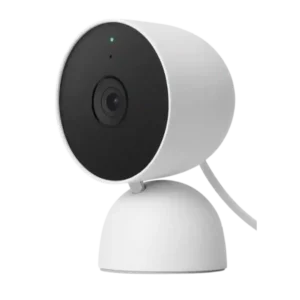
Google Home gives deep controls for events, zones, privacy, and device toggles, but several reviewers call the UI dense or unintuitive (some settings feel buried) while others describe it as polished and straightforward once configured.
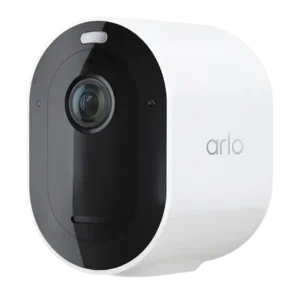
The Arlo Secure app is repeatedly praised for depth and control: modes (home/away/standby), sensitivity sliders, HDR and spotlight tuning, routines, and dashboard customization. A few reviewers note it can take time to learn or was recently revamped, but overall it is considered feature-rich and usable.
Physical articulation (tilt/swivel via stand/ball joint) is helpful for aiming, but range can feel limited in some wall-mount scenarios and there’s no motorized movement.
Two-way audio is usually described as clear and usable, with several calling it surprisingly good; a minority report echo in large spaces or intermittent two-way talk issues, and one notes audio recording may need to be enabled in settings.
Two-way audio quality is commonly described as clear and usable, with relatively low lag. Some reviewers note occasional conversational lag or environmental distortion in windy locations.
Because the camera is wired, it offers no battery runtime or backup; in a power outage it stops, and ‘battery life’ becomes more about how long your phone/tablet can stay active while monitoring.
Battery life is highly variable: reviewers frequently call the up-to-eight-month claim optimistic, with real-world experiences often landing closer to three to four months in typical/busier areas. Low power modes and solar accessories can extend runtime.
Build quality is frequently described as premium for the price class, with a sturdy base and solid materials that feel more substantial than many budget indoor cams.
Most reviews describe premium, well-finished hardware, but at least one user report complains about scratch-prone front plastics, making careful handling important.
The permanently attached power cable (often cited as 10 ft/3 m) helps reach outlets but is not user-replaceable, and hiding/colour-matching the cord is a recurring annoyance; some setups benefit from routing the cable through the base.
The free three-hour cloud history is viewed as too short for real security by many reviewers; Nest Aware extends event history (30/60 days) and adds features like familiar faces and sound alerts, but the ongoing fee is a common complaint.
Subscription value is the most common complaint: Arlo Secure is described as expensive and effectively required for smart detection, rich notifications, and cloud history (often cited as 30 days).
Daytime colors are generally described as natural and accurate, helped by HDR in bright/contrast-heavy scenes.
Color and HDR performance are frequently praised as vibrant and accurate, aided by a higher-bit sensor in some reviews. A few mention highlight overexposure at the edges or in very bright areas.
Connectivity is Wi-Fi-based (2.4/5GHz) and commonly paired with Bluetooth LE for setup; lack of Ethernet/PoE means performance depends on your wireless coverage.
It can connect directly to Wi-Fi as a standalone camera and can also integrate into an Arlo hub-based system. Strong signal quality matters for best responsiveness; most report solid range, but a minority report issues with certain mesh systems.
24/7 continuous recording is available only with higher-tier Nest Aware (Plus) in the reviews; without it, the camera is primarily event-based with a short free lookback.
Customer support is mentioned rarely, but one reviewer reports Arlo support was unable to resolve intermittent live-view lag.
Activity/motion zones are flexible and useful (and available without a subscription), helping cut unwanted alerts, but at least one review says the path to create them isn’t obvious in the app.
Activity or motion zones are repeatedly mentioned as useful for trimming out streets, bushes, or neighbors' areas. Several reviews note zones are cloud-based and/or require a subscription tier.
Detection is a highlight: the camera can distinguish people, animals, and vehicles with high accuracy in most tests; familiar face identification exists but is tied to Nest Aware in multiple reviews.
Smart detection for people, pets/animals, vehicles, and packages is frequently described as accurate and helpful for reducing noise. Multiple sources emphasize these advanced detections are largely subscription-gated.
Indoor detection and IR illumination are commonly described as effective across typical room distances, with multiple sources citing roughly 15 ft as a practical night-vision/detection reference point.
Detection coverage is described as strong for typical home perimeters; one review references an approximate 8-meter motion triggering distance and wide sensor coverage, but real-world range depends on placement, angle, and obstacles.
The 6x digital zoom is handy for quick checks, but multiple reviews note a noticeable loss of detail at distance or when heavily zoomed.
Digital zoom (often cited up to 12x) helps inspect details and tracking, but reviewers note image quality drops as you zoom or when the view is heavily cropped.
Dual-band Wi-Fi performance is a strength in testing, with reviewers reporting stable connections on both 2.4GHz and 5GHz and few dropouts when signals are adequate.
Dual-band Wi-Fi (2.4 and 5 GHz) is a key upgrade for setup flexibility and faster streaming. Many reviews note initial setup typically uses 2.4 GHz; mesh or combined SSID networks can complicate pairing for some users.
Durability impressions are positive for indoor use (stable stand, solid feel), but it’s not designed for weather exposure and lacks battery backup for outages.
Durability is generally treated as solid for outdoor use, though concerns include cosmetic scratching and theft risk if mounted within reach.
Noise cancellation and full-duplex talk are often praised, but real-world acoustics (like garages) can still introduce echo or background noise in some setups.
Noise handling is generally praised, with specific mentions of a noise-cancelling microphone and better-than-average audio clarity for an outdoor camera.
Event capture is generally reliable within the short free window, yet cooldown behavior and the three-hour retention limit can make it easy to miss what happened if you don’t check promptly. Most reviewers found recording dependable, but at least one hands-on test reports missed recordings due to cooldown timing between events.
Reviewers commonly report that it rarely misses meaningful events, with strong motion detection and reliable triggering in typical use. A few note occasional lag or delays in specific situations, such as mode switching at night. Overall recording reliability is described as consistent when properly set up, but the biggest limitation is access: without a subscription or hub-based local storage, recording and clip access can be restricted.
False alerts are usually well-controlled, especially when paired with zones and event-type filtering, but some reviewers saw occasional mislabels (for example, a pet flagged as a person) and one noted missed back-to-back events.
False alerts can be reduced effectively using object-type filtering, sensitivity sliders, and activity zones. Results still depend on placement and environment, but overall filtering is considered among the best.
The 135-degree view covers a wide area and is often seen as a sweet spot, though a few reviewers observe mild fish-eye distortion typical of wide lenses.
The 160-degree field of view is repeatedly called out as a major advantage for covering wide areas from a single mounting point.
1080p at 30fps is standard and consistently seen as smooth enough for indoor monitoring and event playback.
Daytime frame rate is commonly cited around 24 fps, with night recordings dropping lower in some accounts, which can introduce artifacts or blur on fast movement.
Reviews consistently note there is no Apple HomeKit support.
HomeKit support is inconsistent across the review set: some explicitly say it is not supported on this model, while others say HomeKit can work only via an Arlo base station plus an Apple home hub (and may have limitations).
A hub is not required for basic Wi-Fi operation, but is commonly described as needed for local recording and in some setups for HomeKit support, adding cost and complexity.
Reviews that discuss automation note no IFTTT support.
IFTTT and automation options are frequently highlighted, enabling routines with other smart devices. Deeper automation and richer alerts often pair with subscription features.
Included extras are generally adequate: power adapter, mounting screws/anchors, and basic documentation, supporting either shelf or wall installs out of the box.
Boxes typically include the camera, battery, mounts, and a magnetic charging cable. A common gripe is the proprietary charging cable, which is easy to misplace and not as universal as USB-C.
Setup is typically quick (scan code, add in Google Home, connect Wi-Fi) and mounting is straightforward with the built-in bracket, though a few reports mention QR-scan friction or placement constraints caused by needing an outlet nearby.
No summary yet.
The front status light is a clear privacy cue (recording/viewing), and some reviews mention you can adjust its brightness in settings.
Most reviews report minimal distortion in normal use, though some mild fish-eye at the edges is noted due to the wide field of view.
There’s no microSD/NVR option, limiting local storage; one review highlights up to about an hour of onboard buffering during internet outages before uploading, but most still view local storage convenience as a weak point.
Local storage is possible but usually requires an Arlo Smart Hub and external storage, making it less plug-and-play than cameras with built-in microSD. Remote access to local clips is often described as more complex than cloud access.
Low-light performance is generally strong for an indoor cam thanks to HDR and IR night mode, with reviewers describing usable detail in dark areas; a few caveats include black-and-white night footage and occasional IR glare depending on placement.
Low-light performance is a standout, with strong detail retention at night. Reviewers note best results come with adequate ambient light or spotlight assistance, and very fast motion can still blur at night.
Microphone pickup is strong and can capture sounds beyond the immediate area, though some reviewers dislike that it can also capture a lot of background noise without strong filtering.
Microphone sensitivity is positioned as high enough for two-way talk and, with subscription features, for detecting certain alarm sounds.
Reliability is generally strong for daily viewing and clip review, though a few reviews report glitchy first-time setup, brief reconnect delays, and occasional feature hiccups (notably two-way talk in some tests).
App stability is generally good with quick clip playback and live view, but some users report occasional lag, longer loads, or setup hiccups on certain networks, especially mesh or combined-band systems.
You can shelf-mount, wall-mount, or ceiling-mount with included hardware, but because it’s wired-only, placement flexibility ultimately depends on outlet locations and cable concealment.
Angle adjustment is generally easy (ball joint and/or magnetic mounting), supporting walls, fences, ceilings, and overhangs. Some reviewers note the camera can protrude from the wall more than compact rivals.
Night vision is generally bright and crisp in black-and-white, often cited as usable to around 15 ft; downsides include no color night vision and occasional IR reflections/brightness issues depending on positioning.
Night vision quality is consistently rated highly, especially color night vision. Black-and-white IR is also described as sharp, but several sources mention moving subjects can blur more at night due to lower frame rates.
No summary yet.
Notification controls are a major strength: multiple security modes, scheduling and geofencing in some reviews, and the ability to tailor what gets recorded vs what triggers alerts. Rich notifications and the best filtering typically require a subscription.
Alert delivery is typically very fast, often arriving within seconds or near-instantly in testing; however, one review reports cooldown behavior that can suppress rapid repeat notifications.
Alerts are widely described as fast and often faster than competitors, with rich previews (thumbnails, GIFs, highlighted subjects) when subscription features are enabled.
On-device AI/ML is widely praised for fast, accurate categorization and improved privacy (less dependence on cloud processing for recognition), and it underpins many of the camera’s smarter alerts.
The operating range suits typical indoor environments, but one reviewer flags a freezing-point minimum as a concern for unheated cabins or winterized-off spaces.
Power is plug-in only, with no battery mode, which simplifies maintenance but limits placement and eliminates backup during outages.
The removable rechargeable battery design is widely seen as convenient, enabling swaps or off-camera charging, though charging logistics depend on mounting height and accessory choices.
Solar panel accessories are repeatedly mentioned as a practical way to reduce or eliminate manual recharging, especially for cameras mounted in hard-to-reach spots.
Value is polarizing: some call it one of the best Nest bargains (especially on sale) because smart alerts and short history are free, while others say it’s overpriced versus cheaper cams with higher resolution or better storage options.
Value is polarizing: reviewers often call it expensive but justify the price for best-in-class video and notifications. If you do not want to pay for subscriptions, value drops sharply because many features are restricted.
There is no motorized pan/tilt/zoom; you can’t remotely move the camera’s viewpoint, so PTZ responsiveness is effectively not available.
Most accounts suggest minimal delay from detection to alert, but some reviewers report occasional live-view lag (a couple seconds) or brief delays when switching between night modes.
The camera’s small, unobtrusive footprint and friendly design are repeatedly praised, making it easy to place in living spaces without looking overly industrial.
Integration is strongest with Google Assistant and Google smart displays; several reviews explicitly note missing Alexa and Apple ecosystem support, making this best for Google-centric homes.
Smart home support is broad in reviews, commonly including Alexa and Google Assistant and sometimes SmartThings. Voice-display live streaming is generally reported to work well when the network is strong.
Filtering and browsing history by ‘what was seen’ (people/animals/vehicles) is widely viewed as useful, and familiar-face labeling (with Nest Aware) can further improve search and triage.
Sound-based alerts (such as smoke/CO alarm detection) are treated as a useful add-on feature in reviews and demos, though availability is sometimes tied to subscription tiers.
Sound-based alarm detection is called out as a unique feature by some reviewers, though at least one notes it depends on specific beep patterns to trigger reliably.
Speaker output is typically loud and clear for two-way talk; a few note it can be louder than needed for close-range monitoring.
The built-in siren and speaker are often considered loud enough to be effective, though at least one review says the siren volume is not especially impressive.
The built-in spotlight is viewed as a useful deterrent and a key enabler for color night clips. Brightness is generally strong, but some reviews say range claims are optimistic or that spotlight-driven mode switching can be a little finicky.
Live view and clip playback are usually stable and responsive, but some users note brief delays when reopening the feed or reconnecting.
Live view and clip loading are usually quick, though several reviewers observed occasional slow loads or intermittent lag, especially when away from home or on weaker connections.
The platform scales well if you plan multiple Nest devices: subscriptions can cover multiple cameras, and the Google Home UI supports browsing and filtering across a multi-camera setup.
Footage is generally clear 1080p with HDR, good enough for typical indoor monitoring, but reviewers note it’s not class-leading versus 2K/4K competitors and detail drops quickly when you crop or rely on digital zoom.
Across outlets, 2K HDR footage is described as crisp and detailed and among the best in its class. Some quality loss is noted when digitally zooming or using cropped tracking views.
Weather resistance is typically positioned as outdoor-ready; some sources cite an IP65 rating while others note Arlo does not always publish a clear IP rating in specs.
At least one reviewer highlights that key controls and clip access can also be handled via Arlo's web portal, which is handy for monitoring from a computer in addition to the mobile app.