P1
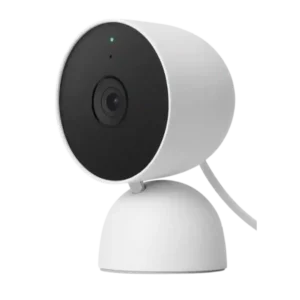
Google Nest Indoor Camera (Wired), 2nd Generation
P2
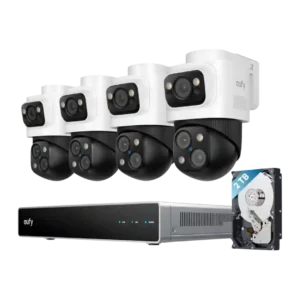
eufy 4K NVR Security Camera System S4 Max
Average score
P1
Product 1: Google Nest Indoor Camera (Wired),...
3.7
P2
Product 2: eufy 4K NVR Security Camera...
4.3
App controls and settings
P1
Product 1: Google Nest Indoor Camera (Wired),...
3.9
App opinions were mixed: Google Home could be easy and powerful, but some reviewers found it clumsy, glitchy, or awkward.
P2
Product 2: eufy 4K NVR Security Camera...
4.6
Controls were generally praised across the app and NVR interface for responsiveness, clear structure, live view speed, and simple setup.
Articulation range
P1
Product 1: Google Nest Indoor Camera (Wired),...
2.8
Manual articulation was mixed: some found aiming easy, while wall mounting and the small arm limited range.
P2
Product 2: eufy 4K NVR Security Camera...
4.8
Articulation was praised for allowing the upper and PTZ sections to cover different directions with useful 180/360-degree positioning.
Audio recording quality
P1
Product 1: Google Nest Indoor Camera (Wired),...
4.1
Audio was usually clear, loud, or superb, but a few reviewers reported delay, echo, unclear speech, or unreliable two-way talk.
P2
Product 2: eufy 4K NVR Security Camera...
4.6
Audio capture and two-way communication were generally praised, with reviewers describing microphones and sound as good or surprisingly good.
Build quality
P1
Product 1: Google Nest Indoor Camera (Wired),...
4.6
Build quality was widely praised as well-made, sturdy, premium, and durable-feeling.
P2
Product 2: eufy 4K NVR Security Camera...
4.6
Build quality was viewed positively, with reviewers describing the cameras or NVR as solid, stout, premium, or hefty.
Cable management
P1
Product 1: Google Nest Indoor Camera (Wired),...
3.4
Cable feedback was mixed: length and concealment helped, but the fixed white cord created placement and aesthetic issues.
P2
Product 2: eufy 4K NVR Security Camera...
2.7
Cable management was a recurring weakness because included cables could be too short and hidden wiring was difficult.
Cloud storage plan value
P1
Product 1: Google Nest Indoor Camera (Wired),...
2.3
Cloud storage value was the most repeated concern, with many reviewers criticizing the short free window and paid Nest Aware dependence despite one positive view of free lookback.
P2
Product 2: eufy 4K NVR Security Camera...
5.0
Reviewers strongly valued the no-subscription/no-cloud model because it avoided monthly fees, server dependence, and follow-up costs.
Color accuracy
P1
Product 1: Google Nest Indoor Camera (Wired),...
4.3
Color accuracy was praised as true-to-life or pretty good.
P2
Product 2: eufy 4K NVR Security Camera...
4.8
Color and exposure were praised through vibrant footage and balanced images that preserved bright and shadow detail.
Connectivity options
P1
Product 1: Google Nest Indoor Camera (Wired),...
4.5
Connectivity evidence was positive from one whole-home test with no Wi-Fi issues.
P2
Product 2: eufy 4K NVR Security Camera...
2.5
Connectivity options were mixed to weak because PoE improved reliability but the system was restricted to Eufy PoE cameras and lacked third-party options.
Continuous recording capability
P1
Product 1: Google Nest Indoor Camera (Wired),...
3.5
Continuous recording is available, but reviewers treated it as cost-bound because it requires the paid Nest Aware Plus tier.
P2
Product 2: eufy 4K NVR Security Camera...
2.8
Continuous recording works, but one reviewer warned that 24/7 recording with four dual-stream cameras can consume storage very quickly.
Cross-camera tracking
P1Product 1: Google Nest Indoor Camera (Wired),...
No score yet
P2
Product 2: eufy 4K NVR Security Camera...
4.9
Cross-camera tracking had the strongest consensus, with reviewers praising seamless handoffs, unified timelines, and continuous subject tracking.
Customizable motion zones
P1
Product 1: Google Nest Indoor Camera (Wired),...
4.4
Motion zones were useful and flexible, with free access praised, though setup ranged from opaque to easy across reviews.
P2
Product 2: eufy 4K NVR Security Camera...
4.5
Custom activity and response controls were praised for letting users tailor zones, alerts, and camera behavior by area.
Detection features
P1
Product 1: Google Nest Indoor Camera (Wired),...
4.6
Detection features were a core strength, with reviewers praising object, animal, person, and face recognition despite one spotty-performance caveat.
P2
Product 2: eufy 4K NVR Security Camera...
4.7
Detection features were praised for accurate people, vehicle, pet, and AI filtering performance across several reviews.
Detection range
P1Product 1: Google Nest Indoor Camera (Wired),...
No score yet
P2
Product 2: eufy 4K NVR Security Camera...
5.0
Detection range was a standout, with reviewers reporting reliable detection or lock-on performance at roughly 150 feet.
Digital zoom clarity
P1
Product 1: Google Nest Indoor Camera (Wired),...
3.3
Digital zoom was acceptable in some tests but often lost detail or became muddy when cropping in.
P2
Product 2: eufy 4K NVR Security Camera...
3.7
Zoom clarity was mixed: reviewers liked the hybrid/2K zoom in some cases, but digital cropping could look less clear and license plates remained difficult.
Dual-band (2.4/5GHz) performance
P1
Product 1: Google Nest Indoor Camera (Wired),...
4.5
One reviewer found no connectivity issues across weak and strong dual-band Wi-Fi areas.
P2Product 2: eufy 4K NVR Security Camera...
No score yetDual-camera design
P1Product 1: Google Nest Indoor Camera (Wired),...
No score yet
P2
Product 2: eufy 4K NVR Security Camera...
4.7
The dual/triple-camera design was praised for replacing multiple conventional cameras and creating multiple useful viewpoints from each unit.
Dual-stream recording
P1Product 1: Google Nest Indoor Camera (Wired),...
No score yet
P2
Product 2: eufy 4K NVR Security Camera...
4.5
Dual-stream/live dual-view behavior was praised where reviewers could view both camera feeds at once from a single physical unit.
Durability
P1
Product 1: Google Nest Indoor Camera (Wired),...
4.5
Durability evidence was limited but positive from one reviewer’s well-made impression.
P2
Product 2: eufy 4K NVR Security Camera...
4.8
Durability evidence was positive, with reviewers describing the hardware as tank-like and stable through outdoor weather.
Echo/noise cancellation
P1
Product 1: Google Nest Indoor Camera (Wired),...
2.3
Noise handling was a weak spot in baby-room and garage contexts, where background noise or echo made speech harder to distinguish.
P2
Product 2: eufy 4K NVR Security Camera...
4.8
Noise handling received positive evidence where reviewers could still pick up clear audio despite wind, rain, cars, or other background noise.
Event recording reliability
P1
Product 1: Google Nest Indoor Camera (Wired),...
3.0
Event recording reliability was split: outage buffering and recording consistency earned praise, but baby-monitoring and cooldown tests exposed missed or impractical recording.
P2
Product 2: eufy 4K NVR Security Camera...
4.8
Event recording was viewed as reliable overall, with reviewers praising consistent tracking, recording, and 24/7 security usefulness.
False alert filter effectiveness
P1
Product 1: Google Nest Indoor Camera (Wired),...
4.1
False alert filtering was mostly strong, though one reviewer had a dog misidentified as a human.
P2
Product 2: eufy 4K NVR Security Camera...
4.7
False alert filtering was generally strong, with reviewers praising fewer irrelevant alerts, though one noted the AI was not perfect.
Field of view
P1
Product 1: Google Nest Indoor Camera (Wired),...
4.3
The 135-degree view was useful for covering more space and generally balanced width with limited distortion, despite a slight fish-eye caveat.
P2
Product 2: eufy 4K NVR Security Camera...
4.8
Coverage was a major strength: reviewers described removed blind spots, broad views, and complete property coverage from fewer physical cameras.
Floodlight brightness
P1Product 1: Google Nest Indoor Camera (Wired),...
No score yet
P2
Product 2: eufy 4K NVR Security Camera...
4.2
Floodlight brightness was sufficient in reviewer evidence, with the spotlight described as bright or strong enough to illuminate useful areas.
Frame rate
P1Product 1: Google Nest Indoor Camera (Wired),...
No score yet
P2
Product 2: eufy 4K NVR Security Camera...
4.5
One reviewer treated the 20fps capture as an improvement over the lower frame rates often seen in similar security cameras.
HomeKit integration
P1
Product 1: Google Nest Indoor Camera (Wired),...
1.5
HomeKit support was explicitly absent.
P2
Product 2: eufy 4K NVR Security Camera...
2.5
HomeKit integration was a weakness in current evidence, with some reviewers noting no current support and one mentioning future plans.
Hub requirement
P1Product 1: Google Nest Indoor Camera (Wired),...
No score yet
P2
Product 2: eufy 4K NVR Security Camera...
2.8
The required NVR/hub created placement limits because it must remain within cabling distance of cameras.
IFTTT/automation compatibility
P1
Product 1: Google Nest Indoor Camera (Wired),...
2.8
IFTTT support was absent, while Google’s geofence-style automation was praised.
P2
Product 2: eufy 4K NVR Security Camera...
2.5
Automation compatibility was limited, with reviewers noting constraints for complex automations, shortcuts, or broader smart-home workflows.
Included accessories
P1Product 1: Google Nest Indoor Camera (Wired),...
No score yet
P2
Product 2: eufy 4K NVR Security Camera...
4.8
Included accessories were praised, especially the mouse and setup hardware that made the NVR easier to configure.
Installation and Mounting
P1
Product 1: Google Nest Indoor Camera (Wired),...
4.7
Setup and mounting were consistently described as easy, quick, or painless.
P2
Product 2: eufy 4K NVR Security Camera...
3.4
Installation was the most repeated tradeoff: setup could be straightforward once wired, but drilling, attic work, and cable routing took effort.
LED indicator visibility
P1
Product 1: Google Nest Indoor Camera (Wired),...
4.0
The status light was useful for making recording state and privacy mode visible.
P2Product 2: eufy 4K NVR Security Camera...
No score yetLens distortion correction
P1
Product 1: Google Nest Indoor Camera (Wired),...
4.5
Lens distortion was minimal overall, with no barrel or pincushion distortion and only slight fish-eye that did not hurt clarity.
P2Product 2: eufy 4K NVR Security Camera...
No score yetLocal storage option convenience
P1
Product 1: Google Nest Indoor Camera (Wired),...
2.3
Local storage convenience was mixed: outage buffering was appreciated, but the lack of true local or microSD storage drew criticism.
P2
Product 2: eufy 4K NVR Security Camera...
4.9
Local storage was a core advantage, praised for privacy, expandability, and avoiding cloud dependence.
Low-light performance
P1
Product 1: Google Nest Indoor Camera (Wired),...
4.8
Low-light footage was reported as clear, bright, and strong enough in full dark.
P2
Product 2: eufy 4K NVR Security Camera...
4.8
Low-light footage was viewed positively, especially where reviewers saw clean, reliable, or surprisingly good footage in dim scenes.
Microphone sensitivity
P1
Product 1: Google Nest Indoor Camera (Wired),...
3.3
Microphone pickup was sensitive enough to hear throughout a home, but one review found it captured too much background noise for baby monitoring.
P2
Product 2: eufy 4K NVR Security Camera...
4.8
Microphone sensitivity was praised where the reviewer said the camera microphone did a great job picking up voice.
Mobile app reliability
P1
Product 1: Google Nest Indoor Camera (Wired),...
2.0
Mobile app reliability drew complaints around setup glitches and two-way talk failures.
P2
Product 2: eufy 4K NVR Security Camera...
4.2
Mobile app reliability was mostly positive for stability and speed, though one beta-app reviewer saw slow or failed downloads.
Mounting flexibility
P1
Product 1: Google Nest Indoor Camera (Wired),...
4.3
Mounting and positioning were mostly flexible, especially with the ball/socket and built-in mount.
P2
Product 2: eufy 4K NVR Security Camera...
4.8
Mounting flexibility was praised for allowing flexible positioning and fewer cameras over larger areas, though cable routing still matters.
Night vision
P1
Product 1: Google Nest Indoor Camera (Wired),...
4.3
Night vision generally earned praise for bright, clear black-and-white footage, though reviewers noted the lack of color night vision and one called it only OK.
P2
Product 2: eufy 4K NVR Security Camera...
4.8
Night vision drew broad praise for color, infrared, and low-light clarity, with reviewers calling it impressive, clear, and very good.
Notification management
P1
Product 1: Google Nest Indoor Camera (Wired),...
4.5
Notification controls were praised for customization, categories, push choices, and alert reduction.
P2
Product 2: eufy 4K NVR Security Camera...
2.8
Notification management was mixed: alerts were fast, but setup could be tricky and some users may receive too many notifications.
Notification speed
P1
Product 1: Google Nest Indoor Camera (Wired),...
4.8
Reviewers generally saw fast or instant notifications, even though one cooldown-focused review later exposed repeat-alert problems.
P2
Product 2: eufy 4K NVR Security Camera...
5.0
Notification speed was one of the strongest points, with reviewers measuring or describing alerts as extremely fast and nearly instant.
On-device features
P1
Product 1: Google Nest Indoor Camera (Wired),...
4.7
Free and on-device features stood out, especially smart alerts and no-subscription event history, though value depends on storage needs.
P2
Product 2: eufy 4K NVR Security Camera...
5.0
On-device features were praised for combining local AI, recording, tracking, and smart management without cloud processing.
On-device processing (AI)
P1
Product 1: Google Nest Indoor Camera (Wired),...
4.8
On-device AI processing was viewed positively for local object recognition and privacy.
P2
Product 2: eufy 4K NVR Security Camera...
4.6
On-device AI was praised for local processing, useful filtering, smart tracking, and strong real-world detection, though one reviewer said it was still being refined.
ONVIF/RTSP support
P1Product 1: Google Nest Indoor Camera (Wired),...
No score yet
P2
Product 2: eufy 4K NVR Security Camera...
1.9
ONVIF/RTSP support was a clear weakness: reviewers wanted it and noted current incompatibility with third-party standards or cameras.
Operating temperature range
P1
Product 1: Google Nest Indoor Camera (Wired),...
2.0
One reviewer warned that below-freezing locations could be problematic.
P2
Product 2: eufy 4K NVR Security Camera...
4.8
Operating conditions were viewed positively where a reviewer said the system handled Michigan summer heat and rainstorms.
Optical zoom performance
P1Product 1: Google Nest Indoor Camera (Wired),...
No score yet
P2
Product 2: eufy 4K NVR Security Camera...
4.8
Optical and hybrid zoom were praised for refined behavior, smooth switching, and accurate tracking when the telephoto lens engaged.
PoE
P1Product 1: Google Nest Indoor Camera (Wired),...
No score yet
P2
Product 2: eufy 4K NVR Security Camera...
4.7
PoE was strongly praised for stable power/data, reliable video, simpler single-cable camera runs, and fewer Wi-Fi or battery issues.
Power options (battery)
P1
Product 1: Google Nest Indoor Camera (Wired),...
3.5
The lack of battery was a placement drawback for one reviewer but also removed recharge worries for another.
P2Product 2: eufy 4K NVR Security Camera...
No score yetPrice value
P1
Product 1: Google Nest Indoor Camera (Wired),...
3.5
Value was sharply mixed: some praised the smart-feature package, while others called the price high or overpriced versus cheaper competitors.
P2
Product 2: eufy 4K NVR Security Camera...
4.1
Value was favorable but not budget-oriented: reviewers repeatedly called it expensive while still fair, solid, or compelling for serious security needs.
PTZ (pan/tilt/zoom) control responsiveness
P1
Product 1: Google Nest Indoor Camera (Wired),...
1.5
Remote pan/tilt movement is absent, and reviewers wanting room scanning or more accurate aiming marked this as a limitation.
P2
Product 2: eufy 4K NVR Security Camera...
4.8
PTZ responsiveness was a major strength, with reviewers noting low latency, smooth real-time motion, accurate tracking, and precise quiet movement.
Recording start-time lag
P1
Product 1: Google Nest Indoor Camera (Wired),...
1.5
One reviewer found a cooldown period that could block repeat alerts and recordings.
P2
Product 2: eufy 4K NVR Security Camera...
5.0
Wired local processing was credited with eliminating lag and reducing dependence on internet speed for detection and tracking.
Size and footprint
P1
Product 1: Google Nest Indoor Camera (Wired),...
4.5
Reviewers liked the small, compact, discreet footprint and attractive appearance.
P2
Product 2: eufy 4K NVR Security Camera...
3.9
Size and footprint were mixed: the NVR was compact but audible, while cameras were described as large and hefty.
Smart-home integration (Alexa, Google, Siri, HomeKit, Matter, Thread)
P1
Product 1: Google Nest Indoor Camera (Wired),...
4.1
Google integration was repeatedly praised, while non-Google ecosystems were weaker or unsupported.
P2
Product 2: eufy 4K NVR Security Camera...
3.1
Smart-home integration was mixed: Alexa and Google support were useful, but HomeKit, Home Assistant, and broader ecosystem options were limited.
Smart home accessory compatibility
P1
Product 1: Google Nest Indoor Camera (Wired),...
4.4
Google display and accessory compatibility worked well, while broader security-system and ecosystem compatibility was narrower.
P2
Product 2: eufy 4K NVR Security Camera...
2.7
Accessory compatibility was mixed to weak because support for Eufy Smart Display E10, third-party cameras, and broader ecosystems was limited.
Smart search accuracy
P1
Product 1: Google Nest Indoor Camera (Wired),...
4.5
Smart history and search tools helped reviewers filter or browse events by object and thumbnail.
P2
Product 2: eufy 4K NVR Security Camera...
4.7
Smart search was praised as accurate, useful, time-saving, and impressive, though one reviewer said it was not perfect.
Sound detection accuracy
P1
Product 1: Google Nest Indoor Camera (Wired),...
4.0
Sound detection was seen as a useful emergency-alert add-on, though evidence was mostly limited to feature usefulness rather than deep testing.
P2Product 2: eufy 4K NVR Security Camera...
No score yetSpeaker volume
P1
Product 1: Google Nest Indoor Camera (Wired),...
4.5
Speaker and two-way volume were considered clear and loud enough, sometimes louder than needed.
P2
Product 2: eufy 4K NVR Security Camera...
4.8
The speaker and alarm output were viewed positively, with clear two-way talk and a loud built-in alarm noted.
Spotlight features
P1Product 1: Google Nest Indoor Camera (Wired),...
No score yet
P2
Product 2: eufy 4K NVR Security Camera...
4.7
Spotlight and deterrence features were praised for automated siren/light responses and attention-grabbing red/blue warning lights.
Streaming reliability
P1
Product 1: Google Nest Indoor Camera (Wired),...
4.0
Live viewing was generally reliable and low-lag, though one baby-monitoring review reported reconnect delay.
P2
Product 2: eufy 4K NVR Security Camera...
4.8
Streaming and live viewing were consistently strong, with fast live feeds, constant live view, responsive playback, and near-real-time display.
System scalability
P1
Product 1: Google Nest Indoor Camera (Wired),...
4.3
Scalability was favorable when multiple Nest cameras share one subscription.
P2
Product 2: eufy 4K NVR Security Camera...
4.5
Scalability was a strength for larger homes or properties, with expandable camera counts and fewer physical cameras needed for wide coverage.
Video resolution and detail
P1
Product 1: Google Nest Indoor Camera (Wired),...
4.0
Most reviewers found the 1080p footage clear or sharp, though some said it was merely okay or fine and lost detail versus higher-resolution cameras.
P2
Product 2: eufy 4K NVR Security Camera...
4.9
Reviewers consistently praised the camera image as sharp and detailed, with strong 4K results in both broad and tracked views.
Weather resistance rating (IP code)
P1
Product 1: Google Nest Indoor Camera (Wired),...
1.5
Reviewers flagged that this indoor wired camera is not weatherproof or outdoor-ready.
P2
Product 2: eufy 4K NVR Security Camera...
4.7
Weather resistance evidence was positive, with reviewers reporting stable operation in rain, storms, heat, and changeable outdoor weather.
Web portal access
P1Product 1: Google Nest Indoor Camera (Wired),...
No score yet
P2
Product 2: eufy 4K NVR Security Camera...
2.8
Web access worked for playback and viewing, but the strongest review evidence criticized login friction and inefficient internet routing.
wired
P1
Product 1: Google Nest Indoor Camera (Wired),...
3.2
The wired design avoids battery maintenance but limits placement and uses a non-replaceable cord.
P2
Product 2: eufy 4K NVR Security Camera...
4.9
The wired design was viewed as worth the effort by reviewers who prioritized reliability, no batteries, and dependable security.