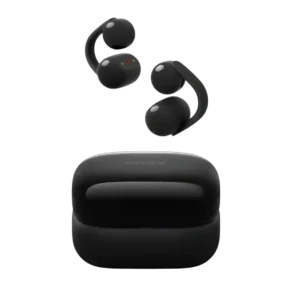
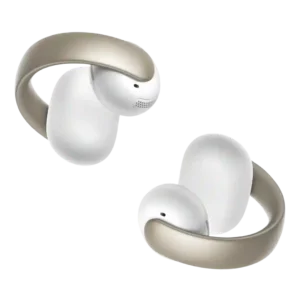
Average score
P1
Product 1: Sony LinkBuds Clip Earbuds
3.3
P2
Product 2: Soundcore AeroClip Earbuds
4.0
Active noise cancellation
P1
Product 1: Sony LinkBuds Clip Earbuds
1.4
Reviewers repeatedly treat the lack of ANC as a limitation for commuting, travel, and users who want to tune out their surroundings.
P2
Product 2: Soundcore AeroClip Earbuds
1.3
Reviewers consistently noted the lack of ANC as a limitation for users who want noise cancellation or a shut-out-the-world earbud.
Android compatibility
P1Product 1: Sony LinkBuds Clip Earbuds
No score yet
P2
Product 2: Soundcore AeroClip Earbuds
5.0
Android compatibility had limited but strong support, including near-instant Google Fast Pair and Android-specific hi-res support.
App
P1
Product 1: Sony LinkBuds Clip Earbuds
3.2
The Sound Connect app is useful and sometimes well-designed, but several reviewers say the feature set feels limited for the price.
P2
Product 2: Soundcore AeroClip Earbuds
4.3
The Soundcore app was generally praised as slick, useful, simple, or intuitive, especially for EQ, controls, battery views, multipoint, and device finding.
Audio-video sync accuracy
P1Product 1: Sony LinkBuds Clip Earbuds
No score yet
P2
Product 2: Soundcore AeroClip Earbuds
3.8
Latency was generally acceptable for video and everyday use, but gaming performance was described as unsuitable for faster action games.
Bass performance
P1
Product 1: Sony LinkBuds Clip Earbuds
2.7
Bass is the main sound weakness: some reviewers found surprising or acceptable bass, but most describe limited low-end impact.
P2
Product 2: Soundcore AeroClip Earbuds
4.2
Bass was better than reviewers expected from open-ear earbuds, often described as punchy or strong, though a few noted limited depth, bass loss, or strain at higher volumes.
Battery
P1
Product 1: Sony LinkBuds Clip Earbuds
4.2
Battery life is generally praised as a major upside, though one lab-style reviewer fell short of Sony's nine-hour claim.
P2
Product 2: Soundcore AeroClip Earbuds
4.2
Battery life was mostly seen as solid or good for daily use, but several reviewers noted it was not exceptional versus some open-ear competitors.
Bluetooth
P1
Product 1: Sony LinkBuds Clip Earbuds
3.8
Bluetooth is usually stable in positive reviews, but one reviewer reported low range and stuttering, especially around multipoint use.
P2
Product 2: Soundcore AeroClip Earbuds
4.5
Bluetooth performance was generally reliable, with reviewers reporting easy pairing, no dropouts, and good enough range, aside from one merely acceptable range result.
Build quality
P1
Product 1: Sony LinkBuds Clip Earbuds
4.0
Build quality receives positive evidence from a reviewer who calls the earbuds well-built and suitable for exercise and leisure.
P2
Product 2: Soundcore AeroClip Earbuds
4.3
Build quality was generally solid, with praise for scratch resistance, tight construction, and the flexible memory wire's ability to spring back.
Button control usability
P1
Product 1: Sony LinkBuds Clip Earbuds
2.6
Control usability is limited by restricted customization and repeated tapping, even when the controls themselves work.
P2Product 2: Soundcore AeroClip Earbuds
No score yetCarry case quality
P1
Product 1: Sony LinkBuds Clip Earbuds
3.6
Case feedback varies from compact and pocketable to boxy, bulky, or thick, with one review praising its accessory-style appeal.
P2
Product 2: Soundcore AeroClip Earbuds
3.9
Case feedback was positive for compactness and durability in several reviews, but one reviewer criticized the loose shake-test retention.
Charging
P1
Product 1: Sony LinkBuds Clip Earbuds
2.6
Charging feedback is mixed: fast charging is praised, but the missing wireless charging is one of the most repeated complaints.
P2
Product 2: Soundcore AeroClip Earbuds
4.0
Charging was helped by quick-charge support, but the lack of wireless charging or inductive charging held the score back in several reviews.
Clamping force comfort
P1
Product 1: Sony LinkBuds Clip Earbuds
2.1
Clamp comfort is fit-dependent: some reviewers reported pinching, soreness, or awkwardness with hats despite the secure design.
P2
Product 2: Soundcore AeroClip Earbuds
3.3
Clamp and pressure comfort depended on ear shape, with one reviewer finding pressure painful over time and another reporting no rubbing or discomfort.
Codec support
P1
Product 1: Sony LinkBuds Clip Earbuds
3.0
Codec support is viewed as basic rather than enthusiast-grade, with reviewers describing the connection options as standard.
P2
Product 2: Soundcore AeroClip Earbuds
3.0
Codec support was mixed: some reviewers criticized the lack of higher-end codecs, while others praised LDAC support where available.
Comfort during long use
P1
Product 1: Sony LinkBuds Clip Earbuds
4.2
Comfort is one of the strongest themes, with many reviewers able to wear the buds for long sessions, though a few found pressure or soreness.
P2
Product 2: Soundcore AeroClip Earbuds
4.6
Long-wear comfort was the product's strongest theme; most reviewers could wear them for hours or forget they were on, though a few experienced pinching or discomfort.
Design and Aesthetics
P1
Product 1: Sony LinkBuds Clip Earbuds
3.9
Design reactions are mostly positive for color, finish, and style, but some reviewers find the look basic or odd.
P2
Product 2: Soundcore AeroClip Earbuds
4.2
Design drew mostly positive reactions for sleekness, jewelry-like styling, and cohesive materials, although a few reviewers called parts cheap-looking or polarizing.
Ear tip size options
P1
Product 1: Sony LinkBuds Clip Earbuds
4.5
The included fitting cushions are strongly praised for improving fit, stability, and comfort for smaller or harder-to-fit ears.
P2
Product 2: Soundcore AeroClip Earbuds
4.1
The included grip or sleeve options were usually seen as useful for improving fit and stability, though one reviewer found them too tight.
Equalizer customization
P1
Product 1: Sony LinkBuds Clip Earbuds
3.9
EQ customization is a strength overall, with a 10-band EQ and useful presets, though not every reviewer found the presets impactful.
P2
Product 2: Soundcore AeroClip Earbuds
4.4
Equalizer customization was a major advantage, with reviewers frequently using custom EQ or the app's 8-band controls to improve sound.
Find My
P1
Product 1: Sony LinkBuds Clip Earbuds
2.5
Tracking support is a mild weakness because one reviewer notes the lack of location tracking or sound emission for misplaced buds.
P2
Product 2: Soundcore AeroClip Earbuds
4.2
Find My / Find Device was a useful app feature when evaluated, with reviewers noting loud beeps that help locate misplaced buds nearby.
Frequency response accuracy
P1
Product 1: Sony LinkBuds Clip Earbuds
2.5
Frequency response accuracy is limited by open-ear physics, with lab notes showing low-end rolloff around the bass region.
P2
Product 2: Soundcore AeroClip Earbuds
4.2
Frequency balance was mostly positive, with reviewers highlighting well-rounded or balanced tuning, though one detected subtle distortion on demanding electronic music.
Head gestures
P1
Product 1: Sony LinkBuds Clip Earbuds
1.5
Head gesture support is a weakness in the evidence because a reviewer says missing Sony smart controls diminishes functionality.
P2Product 2: Soundcore AeroClip Earbuds
No score yetIncluded accessories
P1
Product 1: Sony LinkBuds Clip Earbuds
4.5
Included accessories earn praise where reviewers appreciate Sony putting fit cushions in the box rather than selling them separately.
P2
Product 2: Soundcore AeroClip Earbuds
4.0
Included accessories had limited positive evidence, mainly around the useful added grip attachments.
Instrument separation
P1
Product 1: Sony LinkBuds Clip Earbuds
2.5
Instrument separation suffers on dense material, with reviewers saying cheaper rivals separate better or busy tracks lose clarity.
P2
Product 2: Soundcore AeroClip Earbuds
4.3
Instrument separation received limited but positive support, with reviewers noting nicely placed instruments and clear differences between parts of the mix.
Integrated microphone
P1
Product 1: Sony LinkBuds Clip Earbuds
4.3
The integrated microphone is generally usable to solid, with reviewers describing the raw mic quality as good enough for everyday calls.
P2
Product 2: Soundcore AeroClip Earbuds
5.0
Integrated microphones were strongly praised in the review that evaluated them as a major conversation strength.
LDAC
P1
Product 1: Sony LinkBuds Clip Earbuds
2.4
LDAC support is a recurring disappointment because reviewers expected Sony's own higher-end codec at this price.
P2
Product 2: Soundcore AeroClip Earbuds
3.0
LDAC evidence was split by platform and review, with Android-focused reviewers praising it while others noted LDAC was absent or unavailable on Apple devices.
Maximum volume clarity
P1
Product 1: Sony LinkBuds Clip Earbuds
4.5
Maximum-volume clarity is praised by one reviewer who heard no harshness, piercing treble, or distortion at full volume.
P2
Product 2: Soundcore AeroClip Earbuds
3.4
High-volume clarity was mixed, with some praise for maintaining vocals and tuning but repeated caveats about tinny sound, bass loss, treble brightness, or distortion near higher levels.
Microphone noise reduction
P1
Product 1: Sony LinkBuds Clip Earbuds
4.2
Microphone noise reduction is usually praised for suppressing traffic, fans, and background noise, though some incidental noise remains.
P2
Product 2: Soundcore AeroClip Earbuds
4.3
Microphone noise reduction was usually strong against traffic, wind, and household noise, but a few reviewers found wind or busy restaurants could still overwhelm calls.
Microphone quality for calls
P1
Product 1: Sony LinkBuds Clip Earbuds
3.7
Call quality is mixed but often positive, ranging from excellent and clear to tinny, muffled, or merely adequate.
P2
Product 2: Soundcore AeroClip Earbuds
4.4
Call microphone quality was widely praised as clear, crisp, or flawless, though a few reviewers found it darker or less effective in especially noisy environments.
Midrange clarity
P1
Product 1: Sony LinkBuds Clip Earbuds
4.2
Midrange and vocals are usually praised as clear, balanced, or warm, making speech and lighter music a stronger use case.
P2
Product 2: Soundcore AeroClip Earbuds
4.3
Midrange and vocal clarity were usually praised, especially for voices, podcasts, and pop/R&B, with one review noting mids could sit quieter under the bass-heavy profile.
Multi-platform compatibility
P1Product 1: Sony LinkBuds Clip Earbuds
No score yet
P2
Product 2: Soundcore AeroClip Earbuds
4.8
Multi-platform compatibility was strong across reviews that tested phones, laptops, iOS, Android, MacBook, and other playback devices.
Multipoint connectivity reliability
P1
Product 1: Sony LinkBuds Clip Earbuds
3.0
Multipoint is useful when it works, but evidence is split between smooth two-device use and frustration enabling it.
P2
Product 2: Soundcore AeroClip Earbuds
4.6
Multipoint was a frequent strength, with reviewers appreciating smooth device switching for work calls, phones, laptops, and daily device changes.
Noise isolation (passive)
P1
Product 1: Sony LinkBuds Clip Earbuds
1.6
Passive isolation is intentionally weak, and reviewers repeatedly warn these do not block outside noise.
P2
Product 2: Soundcore AeroClip Earbuds
1.8
Passive isolation is inherently weak because the open design lets outside noise through, which several reviewers framed as a core limitation in loud places.
Portability/foldability
P1
Product 1: Sony LinkBuds Clip Earbuds
2.5
Portability is hurt in at least one review by the larger overall size and price-positioning of the design.
P2
Product 2: Soundcore AeroClip Earbuds
4.7
The compact case and lightweight form made the AeroClip easy to carry in pockets, hydration vests, or daily use; foldability itself was not relevant.
Preset EQ profile quality
P1
Product 1: Sony LinkBuds Clip Earbuds
3.4
Preset/listening modes are context-dependent: Voice Boost can help speech, while Sound Leakage Reduction often reduces sound quality.
P2
Product 2: Soundcore AeroClip Earbuds
4.4
Preset EQ profiles were well received overall, especially Podcast, Classical, Volume Booster, and Soundcore Signature, though preferences varied by listener.
Sensors
P1
Product 1: Sony LinkBuds Clip Earbuds
4.0
The bone-conduction sensor is treated positively as part of the voice pickup system.
P2
Product 2: Soundcore AeroClip Earbuds
2.1
Sensors were a weakness because several reviewers criticized missing wear detection, auto-pause, or smart sensor features.
Smudge resistance
P1
Product 1: Sony LinkBuds Clip Earbuds
2.0
Smudge resistance is weak based on a direct complaint that the case is a fingerprint magnet.
P2Product 2: Soundcore AeroClip Earbuds
No score yetSoftware/setup simplicity
P1
Product 1: Sony LinkBuds Clip Earbuds
4.0
Setup and basic software behavior are described as simple and generally working as expected.
P2
Product 2: Soundcore AeroClip Earbuds
5.0
Setup was praised as simple and quick in the few reviews that evaluated it directly.
Sound leakage
P1
Product 1: Sony LinkBuds Clip Earbuds
3.8
Sound leakage handling works in several tests, but the leakage-reduction mode often makes music more muffled or worse sounding.
P2
Product 2: Soundcore AeroClip Earbuds
3.6
Sound leakage was mixed: some reviewers found leakage lower than open-ear rivals, while others still warned that nearby people may hear them at higher volume.
Sound quality
P1
Product 1: Sony LinkBuds Clip Earbuds
3.6
Sound quality is good for open earbuds in many reviews, but still limited compared with sealed earbuds and traditional designs.
P2
Product 2: Soundcore AeroClip Earbuds
4.5
Reviewers strongly liked the AeroClip's open-ear sound, repeatedly calling it clear, full, balanced, or surprisingly good for the category, with only isolated reservations about loud or complex tracks.
Soundstage width
P1
Product 1: Sony LinkBuds Clip Earbuds
4.3
Soundstage is a strength when mentioned, with reviewers praising the wide or solid open presentation.
P2
Product 2: Soundcore AeroClip Earbuds
4.6
Several reviewers found the AeroClip spacious for open earbuds, describing a wide or unusually open soundstage with good stereo presentation.
Spatial audio
P1
Product 1: Sony LinkBuds Clip Earbuds
1.5
Spatial audio support receives negative evidence from a reviewer who expected 360 Reality Audio to be present.
P2
Product 2: Soundcore AeroClip Earbuds
4.0
Spatial audio had limited evidence, but one reviewer said Android spatial audio produced a more spacious sound.
Stability
P1
Product 1: Sony LinkBuds Clip Earbuds
4.2
Stability is generally strong, with many reviewers saying the buds stay secure, though fit depends on ear shape and cushion use.
P2
Product 2: Soundcore AeroClip Earbuds
4.9
Fit stability was exceptionally strong, with reviewers repeatedly saying the buds did not move, fall off, or need repositioning during runs, gym use, or daily wear.
Touch control responsiveness
P1
Product 1: Sony LinkBuds Clip Earbuds
3.2
Touch responsiveness is inconsistent across reviews: some found it convenient and responsive, while others called it finicky or poorly executed.
P2
Product 2: Soundcore AeroClip Earbuds
3.5
Controls were divisive: some found the tap area responsive and easy, while many others complained about missed taps, limited gestures, or awkward use during runs.
Transparency mode quality
P1
Product 1: Sony LinkBuds Clip Earbuds
4.7
Transparency and situational awareness are major strengths because the open design lets users hear traffic, people, and home surroundings naturally.
P2
Product 2: Soundcore AeroClip Earbuds
4.7
Awareness of surroundings was one of the clearest strengths, with reviewers praising the natural, safe, open-ear experience for running, parenting, commuting, and everyday use.
Treble clarity
P1
Product 1: Sony LinkBuds Clip Earbuds
3.8
Treble is mixed: some reviewers wanted more sparkle, while another found the highs more detailed than typical open earbuds.
P2
Product 2: Soundcore AeroClip Earbuds
4.0
Treble was generally clear and enjoyable, but reviewers were split between crisp highs and comments about understated, grainy, muddy, bright, or peaky treble.
Value for money
P1
Product 1: Sony LinkBuds Clip Earbuds
2.6
Value is the broadest concern: many reviewers like the product but consider $230 high unless discounted or matched to a niche open-ear need.
P2
Product 2: Soundcore AeroClip Earbuds
4.4
Value was widely positive because reviewers saw strong comfort, calls, fit, and sound for the price, though one reviewer questioned the upgrade value.
Voice assistant integration
P1
Product 1: Sony LinkBuds Clip Earbuds
3.5
Voice assistant support is adequate, with one reviewer calling Google Assistant and Siri use fine for hands-free commands.
P2
Product 2: Soundcore AeroClip Earbuds
4.0
Voice assistant integration had limited evidence, with one review noting Siri commands can be assigned in the app.
Volume output
P1
Product 1: Sony LinkBuds Clip Earbuds
3.2
Volume output is divisive: some found enough loudness, while others needed to crank it or found max volume low in noisy places.
P2
Product 2: Soundcore AeroClip Earbuds
3.9
Volume output was mixed: some reviewers found the AeroClip very loud or improved, while others said noisy streets, trains, or open-ear use forced higher volume.
Water/sweat resistance rating
P1
Product 1: Sony LinkBuds Clip Earbuds
4.0
Water and sweat resistance is treated as sufficient for workouts, light rain, and everyday active use.
P2
Product 2: Soundcore AeroClip Earbuds
3.4
IPX4 resistance was acceptable for sweat, splashes, and light rain, but many reviewers wished for better dust and water protection.
Weight comfort
P1
Product 1: Sony LinkBuds Clip Earbuds
4.3
The lightweight feel helps long-term wear, with reviewers saying the buds are light enough for all-day use or can disappear on the ear.
P2
Product 2: Soundcore AeroClip Earbuds
4.9
Weight comfort was excellent, with reviewers repeatedly describing the earbuds as light, barely noticeable, or relieving neck and ear fatigue.