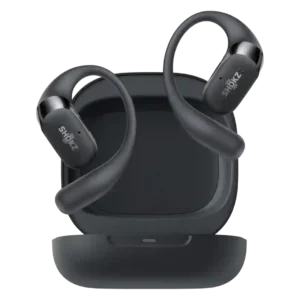
- Better: features and price CNN says Shokz OpenFit 2 offers wireless charging, Dolby Audio, and physical buttons for less.
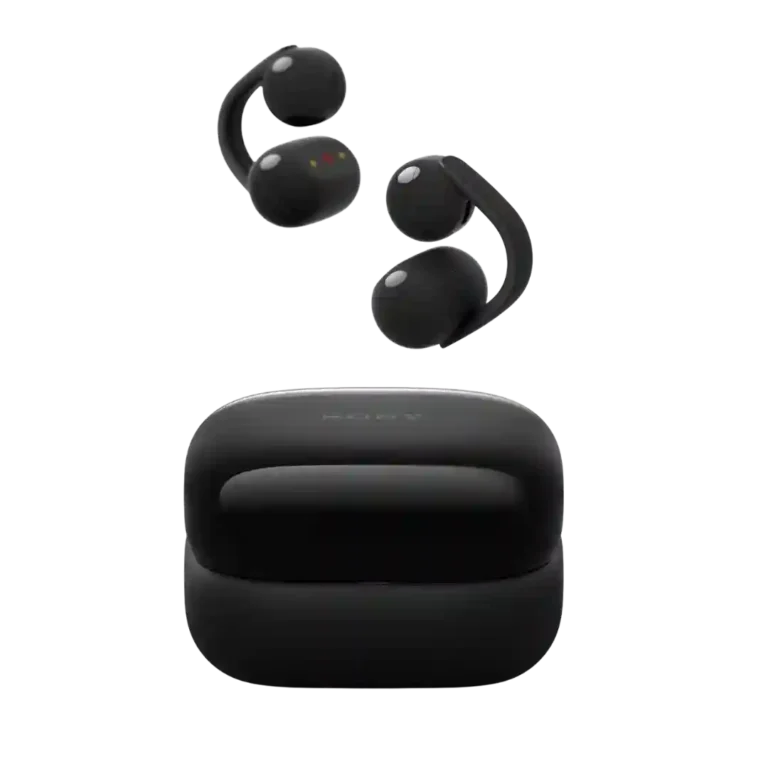
Sony LinkBuds Clip Earbuds Review
Bottom Line
Choose the Sony LinkBuds Clip if you want comfortable open-ear awareness, strong battery life, and generally good call performance. Skip them if you need deep bass, ANC, reliable controls, wireless charging, or a low price.
Best for listeners who specifically want open-ear awareness for walking, working, chores, light workouts, or calls while staying connected to their surroundings. They also suit people who dislike in-ear tips and can benefit from Sony's fitting cushions.
Not for commuters, frequent flyers, bass-heavy music fans, or buyers who want one do-everything earbud with ANC, deep isolation, wireless charging, and premium codec support. Value-focused shoppers should be cautious at full price.
The Sony LinkBuds Clip land as a capable but niche open-ear option. Reviewers most often praise their airy awareness, secure clip fit, long battery life, useful app EQ, and clear speech-focused performance. The tradeoff is that open-ear convenience limits bass, passive isolation, and loud-environment usefulness, while the $230 price makes missing wireless charging, LDAC, and some Sony smart features harder to ignore. Call quality is a split point: several reviewers call it excellent, but others hear tinny, muffled, or merely average voice quality. The product works best when comfort and situational awareness matter more than sealed-ear immersion.
Compared in Reviews
Products reviewers directly compared with this model, grouped into quick takeaways.
Shokz OpenDots One
- Cheaper: price Tom's Guide says the Sony costs more than Shokz OpenDots One.
- Better: fit security The Verge says Shokz's band fit more securely around the reviewer’s ear.
EarFun Clip
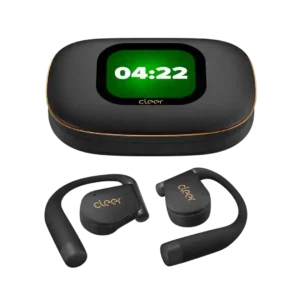
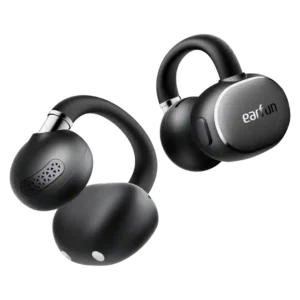
- Better: call quality CNN also preferred call performance on the more affordable EarFun Clip.
- Better: control responsiveness CNN had a better control experience with the cheaper EarFun Clip.
Feature Scorecards
Summary
46 reviewed features- Very positive 4.5-5.0 9% 4 features
- Positive 3.5-4.4 46% 21 features
- Neutral 2.5-3.4 30% 14 features
- Negative 1.5-2.4 13% 6 features
- Very negative below 1.5 2% 1 feature
Pros
-
Transparency and situational awareness are major strengths because the open design lets users hear traffic, people, and home surroundings naturally.
-
The included fitting cushions are strongly praised for improving fit, stability, and comfort for smaller or harder-to-fit ears.
-
Included accessories earn praise where reviewers appreciate Sony putting fit cushions in the box rather than selling them separately.
-
Maximum-volume clarity is praised by one reviewer who heard no harshness, piercing treble, or distortion at full volume.
-
The lightweight feel helps long-term wear, with reviewers saying the buds are light enough for all-day use or can disappear on the ear.
-
The integrated microphone is generally usable to solid, with reviewers describing the raw mic quality as good enough for everyday calls.
-
Soundstage is a strength when mentioned, with reviewers praising the wide or solid open presentation.
-
Stability is generally strong, with many reviewers saying the buds stay secure, though fit depends on ear shape and cushion use.
-
Midrange and vocals are usually praised as clear, balanced, or warm, making speech and lighter music a stronger use case.
-
Battery life is generally praised as a major upside, though one lab-style reviewer fell short of Sony's nine-hour claim.
-
Microphone noise reduction is usually praised for suppressing traffic, fans, and background noise, though some incidental noise remains.
-
Comfort is one of the strongest themes, with many reviewers able to wear the buds for long sessions, though a few found pressure or soreness.
-
Setup and basic software behavior are described as simple and generally working as expected.
-
Water and sweat resistance is treated as sufficient for workouts, light rain, and everyday active use.
-
Build quality receives positive evidence from a reviewer who calls the earbuds well-built and suitable for exercise and leisure.
-
The bone-conduction sensor is treated positively as part of the voice pickup system.
-
Design reactions are mostly positive for color, finish, and style, but some reviewers find the look basic or odd.
-
EQ customization is a strength overall, with a 10-band EQ and useful presets, though not every reviewer found the presets impactful.
-
Sound leakage handling works in several tests, but the leakage-reduction mode often makes music more muffled or worse sounding.
-
Bluetooth is usually stable in positive reviews, but one reviewer reported low range and stuttering, especially around multipoint use.
-
Treble is mixed: some reviewers wanted more sparkle, while another found the highs more detailed than typical open earbuds.
-
Call quality is mixed but often positive, ranging from excellent and clear to tinny, muffled, or merely adequate.
-
Case feedback varies from compact and pocketable to boxy, bulky, or thick, with one review praising its accessory-style appeal.
-
Sound quality is good for open earbuds in many reviews, but still limited compared with sealed earbuds and traditional designs.
-
Voice assistant support is adequate, with one reviewer calling Google Assistant and Siri use fine for hands-free commands.
Cons
-
Preset/listening modes are context-dependent: Voice Boost can help speech, while Sound Leakage Reduction often reduces sound quality.
-
Touch responsiveness is inconsistent across reviews: some found it convenient and responsive, while others called it finicky or poorly executed.
-
The Sound Connect app is useful and sometimes well-designed, but several reviewers say the feature set feels limited for the price.
-
Volume output is divisive: some found enough loudness, while others needed to crank it or found max volume low in noisy places.
-
Multipoint is useful when it works, but evidence is split between smooth two-device use and frustration enabling it.
-
Codec support is viewed as basic rather than enthusiast-grade, with reviewers describing the connection options as standard.
-
Bass is the main sound weakness: some reviewers found surprising or acceptable bass, but most describe limited low-end impact.
-
Charging feedback is mixed: fast charging is praised, but the missing wireless charging is one of the most repeated complaints.
-
Control usability is limited by restricted customization and repeated tapping, even when the controls themselves work.
-
Value is the broadest concern: many reviewers like the product but consider $230 high unless discounted or matched to a niche open-ear need.
-
Instrument separation suffers on dense material, with reviewers saying cheaper rivals separate better or busy tracks lose clarity.
-
Tracking support is a mild weakness because one reviewer notes the lack of location tracking or sound emission for misplaced buds.
-
Frequency response accuracy is limited by open-ear physics, with lab notes showing low-end rolloff around the bass region.
-
Portability is hurt in at least one review by the larger overall size and price-positioning of the design.
-
LDAC support is a recurring disappointment because reviewers expected Sony's own higher-end codec at this price.
-
Clamp comfort is fit-dependent: some reviewers reported pinching, soreness, or awkwardness with hats despite the secure design.
-
Smudge resistance is weak based on a direct complaint that the case is a fingerprint magnet.
-
Passive isolation is intentionally weak, and reviewers repeatedly warn these do not block outside noise.
-
Head gesture support is a weakness in the evidence because a reviewer says missing Sony smart controls diminishes functionality.
-
Spatial audio support receives negative evidence from a reviewer who expected 360 Reality Audio to be present.
-
Reviewers repeatedly treat the lack of ANC as a limitation for commuting, travel, and users who want to tune out their surroundings.
Compared With Category Average
Compared with other Open-Ear Headphones, this product is above average in Sensors, below average in Value for money, Button control usability, Clamping force comfort.
Summary
8 compared features- Above average 0.4+ pts higher 13% 1 feature
- Same as average within 0.3 pts 0% 0 features
- Below average 0.4+ pts lower 88% 7 features
| Attribute | This product | Category average | Difference |
|---|---|---|---|
| Value for money | 2.6 | 4.3 | -1.7 |
| Button control usability | 2.6 | 4.6 | -2.0 |
| Clamping force comfort | 2.1 | 4.1 | -2.0 |
| Charging | 2.6 | 4.2 | -1.6 |
| Sensors | 4.0 | 2.5 | +1.5 |
| Instrument separation | 2.5 | 4.0 | -1.5 |
| Spatial audio | 1.5 | 2.9 | -1.4 |
| Bass performance | 2.7 | 3.8 | -1.1 |
FAQ
Do the Sony LinkBuds Clip have active noise cancellation?
No. Reviewers repeatedly note that the open design does not provide ANC and is weak for commuting, airplanes, and tuning out noisy environments.
How do the LinkBuds Clip sound?
They are often described as clear, balanced, and good for open earbuds, especially for vocals and podcasts. Bass and deep low-end impact are the main limitations.
Are the LinkBuds Clip comfortable for long use?
Many reviewers wore them for long sessions and found them light or easy to forget, but comfort depends heavily on ear shape. A few reviewers reported pinching, soreness, or fit quirks.
Are they good for phone calls?
Call quality is mixed but generally promising. Several reviewers praised voice pickup and noise reduction, while others heard tinny, muffled, or merely average voices.
Does the case support wireless charging?
No. The lack of wireless charging is one of the most repeated complaints, especially because reviewers considered the $230 price high.
Do the listening modes help?
Voice Boost can help speech and podcasts, and Sound Leakage Reduction can reduce audio bleed. Reviewers also warn that these modes can make music harsher, muffled, or less balanced.
Are the LinkBuds Clip worth $230?
Reviewers generally see them as easier to justify for open-ear fans, Sony loyalists, or sale buyers. At full price, value is a concern because competitors offer lower prices or stronger features.
Consider This Instead
If you want better Clamping force comfort
Choose Shokz OpenFit 2+. It scores 5.0 vs 2.1 for Clamping force comfort, with a 3.9 overall score.
If you want better Charging
Choose Anker Soundcore AeroFit 2 Open-Ear Headphones. It scores 4.6 vs 2.6 for Charging, with a 3.7 overall score.
If you want better Sound quality
Choose Edifier LolliClip Earbuds. It scores 4.4 vs 3.6 for Sound quality, with a 3.5 overall score.
If you want better Comfort during long use
Choose Shokz OpenFit 2. It scores 5.0 vs 4.2 for Comfort during long use, with a 4.1 overall score.
Overall Top Open-Ear Headphones Alternatives
Best for secure, comfortable open-ear workouts, strong battery life, and easier physical controls. Skip them if you need ANC, sealed-earbud sound, or the best value at full price.
Pros: Microphone noise reduction, Bluetooth
Cons: Active noise cancellation, Codec support
Choose the Soundcore AeroClip if you want featherlight open-ear buds with strong comfort, secure fit, clear calls, and surprisingly full sound. Skip them if you need ANC, sealed-bud isolation, higher...
Pros: Android compatibility, Software/setup simplicity
Cons: Active noise cancellation, Noise isolation (passive)
Best for open-ear comfort, secure runs, long battery life, and convenient wireless charging. Skip it if you need ANC, deep bass, LDAC, or earbuds that never shift under helmets, buffs,...
Pros: Clamping force comfort, Battery
Cons: Active noise cancellation, Noise isolation (passive)
Choose the AeroFit 2 for comfortable open-ear listening, strong battery life, app control, and value. Skip it if you want class-leading sound balance, real isolation or ANC, smaller cases, or...
Pros: Software/setup simplicity, AI translation
Cons: Noise isolation (passive), Spatial audio