
AirPlay 2 is a core convenience: Apple users can cast audio easily, while non-Apple devices typically rely on Wi-Fi streaming inside the Sonos ecosystem or Spotify Connect.
There is no companion mobile app, which keeps things simple but removes per-input memory and app-based control backup.
The Sonos app is the hub for setup, tuning, and daily control. Most reviews find it powerful, but a few note a learning curve, past redesign turbulence, and occasional reconnect or router-related hiccups.
Dolby Audio and common Dolby Digital formats are supported in reports and specs, but there is no Dolby Atmos support.
Strong Dolby support is a headline feature, including Dolby Atmos; higher quality Atmos can depend on eARC and proper TV passthrough. Optical fallback is typically limited to non-Atmos formats, and DTS:X is not supported.
Compatibility is generally fine with typical TVs and sources, but the use of ARC instead of eARC and the absence of Atmos make it less future-proof for feature hunters.
Arc runs on the Sonos S2 platform and may not play nicely with some legacy Sonos hardware or older software setups, which can be a friction point for long-time Sonos households.
Codec support is basic in reports, with at least one reviewer explicitly observing SBC; there is no consistent mention of premium codecs.
Bluetooth is a common complaint: the Arc is frequently described as lacking conventional Bluetooth, making quick phone pairing harder for Android users and guests compared to many rivals.
Bluetooth is generally described as stable for casual streaming, with few complaints about drops; range depends on room conditions and some note typical short-range limits.
Expected Bluetooth range is around a typical 10 meters in open space, with real-world walls and placement potentially reducing it.
Most reviews describe the overall sound as cohesive, with the subwoofer generally well integrated, though boosting bass too much can upset balance.
Presentation is typically cohesive and polished, and when paired with a Sub and surrounds the handoff between speakers is often described as seamless.
On-unit buttons are generally described as easy and responsive, especially for quick source and SuperWide toggling.
Design is compact and generally liked, with some enjoying the bronze accents and others calling it cheap-looking. The small size suits desks and smaller TVs more than large screens.
The design is repeatedly described as sleek and minimalist, but it is a large bar that visually and physically fits best with bigger TVs and adequate placement space.
Detail is better than expected for the price, especially for dialogue and smaller-room movie playback, though some midrange congestion appears with dense mixes or processing engaged.
Detail and separation are frequent strengths, helping both movies and music sound crisp and well resolved for a soundbar.
Across reviews, dialogue is a standout strength: many call speech crisp, clear, and easy to follow, though at least one tester reports muffled dialogue in busy action scenes when bass is pushed hard.
Dialogue is generally clear and can be boosted with Speech Enhancement, though a few comparisons place Arc behind certain competitors for pure dialogue intelligibility in tricky mixes or low-volume viewing.
At moderate levels it stays controlled, but multiple reviewers hear strain or sharpness at higher volumes, and one notes brief audio skipping with UHD Blu-ray playback.
Most reviewers describe Arc as staying composed at higher volumes; distortion tends to appear only when pushed to extremes or with aggressive bass boosts.
Arc handles big dynamic swings convincingly, keeping effects punchy while maintaining control and avoiding collapse in busy scenes.
Bass and treble adjustments on the remote are widely appreciated for quick tuning. Deeper multi-band EQ is not available, and some find the preset modes subtle.
EQ controls in the app (bass/treble, loudness, and dialogue or night options) provide useful tailoring, even if it is not a deep pro-style equalizer.
Tuning leans lively with boosted mids and/or highs to help clarity. It can sound bright or sharp when cranked, and SuperWide processing may trade detail for space.
The overall tuning is often described as balanced and slightly warm. Bass is strong for a single bar but not subwoofer-deep, and a couple of reviewers want a more direct music presentation.
HDMI ARC works for basic TV integration and CEC control, but multiple users report volume-scaling quirks or prefer optical to avoid HDMI behavior.
HDMI ARC/eARC is central to the experience. eARC is preferred when available for higher bandwidth formats, while standard ARC can still work depending on the TV and content.
Best results are reported in bedrooms, offices, and small-to-medium rooms. Larger spaces expose limits in soundstage scale and subwoofer output.
As a home-theater anchor, Arc is widely praised: it can stand alone for a big upgrade, and it scales cleanly with a Sonos Sub and rear surrounds for a more complete system.
Multi-room grouping and syncing are a core Sonos advantage, and reviewers frequently highlight how well Arc integrates with other Sonos speakers throughout the home.
Lip-sync is generally not flagged as a major problem, but one review reports brief half-second audio skips with UHD Blu-ray content, suggesting occasional source/format sensitivity.
Lip sync is generally solid over HDMI ARC/eARC, and some reviews mention adjustable delay controls. Results still depend on TV audio settings and passthrough behavior.
Volume output is impressively high for a compact bar, with plenty of headroom for small rooms and desktop use. Several note it can get uncomfortably loud up close.
Arc is consistently described as loud and room-filling, with enough output for medium to larger spaces without feeling strained.
Low-volume listening is workable, but some want finer steps, a night mode, or a lower baseline level on HDMI for bedrooms.
No summary yet.
Adding a Sub and surrounds is usually straightforward once everything is on the network, and most reviewers describe the pairing process as reliable and repeatable.
Top-mounted controls for power, volume, input, and SuperWide are convenient for desktop use and provide a fallback if the remote is unavailable.
Touch and on-device controls are generally well-liked for quick volume and playback adjustments, complemented by app control.
Optical input is commonly used as a stable fallback for TVs, though it may require separate remote control handling depending on the source device.
Optical connectivity is typically handled via an adapter for older TVs, but it is generally positioned as a compatibility fallback rather than the best route for Atmos.
Hardware microphone privacy controls and the option to disable voice features are commonly cited as reassuring for privacy-conscious setups.
The remote offers helpful direct access to modes and tone controls, but it often requires separate AAA batteries and a few users mention minor ergonomics or control quirks.
There is typically no dedicated remote; Arc leans on HDMI-CEC, IR features, and the app. Many like the simplicity, but some still prefer a traditional remote.
Setup is repeatedly described as plug-and-play, with straightforward wiring and quick switching between TV, PC, and Bluetooth sources.
Setup is often described as quick and guided, but Dolby Atmos can require extra TV settings and the right ARC/eARC support, which is where some users hit friction.
Smart features are minimal: no voice assistants and no Wi-Fi streaming, with emphasis instead on simple presets and SuperWide processing.
Smart features like Trueplay room tuning, Speech Enhancement, Night Mode, and ecosystem extras are a major part of the Arc experience; Trueplay is frequently noted as an iOS-centric step for best results.
Height effects are a big win with Atmos content, though ceiling height and room shape still influence how dramatic the overhead illusion feels.
Spotify Connect and streaming-service integration are usually described as smooth, letting you start playback without living inside the Sonos app.
The front LED display is useful for showing source and volume, but brightness and standby behavior can be distracting in dark rooms, with limited dimming control noted.
Status lights and indicators are designed to be subtle and not distracting, with some reviews noting thoughtful dimming behavior.
Stereo imaging is best when you are centered and fairly close. From a couch distance or off-axis seating, the image can feel localized and less immersive.
Stereo imaging is wide for a single bar, but multiple reviews note it can feel less forward or less precise than a dedicated stereo setup, especially for music purists.
No summary yet.
No summary yet.
SuperWide Near and Far modes can widen the presentation and add a wraparound feel, but Far often softens focus and Near can be distance-sensitive. Many prefer using it selectively depending on content.
Its surround virtualization is a standout: many reviews call the Atmos experience among the most convincing in a single soundbar, with strong placement and envelopment.
A few reviews call out more eco-friendly packaging choices, though sustainability is not a primary purchase driver in most discussions.
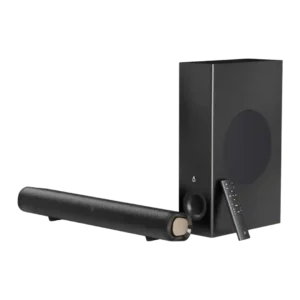
Reviewers repeatedly frame Stage Pro as a punch-above-its-price 2.1 bundle, especially because it includes a subwoofer and multiple inputs while staying in the budget range.
Pricing is consistently described as premium. Value looks best if you want the Sonos ecosystem and find the Arc on discount, but some competitors offer more inputs or better value bundles.
A recurring drawback is the lack of HDMI passthrough or HDMI switching. If your TV has limited ports, this can be a real usability constraint.
Voice control support is frequently described as convenient for volume and playback, with responsiveness generally rated positively when configured correctly.
Vocals and spoken-word content generally come through clean and forward, with Vocal-focused modes seen as optional rather than required.
Far-field microphones are often described as capable of picking up commands in a typical living room, though individual setup experiences vary.
Wi-Fi streaming features are absent, so services like Spotify Connect or Tidal-style direct streaming are not available without going through a TV, streamer, or phone.
Wi-Fi streaming is generally reliable, and an ethernet port is available for stability. Some issues reported are tied to specific routers or mesh networks.
Input options are a strong point for the price, commonly cited as HDMI ARC, optical, AUX, USB-C/USB audio, and Bluetooth.
Physical connectivity is limited: most reviews highlight the single HDMI and reliance on the TV for source switching, plus ethernet and optical adapter options rather than multiple inputs.