- Alternative: smaller rooms and space constraints The Beam Gen 2 is offered as the smaller alternative when the Arc is too large.
Sonos Arc Soundbar Review
Bottom Line
Choose the Sonos Arc if you want immersive Atmos, easy Sonos setup, and a soundbar you can expand with Sub and surrounds. Skip it if price, HDMI passthrough, Bluetooth, or Android-only tuning flexibility matter most.
Best for movie-focused buyers who want a clean, premium soundbar with convincing Atmos and the option to expand later with Sonos Sub, surrounds, and multi-room audio.
Not ideal for buyers who need HDMI passthrough, conventional Bluetooth, the cheapest complete surround system, or full room calibration without an Apple device.
The Sonos Arc earns broad reviewer praise for turning a single soundbar into a convincing home-theater hub. Reviewers repeatedly highlight its Atmos height effects, wide soundstage, clear dialogue, detailed presentation, and easy setup, with the Sonos ecosystem adding real value through surrounds, Sub, AirPlay, voice control, and multi-room expansion. The tradeoff is that the Arc is not the most flexible or cheapest route: Bluetooth is missing or limited, HDMI input/passthrough is a repeated complaint, Android users lose full Trueplay access, and the best bass or surround impact often requires expensive add-ons. Still, the evidence points to a polished, immersive, scalable soundbar whose strongest case is movies and whole-home Sonos integration.
Compared in Reviews
Products reviewers directly compared with this model, grouped into quick takeaways.
Beam
- Alternative: smaller TVs and rooms The Beam is framed as an excellent option for smaller spaces.
- Worse: overall sound quality The Arc is described as clearly better sounding than the Beam.
play bar
- Better: music playback The reviewer preferred the older Playbar for straight music listening.
Feature Scorecards
Summary
46 reviewed features- Very positive 4.5-5.0 50% 23 features
- Positive 3.5-4.4 33% 15 features
- Neutral 2.5-3.4 11% 5 features
- Negative 1.5-2.4 7% 3 features
- Very negative below 1.5 0% 0 features
Pros
-
Home theater integration was a major strength, especially the ability to expand with Sonos surrounds, Sub, and multi-room setups.
-
Sonos multi-speaker pairing was praised as reliable and easy, especially for users building or expanding a whole-home Sonos system.
-
Voice assistant responsiveness was rated highly, with reviewers saying assistants worked well and commands were picked up even during loud playback.
-
The Arc’s microphone hardware was positively described through its far-field mic array for voice pickup.
-
Omnidirectional-style immersion was praised in one review that described sound arriving from every direction.
-
Spotify voice playback was described as working beautifully with the Arc’s voice assistant setup.
-
Dolby Atmos height effects were among the Arc’s strongest attributes, with reviewers praising overhead realism, height presence, and immersive Atmos delivery.
-
Setup simplicity was a clear strength, with reviewers repeatedly calling installation quick, guided, and easy.
-
Smart features were a strength, with reviewers praising Sonos smarts, streaming breadth, and the app as a central media hub.
-
Inter-speaker connectivity was praised as easy and impactful when adding or connecting Sonos components.
-
Alexa and smart assistant integration was praised for convenient hands-free control of volume, playback, and smart-home devices.
-
Vocal clarity in music and general playback drew strong praise, with reviewers calling vocals and higher frequencies very impressive.
-
Detail retrieval was widely praised, with reviewers highlighting separation, crispness, clarity, and fine detail in music and movies.
-
Reviewers consistently described the Arc as loud, powerful, and room-filling, with enough scale for larger spaces and home theater use.
-
Soundstage height was praised for convincing vertical presence and sounds that moved above the listener.
-
Dynamic headroom was strong overall, with reviewers praising power, subtlety, and big dynamic shifts, though one found the Arc less quick than some rivals.
-
Low-volume features were praised for improving late-night listening by reducing bass, stabilizing output, and keeping dialogue clearer.
-
High-volume composure was generally praised, with distortion described as limited to pushed bass and volume settings or absent in stress-free loud playback.
-
Google Assistant support received a positive hands-on assessment when used as the Arc’s selected assistant.
-
Status indicators were praised for being subtle and not overly bright.
-
Voice recognition was praised for continuing to work while content was playing.
-
Despite its size, the Arc was described as easy to move and reposition.
-
Dialogue clarity was usually strong and helped by Speech Enhancement, though one direct comparison placed it behind some rivals for immediate clarity.
-
Surround simulation was a major strength, with reviewers praising the Arc’s virtual 3D field, room-filling movie sound, and immersive presentation while noting it is not true in-ceiling Atmos.
-
The Arc was widely described as balanced, smooth, and controlled, though a few reviews wanted more low-end weight from the standalone bar.
-
Design and aesthetics were praised for a classy, unobtrusive, blend-in look, though the Arc’s size still requires space.
-
Opinions on the Sub were context-dependent: several reviewers said the Arc works well alone, but bass-focused listeners and movie fans benefit noticeably from adding a Sub.
-
Cohesive presentation was mixed: standalone home-cinema cohesion impressed some reviewers, while one found music less authentically cohesive than stereo speakers.
-
EQ controls were viewed as useful for bass, treble, and loudness adjustments, though not a replacement for every hardware limitation.
-
Value opinions were mixed: many reviewers called the Arc worth it or excellent value, while others stressed the premium price and extra cost of a full system.
-
Remote usability was mixed-positive: existing TV remotes usually work well, but some reviewers disliked the lack of a dedicated physical remote.
-
Build quality impressions were mixed: one reviewer praised the form-function blend, while another complained that the plastic body attracts dust.
-
HDMI ARC/eARC was valued for getting the best surround experience, but reviewers warned that TV passthrough support can complicate Atmos setup.
-
AirPlay was viewed positively as a handy wireless music option, especially for Apple users.
-
Trueplay room calibration was praised for improving or tailoring sound, but its Apple-only limitation frustrated Android users.
-
App reliability and usability were mixed: some found Sonos polished and easy to navigate, while others disliked the layout or had reconnection trouble.
-
Stereo imaging was mixed: reviewers praised width and speaker-like imaging with surrounds, but some found music less direct or less precise than stereo speakers.
-
Wi-Fi reliability was mixed, with one reviewer reporting app reconnection struggles and another finding the Wi-Fi-based system more reliable than competing soundbars.
Cons
-
Audio format support was mixed: Dolby Atmos support impressed reviewers, but DTS:X, hi-res, and TV passthrough limitations were repeated caveats.
-
Backwards compatibility was a drawback because some older Sonos devices are not compatible with the S2-based Arc setup.
-
Lip-sync risk was raised as a potential downside when a TV lacks proper passthrough support.
-
Optical support was treated as a fallback with a major tradeoff because it limits Dolby Atmos usefulness.
-
Wired input flexibility was criticized because the Arc’s physical connection options are limited.
-
Bluetooth-related feedback was negative because reviewers complained about the original Arc’s lack of conventional Bluetooth support.
-
Video passthrough support was a consistent weakness because reviewers criticized the absence of HDMI input/passthrough.
-
Gaming HDMI passthrough was a weakness because the single HDMI connection and lack of passthrough can complicate consoles and streaming boxes.
Compared With Category Average
Compared with other Sound Bars, this product is above average in Google, Dolby Atmos height effects, Smart assistant integration (Alexa, below average in Bluetooth connection stability, Backwards compatibility, Latency with TV (lip sync).
Summary
8 compared features- Above average 0.4+ pts higher 38% 3 features
- Same as average within 0.3 pts 0% 0 features
- Below average 0.4+ pts lower 63% 5 features
| Attribute | This product | Category average | Difference |
|---|---|---|---|
| Bluetooth connection stability | 2.2 | 4.3 | -2.2 |
| Backwards compatibility | 2.5 | 4.5 | -2.0 |
| 4.5 | 2.5 | +2.0 | |
| Dolby Atmos height effects | 4.9 | 3.3 | +1.6 |
| Latency with TV (lip sync) | 2.5 | 4.3 | -1.8 |
| Wired input | 2.5 | 4.1 | -1.6 |
| Smart assistant integration (Alexa | 4.8 | 3.3 | +1.5 |
| Gaming HDMI passthrough | 2.0 | 3.4 | -1.4 |
FAQ
Is the Sonos Arc good for Dolby Atmos movies?
Yes. Reviewers consistently praised its Atmos height effects, room-filling sound, and immersive surround simulation from a single soundbar.
Does the Sonos Arc need a Sub?
Not always. Several reviewers said the standalone Arc has strong bass for a soundbar, but bass-heavy listeners and movie fans often found a Sub a major upgrade.
Is dialogue clear on the Sonos Arc?
Generally yes. Reviews praised dialogue clarity and Speech Enhancement, though one comparison found Bose and Samsung clearer for dialogue-first buyers.
Is the Sonos Arc easy to set up?
Yes. Reviewers repeatedly called setup quick, guided, and easy, especially through the Sonos app.
What are the main Sonos Arc drawbacks?
The repeated complaints were high price, limited HDMI input/passthrough, no conventional Bluetooth support, and Trueplay room tuning being limited to Apple devices.
Is the Sonos Arc good for music?
Reviews were positive overall, especially for balance and detail, but a few found stereo music less direct or less precise than dedicated speakers or older Sonos options.
Sample Expert Reviews We Analyzed
These are a few of the reviews included in our analysis.

Video Reviews
- Review score
- 4.5/5
Article Reviews
- Review score
- 3.8/5
Consider This Instead
If you want better Gaming HDMI passthrough
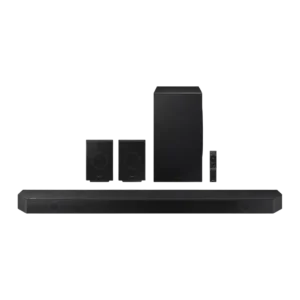
Choose Samsung HW-Q990F Soundbar. It scores 5.0 vs 2.0 for Gaming HDMI passthrough, with a 4.3 overall score.
If you want better Bluetooth connection stability
Choose Samsung HW-B650 Soundbar. It scores 4.9 vs 2.2 for Bluetooth connection stability, with a 4.0 overall score.
If you want better Latency with TV (lip sync)
Choose Sonos Beam (Gen 2). It scores 4.7 vs 2.5 for Latency with TV (lip sync), with a 4.2 overall score.
If you want better Audio format support
Choose JBL Bar 1300X Soundbar. It scores 5.0 vs 3.1 for Audio format support, with a 3.9 overall score.
Overall Top Sound Bars Alternatives
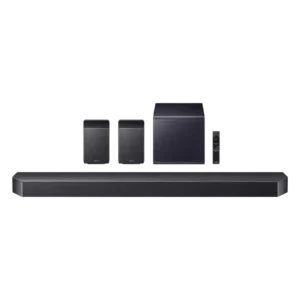
Choose the Samsung HW-Q990F if you want a premium, easy Atmos system with huge surround, strong bass, and Samsung TV perks. Skip it if price, a four-piece setup, music purity,...
Pros: Multi-speaker pairing reliability, Gaming HDMI passthrough
Cons: Google, Cabinet construction / bracing
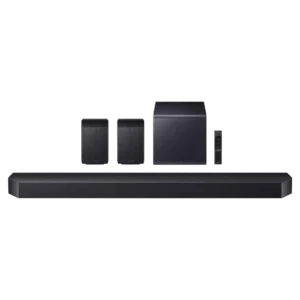
Choose the Sonos Beam Gen 2 for compact, stylish TV sound with excellent dialogue, easy setup, and upgradeable Sonos surround. Skip it if you need true overhead Atmos, built-in Bluetooth,...
Pros: Multi-speaker pairing reliability, Voice recognition accuracy
Cons: Bluetooth connectivity, Video passthrough support
Choose the Sonos Arc if you want immersive Atmos, easy Sonos setup, and a soundbar you can expand with Sub and surrounds. Skip it if price, HDMI passthrough, Bluetooth, or...
Pros: Multi-speaker pairing reliability, Spotify Connect reliability
Cons: Gaming HDMI passthrough, Video passthrough support
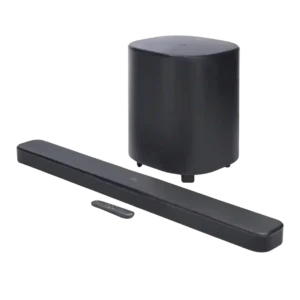
Choose the JBL Bar 500 MK2 if you want a compact soundbar with strong bass, clear dialogue, simple setup, and convincing surround for small to medium rooms. Skip it if...
Pros: Spotify Connect reliability, Setup simplicity
Cons: On-device controls, HDMI 2.1 gaming