Average score
P1
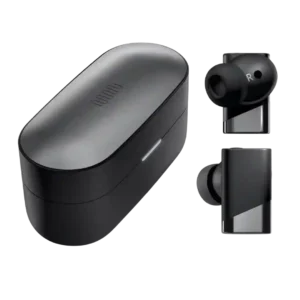
Product 1: Status Pro X Wireless Earbuds
4.0
P2
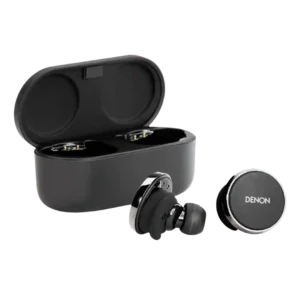
Product 2: Denon Perl Pro True Wireless...
4.0
Active noise cancellation
P1
Product 1: Status Pro X Wireless Earbuds
3.7
ANC is widely viewed as strong for the category, but wind performance is a recurring weakness in several reviews and some listeners notice a faint hiss in very quiet rooms. Mode switching is straightforward, but several reviewers want finer ANC intensity controls and better ways to access wind-related settings without opening the app.
P2
Product 2: Denon Perl Pro True Wireless...
3.9
ANC effectiveness is usually rated good but not class-leading; it can handle commute rumble well, yet several reviewers say Sony/Bose options suppress more, especially in the upper ranges. Noise cancelling and awareness modes are often limited in fine control, with some reviews noting on/off style behavior and few intensity tweaks compared with competitors.
Android compatibility
P1
Product 1: Status Pro X Wireless Earbuds
4.5
Android support is strong, helped by features like Fast Pair and LDAC compatibility on supported phones.
P2
Product 2: Denon Perl Pro True Wireless...
4.0
Android compatibility is good overall, and Android users with aptX-capable Snapdragon devices can get the most from Lossless/Adaptive modes; on other phones it still works well but with fewer codec benefits.
App
P1
Product 1: Status Pro X Wireless Earbuds
4.0
The Status Hub app is generally seen as clean and useful for EQ and features, though some reviewers flag firmware/update hiccups or missing toggles for certain behaviors.
P2
Product 2: Denon Perl Pro True Wireless...
3.9
The companion app is feature-rich for personalization, EQ, control mapping, and updates, but some sources mention slow loading or occasional instability, and several note it is effectively required to get full value.
aptX
P1
Product 1: Status Pro X Wireless Earbuds
2.7
Some reviews explicitly note the lack of aptX-family support, which may matter to Android users who prefer Qualcomm codecs.
P2
Product 2: Denon Perl Pro True Wireless...
5.0
aptX support is a highlight, with repeated mentions of aptX Adaptive/Lossless (and sometimes aptX Voice) as a key advantage for compatible Android devices.
Audio-video sync accuracy
P1
Product 1: Status Pro X Wireless Earbuds
3.4
Latency is described as typical for Bluetooth: fine for most video, but not ideal for competitive gaming and some reviewers wish for a dedicated low-latency mode.
P2
Product 2: Denon Perl Pro True Wireless...
4.7
Video latency is generally reported as well controlled, with reviewers noting little to no audio-video sync issues during typical streaming and YouTube viewing.
Bass performance
P1
Product 1: Status Pro X Wireless Earbuds
4.3
Bass is generally described as deep and controlled, but some listeners want more punch or find the low end a bit warm depending on tips/EQ.
P2
Product 2: Denon Perl Pro True Wireless...
4.3
Bass is frequently praised as impactful and well controlled, with Immersion mode letting you add heft without obvious bleed; a few listeners still find the default or certain profiles bass-light or overly sculpted.
Battery
P1
Product 1: Status Pro X Wireless Earbuds
3.4
Battery life is mixed: some see close to the rated numbers in lighter use, while others measure around 5–6 hours with ANC and/or LDAC, which can feel short for the price.
P2
Product 2: Denon Perl Pro True Wireless...
4.0
Battery life is marketed as long, but real-world reports vary, with at least one standardized test landing closer to about six hours; most still consider it adequate for daily use.
Bluetooth
P1
Product 1: Status Pro X Wireless Earbuds
3.9
Bluetooth connections are usually stable and easy to pair, though a few reports mention occasional quirks during reconnection or device prioritization.
P2
Product 2: Denon Perl Pro True Wireless...
4.4
Bluetooth stability is mostly strong with quick reconnects, though at least one review reports occasional stuttering in specific conditions.
Build quality
P1
Product 1: Status Pro X Wireless Earbuds
3.9
Overall build quality is viewed as premium, though there are occasional reports of small durability quirks such as case contact issues.
P2
Product 2: Denon Perl Pro True Wireless...
4.3
Build quality is generally viewed as solid and premium-feeling, with durable housings and a well-made overall package.
Button control usability
P1
Product 1: Status Pro X Wireless Earbuds
3.3
Physical buttons are appreciated for tactile control, yet multiple reviewers dislike that key button functions are fixed and not fully remappable.
P2Product 2: Denon Perl Pro True Wireless...
No score yetCarry case quality
P1
Product 1: Status Pro X Wireless Earbuds
3.8
The charging case is often described as sturdy with strong magnets, but a few complaints include one-hand opening difficulty or isolated hardware/connector issues.
P2
Product 2: Denon Perl Pro True Wireless...
3.7
The charging case is often described as somewhat bulky but generally sturdy with strong magnets; a few comments mention hinge/handling quirks.
Charging
P1
Product 1: Status Pro X Wireless Earbuds
4.3
Charging is convenient with USB-C and wireless charging support noted across reviews, and case-to-bud top-ups are generally quick.
P2
Product 2: Denon Perl Pro True Wireless...
4.3
Charging is a strong point with fast-charge support and both wired and wireless options, though a small number of users report the case can get warm on a wireless pad.
Codec support
P1
Product 1: Status Pro X Wireless Earbuds
4.6
Codec support is a highlight, with broad coverage including common codecs plus modern options mentioned across reviews.
P2
Product 2: Denon Perl Pro True Wireless...
4.3
Codec support is broad, including aptX Adaptive and aptX Lossless alongside AAC/SBC; the main caveat is that benefits depend on having a compatible source and LDAC is missing.
Comfort during long use
P1
Product 1: Status Pro X Wireless Earbuds
4.5
Comfort is one of the strongest themes, with many reviewers reporting hours-long wear without hot spots once the right tips are chosen.
P2
Product 2: Denon Perl Pro True Wireless...
3.6
Long-wear comfort is highly personal: some find the fit secure and comfortable, especially with wings, while others report pressure, heat, or discomfort due to the large shells.
Design and Aesthetics
P1
Product 1: Status Pro X Wireless Earbuds
4.0
Design stands out with a distinctive blocky stem look and premium finishes that many reviewers find sharp and upscale.
P2
Product 2: Denon Perl Pro True Wireless...
3.4
Design is distinctive and polarizing: the large circular faceplate stands out, but many note the buds are physically big and may look or feel awkward in smaller ears.
Ear tip size options
P1
Product 1: Status Pro X Wireless Earbuds
3.2
Tip selection is commonly limited to three sizes, which most can work with but feels sparse at this price tier for very small or very large ears.
P2
Product 2: Denon Perl Pro True Wireless...
4.5
Ear tip options are generous, typically including several silicone sizes plus at least one foam set, which helps comfort and isolation when matched correctly.
Equalizer customization
P1
Product 1: Status Pro X Wireless Earbuds
4.5
EQ customization is a major strength, with an 8-band EQ and advanced tweaking options that let users significantly reshape the sound.
P2
Product 2: Denon Perl Pro True Wireless...
4.0
EQ options are strong for the category, typically including a 5-band ProEQ plus an Immersion bass slider to fine-tune tonality after personalization.
Find My
P1
Product 1: Status Pro X Wireless Earbuds
4.2
The find-earbuds tools (audible beeps and last-known location style tracking) are generally useful and easy to trigger in the app.
P2Product 2: Denon Perl Pro True Wireless...
No score yetFrequency response accuracy
P1
Product 1: Status Pro X Wireless Earbuds
4.2
Default tuning is often described as balanced or close to a preference curve, and the multi-driver setup helps maintain clarity across lows, mids, and highs.
P2
Product 2: Denon Perl Pro True Wireless...
3.0
Frequency response accuracy is divisive: some praise a balanced, natural tuning once updated, while others cite measured or perceived tonal issues out of the box that may require firmware and EQ.
Included accessories
P1Product 1: Status Pro X Wireless Earbuds
No score yet
P2
Product 2: Denon Perl Pro True Wireless...
4.5
Included accessories are a highlight, with multiple tip sizes, foam options, and stabilizing wings helping users dial in fit and seal.
Instrument separation
P1
Product 1: Status Pro X Wireless Earbuds
4.2
Instrument separation and imaging are consistently strong, helping complex mixes stay organized even with bass-forward tracks.
P2
Product 2: Denon Perl Pro True Wireless...
4.5
Instrument separation and imaging are commonly highlighted as a standout, with precise placement and clean layering across busy mixes.
LDAC
P1
Product 1: Status Pro X Wireless Earbuds
4.6
LDAC support is consistently highlighted as a premium feature, with the usual tradeoff of higher power draw in real-world use.
P2
Product 2: Denon Perl Pro True Wireless...
1.0
LDAC is repeatedly called out as not supported, so Android users who rely on LDAC for high-bitrate Bluetooth may prefer alternatives.
Maximum volume clarity
P1
Product 1: Status Pro X Wireless Earbuds
4.0
At higher volumes, distortion is generally kept in check, with some reviewers noting the sound stays composed near the top of the range.
P2
Product 2: Denon Perl Pro True Wireless...
4.7
Clarity at higher volumes is typically strong, with multiple sources noting low distortion and intelligible detail even when played loudly.
Microphone noise reduction
P1
Product 1: Status Pro X Wireless Earbuds
3.6
Noise reduction for calls and ANC-related wind filtering helps in many scenarios, but results vary, with multiple reviewers pointing to wind as the hardest condition.
P2
Product 2: Denon Perl Pro True Wireless...
4.1
Noise and wind reduction on calls is frequently reported as effective, helping keep speech understandable in busy or windy environments.
Microphone quality for calls
P1
Product 1: Status Pro X Wireless Earbuds
3.5
Call quality is generally clear in quiet settings, but some reviews note compression or muffling as background noise rises, and wind can be a challenge in certain tests.
P2
Product 2: Denon Perl Pro True Wireless...
4.3
Call quality is generally above average, with voices described as clear and intelligible; a few reviewers still note slight processing or that top rivals edge it out.
Midrange clarity
P1
Product 1: Status Pro X Wireless Earbuds
4.0
Midrange comes through clearly with strong vocal presence and good musical detail, especially with the Signature or Knowles-style tunings.
P2
Product 2: Denon Perl Pro True Wireless...
4.1
Midrange is generally clear and present, but can sound forward or radio-like depending on the AAT profile and firmware, so some users prefer minor EQ adjustments for balance.
Multi-platform compatibility
P1
Product 1: Status Pro X Wireless Earbuds
4.3
Compatibility across phones and computers is broadly positive, with some caveats around platform-specific codec support (notably iPhone and LDAC).
P2
Product 2: Denon Perl Pro True Wireless...
3.7
Multi-platform use is supported across phones and computers, but fidelity and feature access can vary by platform, with iOS often limited to AAC and Android benefiting more from aptX.
Multipoint connectivity reliability
P1
Product 1: Status Pro X Wireless Earbuds
3.9
Multipoint works well for many users with quick switching, but at least one review reports finicky behavior that required manual device management.
P2
Product 2: Denon Perl Pro True Wireless...
4.5
Multipoint connectivity is a consistent win, with reviewers reporting reliable dual-device pairing and fast handoff between phone and computer/tablet.
Noise isolation (passive)
P1
Product 1: Status Pro X Wireless Earbuds
3.6
With ANC off, passive isolation is described as usable but not standout, and tip choice plays a big role in the seal.
P2
Product 2: Denon Perl Pro True Wireless...
3.6
Passive isolation depends heavily on getting a good seal; with the right tips, attenuation is described as decent, but it is not the main selling point versus active cancellation.
Preset EQ profile quality
P1
Product 1: Status Pro X Wireless Earbuds
4.1
Preset EQs provide meaningful variety, but naming can be confusing and some presets (especially brighter ones) may not suit everyone.
P2
Product 2: Denon Perl Pro True Wireless...
4.2
Personalized AAT profiles can produce dramatic, often positive changes, but results vary by listener and tips; some profiles trade a sense of spaciousness for extra punch or focus.
Sensors
P1Product 1: Status Pro X Wireless Earbuds
No score yet
P2
Product 2: Denon Perl Pro True Wireless...
4.0
In-ear sensors for auto play/pause are commonly mentioned and generally work as expected, with options to change or disable behavior in the app.
Sidetone adjustment quality
P1
Product 1: Status Pro X Wireless Earbuds
4.3
Sidetone is a well-liked call feature that helps users regulate their speaking volume and feel more natural on calls.
P2Product 2: Denon Perl Pro True Wireless...
No score yetSoftware/setup simplicity
P1
Product 1: Status Pro X Wireless Earbuds
4.4
Setup is usually quick and straightforward, with several reviews praising how easy pairing and basic configuration are.
P2
Product 2: Denon Perl Pro True Wireless...
3.3
Setup and daily usability are good once configured, but some reviews describe the experience as less polished than rivals because controls and tuning can require initial tinkering.
Sound quality
P1
Product 1: Status Pro X Wireless Earbuds
4.6
Across reviews, Pro X is praised for lively, detailed sound that competes with premium flagships, though a few reviewers call it more of an all-arounder than a market leader.
P2
Product 2: Denon Perl Pro True Wireless...
4.5
Sound quality is the main strength: many reviews describe a clean, low-distortion, spacious and highly detailed presentation, especially after Masimo AAT personalization and/or EQ tweaks, though a minority found stock tuning or earlier firmware disappointing.
Soundstage width
P1
Product 1: Status Pro X Wireless Earbuds
3.7
Soundstage is typically moderate rather than huge, but positioning and spatial precision are frequently called out as a strength.
P2
Product 2: Denon Perl Pro True Wireless...
4.5
Soundstage is widely described as unusually wide and open for true wireless, with good spacing; a few reviews note it can feel a bit flatter in depth compared with the very best rivals.
Spatial audio
P1Product 1: Status Pro X Wireless Earbuds
No score yet
P2
Product 2: Denon Perl Pro True Wireless...
4.0
Spatial audio gets mixed reactions: some find it immersive and bubble-like, while others call it subtle or underwhelming, and it is typically not head-tracked.
Stability
P1
Product 1: Status Pro X Wireless Earbuds
3.9
Fit stability is generally good for daily use and light workouts, but removing fit-wings and tip choice can affect how locked-in it feels for some users.
P2
Product 2: Denon Perl Pro True Wireless...
4.2
Stability is usually good when the right tips and wings are used, though some users report slight movement during chewing or vigorous motion without added support.
Touch control responsiveness
P1
Product 1: Status Pro X Wireless Earbuds
3.4
Touch controls offer a large target and good customization, but sensitivity can be hit-or-miss for some users and swipe gestures are sometimes expected but not always present.
P2
Product 2: Denon Perl Pro True Wireless...
4.3
Touch controls are commonly described as responsive and highly customizable, with reliable gesture detection and audible feedback.
Transparency mode quality
P1
Product 1: Status Pro X Wireless Earbuds
3.9
Transparency/ambient mode is often rated excellent with multiple strength levels, though higher settings can introduce hiss, occlusion, or extra white noise for some ears.
P2
Product 2: Denon Perl Pro True Wireless...
3.4
Transparency or social mode is usable but mixed: some call it smooth and subtle, while others find it less natural, occluded, or slightly artificial versus AirPods-class passthrough.
Treble clarity
P1
Product 1: Status Pro X Wireless Earbuds
3.9
Treble is mostly clean and detailed, but certain presets can sound bright or fatiguing and one review notes slightly restrained upper-treble bite out of the box.
P2
Product 2: Denon Perl Pro True Wireless...
4.1
Treble tends to be detailed and airy, but reports vary from smooth and controlled to tinny or over-sharpened on older firmware or specific personalized profiles.
USB-C
P1
Product 1: Status Pro X Wireless Earbuds
4.5
USB-C is standard here and is repeatedly mentioned as the primary wired charging option.
P2
Product 2: Denon Perl Pro True Wireless...
5.0
USB-C charging is consistently supported and frequently mentioned as the standard wired option.
Voice assistant integration
P1
Product 1: Status Pro X Wireless Earbuds
3.8
Voice assistant support is present via controls, but it is treated as a basic convenience feature rather than a standout differentiator.
P2
Product 2: Denon Perl Pro True Wireless...
4.2
Voice assistant integration is supported through touch controls, with reports of common assistants working reliably when mapped.
Volume output
P1
Product 1: Status Pro X Wireless Earbuds
3.6
Volume gets loud enough for most use, but a few reviews want more headroom outdoors or note it is not the loudest in its class.
P2
Product 2: Denon Perl Pro True Wireless...
4.6
Volume output is often described as louder than average with plenty of headroom, useful for dynamic music and noisy environments.
Water/sweat resistance rating
P1
Product 1: Status Pro X Wireless Earbuds
4.5
The IP55 rating is repeatedly cited as a meaningful durability perk for sweat, rain, and dust exposure.
P2
Product 2: Denon Perl Pro True Wireless...
4.0
IPX4 water and sweat resistance is consistently noted, making the earbuds suitable for light workouts and rain, though not for submersion.
Weight comfort
P1Product 1: Status Pro X Wireless Earbuds
No score yet
P2
Product 2: Denon Perl Pro True Wireless...
2.9
Weight comfort is a recurring tradeoff: the earbuds are heavier and more noticeable than many rivals, which can cause fatigue for smaller ears.