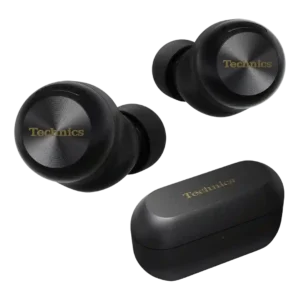
Status Pro X Wireless Earbuds Review
Bottom Line
Choose Pro X if you want big, detailed sound with strong ANC and EQ control. Skip if you are often in windy conditions or need longer real-world battery life and more premium extras for $299.
Listeners who prioritize engaging, detailed sound and like tweaking EQ, especially Android users who want LDAC and multipoint in a premium-feeling package.
People in windy environments, heavy travelers who need all-day runtime from the buds alone, or anyone who wants every flagship convenience feature for the money.
Status Pro X earns its reputation mainly on audio: the triple-driver tuning delivers punchy bass, clear mids, and impressive separation that hangs with top-tier earbuds. ANC is generally very competitive in everyday noise, and the companion app offers deep EQ tools and useful features like find-earbuds and sidetone. The tradeoffs are consistency and value: wind can trip up the mics/ANC, multipoint behavior varies by device, and many users see roughly 5–6 hours when ANC and high-bitrate modes are in play. If sound is your priority, it is compelling; if you want the most polished all-round flagship experience, rivals are safer.
Scored Features
Pros
-
Codec support is a highlight, with broad coverage including common codecs plus modern options mentioned across reviews.
-
Across reviews, Pro X is praised for lively, detailed sound that competes with premium flagships, though a few reviewers call it more of an all-arounder than a market leader.
-
LDAC support is consistently highlighted as a premium feature, with the usual tradeoff of higher power draw in real-world use.
-
EQ customization is a major strength, with an 8-band EQ and advanced tweaking options that let users significantly reshape the sound.
-
The IP55 rating is repeatedly cited as a meaningful durability perk for sweat, rain, and dust exposure.
-
Comfort is one of the strongest themes, with many reviewers reporting hours-long wear without hot spots once the right tips are chosen.
-
Android support is strong, helped by features like Fast Pair and LDAC compatibility on supported phones.
-
USB-C is standard here and is repeatedly mentioned as the primary wired charging option.
-
Setup is usually quick and straightforward, with several reviews praising how easy pairing and basic configuration are.
-
Charging is convenient with USB-C and wireless charging support noted across reviews, and case-to-bud top-ups are generally quick.
-
Compatibility across phones and computers is broadly positive, with some caveats around platform-specific codec support (notably iPhone and LDAC).
-
Bass is generally described as deep and controlled, but some listeners want more punch or find the low end a bit warm depending on tips/EQ.
-
Sidetone is a well-liked call feature that helps users regulate their speaking volume and feel more natural on calls.
-
The find-earbuds tools (audible beeps and last-known location style tracking) are generally useful and easy to trigger in the app.
-
Default tuning is often described as balanced or close to a preference curve, and the multi-driver setup helps maintain clarity across lows, mids, and highs.
-
Instrument separation and imaging are consistently strong, helping complex mixes stay organized even with bass-forward tracks.
-
Preset EQs provide meaningful variety, but naming can be confusing and some presets (especially brighter ones) may not suit everyone.
-
The Status Hub app is generally seen as clean and useful for EQ and features, though some reviewers flag firmware/update hiccups or missing toggles for certain behaviors.
-
Midrange comes through clearly with strong vocal presence and good musical detail, especially with the Signature or Knowles-style tunings.
-
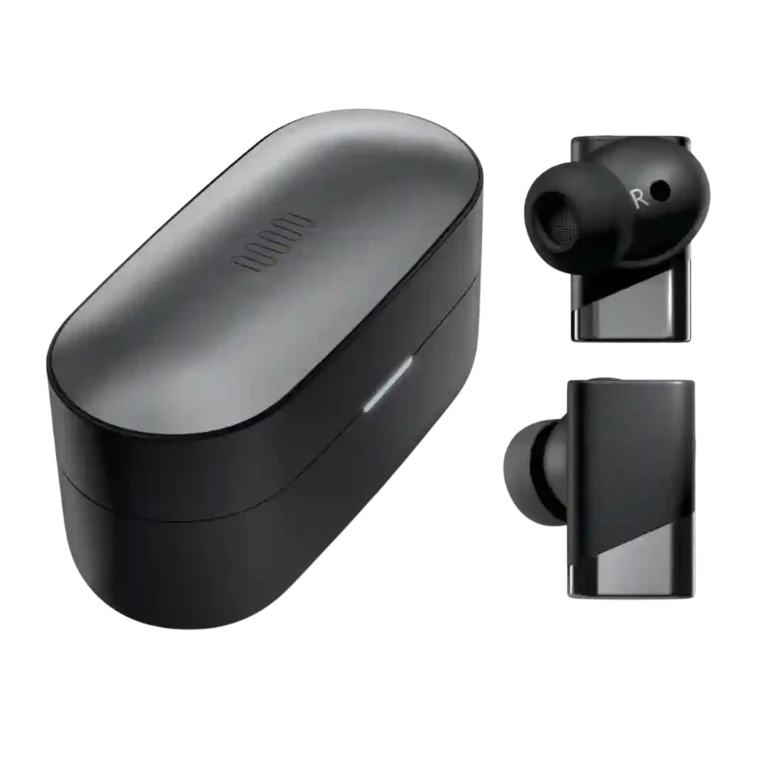
Design stands out with a distinctive blocky stem look and premium finishes that many reviewers find sharp and upscale.
-
At higher volumes, distortion is generally kept in check, with some reviewers noting the sound stays composed near the top of the range.
-
Bluetooth connections are usually stable and easy to pair, though a few reports mention occasional quirks during reconnection or device prioritization.
-
Overall build quality is viewed as premium, though there are occasional reports of small durability quirks such as case contact issues.
-
Transparency/ambient mode is often rated excellent with multiple strength levels, though higher settings can introduce hiss, occlusion, or extra white noise for some ears.
-
Treble is mostly clean and detailed, but certain presets can sound bright or fatiguing and one review notes slightly restrained upper-treble bite out of the box.
-
Multipoint works well for many users with quick switching, but at least one review reports finicky behavior that required manual device management.
-
Fit stability is generally good for daily use and light workouts, but removing fit-wings and tip choice can affect how locked-in it feels for some users.
-
The charging case is often described as sturdy with strong magnets, but a few complaints include one-hand opening difficulty or isolated hardware/connector issues.
-
Voice assistant support is present via controls, but it is treated as a basic convenience feature rather than a standout differentiator.
-
Soundstage is typically moderate rather than huge, but positioning and spatial precision are frequently called out as a strength.
-
ANC is widely viewed as strong for the category, but wind performance is a recurring weakness in several reviews and some listeners notice a faint hiss in very quiet rooms. Mode switching is straightforward, but several reviewers want finer ANC intensity controls and better ways to access wind-related settings without opening the app.
-
Noise reduction for calls and ANC-related wind filtering helps in many scenarios, but results vary, with multiple reviewers pointing to wind as the hardest condition.
-
Volume gets loud enough for most use, but a few reviews want more headroom outdoors or note it is not the loudest in its class.
-
With ANC off, passive isolation is described as usable but not standout, and tip choice plays a big role in the seal.
-
Call quality is generally clear in quiet settings, but some reviews note compression or muffling as background noise rises, and wind can be a challenge in certain tests.
Cons
-
Battery life is mixed: some see close to the rated numbers in lighter use, while others measure around 5–6 hours with ANC and/or LDAC, which can feel short for the price.
-
Touch controls offer a large target and good customization, but sensitivity can be hit-or-miss for some users and swipe gestures are sometimes expected but not always present.
-
Latency is described as typical for Bluetooth: fine for most video, but not ideal for competitive gaming and some reviewers wish for a dedicated low-latency mode.
-
Physical buttons are appreciated for tactile control, yet multiple reviewers dislike that key button functions are fixed and not fully remappable.
-
Tip selection is commonly limited to three sizes, which most can work with but feels sparse at this price tier for very small or very large ears.
-
Some reviews explicitly note the lack of aptX-family support, which may matter to Android users who prefer Qualcomm codecs.
Compared With Category Average
Compared with other Earbud Headphones, this product is above average in LDAC, Codec support, Equalizer customization, below average in Ear tip size options, Battery, Audio-video sync accuracy.
| Attribute | This product | Category average | Difference |
|---|---|---|---|
| LDAC | 4.6 | 2.5 | +2.1 |
| Codec support | 4.6 | 3.6 | +1.0 |
| Equalizer customization | 4.5 | 3.7 | +0.9 |
| Ear tip size options | 3.2 | 4.1 | -0.9 |
| Battery | 3.4 | 4.2 | -0.8 |
| Audio-video sync accuracy | 3.4 | 4.3 | -0.9 |
| Water/sweat resistance rating | 4.5 | 4.0 | +0.5 |
| Sidetone adjustment quality | 4.3 | 3.5 | +0.8 |
FAQ
How long does the battery last in real use?
Expect a split depending on settings: lighter use can approach the quoted numbers, but many reviewers see about 5–6 hours when ANC and/or LDAC are enabled.
Is the noise cancelling good for commuting?
Most reviews describe the ANC as strong for traffic, engine hum, and general city noise, but wind performance is the main weak spot.
Does it support wireless charging and USB-C?
Yes. The case supports USB-C wired charging and Qi-style wireless charging.
Will LDAC work on iPhone?
The earbuds support LDAC, but iPhones generally do not. iPhone users will fall back to common codecs like AAC.
Does it have multipoint and a way to find lost earbuds?
Yes. Multipoint is supported, and the app can help you locate earbuds with audible alerts and last-known location style tracking, though multipoint reliability can vary by device.
Expert Reviews We Analyzed
Video Reviews
Article Reviews
Consider This Instead
If you want better Battery
Choose Audio-Technica ATH-CKS50TW Earbuds. It scores 5.0 vs 3.4 for Battery, with a 3.9 overall score.
If you want better Active noise cancellation
Choose Apple AirPods Pro 3 Wireless Earbuds. It scores 5.0 vs 3.7 for Active noise cancellation, with a 3.8 overall score.
If you want better Ear tip size options
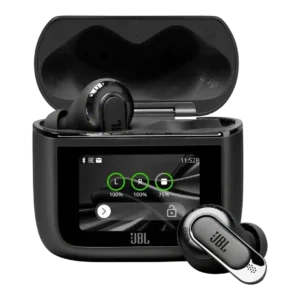
Choose JBL Tour Pro 3 Earbuds. It scores 4.6 vs 3.2 for Ear tip size options, with a 4.3 overall score.
If you want better Bluetooth
Choose Edifier NeoBuds Planar Earbuds. It scores 5.0 vs 3.9 for Bluetooth, with a 4.2 overall score.
Overall Top Earbud Headphones Alternatives
Choose Sony WF-1000XM6 for top-tier noise canceling and a spacious, punchy sound; Skip if you struggle with foam-tip comfort/fit or want the most natural transparency and effortless Apple-first...
Pros: USB-C, LDAC, Codec support, Smudge resistance, Soundstage width, Active noise cancellation effectiveness, Sound quality
Cons: None
Choose JBL Tour Pro 3 for feature-hungry listeners who want a smart-case transmitter and lively sound. Skip if you need the smallest, most secure fit or demand best-in-class...
Pros: Dongle, Codec support, Ear tip size options, Equalizer customization, LDAC, Android compatibility, Carry case quality
Cons: None
Choose for top-tier sound and a feature-rich, future-proof codec stack; Skip if you prioritize the very best ANC or consistently clean calls in wind/noise (especially on iPhone).
Pros: Codec support, aptX, Sensors, Build quality, Sound quality, Soundstage width, Bass performance
Cons: Spatial audio, Find My
Choose Nothing Ear (a) if you want standout design, very good sound, and easy daily comfort for under $100. Skip it if you need class-leading transparency or wireless...
Pros: Comfort during long use, Software/setup simplicity, LDAC, Multi-platform compatibility, Design and Aesthetics, Noise cancellation adjustability, Instrument separation
Cons: none