Average score
P1
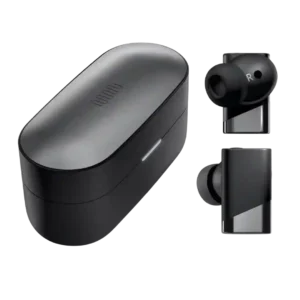
Product 1: Status Pro X Wireless Earbuds
4.0
P2
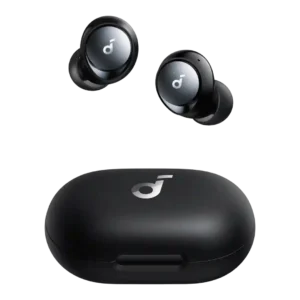
Product 2: Soundcore by Anker Space A40...
3.9
Active noise cancellation
P1
Product 1: Status Pro X Wireless Earbuds
3.7
ANC is widely viewed as strong for the category, but wind performance is a recurring weakness in several reviews and some listeners notice a faint hiss in very quiet rooms. Mode switching is straightforward, but several reviewers want finer ANC intensity controls and better ways to access wind-related settings without opening the app.
P2
Product 2: Soundcore by Anker Space A40...
4.1
Across reviews, ANC is strong for the price, especially against steady low-frequency rumble (traffic, engines), but it is less consistent against voices and higher-frequency clatter; a few reviewers still call it merely adequate compared with premium flagships. ANC offers manual and adaptive modes plus strength presets, but several testers report little real-world difference between levels, and changing presets from the earbuds is limited; others find the adjustability useful enough to dial in.
Android compatibility
P1
Product 1: Status Pro X Wireless Earbuds
4.5
Android support is strong, helped by features like Fast Pair and LDAC compatibility on supported phones.
P2
Product 2: Soundcore by Anker Space A40...
4.5
Android support is strong, including access to LDAC and the full Soundcore app feature set on compatible devices.
App
P1
Product 1: Status Pro X Wireless Earbuds
4.0
The Status Hub app is generally seen as clean and useful for EQ and features, though some reviewers flag firmware/update hiccups or missing toggles for certain behaviors.
P2
Product 2: Soundcore by Anker Space A40...
4.3
The Soundcore app is a major value add: it is usually described as straightforward, stable, and essential for unlocking features like EQ, control remapping, and firmware.
aptX
P1
Product 1: Status Pro X Wireless Earbuds
2.7
Some reviews explicitly note the lack of aptX-family support, which may matter to Android users who prefer Qualcomm codecs.
P2
Product 2: Soundcore by Anker Space A40...
1.2
aptX support is explicitly absent in multiple reviews, so users prioritizing aptX should look elsewhere.
Audio-video sync accuracy
P1
Product 1: Status Pro X Wireless Earbuds
3.4
Latency is described as typical for Bluetooth: fine for most video, but not ideal for competitive gaming and some reviewers wish for a dedicated low-latency mode.
P2
Product 2: Soundcore by Anker Space A40...
4.2
Latency and A/V sync are generally reported as good, especially for video; gaming modes exist, but several reviewers say improvements are subtle and best for casual mobile gaming.
Bass performance
P1
Product 1: Status Pro X Wireless Earbuds
4.3
Bass is generally described as deep and controlled, but some listeners want more punch or find the low end a bit warm depending on tips/EQ.
P2
Product 2: Soundcore by Anker Space A40...
4.0
Bass tends to be punchy and fun, with some reviews noting a mid-bass lift; extension and sub-bass weight are more variable, and stock tuning can feel light down low for bassheads unless EQ is used.
Battery
P1
Product 1: Status Pro X Wireless Earbuds
3.4
Battery life is mixed: some see close to the rated numbers in lighter use, while others measure around 5–6 hours with ANC and/or LDAC, which can feel short for the price.
P2
Product 2: Soundcore by Anker Space A40...
4.4
Battery life is a consistent highlight: real-world playback commonly lands around 6–8 hours with ANC and higher without it, with the case extending total time well beyond a full workweek for many.
Bluetooth
P1
Product 1: Status Pro X Wireless Earbuds
3.9
Bluetooth connections are usually stable and easy to pair, though a few reports mention occasional quirks during reconnection or device prioritization.
P2
Product 2: Soundcore by Anker Space A40...
4.0
Bluetooth stability is usually reliable with quick pairing and solid range, though at least one review reports intermittent re-pairing frustration that may require forgetting devices.
Build quality
P1
Product 1: Status Pro X Wireless Earbuds
3.9
Overall build quality is viewed as premium, though there are occasional reports of small durability quirks such as case contact issues.
P2
Product 2: Soundcore by Anker Space A40...
3.8
Overall build quality is solid for the price, though small durability concerns show up around case hinges and scratch-prone glossy interior surfaces.
Button control usability
P1
Product 1: Status Pro X Wireless Earbuds
3.3
Physical buttons are appreciated for tactile control, yet multiple reviewers dislike that key button functions are fixed and not fully remappable.
P2Product 2: Soundcore by Anker Space A40...
No score yetCarry case quality
P1
Product 1: Status Pro X Wireless Earbuds
3.8
The charging case is often described as sturdy with strong magnets, but a few complaints include one-hand opening difficulty or isolated hardware/connector issues.
P2
Product 2: Soundcore by Anker Space A40...
3.8
The case is compact and convenient with wireless charging, but some reviews flag lid/hinge security or imperfect closure that can risk accidental opening.
Charging
P1
Product 1: Status Pro X Wireless Earbuds
4.3
Charging is convenient with USB-C and wireless charging support noted across reviews, and case-to-bud top-ups are generally quick.
P2
Product 2: Soundcore by Anker Space A40...
4.5
Charging features are premium for the price, typically including fast-charge boosts and wireless charging; real-world convenience is strong even if total runtime varies by codec and ANC.
Codec support
P1
Product 1: Status Pro X Wireless Earbuds
4.6
Codec support is a highlight, with broad coverage including common codecs plus modern options mentioned across reviews.
P2
Product 2: Soundcore by Anker Space A40...
4.1
Codec support is strong for the class (SBC/AAC with LDAC often available), but higher-quality modes can reduce battery life and may constrain other features like multipoint.
Comfort during long use
P1
Product 1: Status Pro X Wireless Earbuds
4.5
Comfort is one of the strongest themes, with many reviewers reporting hours-long wear without hot spots once the right tips are chosen.
P2
Product 2: Soundcore by Anker Space A40...
4.3
Comfort is a strong point thanks to the small shells and light weight; long sessions are generally easy, though a few users report minor pressure or discomfort after several hours.
Design and Aesthetics
P1
Product 1: Status Pro X Wireless Earbuds
4.0
Design stands out with a distinctive blocky stem look and premium finishes that many reviewers find sharp and upscale.
P2
Product 2: Soundcore by Anker Space A40...
4.1
Design is frequently described as stylish and premium-looking for the price, with a compact, pocket-friendly aesthetic that does not scream budget.
Ear tip size options
P1
Product 1: Status Pro X Wireless Earbuds
3.2
Tip selection is commonly limited to three sizes, which most can work with but feels sparse at this price tier for very small or very large ears.
P2
Product 2: Soundcore by Anker Space A40...
4.1
Multiple ear tip sizes are included (often five or six), improving fit odds; however, people with very large ear canals may still need third-party XL tips.
Equalizer customization
P1
Product 1: Status Pro X Wireless Earbuds
4.5
EQ customization is a major strength, with an 8-band EQ and advanced tweaking options that let users significantly reshape the sound.
P2
Product 2: Soundcore by Anker Space A40...
4.5
EQ customization is one of the standout features, with extensive presets plus custom multi-band control and HearID-style personalization that can noticeably refine mids/highs and bass balance.
Find My
P1
Product 1: Status Pro X Wireless Earbuds
4.2
The find-earbuds tools (audible beeps and last-known location style tracking) are generally useful and easy to trigger in the app.
P2
Product 2: Soundcore by Anker Space A40...
3.8
Find My-style locating is present in some accounts, typically using audible beeps rather than true GPS tracking, and works as a practical backstop for misplaced buds.
Frequency response accuracy
P1
Product 1: Status Pro X Wireless Earbuds
4.2
Default tuning is often described as balanced or close to a preference curve, and the multi-driver setup helps maintain clarity across lows, mids, and highs.
P2
Product 2: Soundcore by Anker Space A40...
4.0
Tuning is described as broadly balanced and inoffensive, with the ability to correct the signature via EQ; some note small tonal shifts when ANC is enabled.
Instrument separation
P1
Product 1: Status Pro X Wireless Earbuds
4.2
Instrument separation and imaging are consistently strong, helping complex mixes stay organized even with bass-forward tracks.
P2
Product 2: Soundcore by Anker Space A40...
4.1
Instrument separation and imaging are often highlighted as a strength, delivering good layering and placement for the money, though not at true flagship levels.
LDAC
P1
Product 1: Status Pro X Wireless Earbuds
4.6
LDAC support is consistently highlighted as a premium feature, with the usual tradeoff of higher power draw in real-world use.
P2
Product 2: Soundcore by Anker Space A40...
4.5
LDAC support is repeatedly called a key differentiator for Android users, enabling higher-bitrate streaming; expect higher power draw and the need to toggle settings in the app.
Maximum volume clarity
P1
Product 1: Status Pro X Wireless Earbuds
4.0
At higher volumes, distortion is generally kept in check, with some reviewers noting the sound stays composed near the top of the range.
P2
Product 2: Soundcore by Anker Space A40...
4.2
Maximum-volume clarity is mostly maintained, with limited distortion reported; tonal balance, rather than distortion, is the more common complaint at higher levels.
Microphone noise reduction
P1
Product 1: Status Pro X Wireless Earbuds
3.6
Noise reduction for calls and ANC-related wind filtering helps in many scenarios, but results vary, with multiple reviewers pointing to wind as the hardest condition.
P2
Product 2: Soundcore by Anker Space A40...
3.7
Mic noise reduction can be effective at separating voice from traffic or café noise, yet wind processing artifacts and aggressive suppression can reduce naturalness or intelligibility for some callers.
Microphone quality for calls
P1
Product 1: Status Pro X Wireless Earbuds
3.5
Call quality is generally clear in quiet settings, but some reviews note compression or muffling as background noise rises, and wind can be a challenge in certain tests.
P2
Product 2: Soundcore by Anker Space A40...
3.7
Call mic quality is mixed: indoor clarity is often fine, and some reviewers are impressed, but others report thin, muffled, or inconsistent voice pickup in louder or windy environments.
Midrange clarity
P1
Product 1: Status Pro X Wireless Earbuds
4.0
Midrange comes through clearly with strong vocal presence and good musical detail, especially with the Signature or Knowles-style tunings.
P2
Product 2: Soundcore by Anker Space A40...
4.0
Midrange is generally clear with decent vocal intelligibility, but a few reviewers note slightly veiled vocals or a cooler tuning that benefits from HearID/EQ tweaks.
Multi-platform compatibility
P1
Product 1: Status Pro X Wireless Earbuds
4.3
Compatibility across phones and computers is broadly positive, with some caveats around platform-specific codec support (notably iPhone and LDAC).
P2
Product 2: Soundcore by Anker Space A40...
4.5
Cross-platform support is good across iOS and Android, but the best codec features and some behaviors vary by platform (for example LDAC typically being Android-only).
Multipoint connectivity reliability
P1
Product 1: Status Pro X Wireless Earbuds
3.9
Multipoint works well for many users with quick switching, but at least one review reports finicky behavior that required manual device management.
P2
Product 2: Soundcore by Anker Space A40...
4.1
Multipoint/dual-device connectivity is commonly praised as smooth and dependable, but at least one source claims it is missing and others note tradeoffs (like dropping to AAC/SBC when enabled).
Noise isolation (passive)
P1
Product 1: Status Pro X Wireless Earbuds
3.6
With ANC off, passive isolation is described as usable but not standout, and tip choice plays a big role in the seal.
P2
Product 2: Soundcore by Anker Space A40...
4.1
Passive isolation is generally above average with a good seal, providing a solid baseline even before ANC; fit-dependent leakage is the main limiter if tips do not seal well.
Preset EQ profile quality
P1
Product 1: Status Pro X Wireless Earbuds
4.1
Preset EQs provide meaningful variety, but naming can be confusing and some presets (especially brighter ones) may not suit everyone.
P2
Product 2: Soundcore by Anker Space A40...
4.3
Preset EQ profiles are plentiful and generally useful, giving workable options for music genres and spoken word; most reviewers still recommend light personalization for best results.
Sensors
P1Product 1: Status Pro X Wireless Earbuds
No score yet
P2
Product 2: Soundcore by Anker Space A40...
1.5
Wear sensors are a weak spot: multiple reviews call out the lack of auto-pause/in-ear detection, which reduces day-to-day convenience compared with some rivals.
Sidetone adjustment quality
P1
Product 1: Status Pro X Wireless Earbuds
4.3
Sidetone is a well-liked call feature that helps users regulate their speaking volume and feel more natural on calls.
P2Product 2: Soundcore by Anker Space A40...
No score yetSoftware/setup simplicity
P1
Product 1: Status Pro X Wireless Earbuds
4.4
Setup is usually quick and straightforward, with several reviews praising how easy pairing and basic configuration are.
P2
Product 2: Soundcore by Anker Space A40...
4.1
Setup is generally easy with quick pairing, but the feature set can feel dense; most reviewers suggest using the app to configure controls, codecs, and listening modes early.
Sound quality
P1
Product 1: Status Pro X Wireless Earbuds
4.6
Across reviews, Pro X is praised for lively, detailed sound that competes with premium flagships, though a few reviewers call it more of an all-arounder than a market leader.
P2
Product 2: Soundcore by Anker Space A40...
4.2
Sound quality is widely praised for a sub-$100 set, with a clean, detailed presentation and lots of tuning flexibility; a recurring theme is that it is enjoyable rather than truly reference-grade for critical listening.
Soundstage width
P1
Product 1: Status Pro X Wireless Earbuds
3.7
Soundstage is typically moderate rather than huge, but positioning and spatial precision are frequently called out as a strength.
P2
Product 2: Soundcore by Anker Space A40...
3.9
Soundstage is typically called wider than expected for compact buds, but still varies by listener and EQ, with some describing it as more in-head than expansive.
Stability
P1
Product 1: Status Pro X Wireless Earbuds
3.9
Fit stability is generally good for daily use and light workouts, but removing fit-wings and tip choice can affect how locked-in it feels for some users.
P2
Product 2: Soundcore by Anker Space A40...
4.0
Fit stability is generally good for daily use and light exercise, though the lack of stabilizing fins means heavy workouts and running can require occasional readjustment.
Touch control responsiveness
P1
Product 1: Status Pro X Wireless Earbuds
3.4
Touch controls offer a large target and good customization, but sensitivity can be hit-or-miss for some users and swipe gestures are sometimes expected but not always present.
P2
Product 2: Soundcore by Anker Space A40...
3.9
Touch controls are customizable and usually responsive, but several reviewers mention occasional missed taps, lag, or finicky behavior that takes practice.
Transparency mode quality
P1
Product 1: Status Pro X Wireless Earbuds
3.9
Transparency/ambient mode is often rated excellent with multiple strength levels, though higher settings can introduce hiss, occlusion, or extra white noise for some ears.
P2
Product 2: Soundcore by Anker Space A40...
3.9
Transparency mode is feature-rich (often with full and vocal-focused options) and can work well for quick conversations, but opinions diverge on naturalness: some hear hiss, brightness, or a narrow sound window.
Treble clarity
P1
Product 1: Status Pro X Wireless Earbuds
3.9
Treble is mostly clean and detailed, but certain presets can sound bright or fatiguing and one review notes slightly restrained upper-treble bite out of the box.
P2
Product 2: Soundcore by Anker Space A40...
3.9
Treble detail is good for the price, yet multiple reviewers mention either a treble spike/snappiness or a slight roll-off and reduced sparkle depending on tuning and ANC mode.
USB-C
P1
Product 1: Status Pro X Wireless Earbuds
4.5
USB-C is standard here and is repeatedly mentioned as the primary wired charging option.
P2
Product 2: Soundcore by Anker Space A40...
4.7
USB-C charging is standard and universally present, with quick top-ups frequently cited as genuinely useful.
Voice assistant integration
P1
Product 1: Status Pro X Wireless Earbuds
3.8
Voice assistant support is present via controls, but it is treated as a basic convenience feature rather than a standout differentiator.
P2
Product 2: Soundcore by Anker Space A40...
2.4
Voice assistant integration is available but not always reliable, with reports of lag or misinterpreted commands on some platforms.
Volume output
P1
Product 1: Status Pro X Wireless Earbuds
3.6
Volume gets loud enough for most use, but a few reviews want more headroom outdoors or note it is not the loudest in its class.
P2
Product 2: Soundcore by Anker Space A40...
4.3
Peak volume is generally more than sufficient for most listeners, with at least one measured test placing it firmly in loud-enough territory without obvious strain.
Water/sweat resistance rating
P1
Product 1: Status Pro X Wireless Earbuds
4.5
The IP55 rating is repeatedly cited as a meaningful durability perk for sweat, rain, and dust exposure.
P2
Product 2: Soundcore by Anker Space A40...
3.6
The IPX4 rating is adequate for sweat and light rain but not for dunking or heavy water exposure; runners wanting more protection may prefer higher-rated alternatives.
Weight comfort
P1Product 1: Status Pro X Wireless Earbuds
No score yet
P2
Product 2: Soundcore by Anker Space A40...
4.5
Weight comfort is excellent, with the buds routinely described as lightweight and easy to forget once seated properly.