Active noise cancellation
P1
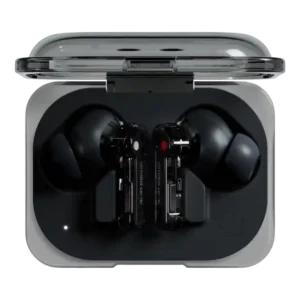
Product 1: Nothing Ear (a) Earbuds
4.1
ANC is consistently rated as very good for $99: strong enough for commuting, offices, and travel, but still a step below the very best premium earbuds. The ANC controls are a plus, with multiple levels and adaptive behavior giving users more flexibility than many earbuds at this price.
P2
Product 2: JBL Tour Pro 3 Earbuds
4.3
Across reviews, ANC is consistently strong and competitive at the flagship tier, especially with a solid seal and the included foam tips. Several reviewers still place Bose or AirPods Pro 2 a step ahead for the most cocooned, best-in-class quiet. Noise canceling is highly tunable, with adaptive modes and manual strength steps/sliders available in the app and often from the case screen. Most reviewers found it easy to dial in more reduction or more awareness depending on environment.
Android compatibility
P1
Product 1: Nothing Ear (a) Earbuds
4.4
Android users get extra upside from features like Fast Pair and LDAC, making the Ear (a) a particularly good value outside closed ecosystems.
P2
Product 2: JBL Tour Pro 3 Earbuds
4.6
Android users get the most obvious upside through LDAC support and Fast Pair-style conveniences, and several reviews specifically cite Android phones during testing. Compatibility is generally smooth, and features feel most complete on Android.
App
P1
Product 1: Nothing Ear (a) Earbuds
4.4
Nothing X is widely praised for being clean, stable, and genuinely useful rather than filler software, adding meaningful value to the overall package.
P2
Product 2: JBL Tour Pro 3 Earbuds
4.4
The JBL Headphones app is viewed as central to the experience, enabling firmware updates, mode switching, and deeper personalization. Most find it well organized, though a minority report occasional crashes or flaky connections.
Audio-video sync accuracy
P1Product 1: Nothing Ear (a) Earbuds
No score yet
P2
Product 2: JBL Tour Pro 3 Earbuds
3.8
A/V sync is typically fine for video, but Bluetooth gaming latency can be noticeable for some reviewers. Using the case as a transmitter is repeatedly framed as the lower-latency workaround for flights, TVs, and certain gaming setups.
Bass performance
P1
Product 1: Nothing Ear (a) Earbuds
4.2
Bass is energetic and satisfying, with enough weight for pop and hip-hop, but the default tuning can lean bass-heavy until you dial it back in the app.
P2
Product 2: JBL Tour Pro 3 Earbuds
4.4
Bass is punchy and deep with strong slam, and many reviewers highlight it as a core strength. A few find the stock low end a bit thick for vocals or podcasts, but EQ presets make it easy to trim or boost.
Battery
P1
Product 1: Nothing Ear (a) Earbuds
4.2
Battery life is a clear plus overall, especially with ANC off, and most reviewers found the case and quick top-ups easy to live with day to day.
P2
Product 2: JBL Tour Pro 3 Earbuds
4.3
Battery life is consistently strong, commonly cited around 7-8 hours with ANC and up to about 11 hours without, with the case extending totals into the 32-44 hour range. Long-term impressions suggest only modest degradation after heavy use.
Bluetooth
P1
Product 1: Nothing Ear (a) Earbuds
4.2
Bluetooth stability is mostly solid, but there are scattered reports of stutters in interference-heavy areas, so reliability is good rather than flawless.
P2
Product 2: JBL Tour Pro 3 Earbuds
4.5
Bluetooth performance is generally stable with fast pairing and modern conveniences like Fast Pair/Swift Pair depending on platform. A few long-term or multipoint users mention occasional reconnect hiccups, but dropouts are not a dominant complaint.
Build quality
P1
Product 1: Nothing Ear (a) Earbuds
3.9
General build quality is good enough for the price, but the clear plastics and case finish draw some concern about scratches, creaks, and long-term wear.
P2
Product 2: JBL Tour Pro 3 Earbuds
4.2
Build quality is generally reported as solid and durable, with good materials feel and hardware that holds up over time. Cosmetic wear on the case (micro-scratches, fingerprints) shows up, but functional durability complaints are rare.
Carry case quality
P1
Product 1: Nothing Ear (a) Earbuds
4.1
The case is generally liked for its smaller footprint and pocketability, though some reviewers found it fiddly to open, awkward to load, or prone to cosmetic wear.
P2
Product 2: JBL Tour Pro 3 Earbuds
4.5
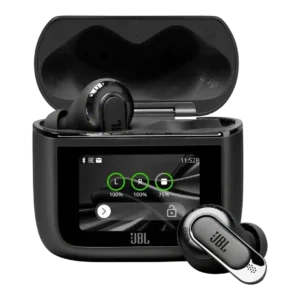
The smart charging case is a defining feature, offering a touchscreen control center and useful shortcuts without pulling out a phone. The main downsides are physical size and occasional reports of UI lag or brightness quirks, but overall sentiment is strongly positive.
Charging
P1
Product 1: Nothing Ear (a) Earbuds
3.8
Charging is convenient thanks to fast USB-C top-ups, but the missing wireless charging is one of the most repeated compromises in the reviews.
P2
Product 2: JBL Tour Pro 3 Earbuds
4.4
Charging is convenient and fast, with USB-C plus Qi wireless charging and a quick-charge feature that can deliver several hours from a short top-up. The case provides multiple full recharges, though heavy screen use can draw additional power.
Codec support
P1
Product 1: Nothing Ear (a) Earbuds
4.4
Codec support is strong for the price, covering AAC and SBC broadly while also adding LDAC for higher-quality Android listening.
P2
Product 2: JBL Tour Pro 3 Earbuds
4.6
Codec support is broad for the category, covering SBC/AAC plus hi-res LDAC and, in some coverage, LE Audio/LC3 in transmitter mode. This flexibility is frequently cited as a reason these feel future-proof.
Comfort during long use
P1
Product 1: Nothing Ear (a) Earbuds
4.6
Long-session comfort is one of the most consistently praised traits, with reviewers repeatedly calling the earbuds easy to wear for hours without fatigue.
P2
Product 2: JBL Tour Pro 3 Earbuds
4.1
Comfort and fit are mixed and highly ear-dependent: many find them comfortable for long sessions, but multiple sources note the buds are physically large/deep and can be tricky for smaller ears. Tip choice (including foam) is often the difference between secure comfort and constant readjustment.
Design and Aesthetics
P1
Product 1: Nothing Ear (a) Earbuds
4.5
Design is a major selling point: the transparent Nothing look feels distinctive, stylish, and far less generic than most earbuds in this price band.
P2
Product 2: JBL Tour Pro 3 Earbuds
4.0
Design is widely seen as premium and distinctive, with a stemmed look and modern finishes, but size is a consistent theme. Both the earbuds and especially the case are larger than many rivals, which can affect small-ear comfort and pocketability.
Dongle
P1Product 1: Nothing Ear (a) Earbuds
No score yet
P2
Product 2: JBL Tour Pro 3 Earbuds
4.6
Using the case as a transmitter (USB-C or 3.5mm/aux via included cables) is repeatedly praised for flights, treadmills, TVs, and older sources. Reviewers treat it as more than a gimmick because it adds flexibility and can improve latency behavior.
Ear tip size options
P1
Product 1: Nothing Ear (a) Earbuds
3.9
The included tip selection works for most listeners, but the fit options are not especially expansive, so very small ears may need more trial and error.
P2
Product 2: JBL Tour Pro 3 Earbuds
4.6
The included tip selection is generous, usually featuring multiple silicone sizes plus foam, and reviewers frequently credit it for improving seal and ANC. Most see the variety as a practical advantage for dialing in fit.
Equalizer customization
P1
Product 1: Nothing Ear (a) Earbuds
4.0
EQ options are helpful and easy to use, but customization depth is limited versus pricier models because the Ear (a) relies on a simpler 3-band approach.
P2
Product 2: JBL Tour Pro 3 Earbuds
4.6
EQ and tuning tools are among the strongest in-class, with multiple presets plus advanced multi-band EQ and Personi-Fi hearing personalization. Reviewers frequently cite these controls as the key to tailoring bass, brightness, and overall balance.
Find My
P1
Product 1: Nothing Ear (a) Earbuds
4.1
Find My is a small but appreciated bonus that makes the feature set feel unusually complete for budget earbuds.
P2
Product 2: JBL Tour Pro 3 Earbuds
3.9
Find My-style locating features are present through the app and case controls, and reviewers generally find them useful for locating earbuds. A few note limitations around locating or pinging the case itself compared with the earbuds.
Instrument separation
P1
Product 1: Nothing Ear (a) Earbuds
4.4
Where instrument separation was discussed, the Ear (a) performed well, making layered parts and small details easier to pick out than expected for budget buds.
P2
Product 2: JBL Tour Pro 3 Earbuds
4.4
Instrument separation and imaging are repeatedly called out as clear and well-defined for true wireless earbuds. A few reviewers say it is not the most surgically accurate staging available, but it remains easy to place elements in the mix.
LDAC
P1
Product 1: Nothing Ear (a) Earbuds
4.5
LDAC support is a real differentiator in this segment and repeatedly mentioned as one reason the Ear (a) feels more premium than its price suggests.
P2
Product 2: JBL Tour Pro 3 Earbuds
4.6
LDAC is widely appreciated by Android users for higher-quality wireless audio and is treated as a premium advantage. Tradeoffs show up in a few reviews: higher drain/latency and, in some implementations, disabling certain extra processing features.
Microphone noise reduction
P1
Product 1: Nothing Ear (a) Earbuds
4.0
Voice isolation can be impressively effective in some tests, yet reviewer consensus is more mixed once wind and heavier background noise enter the picture.
P2
Product 2: JBL Tour Pro 3 Earbuds
4.3
Noise reduction for calls, including background and wind suppression, is frequently praised and often highlighted as best-in-class or close. Edge cases include echo handling or very windy, chaotic environments where voices can wobble slightly.
Microphone quality for calls
P1
Product 1: Nothing Ear (a) Earbuds
4.0
Call quality is usually clear enough for everyday use, but it is not universally excellent, with some reviews reporting compressed or only average-sounding calls outdoors.
P2
Product 2: JBL Tour Pro 3 Earbuds
4.3
Call microphone quality is a consistent strength, with many reviewers describing clear, intelligible voice capture across calls and meetings. A few note mild Bluetooth artifacts or voice coloration depending on app and conditions.
Midrange clarity
P1
Product 1: Nothing Ear (a) Earbuds
4.2
When reviewers called out the mids, they usually praised clear vocals and an open midrange, though the tuning is still more fun than strictly neutral.
P2
Product 2: JBL Tour Pro 3 Earbuds
4.3
Midrange and vocal clarity are typically strong, though some note a mild V-shape or mid dip that can make certain instruments feel less forward. Personalization tools (EQ/Personi-Fi) are frequently recommended to bring mids up if desired.
Multi-platform compatibility
P1
Product 1: Nothing Ear (a) Earbuds
4.5
Cross-platform behavior is a quiet strength, with reviewers liking that the core experience works well across Android, iPhone, and PC instead of favoring one ecosystem too heavily.
P2
Product 2: JBL Tour Pro 3 Earbuds
4.3
Multi-platform support is strong across Android, iOS, and computers, helped by standard Bluetooth features and platform pairing options. The case transmitter further improves flexibility for devices without reliable Bluetooth audio.
Multipoint connectivity reliability
P1
Product 1: Nothing Ear (a) Earbuds
4.4
Multipoint is a standout convenience feature here, with most reviews praising smooth two-device switching, though a few noticed occasional prioritization hiccups.
P2
Product 2: JBL Tour Pro 3 Earbuds
4.2
Multipoint and device switching are a major feature and usually work smoothly once set up. Some reviewers experienced occasional wrong-source switching or needed to toggle Bluetooth settings to recover, especially in multi-device workflows.
Sensors
P1
Product 1: Nothing Ear (a) Earbuds
4.0
In-ear detection and related sensor-based conveniences add polish, though fit sensitivity can occasionally trigger false pauses until the tips are dialed in.
P2
Product 2: JBL Tour Pro 3 Earbuds
4.5
Wear detection and related sensors are usually reliable for auto pause/resume and convenience features. Some smart automation features (like auto talk/voice-aware behaviors) can be overly sensitive depending on the user and environment.
Software/setup simplicity
P1
Product 1: Nothing Ear (a) Earbuds
4.6
Setup and day-to-day software use are repeatedly described as fast, intuitive, and frustration-free, which helps the earbuds feel polished beyond their price.
P2Product 2: JBL Tour Pro 3 Earbuds
No score yetSound quality
P1
Product 1: Nothing Ear (a) Earbuds
4.4
Across the reviews, sound quality is the Ear (a)'s biggest strength: lively, clear, and more refined than most sub-$100 rivals, even if it stops short of true flagship polish.
P2
Product 2: JBL Tour Pro 3 Earbuds
4.4
Sound quality is a standout: most reviews describe an energetic, polished tuning with plenty of detail and broad appeal from the hybrid drivers. The default voicing can lean bass-forward, but EQ, Studio-style presets, and Personi-Fi help balance it to taste.
Soundstage width
P1
Product 1: Nothing Ear (a) Earbuds
4.3
Several reviews describe the presentation as wider and more spacious than expected at this price, helping music and movies feel less boxed in.
P2
Product 2: JBL Tour Pro 3 Earbuds
4.1
Soundstage is commonly described as wider than expected for sealed in-ears, with good left-right spread. Spatial processing can make it feel larger still, though the perceived benefit varies by listener and content.
Spatial audio
P1Product 1: Nothing Ear (a) Earbuds
No score yet
P2
Product 2: JBL Tour Pro 3 Earbuds
4.1
Spatial audio support is robust and often praised, especially with head tracking for movies and immersive listening. Opinion is mixed for music: some love the effect, while others find it changes timbre or feels inconsistent and prefer it off.
Stability
P1
Product 1: Nothing Ear (a) Earbuds
4.4
Fit security is usually strong enough for commuting and light workouts, though a few reviewers still had occasional loosening depending on ear shape and activity.
P2
Product 2: JBL Tour Pro 3 Earbuds
4.2
Stability in motion is generally good for many users (running and gym use are commonly mentioned), especially with the right tips and seal. A smaller subset report dislodging or needing frequent fit corrections during activity.
Touch control responsiveness
P1
Product 1: Nothing Ear (a) Earbuds
4.3
The pinch-based controls are usually described as responsive and more reliable than typical tap controls, although some advanced gestures take practice.
P2
Product 2: JBL Tour Pro 3 Earbuds
3.8
Touch controls are broadly functional and responsive, but multiple reviews criticize the control scheme tradeoffs and limited customization. A few users mention occasional mis-taps or delays, and some prefer using the case screen or app instead.
Transparency mode quality
P1
Product 1: Nothing Ear (a) Earbuds
3.7
Transparency mode is usable and sometimes above average for the class, but it is also one of the most common weak spots, especially versus flagship rivals.
P2
Product 2: JBL Tour Pro 3 Earbuds
4.0
Transparency and TalkThru/Ambient modes are generally clear and usable for quick conversations, but a few note hiss or a slightly digital character. Multiple reviews say it is good rather than the very best, with AirPods Pro 2 often cited as more natural.
Treble clarity
P1
Product 1: Nothing Ear (a) Earbuds
4.2
Treble detail is generally strong for the class, but some listeners noted the top end is not as airy or extended as pricier earbuds.
P2
Product 2: JBL Tour Pro 3 Earbuds
4.4
Treble is usually described as crisp and controlled, delivering detail without harshness for most listeners. Some report a touch of brightness or occasional coherence/timing quirks versus top audiophile picks, but EQ can tame sibilance if it appears.
Volume output
P1
Product 1: Nothing Ear (a) Earbuds
4.3
Volume output is strong, with enough headroom for outdoor use, though not every reviewer found it exceptionally loud versus the broader market.
P2
Product 2: JBL Tour Pro 3 Earbuds
4.4
Volume output is described as having ample headroom and getting loud without obvious breakup for most listening. Some reviewers note it reaches satisfying levels well below max volume, and volume limiting options exist in software.
Water/sweat resistance rating
P1
Product 1: Nothing Ear (a) Earbuds
4.3
The buds are seen as gym- and commute-friendly thanks to their splash resistance, but the lower-rated case means the protection is not equally robust everywhere.
P2
Product 2: JBL Tour Pro 3 Earbuds
4.3
Earbuds carry an IP55-level water and dust resistance rating in most coverage, making them suitable for sweat and light rain. The case is typically not described as water resistant, so it benefits from more care.