Nothing Ear (a) Earbuds Review
Bottom Line
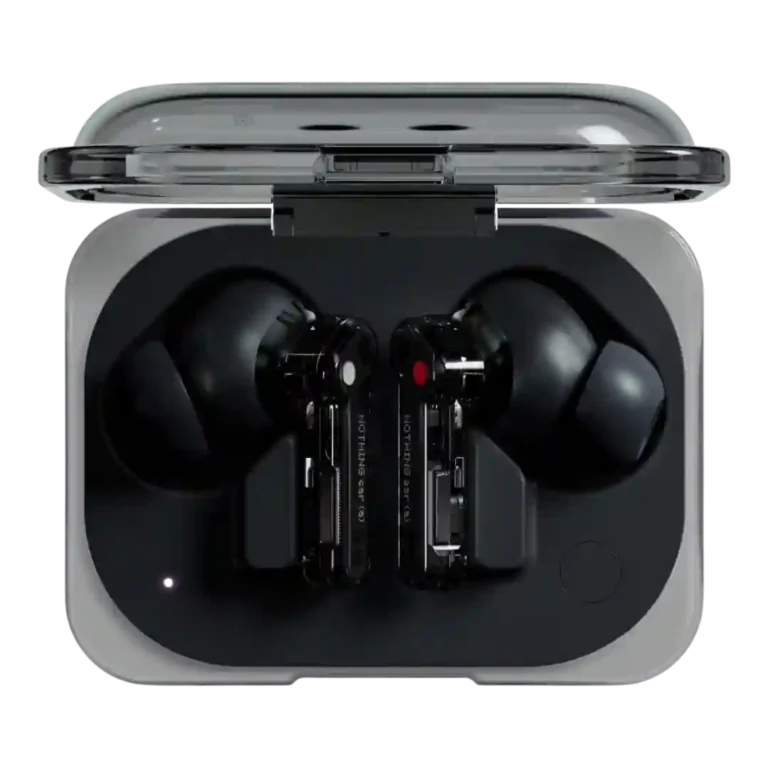
Choose Nothing Ear (a) if you want standout design, very good sound, and easy daily comfort for under $100. Skip it if you need class-leading transparency or wireless charging.
People who want stylish, comfortable everyday earbuds with strong sound, a polished app, and useful features without paying flagship prices. They especially suit commuters and Android users who can take advantage of LDAC and fast pairing.
Shoppers who prioritize the very best transparency, top-tier call isolation, or wireless charging should look higher up the market. They are also a weaker fit for athletes who need extra retention or buyers who dislike scratch-prone clear plastics.
Nothing Ear (a) nails the parts that matter most at this price: sound quality, comfort, controls, app polish, and a surprisingly complete feature set. Reviews consistently praise the earbuds for lively, spacious audio, strong day-to-day ANC, stable multipoint, and a compact case that travels well. The main compromises are clearer at the margins: transparency is merely okay, wireless charging is omitted, and a few reviewers noted either busy-area Bluetooth stutters or only average call cleanup. The tradeoff is straightforward: you give up some flagship refinement and ecosystem tricks, but you get an unusually well-rounded budget earbud that rarely feels cheap.
Scored Features
Pros
-
Long-session comfort is one of the most consistently praised traits, with reviewers repeatedly calling the earbuds easy to wear for hours without fatigue.
-
Setup and day-to-day software use are repeatedly described as fast, intuitive, and frustration-free, which helps the earbuds feel polished beyond their price.
-
LDAC support is a real differentiator in this segment and repeatedly mentioned as one reason the Ear (a) feels more premium than its price suggests.
-
Cross-platform behavior is a quiet strength, with reviewers liking that the core experience works well across Android, iPhone, and PC instead of favoring one ecosystem too heavily.
-
Design is a major selling point: the transparent Nothing look feels distinctive, stylish, and far less generic than most earbuds in this price band.
-
Android users get extra upside from features like Fast Pair and LDAC, making the Ear (a) a particularly good value outside closed ecosystems.
-
Where instrument separation was discussed, the Ear (a) performed well, making layered parts and small details easier to pick out than expected for budget buds.
-
Nothing X is widely praised for being clean, stable, and genuinely useful rather than filler software, adding meaningful value to the overall package.
-
Multipoint is a standout convenience feature here, with most reviews praising smooth two-device switching, though a few noticed occasional prioritization hiccups.
-
Fit security is usually strong enough for commuting and light workouts, though a few reviewers still had occasional loosening depending on ear shape and activity.
-
Codec support is strong for the price, covering AAC and SBC broadly while also adding LDAC for higher-quality Android listening.
-
Across the reviews, sound quality is the Ear (a)'s biggest strength: lively, clear, and more refined than most sub-$100 rivals, even if it stops short of true flagship polish.
-
Volume output is strong, with enough headroom for outdoor use, though not every reviewer found it exceptionally loud versus the broader market.
-
The pinch-based controls are usually described as responsive and more reliable than typical tap controls, although some advanced gestures take practice.
-
Several reviews describe the presentation as wider and more spacious than expected at this price, helping music and movies feel less boxed in.
-
The buds are seen as gym- and commute-friendly thanks to their splash resistance, but the lower-rated case means the protection is not equally robust everywhere.
-
Battery life is a clear plus overall, especially with ANC off, and most reviewers found the case and quick top-ups easy to live with day to day.
-
Bluetooth stability is mostly solid, but there are scattered reports of stutters in interference-heavy areas, so reliability is good rather than flawless.
-
Bass is energetic and satisfying, with enough weight for pop and hip-hop, but the default tuning can lean bass-heavy until you dial it back in the app.
-
Treble detail is generally strong for the class, but some listeners noted the top end is not as airy or extended as pricier earbuds.
-
When reviewers called out the mids, they usually praised clear vocals and an open midrange, though the tuning is still more fun than strictly neutral.
-
The case is generally liked for its smaller footprint and pocketability, though some reviewers found it fiddly to open, awkward to load, or prone to cosmetic wear.
-
ANC is consistently rated as very good for $99: strong enough for commuting, offices, and travel, but still a step below the very best premium earbuds. The ANC controls are a plus, with multiple levels and adaptive behavior giving users more flexibility than many earbuds at this price.
-
Find My is a small but appreciated bonus that makes the feature set feel unusually complete for budget earbuds.
-
Call quality is usually clear enough for everyday use, but it is not universally excellent, with some reviews reporting compressed or only average-sounding calls outdoors.
-
In-ear detection and related sensor-based conveniences add polish, though fit sensitivity can occasionally trigger false pauses until the tips are dialed in.
-
EQ options are helpful and easy to use, but customization depth is limited versus pricier models because the Ear (a) relies on a simpler 3-band approach.
-
Voice isolation can be impressively effective in some tests, yet reviewer consensus is more mixed once wind and heavier background noise enter the picture.
-
General build quality is good enough for the price, but the clear plastics and case finish draw some concern about scratches, creaks, and long-term wear.
-
The included tip selection works for most listeners, but the fit options are not especially expansive, so very small ears may need more trial and error.
-
Charging is convenient thanks to fast USB-C top-ups, but the missing wireless charging is one of the most repeated compromises in the reviews.
-
Transparency mode is usable and sometimes above average for the class, but it is also one of the most common weak spots, especially versus flagship rivals.
Compared With Category Average
Compared with other Earbud Headphones, this product is above average in LDAC, Multipoint connectivity reliability, Software/setup simplicity.
| Attribute | This product | Category average | Difference |
|---|---|---|---|
| LDAC | 4.5 | 2.5 | +2.0 |
| Multipoint connectivity reliability | 4.4 | 3.6 | +0.8 |
| Software/setup simplicity | 4.6 | 3.9 | +0.7 |
| Codec support | 4.4 | 3.6 | +0.7 |
| Design and Aesthetics | 4.5 | 4.0 | +0.5 |
| App | 4.4 | 3.9 | +0.5 |
| Touch control responsiveness | 4.3 | 3.9 | +0.4 |
| Multi-platform compatibility | 4.5 | 3.8 | +0.7 |
FAQ
Does Nothing Ear (a) support wireless charging?
No. The reviews consistently describe USB-C charging with fast top-ups, but no Qi wireless charging on the Ear (a).
Is the ANC actually good for $99?
Yes. It is widely described as stronger than expected for the price and good enough for commuting, offices, and flights, though not quite at top premium-earbud level.
How good are the microphones for calls?
Good enough for routine calls and often clear indoors, but outdoor noise handling is mixed and some reviewers heard compression or artificial processing.
Is the Nothing X app worth using?
Yes. Reviewers repeatedly praised it for fast setup, reliable controls, EQ access, device management, fit tests, and extras like Find My.
Is it better for Android or iPhone users?
It works well across both, but Android users get more upside from Fast Pair and LDAC. iPhone users still get a strong everyday experience, just with fewer audio-format advantages.
Expert Reviews We Analyzed
Video Reviews
Article Reviews
Consider This Instead
If you want better Transparency mode quality
Choose Apple AirPods Pro 2 Wireless Earbuds. It scores 4.7 vs 3.7 for Transparency mode quality, with a 4.0 overall score.
If you want better Active noise cancellation
Choose Bose QuietComfort Ultra Earbuds (2nd Gen). It scores 4.9 vs 4.1 for Active noise cancellation, with a 4.1 overall score.
If you want better Battery
Choose Audio-Technica ATH-CKS50TW Earbuds. It scores 5.0 vs 4.2 for Battery, with a 3.9 overall score.
If you want better Charging
Choose Soundcore by Anker Space A40 Earbuds. It scores 4.5 vs 3.8 for Charging, with a 3.9 overall score.
Overall Top Earbud Headphones Alternatives
Choose Sony WF-1000XM6 for top-tier noise canceling and a spacious, punchy sound; Skip if you struggle with foam-tip comfort/fit or want the most natural transparency and effortless Apple-first...
Pros: USB-C, LDAC, Codec support, Smudge resistance, Soundstage width, Active noise cancellation effectiveness, Sound quality
Cons: None
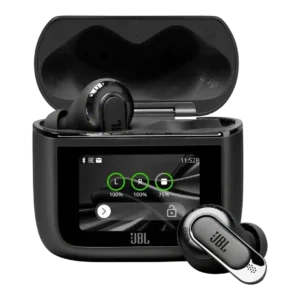
Choose JBL Tour Pro 3 for feature-hungry listeners who want a smart-case transmitter and lively sound. Skip if you need the smallest, most secure fit or demand best-in-class...
Pros: Dongle, Codec support, Ear tip size options, Equalizer customization, LDAC, Android compatibility, Carry case quality
Cons: None
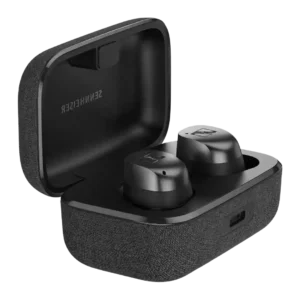
Choose for top-tier sound and a feature-rich, future-proof codec stack; Skip if you prioritize the very best ANC or consistently clean calls in wind/noise (especially on iPhone).
Pros: Codec support, aptX, Sensors, Build quality, Sound quality, Soundstage width, Bass performance
Cons: Spatial audio, Find My
Choose Nothing Ear (a) if you want standout design, very good sound, and easy daily comfort for under $100. Skip it if you need class-leading transparency or wireless...
Pros: Comfort during long use, Software/setup simplicity, LDAC, Multi-platform compatibility, Design and Aesthetics, Noise cancellation adjustability, Instrument separation
Cons: none