Amplifier power requirements
P1Product 1: KEF LSX II Wireless HiFi...
No score yet
P2
Product 2: Focal Theva N.1 Speakers
4.3
Reviews consistently describe the Theva No.1 as easy to drive, with above-average sensitivity and a benign impedance load. Better amplification improves articulation and texture, but most decent amps should power it comfortably.
App reliability
P1
Product 1: KEF LSX II Wireless HiFi...
4.5
KEF Connect is generally praised for clean setup, responsive control, and useful tuning options. The app is a major usability strength, even if a few reviewers still leaned on it more than they wanted.
P2Product 2: Focal Theva N.1 Speakers
No score yetAudio format support
P1
Product 1: KEF LSX II Wireless HiFi...
4.7
Format support is a clear strong point, with repeated praise for broad hi-res handling, streaming service coverage, and flexible digital playback paths.
P2Product 2: Focal Theva N.1 Speakers
No score yetCohesive presentation
P1
Product 1: KEF LSX II Wireless HiFi...
4.7
Reviews repeatedly describe the LSX II as coherent, organized, and musically integrated, especially when handling dense mixes or nearfield listening.
P2
Product 2: Focal Theva N.1 Speakers
4.4
The Theva No.1 is repeatedly described as fluid, organized, and easy to listen to over long sessions. It keeps complex mixes coherent, though some reviewers wanted more rhythmic snap and outright excitement versus top class leaders.
Design and aesthetics
P1
Product 1: KEF LSX II Wireless HiFi...
4.8
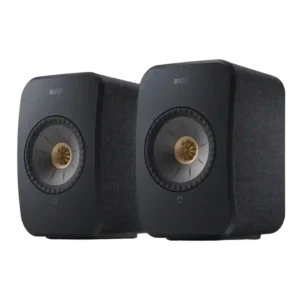
Design is one of the system's clearest selling points. Reviewers consistently call the LSX II stylish, premium-looking, and easy to place in modern living spaces.
P2
Product 2: Focal Theva N.1 Speakers
4.1
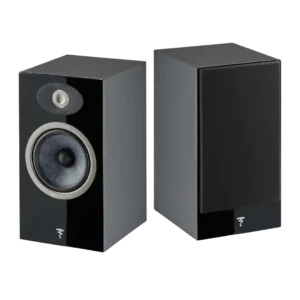
Reviewers generally like the compact French-made styling, tasteful finishes, and clean front baffle. A few note that the vinyl wrap and some exterior details feel a bit less premium than the best rivals around this price.
Detail retrieval
P1
Product 1: KEF LSX II Wireless HiFi...
4.6
Detail retrieval is strong for the class, with reviewers regularly noting clean separation, intelligibility, and the ability to expose textures without sounding vague or blurred.
P2
Product 2: Focal Theva N.1 Speakers
4.2
Detail retrieval is strong for the class, especially through vocals, strings, and low-level film effects. Some reviewers still wanted a little more top-end definition and microdetail compared with pricier or best-in-class alternatives.
Dialogue clarity (for TV/soundbar use)
P1
Product 1: KEF LSX II Wireless HiFi...
4.5
For TV use, dialogue is widely reported as clear and forward, making the LSX II a credible stereo upgrade over basic television audio.
P2Product 2: Focal Theva N.1 Speakers
No score yetDistortion at high volume
P1
Product 1: KEF LSX II Wireless HiFi...
3.8
The LSX II stays composed at sensible levels, but several reviews note that treble can harden and control can loosen when pushed very hard.
P2
Product 2: Focal Theva N.1 Speakers
4.1
Most reviews say the speakers stay composed at high volume and avoid obvious muddiness or breakup. The main caveats are occasional treble edge on difficult recordings and some bass compression when pushed very hard without a subwoofer.
Dynamic headroom
P1
Product 1: KEF LSX II Wireless HiFi...
4.5
Dynamic expression is a recurring highlight. The speakers sound punchy and lively for their size, though headroom still tapers off before true big-room output.
P2
Product 2: Focal Theva N.1 Speakers
4.6
Dynamic expression is one of the clearest strengths in the review set, with repeated praise for punch, crescendos, and scale. Several reviewers were impressed by how loudly and confidently the Theva No.1 can play for its size.
EQ customization
P1
Product 1: KEF LSX II Wireless HiFi...
4.6
EQ and placement tuning are among the best parts of the package. Reviewers frequently mention that the app-based adjustments are useful, audible, and easy to tailor to desks, stands, walls, and subwoofers.
P2Product 2: Focal Theva N.1 Speakers
No score yetFrequency response balance
P1
Product 1: KEF LSX II Wireless HiFi...
4.4
Tonal balance is usually described as refined, accurate, and well judged, with the main caveat being a slightly forward or bright upper range on some material or at higher volumes.
P2
Product 2: Focal Theva N.1 Speakers
4.3
Consensus points to a balanced, full-bodied, slightly smooth presentation with accurate timbre and no major frequency-band exaggeration. The main tonal caveat is that treble can sound a bit exposed, cool, or less refined depending on setup and comparison.
Home theater integration
P1
Product 1: KEF LSX II Wireless HiFi...
4.3
As a compact 2.0 TV and music system, the LSX II integrates very well into home setups. Its limitation is scale, not convenience, so larger rooms and blockbuster bass still benefit from adding a subwoofer.
P2
Product 2: Focal Theva N.1 Speakers
4.4
Several reviews say the Theva No.1 integrates very well into stereo-plus-sub and surround systems thanks to its dynamics, clarity, and easy amplifier load. For home theater, reviewers strongly favor adding a subwoofer for the lowest effects and fullest impact.
Inter-speaker connectivity
P1
Product 1: KEF LSX II Wireless HiFi...
4.4
The inter-speaker link works well, and several reviewers preferred the slightly weightier, more stable sound when the speakers were connected by cable rather than run wirelessly.
P2Product 2: Focal Theva N.1 Speakers
No score yetLatency with TV (lip sync)
P1
Product 1: KEF LSX II Wireless HiFi...
4.9
TV sync performance is a strength. Reviews that tested video sources through HDMI ARC reported little to no lip-sync trouble.
P2Product 2: Focal Theva N.1 Speakers
No score yetLoudness / maximum volume
P1
Product 1: KEF LSX II Wireless HiFi...
4.3
The LSX II plays surprisingly loud for its size and can comfortably fill small to mid-size rooms. It still is not the right tool for very large spaces or constant high-SPL listening.
P2
Product 2: Focal Theva N.1 Speakers
4.5
The speakers play louder than expected for a compact standmount and can fill a room without much effort. Bass output is impressive for the size, but true sub-bass weight and physical slam still require a subwoofer.
Remote control usability
P1
Product 1: KEF LSX II Wireless HiFi...
3.3
The included remote is usable but not a highlight. Some reviewers found it small, plasticky, or less satisfying than simply controlling the speakers through the app.
P2Product 2: Focal Theva N.1 Speakers
No score yetSetup simplicity
P1
Product 1: KEF LSX II Wireless HiFi...
4.8
Setup is widely described as simple and low-friction, with multiple reviewers calling the LSX II easy to get playing from TV, phone, laptop, or network sources.
P2
Product 2: Focal Theva N.1 Speakers
4.1
Set-up is mostly straightforward thanks to easy amplifier matching and manageable placement, but the rear port still wants breathing room. Vertical listening height and toe-in can audibly affect tonal balance, so careful positioning pays off.
Spotify Connect reliability
P1
Product 1: KEF LSX II Wireless HiFi...
4.5
Spotify Connect is treated as a dependable part of the platform, helping make the LSX II approachable for non-audiophile household use.
P2Product 2: Focal Theva N.1 Speakers
No score yetStereo imaging accuracy
P1
Product 1: KEF LSX II Wireless HiFi...
4.7
Stereo imaging is the standout sonic trait. Across the reviews, the LSX II is repeatedly praised for pinpoint placement, broad staging, and a soundfield that feels larger than the cabinets suggest.
P2
Product 2: Focal Theva N.1 Speakers
4.6
Imaging is one of the most consistently praised traits, with reviewers highlighting precise center focus, strong layering, and a wide, dimensional soundstage. Off-axis behavior is also widely seen as a strength when the speakers are positioned thoughtfully.
Value for money
P1
Product 1: KEF LSX II Wireless HiFi...
4.4
Value for money lands on the positive side as long as you want an all-in-one premium compact system. Reviewers mostly argue that the combination of sound, design, and connectivity justifies the price.
P2
Product 2: Focal Theva N.1 Speakers
4.5
Most reviewers believe the Theva No.1 earns its asking price through mature sound, strong imaging, and easy system matching. The value case is slightly softened by fierce competition and the need for a subwoofer if deep bass is a priority.
Wi-Fi streaming reliability
P1
Product 1: KEF LSX II Wireless HiFi...
4.5
Wi-Fi streaming reliability is broadly strong, with repeated mentions of stable everyday use across services and home-network playback.
P2Product 2: Focal Theva N.1 Speakers
No score yetWired input
P1
Product 1: KEF LSX II Wireless HiFi...
4.9
Wired connectivity is a major strength. HDMI ARC, USB-C, optical, Ethernet, and aux on the standard LSX II give it more flexibility than many compact wireless rivals.
P2Product 2: Focal Theva N.1 Speakers
No score yet