If you want better Chromecast compatibility
Choose KEF LS50 Wireless II Powered Bookshelf Speakers. It scores 5.0 vs 2.5 for Chromecast compatibility, with a 4.1 overall score.
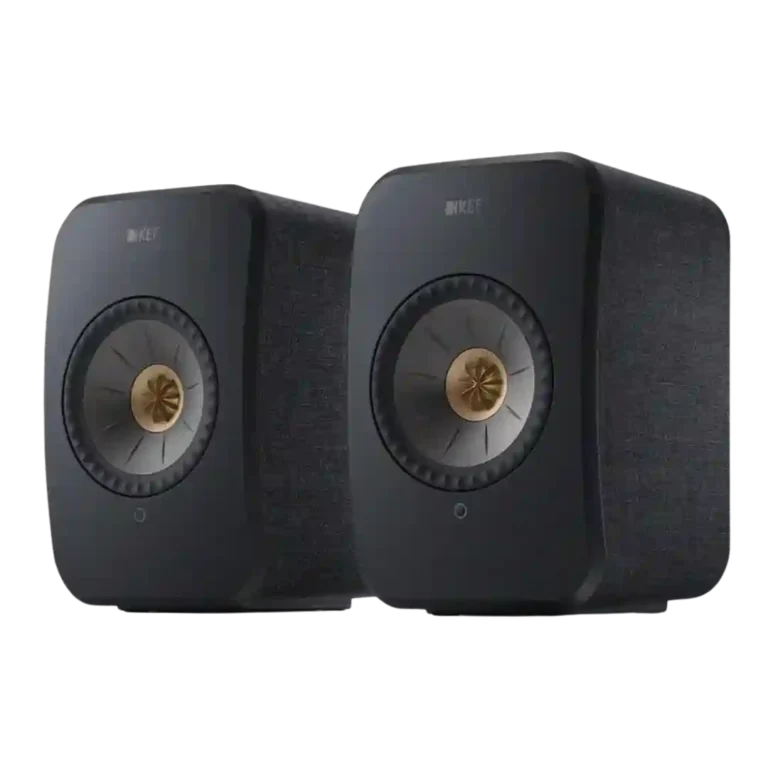
Choose the KEF LSX II if you want compact wireless speakers with sharp imaging, easy setup, strong streaming, and stylish design. Skip it if you need theater-style surround, deepest bass without a sub, premium controls, or effortless high-volume smoothness.
Best for listeners who want compact, stylish, app-friendly hi-fi speakers for a desktop, small room, bedroom, kitchen, or stereo TV setup. The evidence especially favors people who value imaging, clarity, and simple streaming over component stacking.
Not for buyers who want true surround effects, Atmos-style immersion, very deep bass without a subwoofer, or premium physical controls. Large rooms and high-volume movie use also expose the limits of the small cabinet.
Across the reviews, the KEF LSX II stands out as a compact wireless hi-fi system that sounds bigger and more precise than its size suggests. Reviewers repeatedly praised its stereo imaging, detail retrieval, easy setup, app-based tuning, and broad wired/streaming flexibility. The strongest tradeoff is that the small cabinet cannot fully escape physics: bass depth, cinematic impact, and high-volume smoothness improve with careful placement or a subwoofer, while the remote and lack of on-speaker controls feel less premium than the sound. Within smaller rooms, desktops, and TV/music setups that value clarity and simplicity over full theater immersion, the evidence points to an unusually polished all-in-one speaker system.
Compared with other Bookshelf Speakers, this product is above average in Soundstage height, Wired input, Weight convenience, near average in Design and aesthetics, Subwoofer, below average in On-device controls, Distortion at high volume, Remote control usability.
| Attribute | This product | Category average | Difference |
|---|---|---|---|
| On-device controls | 1.8 | 3.3 | -1.5 |
| Soundstage height | 5.0 | 4.0 | +1.0 |
| Distortion at high volume | 3.4 | 4.2 | -0.8 |
| Remote control usability | 3.0 | 3.8 | -0.8 |
| Low-volume performance | 3.5 | 4.3 | -0.8 |
| Wired input | 4.4 | 3.9 | +0.6 |
| Weight convenience | 4.5 | 3.9 | +0.6 |
| Smart features | 4.4 | 3.9 | +0.5 |
Choose KEF LS50 Wireless II Powered Bookshelf Speakers. It scores 5.0 vs 2.5 for Chromecast compatibility, with a 4.1 overall score.
Choose Fluance Ri71 Reference Powered Bookshelf Speakers. It scores 4.3 vs 3.6 for Subwoofer, with a 4.1 overall score.
Choose Kanto REN Speakers. It scores 4.0 vs 3.0 for Remote control usability, with a 4.2 overall score.
Choose Edifier M90. It scores 4.0 vs 2.0 for Surround sound simulation, with a 4.3 overall score.
Products reviewers directly compared with this model, grouped into quick takeaways.
Yes. Multiple reviewers found the nearfield imaging, detail, and compact size especially strong on a desk, with app EQ helping tune placement.
Not for all music. Reviewers often liked the bass for the speaker size, but deep bass, EDM, hip-hop, large rooms, and movie impact were the clearest cases for adding a subwoofer.
Yes for a stereo TV upgrade, especially dialogue clarity and left-right separation through HDMI ARC. They are not a full surround or Atmos replacement.
Setup was consistently described as simple, smooth, or plug-and-play. The KEF Connect app was also praised for usability, though one review noted that expert settings may require the online manual.
The strongest themes are stereo imaging, instrument separation, detail retrieval, tonal balance, and a cohesive presentation that sounds larger than the cabinets suggest.
The most repeated drawbacks are limited deepest bass, possible brightness or strain at high volumes, a basic remote, limited on-speaker controls, and some wired-connection requirements for maximum resolution.
These are a few of the reviews included in our analysis.



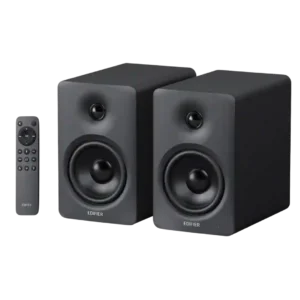
Choose the M90 for powerful, spacious sound, exceptional connectivity, and easy TV integration in a compact desktop-friendly pair. Skip it if you need Wi-Fi or AirPlay, front-mounted controls, or deep...
Pros: HDMI ARC, Low-volume performance
Cons: AirPlay compatibility, Wi-Fi streaming reliability
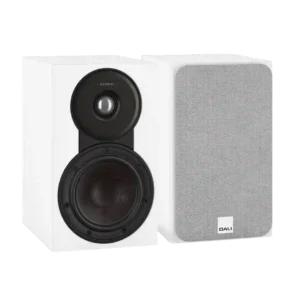
Choose the Sonik 1 for compact-room hi-fi with vivid vocals, punchy bass and precise imaging. Skip it if you need deep sub-bass, dislike forward treble, or cannot justify the steep...
Pros: Distortion at high volume, Dynamic headroom
Cons: Warranty support, Included accessories
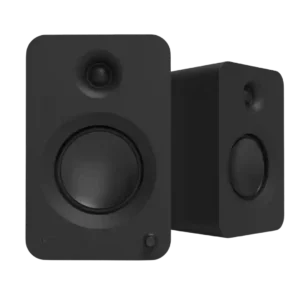
Choose the Kanto REN if you want stylish powered stereo speakers with HDMI ARC, strong imaging, easy setup, and flexible inputs. Skip them if you need Wi-Fi, surround/Atmos, maximum SPL,...
Pros: HDMI ARC, Stereo imaging accuracy
Cons: Surround sound simulation, Bluetooth codec support
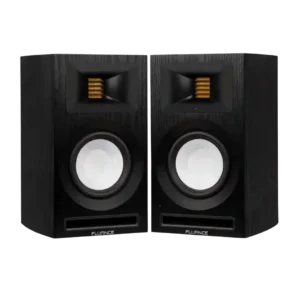
Choose the Fluance Ri71 if you want balanced, detailed powered stereo speakers for music and TV with HDMI ARC and subwoofer expansion. Skip them if you need Wi-Fi, USB/optical inputs,...
Pros: Setup simplicity, Bluetooth connection stability
Cons: optical, Smart features