Average score
P1
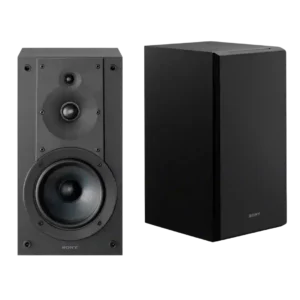
Product 1: Sony SS-CS5M2 Bookshelf Speakers
3.8
P2
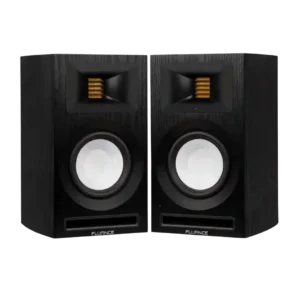
Product 2: Fluance Ri71 Reference Powered Bookshelf...
4.1
Aesthetic design / Finish options
P1
Product 1: Sony SS-CS5M2 Bookshelf Speakers
4.0
The M2's cleaner front finish was seen as more refined than the earlier shiny-ring look.
P2
Product 2: Fluance Ri71 Reference Powered Bookshelf...
4.1
Reviewers generally liked the finish choices and living-room fit, especially walnut, though a few found the styling dated or visually specific.
Amplifier power requirements
P1
Product 1: Sony SS-CS5M2 Bookshelf Speakers
4.5
One reviewer judged the speaker easy enough to drive from a normal AVR rather than needing costly separate amplification.
P2
Product 2: Fluance Ri71 Reference Powered Bookshelf...
4.5
Reviewers who discussed power felt the built-in amplification saved space and provided enough drive for the Ri71’s intended small-to-medium-room use.
Audio format support
P1
Product 1: Sony SS-CS5M2 Bookshelf Speakers
2.3
Reviewers treated the Hi-Res positioning as mostly marketing, not a meaningful audio-format advantage for a passive speaker.
P2
Product 2: Fluance Ri71 Reference Powered Bookshelf...
4.0
The only opinionated format evidence says the simple stereo format should sound natural with most content rather than chase surround formats.
Bluetooth codec support
P1Product 1: Sony SS-CS5M2 Bookshelf Speakers
No score yet
P2
Product 2: Fluance Ri71 Reference Powered Bookshelf...
4.3
Bluetooth codec support was praised for aptX HD/AAC quality, although some reviewers noted rivals or other codecs can offer different advantages.
Bluetooth connection stability
P1Product 1: Sony SS-CS5M2 Bookshelf Speakers
No score yet
P2
Product 2: Fluance Ri71 Reference Powered Bookshelf...
4.8
Bluetooth pairing and everyday wireless use were described as easy, reliable, or effortless across the supporting reviews.
Cabinet construction / bracing
P1
Product 1: Sony SS-CS5M2 Bookshelf Speakers
4.0
Build and bracing impressions were generally positive, though one review still wanted slightly more cabinet bracing.
P2
Product 2: Fluance Ri71 Reference Powered Bookshelf...
4.2
Cabinet build was mostly praised as solid, dense, sturdy, or better than expected, with one reviewer calling the class-average construction less substantive.
Cohesive presentation
P1
Product 1: Sony SS-CS5M2 Bookshelf Speakers
4.5
The overall presentation was praised as a best-of-both-worlds balance between fun character and more mature tuning.
P2
Product 2: Fluance Ri71 Reference Powered Bookshelf...
4.3
Reviewers described the Ri71 as musically confident, cohesive, polished, and engaging, while one Bluetooth rock comparison produced a more mixed result.
Control button responsiveness
P1Product 1: Sony SS-CS5M2 Bookshelf Speakers
No score yet
P2
Product 2: Fluance Ri71 Reference Powered Bookshelf...
3.3
Button and knob response was split: one reviewer praised clicky positive remote buttons, while another disliked the feel and speed of the volume control.
Design and aesthetics
P1
Product 1: Sony SS-CS5M2 Bookshelf Speakers
4.0
The updated look was considered more modern and more likely to blend into a living space.
P2
Product 2: Fluance Ri71 Reference Powered Bookshelf...
3.8
Design reactions were mixed-positive: several liked the attractive, functional look, while others called the finish old-fashioned or not visually subtle.
Detail retrieval
P1
Product 1: Sony SS-CS5M2 Bookshelf Speakers
4.3
Detail and transient clarity were praised, especially when bass demands were managed with subwoofer integration.
P2
Product 2: Fluance Ri71 Reference Powered Bookshelf...
4.6
Detail retrieval was one of the strongest themes, with reviewers repeatedly praising AMT treble clarity, nuance, texture, and high-frequency insight.
Dialogue clarity (for TV/soundbar use)
P1Product 1: Sony SS-CS5M2 Bookshelf Speakers
No score yet
P2
Product 2: Fluance Ri71 Reference Powered Bookshelf...
4.4
TV dialogue evidence was consistently positive, with speech described as centered, clear, intelligible, and easy to follow.
Distortion at high volume
P1
Product 1: Sony SS-CS5M2 Bookshelf Speakers
3.5
High-volume distortion impressions were split: one reviewer warned of grain under stress, while another found no strain in loud sweeps.
P2
Product 2: Fluance Ri71 Reference Powered Bookshelf...
3.8
Most reviewers found the Ri71 clean at normal-to-loud levels, but several noted honkiness, edge, harshness, or limits when pushed very hard.
Dynamic headroom
P1
Product 1: Sony SS-CS5M2 Bookshelf Speakers
3.2
Dynamic headroom was the most mixed area, with size-related limits noted alongside one strong report of clean loud playback.
P2
Product 2: Fluance Ri71 Reference Powered Bookshelf...
4.3
Dynamic range was generally praised as solid or very good for the class, especially within reasonable room size and volume expectations.
EQ customization
P1Product 1: Sony SS-CS5M2 Bookshelf Speakers
No score yet
P2
Product 2: Fluance Ri71 Reference Powered Bookshelf...
3.8
Bass/treble tone controls were viewed as useful for tailoring sound, though some reviewers found the adjustment system basic or rudimentary.
Frequency response balance
P1
Product 1: Sony SS-CS5M2 Bookshelf Speakers
4.1
Most reviewers heard a smoother, more balanced response than before, with remaining caveats around mild sibilance and limited bass.
P2
Product 2: Fluance Ri71 Reference Powered Bookshelf...
4.3
Frequency balance was widely described as neutral, well-balanced, controlled, and suited to many genres, with only minor caveats around bass or midrange voicing.
HDMI ARC
P1Product 1: Sony SS-CS5M2 Bookshelf Speakers
No score yet
P2
Product 2: Fluance Ri71 Reference Powered Bookshelf...
3.8
HDMI ARC was praised as a major TV-use convenience, but evidence was mixed because some reviewers encountered picky behavior or low output.
Home theater integration
P1
Product 1: Sony SS-CS5M2 Bookshelf Speakers
4.5
Reviewers saw strong budget home-theater usefulness, especially as height/surround speakers or with subwoofer support.
P2
Product 2: Fluance Ri71 Reference Powered Bookshelf...
4.3
Reviewers broadly supported the Ri71 as a TV/soundbar alternative, while still treating it as stereo enhancement rather than full surround home theater.
Inter-speaker connectivity
P1Product 1: Sony SS-CS5M2 Bookshelf Speakers
No score yet
P2
Product 2: Fluance Ri71 Reference Powered Bookshelf...
3.7
Inter-speaker setup evidence was mixed: standard wire and channel swapping were useful, but raw-wire handling drew criticism.
Loudness / maximum volume
P1
Product 1: Sony SS-CS5M2 Bookshelf Speakers
3.0
Maximum volume was considered acceptable for modest use but not a strength for listeners expecting big output.
P2
Product 2: Fluance Ri71 Reference Powered Bookshelf...
4.2
Loudness was considered sufficient for small-to-medium rooms and TV use, though reviewers cautioned against expecting party-speaker output.
Low-volume performance
P1
Product 1: Sony SS-CS5M2 Bookshelf Speakers
4.0
One reviewer framed the speaker as especially appealing for listeners staying below loud-volume levels and wanting low coloration.
P2
Product 2: Fluance Ri71 Reference Powered Bookshelf...
4.5
Low-volume evidence was positive, noting retained body, presence, and detail in quieter listening or scenes.
Omnidirectional sound
P1Product 1: Sony SS-CS5M2 Bookshelf Speakers
No score yet
P2
Product 2: Fluance Ri71 Reference Powered Bookshelf...
4.5
One measured/listening review praised wide, even coverage, supporting a broad listening area rather than a tiny sweet spot.
On-device controls
P1Product 1: Sony SS-CS5M2 Bookshelf Speakers
No score yet
P2
Product 2: Fluance Ri71 Reference Powered Bookshelf...
3.8
On-device controls were divisive: some found the top/rear volume control substantial and accessible, while others disliked its placement, speed, or learning curve.
optical
P1Product 1: Sony SS-CS5M2 Bookshelf Speakers
No score yet
P2
Product 2: Fluance Ri71 Reference Powered Bookshelf...
2.2
The missing optical input was one of the most repeated connectivity complaints, especially for older TVs, PCs, and comparison with related models.
Price
P1
Product 1: Sony SS-CS5M2 Bookshelf Speakers
3.5
Price sentiment depended heavily on deal context: retail pricing drew criticism, while $250 or sale pricing drew praise.
P2
Product 2: Fluance Ri71 Reference Powered Bookshelf...
4.4
Price evidence was strongly favorable overall, with reviewers calling the Ri71 affordable, competitive, or a bargain, though one said it was not a steal.
Remote control usability
P1Product 1: Sony SS-CS5M2 Bookshelf Speakers
No score yet
P2
Product 2: Fluance Ri71 Reference Powered Bookshelf...
4.0
Remote usability was mostly praised as handy and useful for daily control, but one reviewer found the mirrored bass/treble layout unintuitive.
Setup simplicity
P1Product 1: Sony SS-CS5M2 Bookshelf Speakers
No score yet
P2
Product 2: Fluance Ri71 Reference Powered Bookshelf...
4.8
Setup was consistently described as easy, straightforward, plug-and-play, dead simple, or hassle-free.
Smart features
P1Product 1: Sony SS-CS5M2 Bookshelf Speakers
No score yet
P2
Product 2: Fluance Ri71 Reference Powered Bookshelf...
3.2
Smart-feature evidence was limited and mixed: reviewers disliked the lack of phone/app control, while one appreciated that no app was required.
Soundstage height
P1
Product 1: Sony SS-CS5M2 Bookshelf Speakers
3.5
Soundstage height impressions were divided, ranging from apparent height and depth to a flat presentation in another comparison.
P2
Product 2: Fluance Ri71 Reference Powered Bookshelf...
4.5
One reviewer specifically praised perceived soundstage height along with stereo separation.
Status indicators
P1Product 1: Sony SS-CS5M2 Bookshelf Speakers
No score yet
P2
Product 2: Fluance Ri71 Reference Powered Bookshelf...
3.6
Status indicator evidence was mixed-positive: dimming and shutoff were appreciated, but one reviewer found the LED much too bright.
Stereo imaging accuracy
P1
Product 1: Sony SS-CS5M2 Bookshelf Speakers
4.3
Imaging was a recurring strength, with reviewers describing precise placement, solid center image, and room-disappearing behavior.
P2
Product 2: Fluance Ri71 Reference Powered Bookshelf...
4.5
Stereo imaging was repeatedly praised, with reviewers noting centered vocals, wide soundstage, precise placement, and convincing left-right motion.
Subwoofer
P1
Product 1: Sony SS-CS5M2 Bookshelf Speakers
3.8
Subwoofer support was treated as beneficial or necessary because the small speaker does not deliver deep bass on its own.
P2
Product 2: Fluance Ri71 Reference Powered Bookshelf...
4.3
Subwoofer support was considered valuable, both for deeper bass and for relieving the speakers of low-frequency strain.
Value for money
P1
Product 1: Sony SS-CS5M2 Bookshelf Speakers
4.7
Value for money was one of the strongest points, especially when the speaker is found on sale or judged against its price class.
P2
Product 2: Fluance Ri71 Reference Powered Bookshelf...
4.5
Value evidence was very strong overall, with reviewers repeatedly saying performance, features, and sound quality punch above the price, despite connectivity tradeoffs.
Voice clarity
P1
Product 1: Sony SS-CS5M2 Bookshelf Speakers
3.0
Voice clarity had a caveat from one reviewer who noticed sibilance making S and T sounds stand out too much.
P2
Product 2: Fluance Ri71 Reference Powered Bookshelf...
4.5
Voice clarity was praised in music and vocal-centric content, with vocals described as natural, clear, centered, and detailed.
Weight convenience
P1Product 1: Sony SS-CS5M2 Bookshelf Speakers
No score yet
P2
Product 2: Fluance Ri71 Reference Powered Bookshelf...
4.1
Reviewers who discussed size and weight found the speakers manageable for desks, stands, shelves, TV consoles, or ordinary living spaces.
Wired input
P1
Product 1: Sony SS-CS5M2 Bookshelf Speakers
3.5
The binding posts were acceptable but not premium, with one reviewer wishing for deeper banana-plug insertion.
P2
Product 2: Fluance Ri71 Reference Powered Bookshelf...
3.7
Wired-input evidence was mixed: RCA/HDMI flexibility helped, but limited USB, optical, and broader digital input options were recurring drawbacks.