Amplifier power requirements
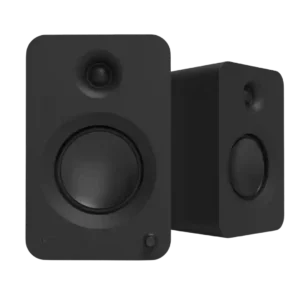
P1Product 1: Kanto REN Speakers
No score yet
P2
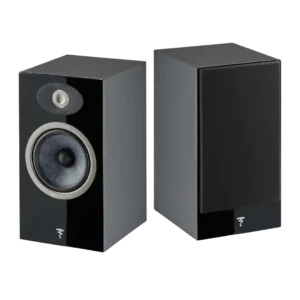
Product 2: Focal Theva N.1 Speakers
4.3
Reviews consistently describe the Theva No.1 as easy to drive, with above-average sensitivity and a benign impedance load. Better amplification improves articulation and texture, but most decent amps should power it comfortably.
Bluetooth connection stability
P1
Product 1: Kanto REN Speakers
4.8
Bluetooth playback is reported as stable, with reviewers mentioning smooth pairing and no meaningful dropouts in normal use. The limitation is more about codecs than connection reliability.
P2Product 2: Focal Theva N.1 Speakers
No score yetCohesive presentation
P1
Product 1: Kanto REN Speakers
4.8
Several reviewers highlight how cohesive and orderly the REN sounds, even on dense mixes or movie soundtracks. It presents a unified stereo image rather than a disjointed hi-fi effect.
P2
Product 2: Focal Theva N.1 Speakers
4.4
The Theva No.1 is repeatedly described as fluid, organized, and easy to listen to over long sessions. It keeps complex mixes coherent, though some reviewers wanted more rhythmic snap and outright excitement versus top class leaders.
Design and aesthetics
P1
Product 1: Kanto REN Speakers
4.7
Reviewers consistently praise the REN's matte finishes, curved cabinets, color options, and living-room-friendly look. Minor knocks are fingerprint and scuff sensitivity on the matte finish and a few comments that the styling is softer or rounder than some rivals.
P2
Product 2: Focal Theva N.1 Speakers
4.1
Reviewers generally like the compact French-made styling, tasteful finishes, and clean front baffle. A few note that the vinyl wrap and some exterior details feel a bit less premium than the best rivals around this price.
Detail retrieval
P1
Product 1: Kanto REN Speakers
4.6
Detail retrieval is strong for the class, with reviewers noting good low-level insight and clear rendering of vocals and instrumentation. A few higher-end comparisons say it stops short of pricier speakers, but it rarely sounds vague or smeared.
P2
Product 2: Focal Theva N.1 Speakers
4.2
Detail retrieval is strong for the class, especially through vocals, strings, and low-level film effects. Some reviewers still wanted a little more top-end definition and microdetail compared with pricier or best-in-class alternatives.
Dialogue clarity (for TV/soundbar use)
P1
Product 1: Kanto REN Speakers
4.7
Dialogue clarity is consistently strong, both in normal playback and with the optional Vocal Boost mode. Reviewers found speech easy to follow in films, TV, sports, and documentaries.
P2Product 2: Focal Theva N.1 Speakers
No score yetDistortion at high volume
P1
Product 1: Kanto REN Speakers
4.0
The REN generally stays clean, but several reviewers noticed bass strain, port noise, or low-end looseness when it is pushed hard without a subwoofer. Using the sub output and 80Hz crossover reduces that behavior substantially.
P2
Product 2: Focal Theva N.1 Speakers
4.1
Most reviews say the speakers stay composed at high volume and avoid obvious muddiness or breakup. The main caveats are occasional treble edge on difficult recordings and some bass compression when pushed very hard without a subwoofer.
Dynamic headroom
P1
Product 1: Kanto REN Speakers
4.4
Dynamics are good for a compact powered speaker and improve meaningfully with a subwoofer connected. At higher output the REN can sound a bit held back compared with larger systems, but it remains lively for TV, gaming, and moderate-room music listening.
P2
Product 2: Focal Theva N.1 Speakers
4.6
Dynamic expression is one of the clearest strengths in the review set, with repeated praise for punch, crescendos, and scale. Several reviewers were impressed by how loudly and confidently the Theva No.1 can play for its size.
EQ customization
P1
Product 1: Kanto REN Speakers
4.5
Bass and treble controls, Vocal Boost, and Night Mode add welcome flexibility. These features are useful rather than gimmicky, especially in TV use or when tailoring bass around a subwoofer or room placement.
P2Product 2: Focal Theva N.1 Speakers
No score yetFrequency response balance
P1
Product 1: Kanto REN Speakers
4.5
Most reviews describe the REN as balanced, neutral-leaning, and easy to listen to, with smooth treble and clear mids. The recurring caveat is the bass, which some heard as a little lumpy, boomy, or uneven depending on placement and volume.
P2
Product 2: Focal Theva N.1 Speakers
4.3
Consensus points to a balanced, full-bodied, slightly smooth presentation with accurate timbre and no major frequency-band exaggeration. The main tonal caveat is that treble can sound a bit exposed, cool, or less refined depending on setup and comparison.
HDMI ARC)
P1
Product 1: Kanto REN Speakers
4.9
HDMI ARC is repeatedly cited as the REN's signature feature, making TV hookup simple and helping it behave more like a polished soundbar alternative. ARC and CEC control were widely appreciated, though some setups required switching the TV to PCM.
P2Product 2: Focal Theva N.1 Speakers
No score yetHome theater integration
P1
Product 1: Kanto REN Speakers
4.8
As a TV and movie speaker system, the REN earns strong marks for combining true stereo separation, easy ARC hookup, and optional sub integration. Reviewers broadly agree it outperforms similarly priced soundbars for fidelity, though it remains a 2.0 or 2.1 solution rather than surround.
P2
Product 2: Focal Theva N.1 Speakers
4.4
Several reviews say the Theva No.1 integrates very well into stereo-plus-sub and surround systems thanks to its dynamics, clarity, and easy amplifier load. For home theater, reviewers strongly favor adding a subwoofer for the lowest effects and fullest impact.
Inter-speaker connectivity
P1
Product 1: Kanto REN Speakers
4.6
The active-passive speaker arrangement is straightforward, and the ability to swap which side is powered is genuinely useful for room layout. Included speaker cable length is generally seen as sufficient and flexible.
P2Product 2: Focal Theva N.1 Speakers
No score yetLoudness / maximum volume
P1
Product 1: Kanto REN Speakers
4.0
Output is adequate to strong for typical living rooms, desks, and nearfield use, but it is not a room-shaking SPL monster. Reviewers wanting party-level volume or bigger effortless slam consistently preferred adding a subwoofer.
P2
Product 2: Focal Theva N.1 Speakers
4.5
The speakers play louder than expected for a compact standmount and can fill a room without much effort. Bass output is impressive for the size, but true sub-bass weight and physical slam still require a subwoofer.
Remote control usability
P1
Product 1: Kanto REN Speakers
4.4
The remote is feature-rich and usually considered better than average for the category, with quick access to inputs, bass and treble, sound modes, and speaker-side swapping. Common complaints are that it is chunky, batteries are not included, and responsiveness can occasionally feel slow.
P2Product 2: Focal Theva N.1 Speakers
No score yetSetup simplicity
P1
Product 1: Kanto REN Speakers
4.6
Setup is widely described as plug-and-play, especially for HDMI ARC TV use. The main caveats are the need to place the speakers thoughtfully, sometimes change TV audio settings to PCM, and understand the left-right speaker swap behavior.
P2
Product 2: Focal Theva N.1 Speakers
4.1
Set-up is mostly straightforward thanks to easy amplifier matching and manageable placement, but the rear port still wants breathing room. Vertical listening height and toe-in can audibly affect tonal balance, so careful positioning pays off.
Smart features
P1
Product 1: Kanto REN Speakers
4.7
Auto-wake, Vocal Boost, Night Mode, sub mute, and other DSP conveniences help the REN feel thoughtful in everyday use. These extras strengthen its TV-first appeal without requiring an app.
P2Product 2: Focal Theva N.1 Speakers
No score yetStereo imaging accuracy
P1
Product 1: Kanto REN Speakers
4.7
Stereo imaging is one of the REN's standout strengths. Multiple reviews call out strong left-right separation, stable center images, and a wide soundstage that makes it a convincing soundbar alternative.
P2
Product 2: Focal Theva N.1 Speakers
4.6
Imaging is one of the most consistently praised traits, with reviewers highlighting precise center focus, strong layering, and a wide, dimensional soundstage. Off-axis behavior is also widely seen as a strength when the speakers are positioned thoughtfully.
Value for money
P1
Product 1: Kanto REN Speakers
4.6
Value is a consistent strength. Most reviewers see the REN as expensive only relative to cheap soundbars, but very competitive once sound quality, inputs, and TV-friendly features are factored in.
P2
Product 2: Focal Theva N.1 Speakers
4.5
Most reviewers believe the Theva No.1 earns its asking price through mature sound, strong imaging, and easy system matching. The value case is slightly softened by fierce competition and the need for a subwoofer if deep bass is a priority.
Wired input
P1
Product 1: Kanto REN Speakers
4.9
Connectivity is a major selling point, with HDMI ARC, optical, USB-C, RCA, 3.5mm, and sub out appearing in nearly every review. The only recurring omissions mentioned are a built-in phono stage and Wi-Fi streaming.
P2Product 2: Focal Theva N.1 Speakers
No score yet